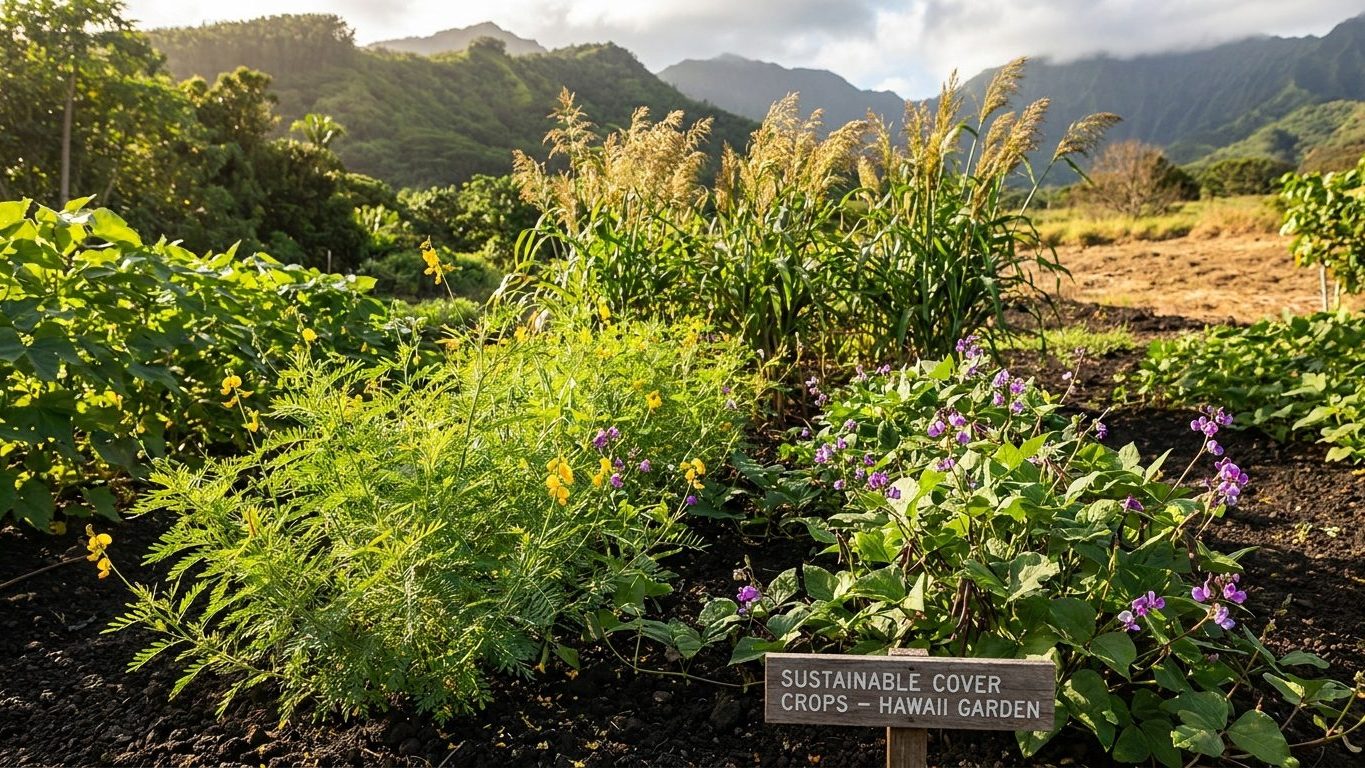

Maine’s short, cool growing season narrows the field fast. The most reliable cover crops here are winter rye, oats, field peas and buckwheat, chosen by how they handle a frost-free window that can close as early as October 9 and a winter where the coldest month regularly drops to a mean minimum of 15.6°F. Everything else on this page explains why those four keep winning and what shifts them.
The short answer for Maine
Start with the calendar. Last spring frost across the reference station falls between April 22 and May 1, and the first fall frost lands between October 9 and October 21. That leaves a working season of roughly five months in the mildest pockets, less inland. Any cover crop recommendation for Maine has to be built around that number first, cold tolerance second.
Winter rye (cereal rye, not ryegrass) is the default choice for a reason: it germinates in cold soil, keeps growing after most other plants have quit for the season, and shrugs off a coldest-month minimum of 15.6°F without special treatment. It’s the crop most gardeners plant when they’re not sure what else to plant.
Oats earn their spot as a winter-killed option. Sown in late summer, they grow fast, then die back cleanly once temperatures drop into the low 20s, leaving a mat of residue with no spring tillage required. That timing lines up well with a first frost that can arrive as early as October 9.
Field peas, usually paired with oats, add nitrogen fixation on the same schedule. Straight Austrian winter peas are a riskier bet on their own in the colder half of the state, but mixed with oats and used as a fall-only planting, they perform reliably.
Buckwheat fills the gap the others can’t: fast summer smother cover. It needs warm soil, so it waits until after the last frost window closes, then grows to flower in about 30 to 40 days. In southern Maine’s longer window, gardeners can often squeeze in two rounds before the first fall frost.
| Cover crop | Role | Why it fits Maine |
|---|---|---|
| Winter rye | Overwintering cover | Tolerates 15.6°F coldest-month minimum |
| Oats | Winter-killed cover | Fast growth before Oct 9–21 frost, no spring work |
| Field peas + oats | Nitrogen fixation | Fall-only window avoids winter survival risk |
| Buckwheat | Summer smother crop | Fits the short window after last spring frost |
What will not work here
Warm-season legumes are the first casualties. Cowpeas and sunn hemp need consistently warm soil and a long run of heat to fix meaningful nitrogen or produce enough biomass to matter. With a last spring frost that can hold on until May 1 in cooler spots and a first fall frost as early as October 9, the warm window they need simply doesn’t exist in most of the state. Gardeners who’ve had luck with these farther south often try them here once, get a thin, pale stand, and move on.
Berseem clover runs into the same wall. It’s a fine cover crop where summers stretch long and warm, but it needs 60 to 90 days of real heat to bulk up, and Maine’s growing season rarely offers that stretch without interruption.
Hairy vetch sits in a gray zone. It’s often marketed as winter-hardy, and in the mildest coastal pockets it can survive. But once you’re inland or at any elevation, where the coldest-month minimum runs well below the 15.6°F reference figure, stand loss over winter becomes common. It’s not a crop to bet a whole bed on without a fallback.
Crimson clover is the one that surprises people. It looks tough, but it’s genuinely a warmer-zone plant. Planted with confidence in the coastal south, it can fail outright farther north or at higher ground, where winter cold and a shorter fall establishment window both work against it.
Spacing matters too, though for a different reason than heat or cold. Maine summers run humid enough that cover crops planted too densely, buckwheat and field peas especially, are prone to powdery mildew and other foliar fungal issues. The fix isn’t less water, it’s more air: wider rows than the seed packet’s minimum spacing suggests.
What changes across Maine
Maine spans USDA hardiness zones 3b to 6a, according to the USDA Plant Hardiness Zone Map. That’s not a narrow band. It’s the difference between a coastal garden that can flirt with crimson clover and an inland or high-elevation garden where winter rye is the only overwintering cover worth trusting.
The Portland reference point used for the frost dates and the 15.6°F coldest-month figure represents the mild end of the state. Inland and northern Maine run colder in winter and start spring later, which means the whole calendar above shifts later and the margin for tender covers shrinks further.
| Region type | Relative to Portland reference | Practical shift |
|---|---|---|
| Coastal south (near 6a) | Milder, closest to stated frost dates | Crimson clover and winter peas become more viable |
| Inland / northern (toward 3b) | Colder winters, later spring, earlier fall frost | Lean on winter rye and winter-killed oats; skip tender legumes |
This isn’t a state where you can point to one town and say “that’s typical.” A gardener at higher elevation or well north of the coast is working with a different set of odds than someone gardening a few miles inland from Portland. The right move isn’t to guess which end of that 3b-to-6a range applies to a given yard, it’s to look it up directly.
Where to check this for your own county
The University of Maine Cooperative Extension is the source built for exactly this question: extension.umaine.edu. It exists precisely because a statewide answer, including everything on this page, is a starting point, not a finish line.
Two things are worth pulling up there specifically. First, the county-level planting calendar, which will translate the statewide frost-date range into something closer to your actual growing window rather than the five-month span this page has to work with. Second, any list of cover crop varieties that have actually been trialled in your county’s soil and climate. Extension offices track this kind of local performance data precisely because state and even regional recommendations miss the variation inside them.
A county-level recommendation will beat a state-level one every time, for the same reason a weather forecast for your town beats one for the whole region. This page had to average across a hardiness range that runs from 3b to 6a. Your county’s extension office doesn’t have to average anything. It can tell you what grows there.
Checking this against your own garden
Dates on a page, including this one, are averages built from decades of weather records. Your own soil this year might be running a week ahead or behind that average, and there’s no substitute for checking it directly before you commit seed to the ground.
Grab a handful of soil from where you plan to sow. If it’s still cold enough to feel unpleasant against bare skin and clumps together rather than crumbling, it’s too early for buckwheat or oats, no matter what the calendar says. Cover crops that need warm soil to germinate evenly will sit and rot before they sprout in soil that hasn’t caught up yet.
Watch what’s already growing nearby. Volunteer weeds pushing out their first true leaves in a bed are a decent local signal that soil temperature has crossed the threshold most seeds are waiting for. If nothing’s moved yet, your patch is running behind the county average, whatever that average turns out to be.
If you’ve got squash, cucumbers or other cucurbits in a nearby bed, the first flush of male flowers is another useful marker. It tells you the season has accumulated enough sustained heat for warm-loving plants to commit to reproduction, which is roughly the same heat threshold a crop like buckwheat needs to get going. None of this replaces the frost-date research behind this page. It just tells you whether this particular year, in this particular spot, is running early, on schedule, or late.