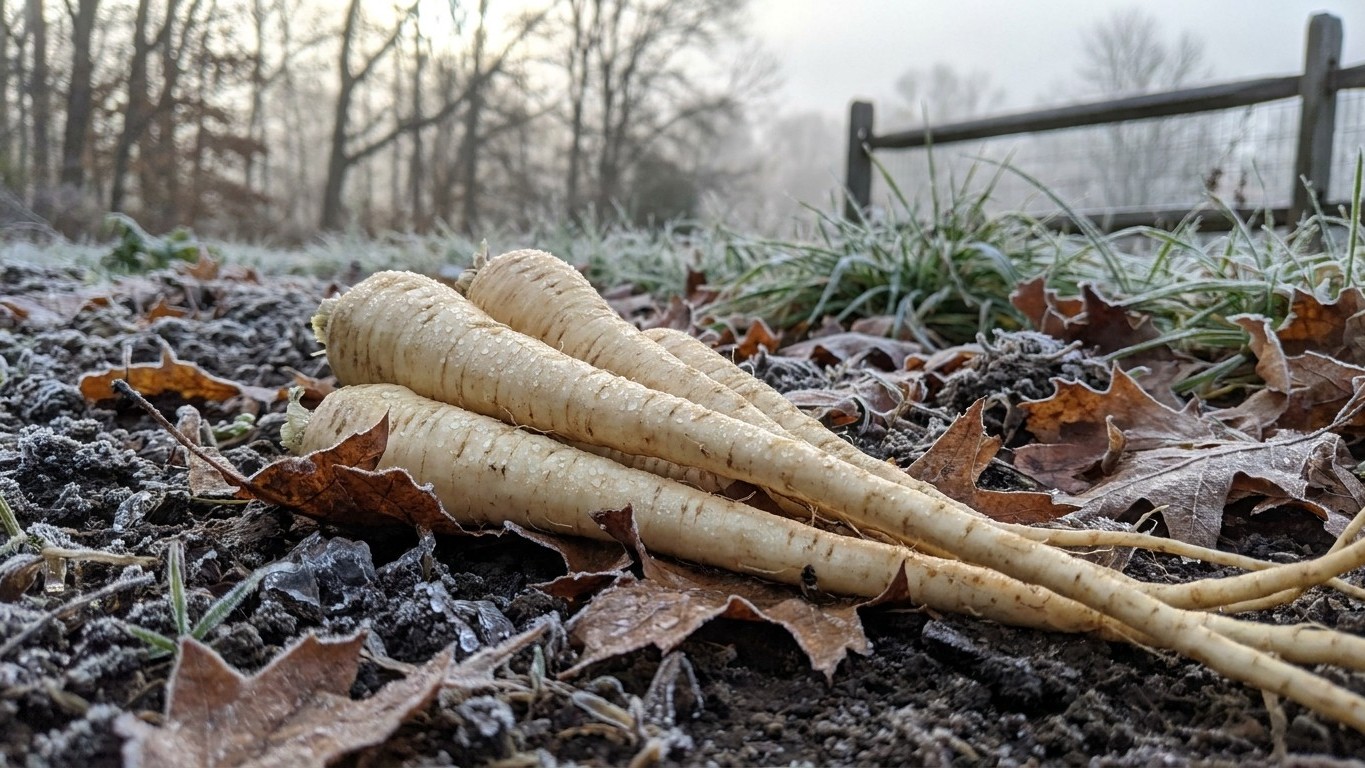

None of the ten pests Massachusetts’s extension service tracks are true parsnip specialists. Winter moth caterpillars are the only ones on that list with any plausible reason to land on parsnip foliage, and only for a few weeks right after they hatch, before moving on to their preferred hosts. Everything else a gardener notices on parsnip in this state, from forked roots to leaves that never turn sweet, usually traces back to soil, water, or the calendar rather than an insect.
Which pests attack parsnip in Massachusetts
UMass Extension documents ten pest species for vegetable and ornamental crops statewide: cabbage root maggot fly, Colorado potato beetle, European corn borer, lily leaf beetle, Mexican bean beetle, spotted lanternfly, squash bug, squash vine borer, striped cucumber beetle, and winter moth. That’s the full list this territory’s extension service tracks, and it’s worth sorting through carefully, because most of it has nothing to do with a root crop in the carrot family.
| Pest | Typical host | Feeds on parsnip here? |
|---|---|---|
| Cabbage root maggot fly | Cabbage, broccoli, radish (brassicas) | No |
| Colorado potato beetle | Potato, eggplant, tomato (nightshades) | No |
| European corn borer | Corn, peppers | No |
| Lily leaf beetle | True lilies, fritillaria (ornamentals) | No |
| Mexican bean beetle | Beans (legumes) | No |
| Spotted lanternfly | Tree of heaven, grapevine, hardwoods | No |
| Squash bug | Squash, pumpkin | No |
| Squash vine borer | Squash, zucchini vines | No |
| Striped cucumber beetle | Cucumber, melon, squash | No |
| Winter moth | Dozens of tree and shrub species | Only opportunistically |
Each of the excluded nine is tied to a specific plant family that isn’t parsnip’s. Cabbage maggot lays eggs at the base of brassicas, not carrot-family roots. Colorado potato beetle and its larvae are built to strip nightshade foliage. Corn borer needs a stalk to tunnel into. Lily leaf beetle won’t touch anything outside true lilies. Bean beetle, squash bug, squash vine borer, and cucumber beetle are all locked onto their namesake crops. Spotted lanternfly feeds on woody plants and vines, not garden vegetables at all.
Winter moth is different because its caterpillars aren’t picky. They hatch as tiny larvae right around budbreak and, before settling on a preferred tree, will chew on almost any soft green tissue nearby, including low garden plants growing under or near infested trees. UMass Extension’s own documentation for this species centers on trees and shrubs, not root vegetables, so any feeding on parsnip tops would be incidental rather than a targeted attack. None of the ten pests this service tracks statewide are listed as parsnip feeders, which is the honest starting point for anyone trying to identify a problem on this crop.
When each one shows up, and what it does first
Parsnip is sown directly in the garden rather than transplanted, and Utah State University Extension notes that seeds take 14 to 21 days to germinate. Gardeners who sow two to three weeks before the last spring frost, which falls between April 1 and April 8 in this territory, end up with seedlings breaking ground in late April into May. That’s a slow, exposed window, and it happens to overlap loosely with when winter moth eggs hatch near budbreak.
If winter moth caterpillars are present near a garden bed, this early stretch, while parsnip seedlings still have soft, undeveloped leaves, is when any feeding would first show up. The sign to watch for is ragged holes or chewed margins on the first true leaves, sometimes with entire seedlings skeletonized down to the veins if numbers are high nearby. Once true leaves toughen up and the plant is established, this kind of feeding tends to taper off as the caterpillars move on to tree canopy.
Outside that narrow window, there’s very little insect activity to watch for on parsnip through the rest of the season in this state, based on what’s documented here. The bulk of the growing period, roughly 100 to 120 days from seeding to a harvestable root, runs quietly. That stretch pushes a spring-sown crop toward late summer or early fall maturity, well ahead of the first fall frost window of November 3 to 14. Because the crop tastes best after exposure to several weeks of frosty weather, most Massachusetts gardeners leave mature roots in the ground past that first frost rather than pulling them the moment they size up. Nothing in the documented pest list changes that timing decision. It comes down to the plant’s own chemistry, not insect pressure.
Telling the damage apart from everything else
Most of what looks like pest damage on parsnip in this state isn’t. A forked or split root is the classic complaint, and it has two separate, unrelated causes here, not one. Heavy or stony ground can split a root as it grows around an obstruction, and so can overwatering, which encourages secondary rootlets to branch off the main taproot. Digging a bit of soil near an affected row tells you which one applies: stones or compacted clay point to soil, while consistently soggy ground with no obstruction points to watering habits.
| What you see | Likely cause | What distinguishes it |
|---|---|---|
| Forked, branched root | Heavy/stony soil, or overwatering | Check soil texture near the row, then check watering frequency |
| Root tastes bland or bitter, not sweet | Harvested before enough frost exposure | Roots pulled right after sizing up, before several cold weeks passed |
| Ragged holes on young leaf margins | Possible winter moth caterpillar feeding | Feeding appears near budbreak, on very young growth only |
| Pale, stunted seedlings | Nutrient shortage or seed rot in wet, heavy soil | Slow uniform decline across the row, not isolated chewing |
| Wilting despite watering | Root disease or mechanical injury | No chewing marks visible; roots may show soft rot |
The sweetness question deserves its own note, because it’s easy to blame a bad root on the wrong thing. Parsnip needs actual exposure to frost to convert stored starch into sugar, not just survival through a tolerable winter. A mild patch of garden that never dips below freezing for long can grow a perfectly healthy-looking parsnip that stays starchy and flat all season. That’s a climate exposure issue, not a pest, a soil problem, or a sign the plant is unhealthy. None of this is a substitute for an actual diagnosis, though. Anyone unsure which of these is happening in a specific bed should bring a sample, root and leaves both, to a local extension office rather than guess from a description alone.
What actually works here, and what is a waste of time
Given that only one pest on the documented list has any plausible reach into a parsnip bed, and only for a brief window, the most useful move is timing rather than treatment. A lightweight physical barrier placed over the row at seeding, before the 14 to 21 day germination period ends, protects the most vulnerable stage, the newly emerged seedling, without needing to identify anything by name first. Removing it once true leaves toughen up is usually enough, since the exposure window that matters is narrow.
What’s a waste of time is spraying anything preventively for a pest that isn’t documented as a parsnip feeder in this state to begin with. It treats a problem that, based on what’s tracked here, mostly doesn’t exist on this crop, while doing nothing for the far more common issues, forked roots from heavy soil or overwatering, and stunted growth from poor drainage. Soil preparation does more real work than any spray: Utah State University Extension recommends deep, sandy, loose soil for parsnip, and specifically notes that heavy ground needs to be double dug rather than amended lightly. That single step of loosening and de-stoning a bed before sowing prevents more damage-looking symptoms than reacting to leaf holes ever will.
This site doesn’t recommend specific products or active ingredients for a reason: what’s legally labeled and appropriate for a given pest changes by state and by year, and only the extension service knows what’s currently approved for use in Massachusetts gardens. A physical barrier at the right moment, and loose, well-prepped soil, cover almost everything a home gardener needs to manage on this particular crop.
Where to check this for your own county
Statewide documentation from UMass Extension tells you what’s been found somewhere in Massachusetts, not what’s living in a particular yard. Pest presence shifts from one neighborhood to the next depending on nearby trees, soil type, and what’s been planted in past seasons. A garden with no mature trees overhead is far less likely to see winter moth caterpillars drop onto parsnip seedlings than one shaded by an infested oak or maple.
The most useful next step for anyone seeing unexplained damage is contacting UMass Extension directly, or the local Extension office serving the area, and bringing an actual sample rather than a description. A chewed leaf, an affected root, or a few caterpillars in a sealed container gives a diagnostician something to work from. Photographs help too, especially close-up shots of the feeding pattern and the plant’s growth stage when it appeared. Timing the sample to when the damage first appeared matters more than waiting until the whole row looks affected, since early-stage evidence is easier to identify than a plant that’s already declined from several possible causes at once.
Soil questions, forked roots, bland-tasting harvests, these are usually better solved with a soil test through the same extension system than with a pest search. That test settles the heavy-ground question directly, rather than leaving it as a guess between soil and watering habits.
Common questions
Should I worry about carrot rust fly on parsnip in Massachusetts?
That species isn’t part of the documented list from UMass Extension referenced here. If a gardener sees tunneling in a parsnip root that doesn’t match anything described above, the local extension office is the right place to get an accurate identification rather than guessing from an unlisted pest name.
How long does it actually take to get a harvestable parsnip from seed?
Utah State University Extension puts it at 100 to 120 days from seeding, not from transplanting, since parsnip is grown in place. That’s a long season to plan around, especially paired with the extra weeks of frost exposure the crop needs afterward for good flavor.
My parsnip seeds didn’t come up. Did I do something wrong?
Maybe not. Germination takes 14 to 21 days, which feels slow compared to most vegetable seeds. Digging up the row before three weeks have passed is a common reason gardeners think their seed failed when it simply hadn’t had time yet.
Does a mild winter mean my parsnip will be sweeter?
No. Sweetening comes from direct exposure to several weeks of frosty weather after the root matures, not from how comfortably the plant survives winter overall. A region with a mild coldest-month low can still grow healthy parsnip that simply never sweetens if it isn’t left in the ground through enough cold weather.