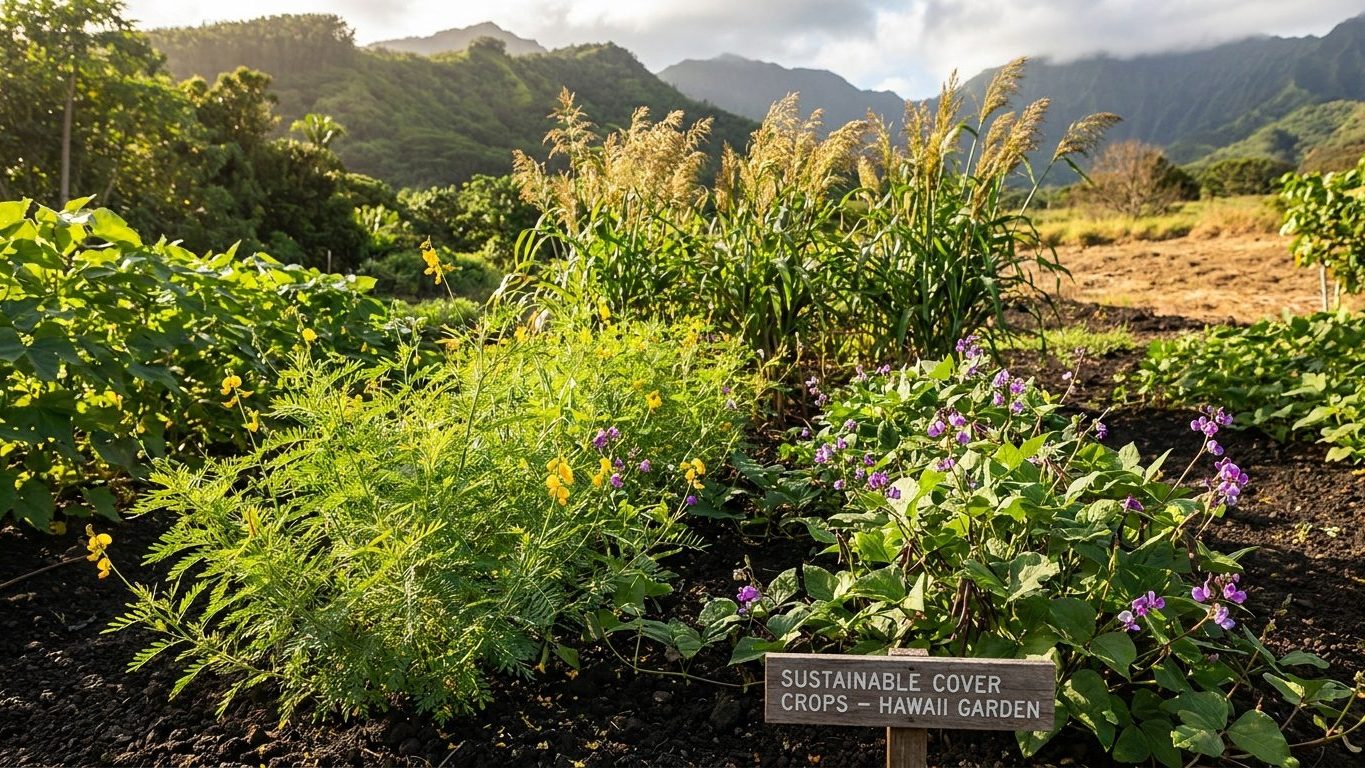

Cereal rye is the one cover crop that works across nearly all of New York, because it tolerates cold better than any other common option and germinates in soil most legumes and grasses just sit in. Hairy vetch, crimson clover, oats, and buckwheat all work too, but only in parts of the state, or only in the right window. Which one wins for you depends on where you garden.
The short answer for New York
Start with cereal (winter) rye if you want one crop that survives the winter almost anywhere in this state. New York’s USDA hardiness zone spans 3b to 7b, a spread wide enough to run from the Canadian border to the Long Island shoreline, and cereal rye is rated hardy well past the cold end of that range. It germinates in soil temperatures other cover crops ignore, keeps growing into late fall, and resumes in early spring before most gardeners have picked up a rake.
Hairy vetch is the classic partner to rye, mostly because it fixes nitrogen the rye doesn’t. But vetch needs more fall growth before hard cold sets in to survive winter reliably, which makes it a safer bet in the warmer bands of the state, closer to the New York City reference station, than in the colder interior. Crimson clover is even more particular about warmth: it’s a fine choice near the coast and in the lower Hudson Valley, and a gamble anywhere colder.
Buckwheat and oats play a different game entirely. Neither is meant to overwinter. Buckwheat is a summer filler, sown after the last spring frost and turned under before the first fall frost, useful for smothering weeds in a bed you’re resting for a few weeks. Oats are the opposite timing: sown in late summer specifically so they winterkill, leaving a dead mat of residue on the surface that needs no tilling in spring.
By type, in one line each
- Cereal rye: the state-wide default, hardy through the coldest zones New York has.
- Hairy vetch: nitrogen-fixing partner to rye, best where fall stays mild longer.
- Crimson clover: fast and cheap, but a warm-zone crop here, not a cold one.
- Buckwheat: a summer-only gap filler, dies at the first real frost.
- Oats: sown to fail on purpose, giving you frost-killed mulch by winter.
None of this is a substitute for checking your own county’s numbers, which is covered further down. But if you need one answer before you’ve read the rest of this page: rye first, then decide what to pair it with once you know how cold your particular corner of New York actually gets.
What will not work here
The mistake that costs New York gardeners the most is treating the whole state as one climate. The reference figures for this page come from the New York City station: a last spring frost between March 23 and April 3, and a first fall frost between November 14 and November 27. That’s a long, mild window by New York standards. The Adirondacks and much of the North Country frost far earlier in fall and thaw out far later in spring. A buckwheat sowing timed off the NYC dates, planted in a garden two hundred miles north, risks getting caught by frost weeks before it would in the city.
Crimson clover fails for the same reason, but on the winter-hardiness side. New York’s coldest-month mean daily minimum at the NYC reference station is 27.9°F, and that’s the mild end of the state. Interior and northern New York run considerably colder through the winter months. Crimson clover, bred and generally recommended for warmer zones, can winterkill in the colder bands of New York’s 3b-7b range even when it establishes fine in fall. If you’re relying on it to fix nitrogen through to spring, a hard winter can erase that plan entirely.
Long-season, heat-loving cover crops are the other trap. Anything that needs a long stretch of hot weather to mature, forage sorghum-sudangrass mixes are the common example, struggles once you’re north of the city’s mild band, simply because the frost-free window shrinks the farther you get from the coast. Sowing these too late means they never reach the growth stage where they’re doing their job, whether that’s biomass, weed suppression, or soil structure.
And the reverse mistake matters too: sowing a tender summer crop like buckwheat before the last spring frost date for your area, rather than the state’s mildest reference point, kills the seedlings before they get going. The NYC dates above are a starting reference, not a guarantee for every county.
What changes across New York
New York is not one garden, and the hardiness zone range makes that plain: 3b to 7b under the USDA Plant Hardiness Zone Map, built from the average annual extreme minimum temperature. That’s a five-zone spread inside a single state, which is unusual. Zone 3b readers are gardening in conditions closer to interior Vermont or northern Minnesota. Zone 7b readers, generally near the coast and around New York City, are gardening in conditions that overlap with parts of Virginia.
There is no single cover crop calendar that fits both ends of that spread. A gardener in the milder zones can lean on crimson clover and hairy vetch with reasonable confidence, sow buckwheat later into the season, and expect a longer stretch before the first fall frost. A gardener in the colder interior or at higher elevation should shift toward cereal rye and oats, sow any summer cover crop earlier to make sure it finishes before frost, and treat any “winter hardy” label on seed packaging with some skepticism unless it specifies a zone at or below theirs.
Elevation adds another layer on top of latitude. Two spots at the same latitude in New York can differ by a full zone or more depending on how high up they sit, since cold air pools in valleys and drains off ridges. That’s exactly why this page can’t tell you which zone you’re in, and won’t guess. The USDA map exists precisely so you can look up your own location rather than infer it from a state average.
Where to check this for your own county
This page gives you the state-level picture: the frost window at one reference station, the winter cold at that same station, and the zone range for the whole state. What it can’t give you is the calendar for your specific county, and that gap matters more here than in most states given how wide New York’s climate spread runs.
For that, go to Cornell Cooperative Extension. Cornell runs county-level offices across New York, and each one works from local trial data rather than a single statewide average. Two things are worth pulling up specifically:
- The local planting calendar for cover crops, which will give you sowing and turn-under windows adjusted for your county’s actual frost dates, not the New York City dates used as the reference point on this page.
- The variety trials run for your region, which will tell you which hairy vetch or clover varieties have actually overwintered reliably in your county’s winters, rather than what the seed packet claims for a generic hardiness zone.
A county recommendation beats a state one every time, for the simple reason that it’s built from data closer to your actual garden. This page is the state-level starting point: useful for understanding the range of what’s possible in New York, and for narrowing down which crop family makes sense before you check specifics. But the fine-tuning, the exact date to drill rye or turn under buckwheat, belongs to your county extension office, not to a page written for the whole state.
Checking this against your own garden
Every date on this page is a probability built from decades of weather records, not a promise about this particular year. Your own garden will tell you more than any calendar, if you know what to watch for.
Start with soil warmth by feel. Push your hand a few inches into the bed in early spring. If it still feels cold and heavy, wet clay that clumps rather than crumbles, your soil hasn’t caught up to the calendar yet, and seeding a warm-season crop like buckwheat will likely mean weak, slow germination even if the frost date on paper has passed.
Watch how fast weeds are germinating in the same bed. A flush of weed seedlings coming up on their own is one of the more reliable free signals that soil temperature has crossed the threshold most cover crop seed also needs to germinate. If the weeds are still dormant, your cover crop seed probably will be too.
Finally, track how quickly your own cover crop reaches its first true leaves after sowing. A rye or oat planting that’s slow to show true leaves, well past what you’d expect from the seed packet’s timeline, is telling you something about your specific microclimate: maybe a shadier spot, a lower patch of ground where cold settles, or simply a cooler year than the 1991-2020 average this page is built on. That signal, from your own bed, outranks every date printed here.