
Louisiana’s climate normals don’t name a single insect. What the verified data shows is when a pepper plant stops defending itself and starts absorbing damage from anything nearby, whether that’s a chewing insect, a hot afternoon, or a night that never cools off. The window runs from transplant through flowering and straight into the state’s long run of 90-degree days, and that window is what decides whether pest pressure even matters this year.
Which pests attack pepper in Louisiana
Here’s the honest limit of what’s verified for this page: the sourced facts behind it are climate and horticultural data, not an entomology survey. There’s no state-issued, species-by-species pest list attached to these numbers, and this site isn’t going to invent one just to fill a heading. What is documented, and documented precisely, is the physical stress pepper plants sit under for most of the growing season in Louisiana, and that stress is what determines whether insect damage becomes visible at all.
The reference station near New Orleans averages 70.7 days a year at 90°F or hotter, according to NOAA NCEI Climate Normals for 1991-2020. That’s not a handful of scorching afternoons. That’s more than two full months where a pepper plant is running a heat deficit before anything with legs or wings shows up. A plant already dropping blossoms from heat stress looks a lot like a plant losing flowers to an insect, and telling the two apart from a photo alone is close to impossible.
What can be ruled out here is anything tied to trees, turf, or ornamentals. If a resource lists borers that attack hardwood trunks, scale insects on shrubs, or grubs feeding on lawn roots, none of that belongs on a page about a vegetable crop grown from a spring transplant. Those organisms have different hosts, different life cycles, and different seasonal triggers, and lumping them in with garden pepper questions is exactly the kind of padding that erodes trust. If your plant has chewed leaves, deformed fruit, or a wilting stem, the identification has to come from someone looking at your actual plant, in your actual parish, not from a generic species list.
That’s not a dodge. It’s the same conclusion the horticultural sources for this page point toward indirectly: Clemson Cooperative Extension’s Home & Garden Information Center and Utah State University Extension both frame pepper problems around the plant’s physiology first, because so much of what looks like pest damage in the field turns out to be heat, water, or nutrient related. Louisiana’s numbers make that overlap worse than most states, simply because the hot stretch is so long.
When each one shows up, and what it does first
Forget calendar months. Louisiana’s frost line is too unstable for that anyway, since a 32°F freeze only shows up in roughly 87 percent of years at the reference station, meaning about one year in seven never freezes at all. The useful clock here is plant stage, not date.
The first vulnerable stretch starts at transplant. Transplants need 8 to 10 weeks indoors before they go in the ground, and they shouldn’t move outside until soil temperature reaches 60°F and frost risk has passed, per Utah State University Extension. A young transplant set out too early sits in cold, wet soil with slow root growth, and any feeding damage, insect or otherwise, hits a plant with almost no reserves to recover from it. What you’d see first: stunted growth, purplish or yellowing leaves, and a plant that just never seems to take off, regardless of what’s actually feeding on it.
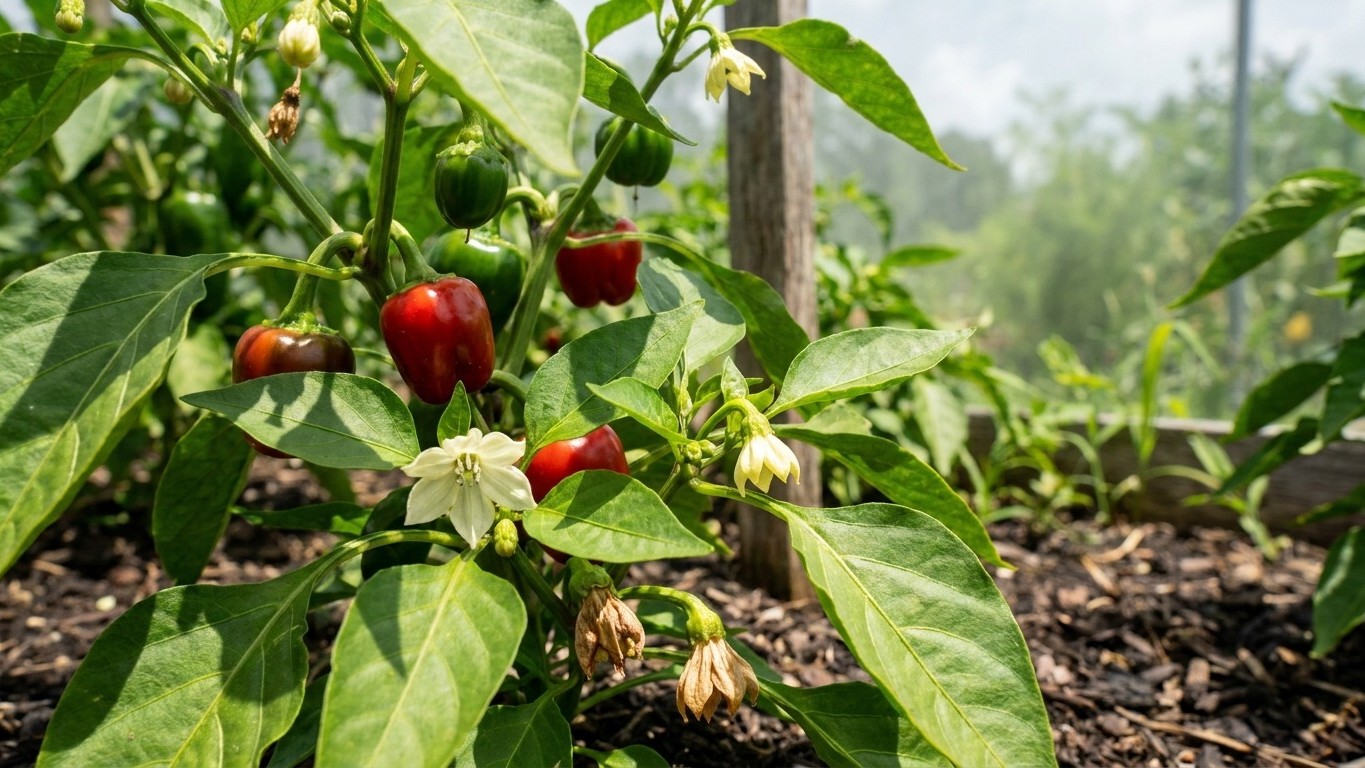
The second stretch is flowering, and it’s the highest-stakes window of the season. Fruit set fails at both ends of the temperature range: nights below 55°F, or days above 90°F. Given the reference station’s 70.7 days a year at or above that heat mark, a huge share of Louisiana’s summer falls inside the failure zone on the hot side. What shows up first isn’t chewed foliage, it’s blossom drop, flowers falling off before they ever set fruit. That symptom alone tells you almost nothing about pests one way or the other, because heat does the exact same thing.
Once fruit does set, it takes 35 to 45 days from flowering, not from the transplant date, to finish forming, according to Utah State University Extension. That stretch is where fruit-specific damage becomes visible for the first time: pitting, soft spots, holes, or discolored patches on fruit that otherwise looked fine at bloom. This site does not carry summer night-minimum data for Louisiana, so if your area runs cooler at night than the state average suggests, watch your own thermometer rather than assuming the cold-end threshold doesn’t apply to you.
Telling the damage apart from everything else
Most of the “something’s eating my pepper plants” questions that reach an extension office turn out to be something other than an insect. The single biggest decision point is temperature, and it’s the one thing a homeowner can actually check without a hand lens.
If nighttime temperatures are running below 55°F or daytime highs are pushing past 90°F, blossom drop is expected on physiology alone, no pest required. That’s the fact worth remembering before reaching for anything else as an explanation.
| Symptom | Likely environmental cause | What distinguishes it |
|---|---|---|
| Flowers drop before fruiting | Nights under 55°F or days over 90°F | Happens across most of the plant at once, not localized to one branch |
| Wilting despite moist soil | Root disease or transplant shock | Insect root feeding usually shows uneven wilting, plant by plant |
| Soft, pitted fruit after harvest | Chilling injury from cold storage | Appears days after harvest, not in the field, and spreads evenly across the fruit |
| Stunted, pale transplants | Soil too cold at planting, below 60°F | Whole row affected evenly, not scattered damage |
That third row deserves its own note, because it trips up a lot of home gardeners after a good harvest, not during one. Clemson Cooperative Extension is direct about pepper storage: optimal conditions are 45 to 50°F with 80 to 90 percent relative humidity, good for two to three weeks at most. A standard refrigerator runs colder than that, and below roughly 45°F peppers develop pitting and soft, water-soaked spots from chilling injury, not from anything that fed on them in the garden. If fruit looked fine coming off the plant and turned mushy a few days later in the fridge, that’s storage temperature, not a pest.
None of this replaces an in-person look. When holes, chew marks, or insect bodies are actually visible on leaves or fruit, that’s a job for your parish extension agent, who can identify the organism directly instead of guessing from a description.
What actually works here, and what is a waste of time
Louisiana’s season isn’t limited by frost the way most of the country’s is. It’s limited by heat, and that changes what’s worth doing and when.
The single highest-leverage move is timing the transplant to soil temperature, not the calendar: wait until soil hits 60°F and frost risk has passed, but don’t wait so long that flowering lands in the deepest stretch of the 90-plus-degree window. Since the reference station averages 70.7 such days a year, pushing transplant dates later just to “play it safe” from cold often walks the plant straight into the heat-failure zone instead. That’s a bad trade.
Physical barriers set up before the plant flowers do more good than any reactive treatment applied after damage is already visible. Row cover during the vulnerable transplant stage, for instance, protects against both cold snaps and early insect pressure at once, and it costs nothing in growing time if it’s removed before flowering starts.
What’s a waste of time: spraying anything without knowing what’s actually causing the damage. If blossom drop is heat-driven, as it often is here, no treatment on earth fixes it. Insecticide applied against a temperature problem does nothing but cost money and time in a season that’s already short on both. It’s also worth saying plainly that this site doesn’t recommend specific products, active ingredients, or rates. Only your state’s Cooperative Extension Service knows what’s currently labeled and legal for use in Louisiana, and that answer changes over time in ways a general gardening article never will.
Harvest timing matters just as much as planting timing. Fruit is generally ready 70 to 85 days after transplant, per Clemson Cooperative Extension, and pulling it promptly at that window avoids the extended field exposure that lets minor damage turn into rot.
Where to check this for your own county
Louisiana doesn’t have counties. It has parishes, and that’s not a technicality, it’s exactly where the pest question actually gets answered. Pest presence documented at the state level tells you almost nothing about what’s active in a specific yard, because insect populations shift parish to parish and even garden to garden depending on nearby crops, moisture, and what got planted the year before.
The next concrete step is contacting the LSU AgCenter office for your parish, the Cooperative Extension Service that covers Louisiana, and bringing a photo or, better, the actual damaged leaf or fruit. Extension agents identify pest damage far more reliably in person than any article can from a description of symptoms, and they know what treatments are currently labeled for use in the state, which changes over time.
Before that call, it helps to have three things ready: when the plant was transplanted, whether nighttime temperatures have dipped below 55°F or days have pushed past 90°F recently, and how the damage is distributed across the row. Answering those three narrows the diagnosis faster than any photo alone.
Common questions
Does Louisiana really only freeze some years?
Yes. At the NOAA NCEI reference station, a 32°F freeze occurs in about 86.8 percent of years, meaning roughly one year in seven passes with no freeze at all, and the freeze window itself runs from January 18 to February 8.
Why do my pepper flowers keep falling off?
Fruit set fails at both temperature extremes: nights below 55°F or days above 90°F. Given how many days in Louisiana’s summer clear that 90°F mark, heat is the more likely culprit here than a pest, though only a physical inspection can confirm it.
Can I store harvested peppers in the refrigerator?
Not for long, and not at typical fridge temperatures. Clemson Cooperative Extension puts optimal storage at 45 to 50°F, warmer than most refrigerators run, for up to two to three weeks. Colder than that causes chilling injury, pitting, and softening.
How soon after transplanting should I expect fruit?
Around 70 to 85 days after transplanting, per Clemson Cooperative Extension, with the fruit itself taking 35 to 45 days to finish developing after flowering, not from the transplant date.