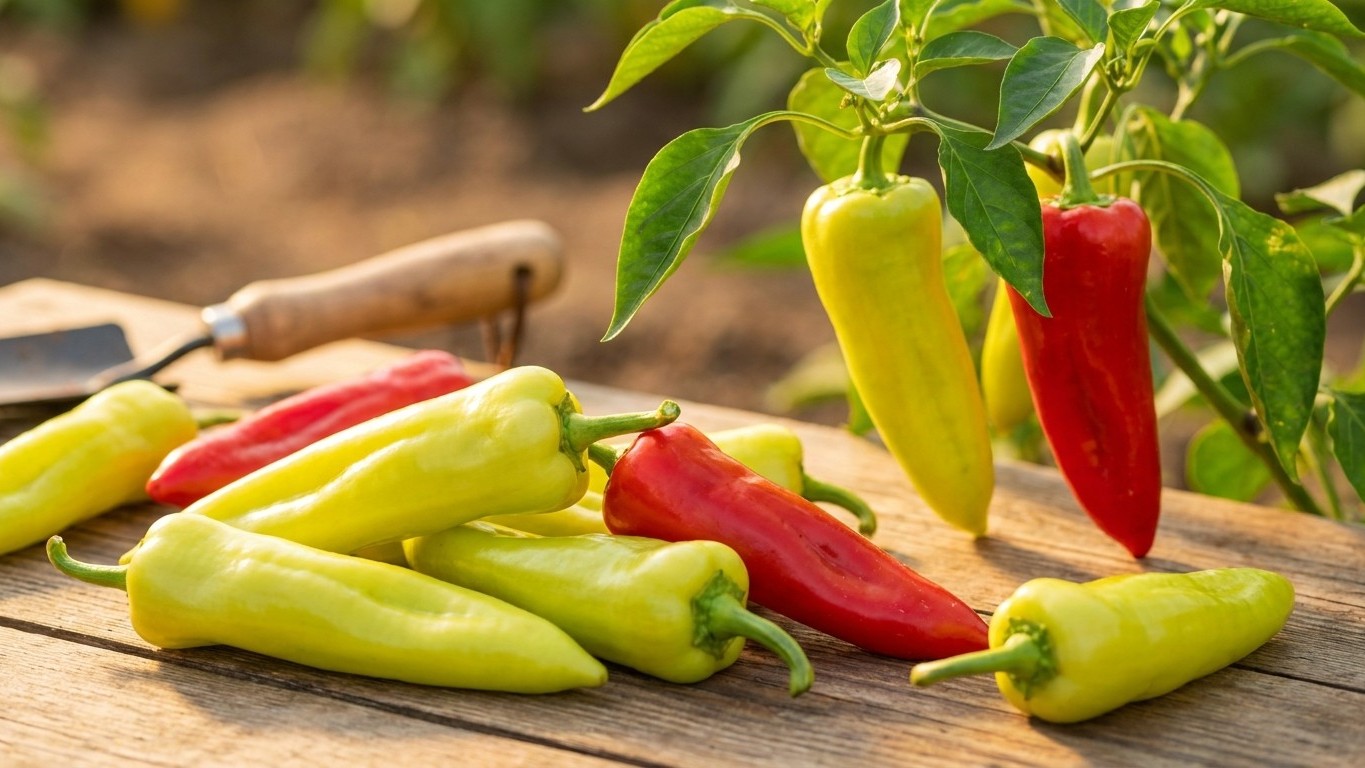

Manitoba’s record on this doesn’t hand you a rap sheet of named bugs. What decides whether pepper plants get hit hard or coast through the season here comes down to two hard numbers: the average last spring frost date, and how many days each summer cross the threshold where pepper fruit set simply stops working. Insect activity riding on top of that window matters, but it isn’t documented at the province level with the kind of species-level detail that would let anyone hand out a confident checklist.
Which pests attack pepper in Manitoba
The verified sources behind this page don’t carry a province-specific, named list of insects documented as pepper pests in Manitoba. What’s actually sourced and confirmed for this territory is climate data, not entomology, and stretching that into a pest list would mean inventing names nobody has verified for this ground.
Insect pressure on garden peppers shifts by soil, by shelter, by what got planted next door last year, and by whether the previous winter was mild. A list built from provincial averages could easily send a gardener chasing a pest that only shows up in another part of the province. Rather than paper over that gap, the more useful move is to describe what actually is confirmed for this province and let that do the work a pest list would normally do.
What actually governs pepper survival here
Peppers fail to set fruit at both ends of the temperature range: nights below 55°F (about 13°C) stall pollen the same way afternoons above 90°F (32°C) do, according to Utah State University Extension. Winnipeg Richardson Int’l A averages 4.54 days a year reaching 32°C, and 13.3 days a year above 30°C, per Environment and Climate Change Canada’s 1981-2010 climate normals for that station. A handful of scorching afternoons a year doesn’t disqualify pepper from this province; what actually rules the season is the length of the frost-free window, which is a separate number entirely.
For a confirmed, current read on which insects are actually active in a given Manitoba garden, the correct move is to contact Manitoba’s provincial agriculture department directly rather than rely on a generic list. Local scouting beats a province-wide guess every time, especially for a crop as sensitive to microclimate as pepper.
When each one shows up, and what it does first
Without a confirmed pest calendar for this province, the timeline that actually matters here is the climate-driven risk window pepper plants move through after transplant. Transplants need 8 to 10 weeks indoors before they go in the ground, and they shouldn’t go outside until the soil has warmed to 60°F, and after frost has passed — a rule from Utah State University Extension that applies regardless of which province is running the calendar.
In Manitoba, that frost line sits at an average of May 23 at the Winnipeg Richardson Int’l A station, per Environment and Climate Change Canada’s 1981-2010 normals. That date is a midpoint, not a guarantee: in roughly half the years on record, frost arrives later than that.
Once plants are in the ground and the soil has come up to temperature, the first real test isn’t a chewed leaf, it’s the flowers. Blossom drop with no fruit forming is the earliest visible sign that something in the temperature range is off, whether that’s a late cold snap pushing nights under 55°F or an early, rare stretch of afternoons crossing 32°C. Because this site does not carry Manitoba’s summer night-minimum data, there’s no way to say from provincial averages alone whether a given garden is running cold at night in early summer. That’s something only a gardener watching their own thermometer, or checking with local ag staff, can confirm.
Later in the season, once fruit has actually set, the calendar shifts to harvest math: peppers generally need 70 to 85 days from transplant to reach harvest, according to Clemson Cooperative Extension. In a province where the frost-free window is already tight, that number is the one that decides whether a late-planted crop finishes at all before fall frost closes things down.
Telling the damage apart from everything else
Most of what looks like pest damage on a pepper plant in Manitoba is something else entirely, and the mix-up costs gardeners time chasing a bug that was never there. The single most useful habit is checking the calendar before checking for insects: if the symptom shows up right after a cold night or a rare hot stretch, temperature is the more likely suspect than anything with legs.
| Symptom | Likely cause | What to check |
|---|---|---|
| Flowers drop, no fruit forms | Temperature stress at flowering | Compare timing against recent nights and any stretch of days above 32°C |
| Sunken, pale patch on the fruit’s shoulder | Sunscald from sudden sun exposure | Appears on the sun-facing side only, with smooth edges, not scattered bite marks |
| Blackened, leathery spot at the fruit tip | Blossom end rot (calcium and water irregularity) | Starts at the blossom end and spreads inward, not a surface wound |
| Ragged holes or chewed leaf margins | Possible insect feeding | Look for the insect itself or dark frass; without that, it isn’t confirmed |
| Wilting on one side of the plant | Mechanical or wind damage to stem | Check the stem base for a crack or lean rather than assuming disease or pest |
The line that matters most is the fourth row. Chewed foliage is the one symptom on this list that could actually be an insect, but confirming that takes finding the insect, or its droppings, on the plant, not just the hole it left behind. Everything else on this table has nothing to do with pests at all, and treating it as if it did wastes a growing season that’s already short on margin.
Anyone seeing damage they can’t place should send a photo or a sample to Manitoba’s provincial agriculture department rather than guess from a description online. Diagnosis by symptom alone, without seeing the actual plant, is exactly how blossom end rot gets treated as an insect problem and a real pest gets ignored for weeks.
What actually works here, and what is a waste of time
On a growing season this tight, timing beats intervention almost every time. The single biggest lever a Manitoba gardener has is not planting before the soil hits 60°F, because a transplant set out into cold ground doesn’t recover the lost weeks later in the season, it just runs behind for the rest of the summer. Starting seed indoors on the 8 to 10 week schedule Utah State University Extension recommends, and holding transplants until both frost and soil temperature clear, does more for a healthy crop than anything applied after the fact.
Physical barriers, put in place before a problem shows up rather than after, are the other tool that consistently pays off on a short season. Row covers set over young transplants protect against both a late cold snap and early insect activity at the same time, and they cost nothing in growing days if removed once plants start flowering and need pollinator access.
What’s a waste of time: treating blossom drop or sunscald as if they were insect damage. No spray, timed or not, fixes a temperature problem, and applying one anyway just burns a week of an already short season while the actual cause keeps happening. This site doesn’t name specific products or active ingredients for pest control, because product approvals and label rules are set at the provincial level and specific to what’s registered in Manitoba. That decision belongs with Manitoba’s provincial agriculture department, not with a generic gardening guide.
Once fruit is harvested, the mistake most people make next is putting peppers straight in the refrigerator. A home fridge runs colder than the 45 to 50°F peppers actually want, and below roughly 45°F they start pitting and softening from chilling injury, according to Clemson Cooperative Extension. Held at that proper range with 80 to 90 percent humidity, peppers keep for two to three weeks at the outside, not indefinitely.
Where to check this for your own county
Manitoba doesn’t run on counties, but the same principle applies through its municipalities and regional agriculture offices: what’s true for the province as a whole is not automatically true for a specific yard. A single confirmed frost date, an average pulled from one weather station, still tells a gardener nothing about a low-lying garden two properties over that runs colder than the airport reading.
The Winnipeg Richardson Int’l A station, the source behind the frost date and heat-day figures on this page, sits outside the city core and can run either warmer or cooler than a given neighborhood depending on shelter and elevation. That’s true of every reference station used for provincial climate normals, but it’s the reason a gardener shouldn’t treat a provincial average as a guarantee for their own soil.
For anything specific to a particular garden, whether that’s confirming an insect ID, checking local frost risk, or getting current pest advisories, Manitoba’s provincial agriculture department is the right first call, not a search engine and not a general gardening article. The next useful step for anyone with a specific symptom in front of them is straightforward: photograph it, note when it appeared relative to the last cold night or hot stretch, and bring both to a local agriculture office before assuming which side of the pest-versus-climate line it falls on.
Common questions
Does Manitoba get too cold at night for peppers to set fruit?
It can, but this page’s sourced data doesn’t cover summer night minimums for the province. Utah State University Extension notes fruit set fails below 55°F (about 13°C), so the only reliable check is a gardener’s own thermometer during flowering, not an assumption based on latitude or on how cold winter gets.
How many hot days does Manitoba actually get above the pepper danger threshold?
Winnipeg Richardson Int’l A averages 4.54 days a year reaching 32°C, per Environment and Climate Change Canada’s 1981-2010 normals. That’s a count of extreme days, not a measure of whether the season is warm enough overall, so it shouldn’t be read as a verdict on whether heat-loving crops belong here.
When is it safe to transplant pepper outdoors in Manitoba?
The average last spring frost at Winnipeg Richardson Int’l A is May 23, but that’s a midpoint, not a safe date; frost falls later than that in roughly half of all years. Combine that with soil that has actually reached 60°F before transplanting, since going by the calendar date alone skips the more important check.
Why did my peppers go soft and pitted after I refrigerated them?
A standard refrigerator runs colder than the 45 to 50°F peppers need for storage, and Clemson Cooperative Extension notes that temperatures below about 45°F cause chilling injury, showing up as pitting and softening. Store peppers at that warmer range with high humidity, and expect at most two to three weeks of good quality.