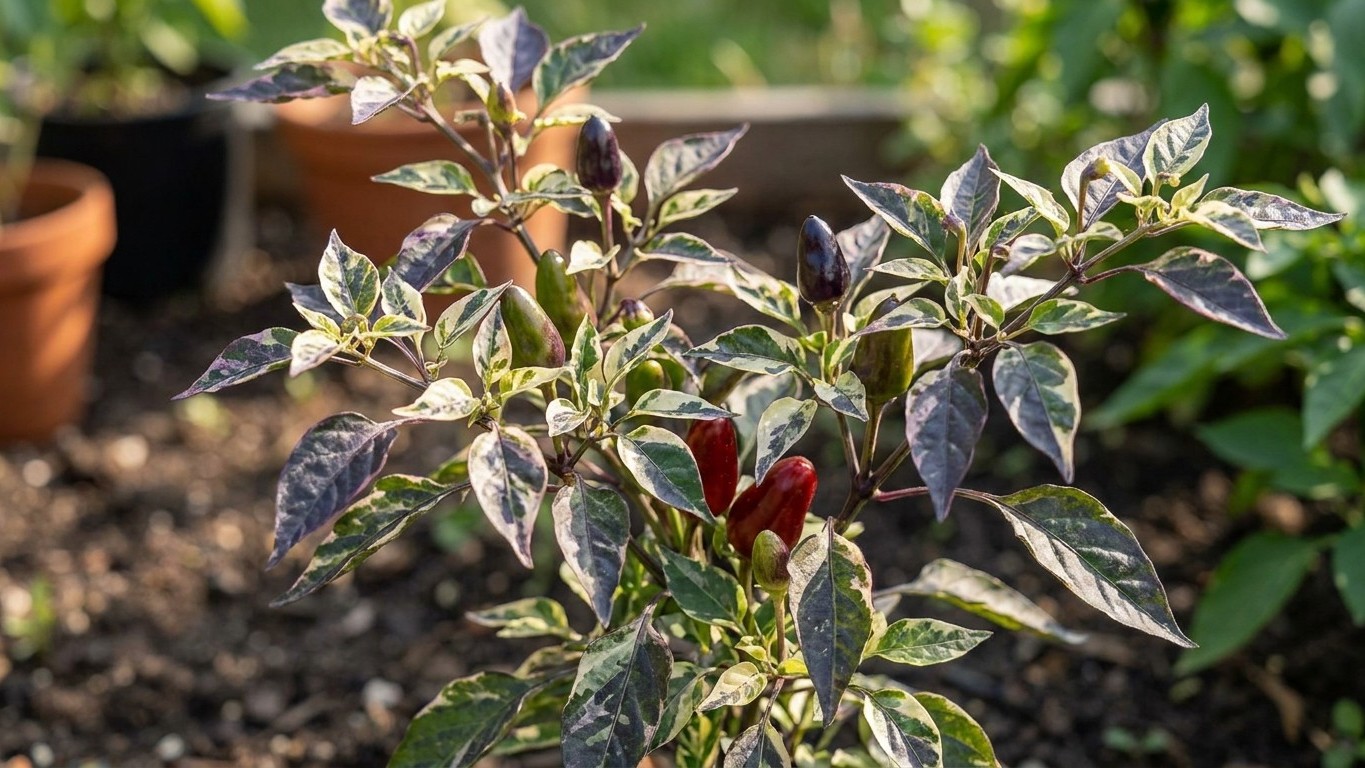

In most Illinois locations, the window for starting pepper seed indoors runs from roughly mid-February to late March, timed backward from a transplant date that falls after your last frost and once soil has warmed to 60 F. The exact week depends on your county, your soil, and how you count backward from that transplant target, which the sections below walk through in detail.
The short answer
Start with the heat side of the equation, because it shapes everything else about your pepper season. The reference station in Chicago averages 14.0 days a year at or above 90 F, based on NOAA NCEI Climate Normals for 1991-2020. That’s not a huge number compared to states farther south, but it’s enough to matter. Pepper fruit set stalls when daytime highs push past 90 F, especially if that heat lands during flowering. Blossoms drop, pollen goes sterile, and a plant that looked loaded with buds one week can look bare the next. Fourteen days scattered across a typical Illinois summer, usually clustered in July and August, means most gardeners get through a season without catastrophic losses, but a heat spike during peak bloom can still wipe out a week or two of fruit set.
The other end of the range matters just as much, and it’s the one gardeners tend to forget. Pepper fruit set also fails when nights drop below 55 F, according to Utah State University Extension. Cool nights in that range confuse pollen the same way extreme heat does, just from the opposite direction. This is where things get specific to your yard rather than to the state as a whole. This site tracks days above 90 F by location, but it does not carry summer night minimum data. Nobody can tell you, from a website, what your particular garden sits at overnight in June. Low spots collect cold air. Open fields lose heat faster than sheltered yards near buildings or tree lines. A garden ten miles away can run five degrees cooler on a still night than yours does.
That means the practical move is to watch your own thermometer once plants are in the ground, particularly during the first few weeks after transplant when flowering typically begins. If you’re seeing a run of nights forecast in the low 50s right as buds are forming, that’s a signal to expect a slow patch in fruit set, not a plant problem to fix with more water or fertilizer. Nothing about this should be guessed from how far north or south you are in the state. Latitude is a rough proxy at best, and local topography, urban heat, and even wind exposure can shift real numbers well away from what a map would suggest. Track your own conditions with an actual thermometer near the bed, not an assumption based on where Illinois sits on a map.
When to start seed here
Working backward from transplant day is the most reliable way to land on a seed-starting date, and it holds up whether you garden in the Chicago suburbs or downstate near the Ohio River. Here’s how the math works, step by step, so you can plug in your own numbers.
- Start with your last frost window. At the Chicago reference station, NOAA’s 1991-2020 climate normals put the last spring freeze (32 F) between April 11 and April 22, based on the 30 to 70 percent probability band. That’s a station reading from an airport, and suburban or rural gardens typically see their last frost land later, sometimes by one to two weeks, so check your own county’s extension data or your own frost log rather than treating this as a statewide guarantee.
- Add time for soil to catch up. Frost clearing doesn’t mean the soil is ready. Peppers need soil at 60 F before transplanting, and soil temperature lags behind air temperature, often by one to three weeks past the last frost date. That pushes a realistic transplant window into late April through mid-May for a lot of Illinois gardens, though a soil thermometer pushed a few inches into your bed will tell you far more than a calendar will.
- Count back 8 to 10 weeks from that transplant date. Utah State University Extension recommends starting pepper transplants 8 to 10 weeks before they go in the ground. If your transplant target is late April, that puts seed-starting around late February to early March. If your soil and weather push transplanting into mid-May, back the count up to early-to-mid March instead.
- Adjust for your own site, not the state average. A garden that consistently runs a week behind the reference station on frost clearing should shift its seed-starting date later by roughly the same amount. There’s no advantage to starting earlier than your transplant math supports, since pepper seedlings held too long indoors tend to get leggy and stressed before they ever reach the garden.
Run through that sequence with your own frost records and soil readings, and you’ll land on a starting date that’s tailored to your yard rather than a generic recommendation lifted from a seed packet.
What goes wrong here
Illinois’s swing between hot, humid stretches and cool spring nights sets up a specific set of pepper problems. Knowing which one you’re looking at saves a lot of wasted troubleshooting.
- Blossom drop during a hot spell. When daytime highs push past 90 F, especially during flowering, blossoms fall off without setting fruit. Illinois averages 14.0 such days a year at the Chicago reference station, and they tend to cluster in mid-to-late summer. The fix isn’t more fertilizer. Water deeply and consistently through a heat run, provide light afternoon shade if a stretch of 90-plus days is forecast during peak bloom, and expect fruit set to resume once temperatures ease.
- Blossom drop from a cool night. The opposite failure shows up when nights drop below 55 F, per Utah State University Extension. This is most likely to catch gardeners who transplant too early, right after the last frost date without waiting for nights to hold steady. Since this site doesn’t track summer night minimums, keep an eye on your own overnight lows rather than assuming a date on the calendar is safe. If a cold snap is forecast during flowering, a floating row cover overnight can buy a few degrees.
- Sunscald on exposed fruit. Peppers that lose leaf cover, from over-pruning, wind damage, or disease, expose fruit directly to strong summer sun. The skin develops pale, blistered patches that soften and rot. Leave foliage in place rather than pruning for looks, and stake plants so wind doesn’t strip leaves during a storm.
- Blossom-end rot. This shows up as a sunken, leathery patch at the fruit’s bottom end, usually tied to uneven watering rather than a soil deficiency by itself. Illinois’s pattern of heavy spring rain followed by dry summer stretches is a classic setup for it. Keep watering consistent, mulch to hold soil moisture steady, and avoid letting beds swing between soaked and bone-dry.
Common questions
Can I start pepper seed too early indoors in Illinois?
Yes. Utah State University Extension’s 8 to 10 week window exists because pepper seedlings held longer than that tend to get root-bound and stressed before the ground is ready. Starting seed in January for a late-April or May transplant date usually means struggling with leggy, unhealthy seedlings by the time it’s safe to plant.
What soil temperature do peppers need before transplanting?
Utah State University Extension puts the threshold at 60 F, and it should be checked with an actual soil thermometer rather than assumed from air temperature or the calendar date of your last frost.
How do I know when nights are warm enough for peppers here?
Watch your own overnight lows once plants are near flowering. Fruit set struggles below 55 F, according to Utah State University Extension, but this site doesn’t track summer night minimums by location, and nothing about your yard’s overnight temperature can be reliably guessed from latitude alone. A simple outdoor thermometer near the bed is more useful than any regional estimate.
Should I start different pepper varieties at different times?
Utah State University Extension’s guidance doesn’t attach specific days-to-maturity or heat tolerance figures to individual variety names, so there’s no published basis here for staggering seed-starting dates by variety. The 8 to 10 week rule applies broadly across pepper types.