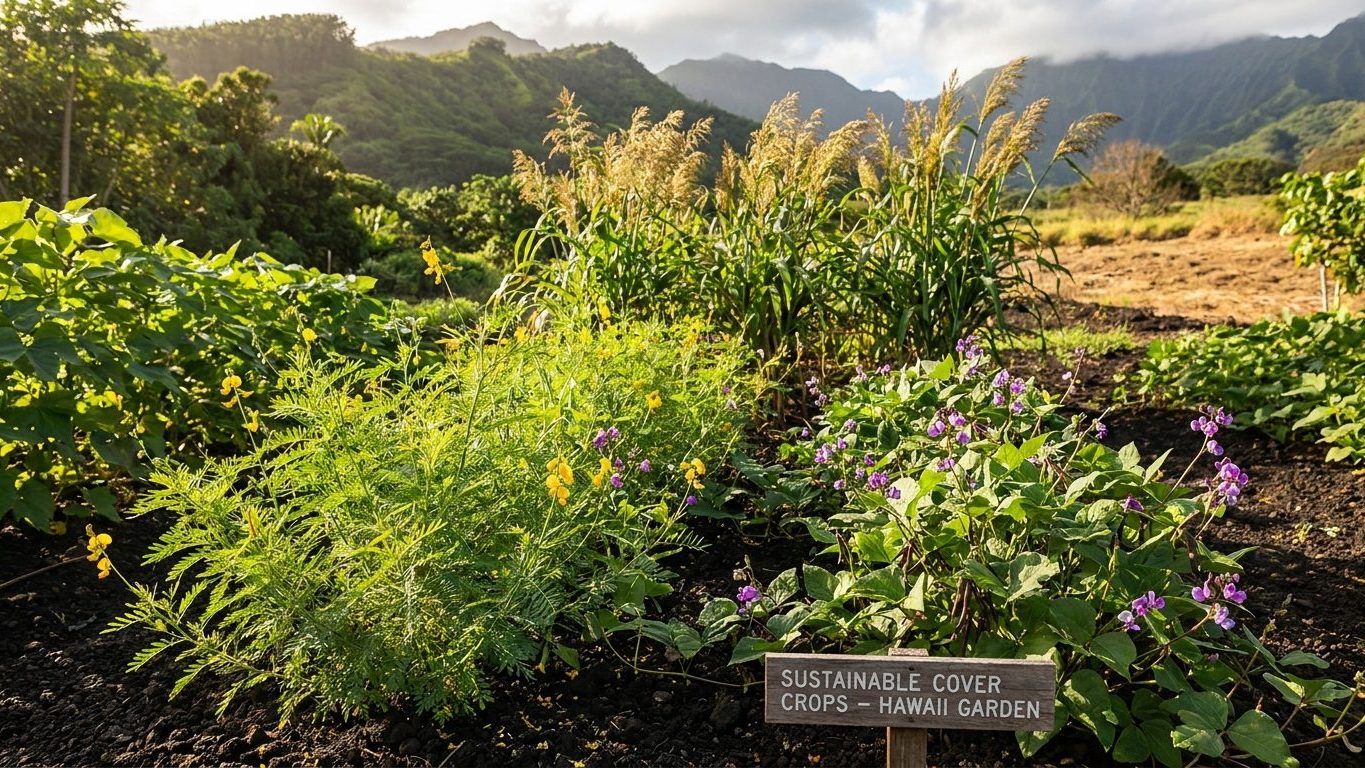

Fall-sown, frost-hardy species are the safe default for Nova Scotia cover crops: winter rye and oilseed radish handle the province’s cold snaps and short shoulder seasons better than almost anything else. Warm-season, heat-loving cover crops are the risk here, not the reward, because Nova Scotia’s growing season simply doesn’t run hot or long enough to finish them reliably.
The short answer for Nova Scotia
Start with the two dates that frame everything: the average last spring frost at Halifax Stanfield is May 7, and the average first fall frost is October 18. That’s a mean frost-free window of roughly 164 days, but it’s a mean, not a guarantee. In half the years on record, frost arrives later in spring or earlier in fall than those dates, which shrinks the real working window a grower can count on.
That single fact should drive the choice by type. Cover crops that need a long run of warm soil to bulk up and fix nitrogen, the kind farther south get away with, are fighting the clock here from the start. Cover crops built for cool, short seasons, or ones designed to be killed by frost rather than tilled under, fit the province’s rhythm far better.
| Cover crop type | Winter behavior | Best fit for Nova Scotia |
|---|---|---|
| Winter rye | Very hardy, typically survives winter and resumes growth in spring | Strong fall-sown choice; needs spring termination before it heads out |
| Oilseed radish | Reliably winterkills with sustained hard freezes | Good fall cover; leaves clean residue by spring, no tillage needed |
| Oats | Winterkills with the first hard, sustained cold | Easy fall cover for gardeners who want it gone by spring |
| Buckwheat | Killed outright by any frost | Fast summer gap-filler between May 7 and the first real fall chill, not a winter crop |
| Hairy vetch | Moderately hardy, survival varies by winter severity | Workable in milder coastal pockets, riskier inland |
| Crimson clover | Only moderately hardy, often killed in harsh winters | Marginal here; treat as a gamble, not a plan |
The takeaway isn’t one single crop. It’s a category: things that either shrug off cold or die on cue, sown early enough after May 7 or late enough before October 18 that they actually get established.
What will not work here
The coldest month at the reference station averages a daily minimum of 13.3°F. That number matters more than any calendar date, because it’s what decides whether a cover crop planted in September is still alive come April. Species rated only moderately winter-hardy, crimson clover being the clearest example, are living close to the edge in a winter that regularly bottoms out near that mark. Some years they survive fine. Other years a grower finds bare, dead ground where they expected a spring nitrogen source, and there’s no way to know in advance which kind of winter is coming.
Warm-season legumes and grasses built for long, hot summers are the other clear failure. Cowpeas, sorghum-sudangrass, and sunn hemp need sustained heat and a wide summer window to flower, fix nitrogen, or bulk up enough biomass to matter. With frost bookending the season at May 7 and October 18 on average, and a real chance of either date arriving worse than the mean, these species are routinely still immature when the first fall chill shows up. A gardener who plants them expecting a Georgia-style result is planting a crop this climate can’t finish.
Close, tight spacing recommended for warmer, drier climates also tends to backfire in Nova Scotia’s damper coastal air. Crops that need good airflow to avoid fungal trouble, like dense clover stands sown too thick, hold moisture longer here than the same seeding rate would in a drier inland state. That’s not a frost problem, it’s a humidity problem, but it shows up in the same disappointing way: a stand that looked fine in June and rotted by August.
The pattern across all three failures is the same. Nova Scotia’s cold minimum and its frost dates aren’t obstacles to work around with better technique. They’re hard limits that rule certain species out before the seed ever goes in the ground.
What changes across Nova Scotia
Every figure on this page comes from one reference station, Halifax Stanfield, and one Canadian hardiness zone rating, 6b. That zone number applies to the reference city named in the source data, not to the whole province, and Nova Scotia is not one climate. Coastal areas moderated by the Atlantic run milder than inland valleys, and higher ground, including parts of Cape Breton, sits colder than the Halifax figures suggest.
A grower working land well inland or at higher elevation should expect both frost dates to shift against them: a later last spring frost, an earlier first fall frost, and a shorter working season than the 164-day average implies for the coast. A grower closer to open coastline, with the ocean’s moderating effect, may see the opposite lean, though even there the May 7 and October 18 dates are averages, not promises.
This is also worth saying plainly because the Canadian hardiness system doesn’t work the way many gardeners expect from the American zone maps. It’s built from seven climate variables rather than one, and Natural Resources Canada is explicit that its zones don’t convert cleanly to USDA zones at all. A single Canadian zone can span nine different USDA zones depending on which variables dominate locally. That’s not a rounding issue, it’s a different measurement system entirely, so treat the 6b rating here as descriptive of the reference city, not as a number to cross-reference against a US zone map.
None of this page’s figures can tell an individual reader which zone covers their own property. For that, the right tool is Natural Resources Canada’s plant hardiness map, which lets a grower look up the rating for their own municipality rather than borrowing the Halifax number by default.
Where to check this for your own county
Everything above is a provincial picture built from one weather station and one reference zone. It’s useful as a starting point and useless as a final answer for any one piece of land. The right next step is Nova Scotia’s provincial agriculture service, at novascotia.ca/agri/.
What to actually look for there is narrower than the whole site. Two things matter for cover crop timing specifically: a local planting calendar, if one exists for the crop in question, and any variety trial results or extension notes tied to a specific county rather than the province as a whole. A recommendation built from real trial plots in Kings County or the Annapolis Valley reflects local soil and microclimate in a way a province-wide average never can.
This matters because the two anchor dates on this page, May 7 and October 18, are averages pulled from a single Halifax-area station. A county extension note tied to actual trial data in a different part of the province can and often will shift those working dates in either direction, sometimes by a couple of weeks, based on real local conditions rather than one airport’s climate record.
The general rule holds regardless of crop or region: a county-level recommendation, built from local trials and local soil conditions, will always outrank a state or province-wide figure like the ones gathered here. This page is deliberately the broad version, the one meant to orient a reader before they narrow in. The provincial site is where that narrowing happens.
Checking this against your own garden
Every date on this page is an average pulled from one weather station, which means it will be wrong for any specific piece of ground in a specific year about half the time. A grower’s own observations, made right on the soil in question, outrank all of it.
Three things are worth watching directly. First, soil warmth by feel: cool, damp soil that still feels cold to bare hands in early May is a sign that warm-season cover crops need to wait regardless of what the calendar says, while soil that already feels warm ahead of the average date suggests a slightly earlier start is safe on that particular ground. Second, the first flush of male flowers on any established weeds or volunteer plants nearby is a reliable, low-tech signal that the local season has genuinely turned, often a more honest read than a fixed date. Third, the appearance of the first true leaves, as opposed to the initial seed leaves, on any cover crop already sown shows whether that stand is actually established and hardening off, or still vulnerable to a late cold snap.
Each of these tells a grower something a station-based average can’t: how their particular slope, soil type, and drainage are running compared to the regional mean that May 7 and October 18 represent. A south-facing, well-drained plot will often run warmer than the provincial figures suggest. A low-lying spot that collects cold air overnight can run colder, even a short distance from the coast. Watching the ground itself, season after season, builds a more accurate personal calendar than any single number on this page ever will.