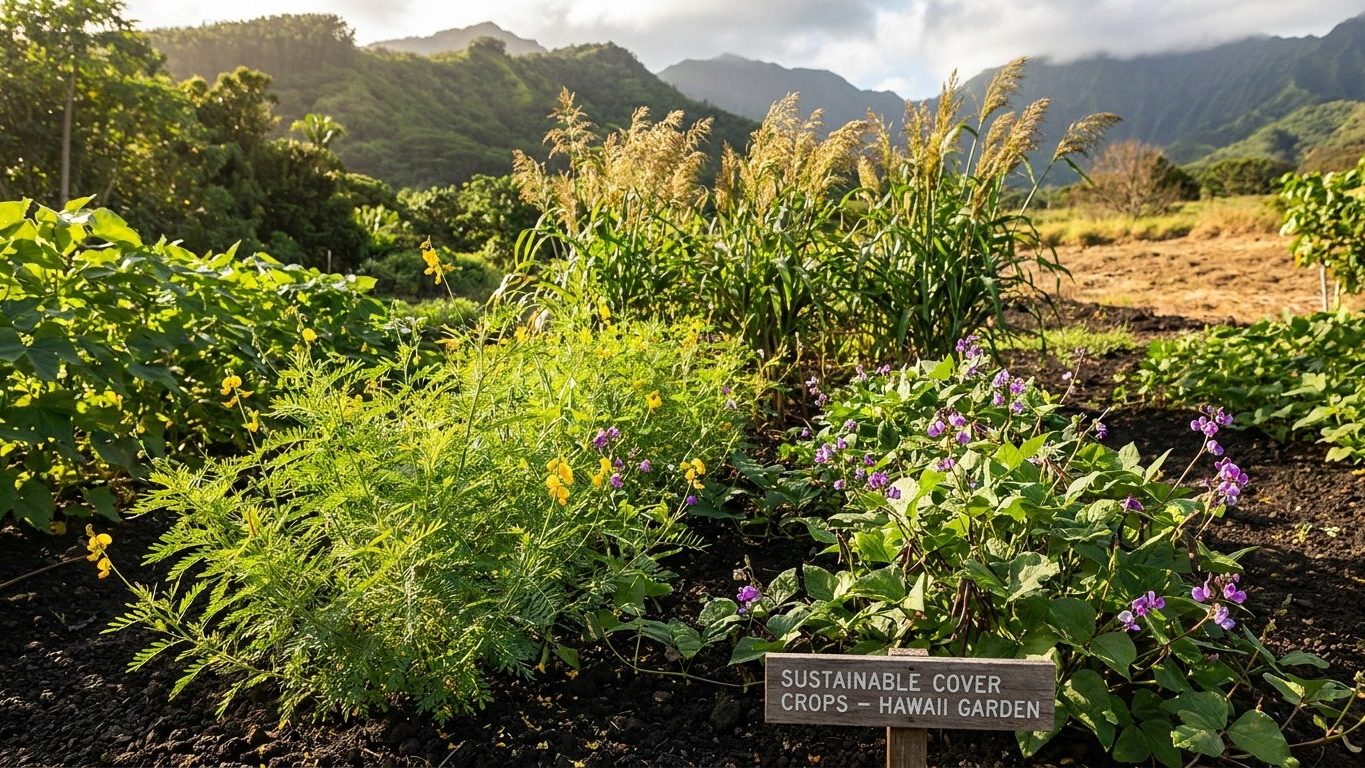

Rhode Island’s frost-free window runs roughly six months, long enough for a full rotation but short enough that timing matters. Winter rye is the workhorse here: it survives the state’s cold snaps without fail, pairs well with hairy vetch for nitrogen, and buckwheat fills the gaps in between. Crimson clover is the gamble.
The short answer for Rhode Island
Rhode Island’s growing conditions sort cover crops into four rough categories, and which one fits depends on what job you need done and when. Cereal rye (often called winter rye) is the default choice for anyone overwintering a garden bed. It germinates in cool soil, keeps growing after most other plants have quit, and shrugs off a coldest-month average minimum of 22.1°F without a second thought. Cereal rye’s cold tolerance goes well below anything Rhode Island’s winter throws at it, which is why extension agents across New England lean on it so heavily.
Hairy vetch is the legume partner most gardeners pair with rye. It fixes nitrogen, tolerates the same cold, and its vining habit works well scrambling up through rye stubble. Field peas and oats serve a different purpose: sown in late summer, they grow fast, then winterkill on their own once temperatures drop, leaving a dead mulch that’s easy to till or push aside in spring without wrestling a living root mass.
For the warm months, buckwheat is the quick fix. It germinates in days, blooms in about a month, and can be mowed before it sets seed, then reseeded for a second flush. Given Rhode Island’s frost-free stretch, roughly from the second week of April to the last week of October at the reference station, there’s enough season for two buckwheat cycles if you’re rotating out an early vegetable bed.
Crimson clover sits in a gray zone. It’s a fine nitrogen-fixer and a favorite in warmer states, but its winter survival in Rhode Island is inconsistent, which the next section covers in more detail.
If you take one thing from this page, it’s this: sow winter rye by mid-October for reliable fall establishment before the ground cools past the point of good root development.
What will not work here
Warm-climate legumes bred for mild winters are the first casualty. Sunn hemp and cowpeas grow beautifully through a Rhode Island summer, but neither is meant to overwinter here, and gardeners who try to leave them in the ground past the first fall frost window (October 24 to November 3 at the reference station) are wasting seed. These are summer-only players, not year-round cover.
Crimson clover’s failure mode is subtler. It’s marketed as winter-hardy, and in zone 7b it often is. But Rhode Island’s hardiness range runs from 6a to 7b, and in the colder pockets, a hard cold snap during the coldest month can push past what crimson clover’s roots tolerate, even when the seasonal average minimum sits at a survivable 22.1°F. Averages hide the outlier night that kills the stand. Gardeners who plant crimson clover as their sole nitrogen source and skip a backup often find bare, dead patches by March.
Slow growers run out of season
Sorghum-sudangrass and other biomass-heavy summer covers need a long, hot stretch to reach their full height and root depth, often 90 days or more of consistently warm soil. Sown late in a Rhode Island July, they’re often still short and thin when the first fall frost arrives, delivering a fraction of the organic matter they’d produce further south. If you want that kind of biomass crop, it has to go in by early summer, not after a mid-season harvest.
Humidity punishes tight spacing
Rhode Island summers run humid, and cover crop stands sown at seed-packet-minimum spacing, particularly dense clover or vetch, are more prone to powdery mildew and other fungal issues than the same crop grown with extra air movement. Widening rows or thinning a too-thick stand isn’t just tidiness. It’s the difference between a cover crop that survives to bloom and one that collapses in a wet August.
What changes across Rhode Island
Rhode Island is small, but it isn’t one climate. The USDA hardiness range for the state spans 6a to 7b, and that spread is wide enough to change which cover crops are a safe bet and which are a gamble, depending on where in the state a garden sits. There’s no single answer for “will crimson clover survive the winter here,” because the honest answer depends on which end of that range a garden falls into.
Coastal areas and the islands, moderated by the ocean, tend to sit at the warmer end of that range, closer to 7a or 7b. Inland and northern parts of the state, further from the water’s tempering effect, run colder and land closer to 6a. That difference shows up directly in what survives the winter: a crimson clover stand that overwinters reliably near the coast may winterkill entirely a few dozen miles inland during the same season, even though both gardens are technically “Rhode Island.”
Frost timing shifts with that same geography. Coastal gardens generally see their first fall frost arrive later than inland ones, stretching the window available for a second buckwheat cycle or for hairy vetch to establish real root mass before cold sets in. Inland gardens working with a shorter effective season should treat the earlier end of any fall planting window as their real deadline, not the later end.
None of this is something to guess at from a state-level map. The USDA Plant Hardiness Zone Map lets you check the specific zone for a given address, and that single lookup does more to refine a cover crop choice than anything else on this page.
Where to check this for your own county
This page describes Rhode Island in general terms, built from statewide climate normals and one reference weather station. That’s useful for a first pass, but it isn’t a substitute for county-level guidance, and the state’s own agricultural experts will always beat a general overview like this one. The University of Rhode Island Cooperative Extension is the source to check next: https://web.uri.edu/coopext/.
Once there, look specifically for two things. First, a county or regional planting calendar, if one is published, since that will reflect local frost timing than the statewide averages cited here. Second, look for any variety trial results or recommended cultivar lists for cover crops. Extension programs frequently test cover crop varieties, including different rye, clover, and vetch cultivars, under local soil and weather conditions, and their trial data reflects what actually performed in Rhode Island’s specific soils rather than what performs well nationally.
Extension offices also field direct questions from home gardeners, often through a hotline or a submission form, and a question specific to a county, soil type, or garden setup will get a more precise answer than any general state page can offer. If a recommendation on this page conflicts with something a local extension agent tells you, follow the extension agent. Their advice is built on local trial plots and years of regional data, not a statewide climate average pulled from a single airport weather station.
This kind of resource exists specifically because state-level advice, including this page, has to generalize. A county recommendation accounts for local soil drainage, local microclimate quirks, and years of what has and hasn’t worked nearby. That’s a level of precision no statewide article can match.
Checking this against your own garden
Dates and averages get a gardener close, but the garden itself has the final word. Three simple checks, none requiring anything beyond your own hands and eyes, will tell you more about your specific plot than any calendar.
Start with soil warmth by feel. Cover crop seed, especially legumes like hairy vetch and crimson clover, wants soil that feels cool but not cold and damp to the touch, roughly the temperature of a spring morning rather than a winter one. If the soil still feels clammy and heavy in your hand well into what the calendar says is planting time, your specific spot, whether it’s a shaded yard or a low-lying area that holds cold air, is running behind the regional average, and seed sown too early will simply sit and rot rather than germinate.
Second, watch for the first true leaves on whatever you’ve already got growing nearby, whether it’s early lettuce, weeds, or last year’s volunteer cover crop. True leaves (the second set, not the rounded seed leaves) show up once a plant has real root and shoot momentum, and their timing is a better real-world signal of your garden’s specific pace than a printed date.
Third, if you’re overwintering a legume, check for new growth at the base of the plant in early spring rather than trusting a calendar date to declare it dead. Some stands that look finished after a hard winter push new shoots once the soil actually warms, and pulling a plant too early on the strength of a single cold week can waste a stand that would have recovered on its own.