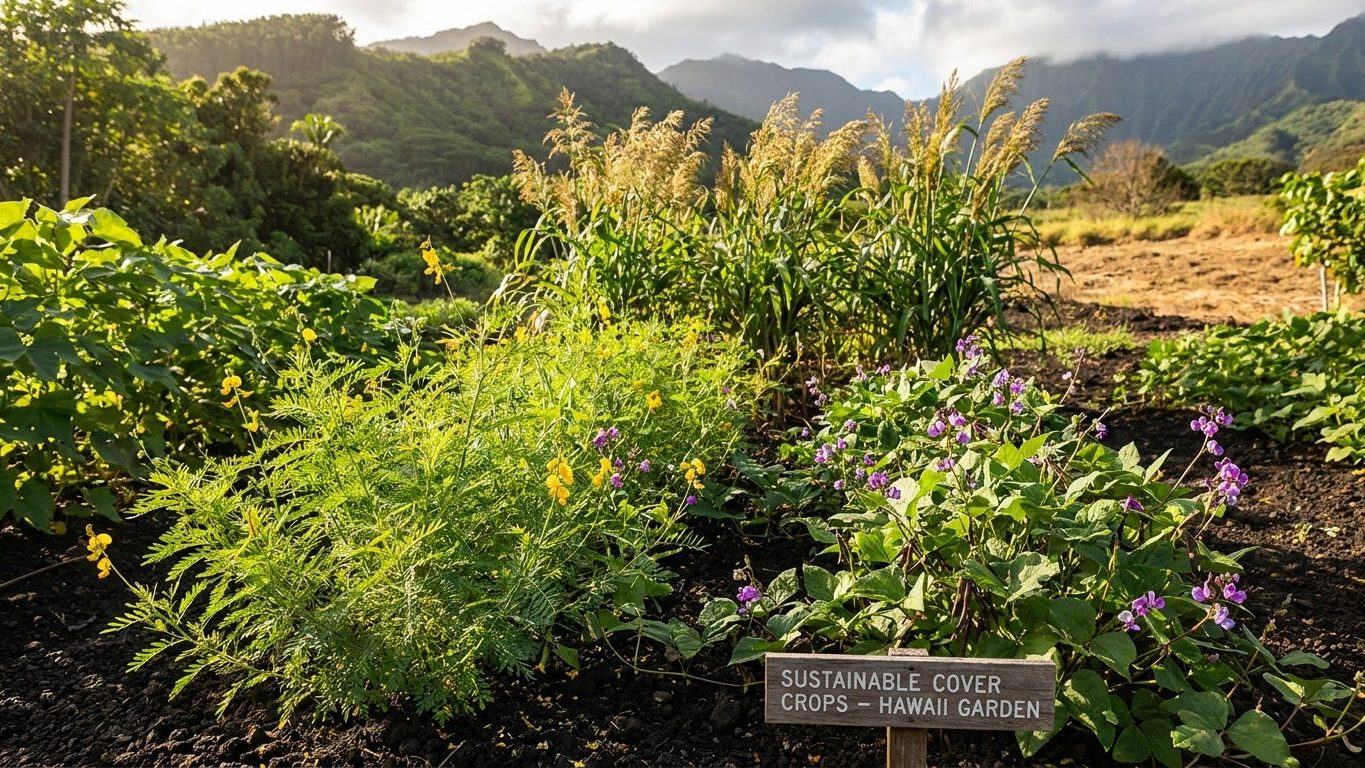

Texas cover crop success comes down to matching the plant to the season length and heat, not to what works in cooler states. In most of the state, cool-season legumes like crimson clover, hairy vetch, and Austrian winter peas carry the nitrogen load from fall through spring, while cereal rye and oats hold soil against wind and heavy rain. Warm months call for cowpeas, sunn hemp, or sorghum-sudangrass instead.
The short answer for Texas
Pick by type, not by brand name on a seed bag. Along the Gulf Coast, using Houston as the reference point, the coldest month averages a mean daily low of 43.7°F. That’s mild enough that cool-season legumes rarely die back on their own, which changes how you manage them later. The last spring freeze at that station runs February 4 to March 1, and the first fall freeze arrives December 1 to December 19, according to NOAA’s 30-year climate normals. That leaves a long frost-free stretch, which is exactly why warm-season options belong in the Texas rotation alongside the winter legumes.
For nitrogen and soil-building through the cool months, crimson clover, hairy vetch, and Austrian winter peas are the standard picks statewide, seeded once fall freeze risk has passed the early window. Cereal rye and oats do the erosion-control job on bare fields over winter, germinating fast and tolerating the occasional cold snap without complaint. Once the frost-free window opens for good, cowpeas and sunn hemp take over as summer legumes, fixing nitrogen while tolerating heat that would stall a clover in its tracks. Sorghum-sudangrass is the biomass workhorse for gardeners or small operations wanting a thick, fast-growing summer cover to chop and drop before fall planting.
The USDA hardiness range for the whole state runs 6a-10a, and the Houston reference sits at the mild end of that spread. That single fact explains why a Texas grower can’t lean on one calendar. A cover crop that dies back cleanly on its own near the coast may survive the winter untouched in the same yard, meaning termination becomes a task you handle instead of one the weather handles for you. Write down February 4 to March 1 as the earliest safe window to think about warm-season seeding near the coast, and adjust inland based on your own frost pattern.
What will not work here
Slow-growing cover crops that need a hard freeze to terminate cleanly are the first casualty of a Texas winter, at least near the Gulf. With the coldest month averaging a 43.7°F daily minimum, a lot of cool-season legumes simply keep growing through what would be a killing frost anywhere colder. Hairy vetch in particular can shrug off a mild winter and turn into a tangled mat by spring, forcing you to mow, crimp, or spray it down instead of letting the season do the work. If your plan depends on winter cold to save you a termination pass, that plan needs a backup near the coast.
Heat is the other failure point, and it cuts the opposite direction. A cool-season legume seeded too close to the frost-free window, when soil temperatures are already climbing, will germinate poorly and bolt or stall once daytime highs push past what clover or peas tolerate. The long frost-free stretch that makes summer legumes possible also means summer heat arrives early and stays late, so a crop that needs weekly moisture through July and August is fighting a losing battle unless someone is out there with a hose on a schedule. Cover crops billed as low-maintenance in seed catalogs written for the Midwest often assume rainfall patterns Texas summers don’t deliver.
Humidity closes the loop. Gulf Coast moisture plus dense planting is a recipe for fungal disease in legumes planted too thick, especially hairy vetch and crimson clover in a wet spring. Wider spacing and good airflow matter more here than the seed packet’s northern-state instructions suggest. Skip weekly hand-watering as your summer plan unless you’re prepared to keep it up through the hottest stretch, or choose a drought-tolerant summer legume like cowpeas instead.
What changes across Texas
Texas is not one garden, and the hardiness range proves it: 6a-10a according to the USDA map, a five-zone spread inside a single state’s borders. The Houston figures used above sit near the mild end of that range, which means a Panhandle grower is working with a genuinely different climate, not just a colder version of the same one. Freezes there arrive months earlier in fall and linger months later in spring compared to the Gulf Coast station cited here, which compresses the entire cool-season window into a much shorter stretch.
That compression changes the calculus for cover crop choice. Where the Gulf Coast can plant Austrian winter peas or clover deep into fall and still get a full cool-season cycle before spring heat, a grower in a colder zone needs the same species seeded earlier to get established roots before frost locks the soil, or needs a hardier cereal grain instead of a tender legume. Hill Country and North Texas fall somewhere in between, with enough winter cold to reliably terminate a cover crop but not so much that fall seeding windows collapse to a few weeks.
Elevation and distance from the coast both matter more than a straight-line map distance would suggest. A county two hundred miles inland can run weeks behind the coast on both ends of the frost season, and even within a single metro area, one reporting station can run two weeks milder than another nearby. None of that is something this page can resolve for an individual reader. The state spans too much ground for one planting date to apply everywhere, and the honest answer is that a Texas-wide recommendation is a starting point, not a final one. Checking a hardiness zone map for your specific location is the next step, not guessing from a regional average.
Where to check this for your own county
Texas A&M AgriLife Extension is the source built for exactly this gap, and it’s reachable at agrilifeextension.tamu.edu. A state-level page like this one can only describe the mechanics: legume types for winter, warm-season options for summer, the general shape of the frost-free window. A county extension office layers your actual local frost dates, soil type, and rainfall pattern on top of that, and that layer is what turns a general answer into a planting decision you can trust.
Once there, look specifically for two things. First, a local planting calendar tied to your county’s frost dates rather than the statewide range, since a county in the Panhandle and a county on the coast are working from entirely different numbers even though they share a state extension service. Second, look for variety trial results or recommended cultivar lists specific to your region, because cover crop breeding has produced strains bred for Gulf humidity resistance or Panhandle cold tolerance that a generic seed catalog won’t flag for you.
A county recommendation beats a state one every time, and that’s not a knock on this page, it’s just how extension systems are built. Look for your county office listing on the AgriLife site before finalizing a planting date, especially if you’re outside the immediate Houston area this page draws its numbers from. The state office can also point you toward the nearest county agent if the website’s county finder doesn’t turn up your area right away, and a phone call often surfaces details a webpage hasn’t gotten around to publishing yet.
Checking this against your own garden
Every date on this page is a regional average, and your own soil will tell you something more specific than any calendar can. Before seeding a warm-season legume, dig a couple inches down and feel the soil with your hand at the same time each morning for a week. Cold, damp soil that doesn’t warm noticeably by mid-morning means the ground hasn’t caught up to the calendar yet, whatever the frost-free date says.
Watch how fast your cool-season legumes push true leaves after germination. A crimson clover or vetch seedling that’s slow to move past its first leaves in what should be favorable fall conditions is signaling that your particular yard runs a few degrees cooler than the regional station this page cites, maybe from shade, elevation, or exposure to wind. That’s useful information for next year’s seeding date, more useful than any generic window.
Last, track what actually survives your coldest nights versus what the coldest-month average predicts. If a legume that’s supposed to persist through a mild Gulf winter gets knocked back hard in your yard, your microclimate is running colder than the 43.7°F reference figure suggests, and that changes your termination timing for next season. Note the exact date your first true leaves appear each year and compare it season to season. Two or three years of that kind of homegrown record will outperform any state average for predicting what your own patch of Texas actually does.