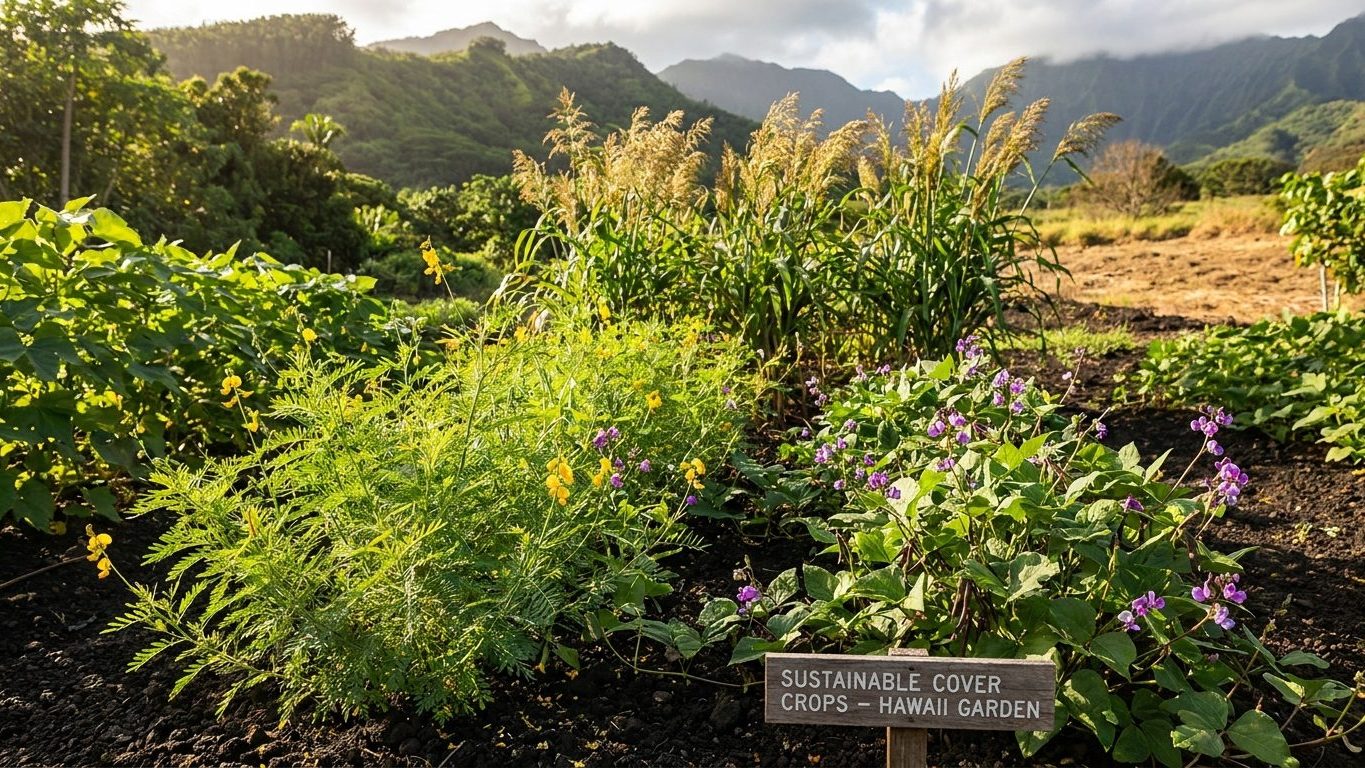

The Best Cover Crops for Washington split hard along the Cascades: west side gardeners plant winter-hardy legumes and cereal grains through a long, mild fall-to-spring window, while east side growers need fast, frost-tolerant covers squeezed into a much shorter, colder season. There’s no single statewide pick.
The short answer for Washington
West of the Cascades, the growing calendar is generous by cover crop standards. The first fall frost in the Seattle area lands somewhere between November 13 and November 30, and the last spring freeze clears out between February 27 and March 18. That gives a fall-sown cover crop something like four to five months in the ground before it needs to be worked back into the soil or terminated ahead of spring planting. Cereal rye, crimson clover, hairy vetch, and winter field peas all thrive in that window because they’re built to keep growing through cool, wet winters rather than sit dormant.
The reason those species work here comes down to one number: the coldest month’s average daily minimum in western Washington sits at 37.1°F. That’s mild. It rarely dips into territory that kills a hardy legume outright, which is why western Washington gardeners can lean on nitrogen-fixing covers that would freeze out in a harsher climate. The tradeoff is germination speed, not survival. Low winter light and cold, saturated soil slow these crops down badly, so a cover crop sown in October won’t look like much until March.
East of the Cascades, the story flips. That region is high desert, with a shorter frost-free season and colder winter extremes than the coastal figures above describe. This page doesn’t carry verified frost-date or winter-minimum figures for the eastern half of the state, and borrowing the western Washington numbers would be misleading. What the season-length pattern tells us in general terms is that eastern growers do better with quicker-maturing, more cold-tolerant options, things like spring-sown field peas, oats, or mustard timed to establish and terminate inside a tighter frost-free stretch, rather than counting on a long, forgiving fall window that simply doesn’t exist there.
So the practical answer is: pick by region first, then by season. West side, favor slow-growing, winter-hardy legumes and grains sown in fall. East side, favor fast-establishing, cold-tolerant covers timed to a shorter window, and confirm the local dates rather than assuming the coastal calendar applies.
What will not work here
Warm-season, heat-loving cover crops are the clearest mismatch for most of Washington. Sunn hemp, cowpea, and sorghum-sudangrass are workhorses in the Southeast and parts of the Midwest, where long, hot summers push them through a full growth cycle in a matter of weeks. Western Washington’s marine climate rarely delivers the sustained heat these species need, and even where summer days get warm, nights stay cool. A cover crop that needs consistent heat to bulk up biomass will limp along here rather than thrive, and gardeners who’ve tried it often report thin, patchy stands that never close a canopy.
On the flip side, tender legumes that can’t handle cold snaps are a poor bet for anyone sowing before winter west of the Cascades. The coldest month’s average minimum of 37.1°F sounds mild, and mostly it is, but that figure is an average, not a floor. A single sharp cold snap below that average can still knock back a marginally hardy species planted too late in fall to establish real cold tolerance. Sowing crimson clover or winter peas in early October, rather than waiting until the ground cools further, gives them time to root before the cold arrives and matters more than the average temperature itself.
Timing failures are just as common as species failures. Sowing a fall cover crop too close to the first fall frost, which lands between November 13 and November 30 on the coast, leaves too little daylight and warmth for seedlings to get established before growth all but stops for the winter. The plants technically survive, but they contribute little organic matter and offer weak weed suppression. East of the Cascades, the opposite mistake shows up: gardeners treating the growing window as if it matches the mild coastal dates, then losing a cover crop to an early, hard freeze that arrives well before what a western Washington calendar would suggest. Neither region tolerates a copy-paste calendar from the other.
What changes across Washington
Washington’s USDA hardiness zones run from 4a to 9a, and that spread alone signals how little a single statewide recommendation can cover. Zone 9a describes the mildest lowland pockets near Seattle and the coast, where winter cold rarely gets severe enough to threaten a hardy cover crop. Zone 4a describes far colder ground, the kind found at higher elevations and in parts of the state where winter extremes plunge much lower than anything the Seattle reference station records. A cover crop that overwinters reliably in one of those zones can die outright in the other, even though both are technically “Washington.”
This matters for cover crop selection because winter survival is exactly what hardiness zones measure. The zone system is built on one variable, the average annual extreme minimum temperature, and it’s the most direct proxy available for whether a species like hairy vetch or crimson clover will make it through to spring rather than needing to be reseeded. A five-zone range inside one state means the “plant this in October and forget it” approach that works in the mildest pockets can fail completely somewhere colder within the same state’s borders.
The practical shift for a reader isn’t picking a different species so much as adjusting timing and hardiness margin. In milder zones, later fall sowing and less cold-hardy species are workable. In colder zones, earlier sowing, hardier species, and sometimes a spring-only planting window instead of a fall one make more sense. Rather than guess which end of that 4a to 9a range applies to a particular yard, the more reliable move is checking the current USDA Plant Hardiness Zone Map directly, since elevation and distance from the coast can shift a zone by a full step or more within a short drive.
Where to check this for your own county
Washington State University’s extension service is the source built for exactly this kind of gap between statewide averages and local conditions. The service is online at https://extension.wsu.edu/, and it’s worth treating as the next stop after this page rather than an optional extra, because county-level advice accounts for elevation, rain shadow effects, and local soil conditions that a state-level article like this one can’t.
Two things are worth hunting down specifically once there. First, a county-level planting calendar, which will translate the general frost-date ranges used here into something closer to an actual local window, especially valuable for anyone east of the Cascades where this page doesn’t have verified figures. Second, look for any list of cover crop varieties that have actually been trialled in the county, since extension offices and their master gardener programs often track which cultivars of clover, vetch, or cereal rye have performed well in local trial plots, information that goes well beyond what a species-level recommendation can offer.
A county recommendation will always beat a state one, simply because it’s built on narrower, more specific conditions. This page describes patterns true across Washington broadly, useful for framing the decision, but not a substitute for what a local extension office knows about a particular valley, county, or soil type. Calling or emailing the county office directly, or searching their site for “cover crops” alongside the county name, tends to surface material that a general web search misses entirely.
Checking this against your own garden
No calendar, state or county, beats direct observation of the actual ground being planted. Three simple checks tell a gardener more about their own microclimate than any published date range.
Soil temperature by feel is the first and most useful. Cold, wet soil that still feels chilly to the touch in early spring, even after the last frost date has technically passed, means germination will lag regardless of what the calendar says. Western Washington’s low winter light and slow-draining soils are exactly why a fall-sown cover crop often looks stalled well into late winter, and waiting for the soil itself to warm, rather than trusting a date alone, prevents wasted seed.
The second check is watching for the first true leaves on any volunteer seedlings or early sprouts already up in the yard, whether from last year’s cover crop or nearby weeds. Their appearance signals that conditions are locally suitable for germination and early growth, a more direct sign than an average frost date pulled from a station potentially miles away and at a different elevation.
Third, tracking the first flush of flowering on an established legume cover crop like clover shows whether the plant is moving toward termination timing, useful for deciding when to till it in ahead of a spring vegetable planting. Watching for that flush, rather than counting days from a sowing date, keeps the timing tied to what the plant is actually doing in that specific patch of ground, which is always the better guide.