
Ohio State University Extension (Ohioline) documents nine garden pests for this territory, but only a handful of them have any business on a parsnip bed. The rest belong to squash vines, cucumber leaves, or landscape shrubs. Knowing which is which saves you from spraying for something that was never going to touch your roots in the first place.
Which pests attack parsnip in Ohio
Ohio State University Extension (Ohioline) lists these documented garden pests for this territory: Aphids, Cutworms, European earwig, Japanese beetle, Slugs, Spotted cucumber beetle, Squash vine borer, Striped cucumber beetle, and Twospotted spider mite. That’s the full roster this source covers here, nothing more, and it isn’t a long list once you sort it by crop.
Three of those nine can be crossed off a parsnip page immediately. The Squash vine borer tunnels into the stems of squash, pumpkin, and other cucurbit vines; a parsnip has no vine for it to enter, so this pest simply has no reason to be there. The Spotted cucumber beetle and Striped cucumber beetle are named for their host family for a reason: cucumbers, squash, and melons are their targets, and they’re built to feed on that foliage, not on a carrot-family root crop. If you see a yellow-and-black striped beetle in the garden, look at your cucumber vines before you worry about the parsnip bed.
The Japanese beetle is a trickier case. It has a famously broad appetite, skeletonizing leaves on roses, grapes, and fruit trees across Ohio through the summer, but it isn’t documented here as a parsnip feeder specifically. Treat any Japanese beetle damage on parsnip foliage as incidental grazing rather than a targeted infestation.
That leaves five pests actually worth watching on parsnip: Aphids, Cutworms, European earwig, Slugs, and Twospotted spider mite. All five feed on foliage or young seedlings, which lines up with how parsnip grows. Because parsnip is sown directly in the ground and takes 14 to 21 days to germinate, per Utah State University Extension, that early window between seeding and a sturdy seedling is exactly when cutworms and slugs do the most damage. The other three (aphids, earwigs, spider mites) work on the leaves throughout the growing season, feeding on the sap and tissue of the foliage that the root depends on to bulk up underground.
None of this means your garden has every one of these five. Ohioline documents them as present in the state; it doesn’t say which ones are active in any particular yard in any particular year.
When each one shows up, and what it does first
Parsnip in this territory is typically seeded in place after the last spring frost, which falls between May 5 and May 15 in zone 6a, according to Ohio State University Extension’s Ohio Gardening Calendar. Add the 14 to 21 day germination window from Utah State University Extension, and the seedling stage runs into late May or early June before true leaves are established. That stretch is when cutworms and slugs matter most.
Cutworms work at night and low to the ground. The first sign is a seedling that was standing yesterday and is now severed at the soil line, sometimes with the top lying nearby untouched. Slugs leave a different signature: ragged holes in the seed leaves or a silvery trail across the soil surface, usually worse after a rainy stretch or in a bed with heavy mulch.
Once the parsnip has a few true leaves and settles into its long root-development phase, which needs the full 100 to 120 days from seeding that Utah State University Extension calls for, the foliage-feeding pests take over. Aphids show up first as small clusters on the underside of leaves or along new growth, and the leaves may curl or look slightly sticky from the honeydew they leave behind. European earwigs feed at night too, leaving irregular chewed edges on leaflets, and they’re often found hiding in the crown of the plant or under mulch during the day if you go looking.
Twospotted spider mites tend to show up later, in hot, dry stretches of the growing season, when the parsnip canopy is fuller. The first sign isn’t a hole or a bite mark, it’s a fine stippling or bronzing across the leaf surface, sometimes with faint webbing on the underside if the infestation has built up. Because parsnip sits in the ground so long, moving toward that fall frost window of October 5 to October 15 before harvest, there’s a long stretch where any of these five could appear, disappear, and reappear depending on the weather that particular week.
Telling the damage apart from everything else
Not every rough-looking parsnip leaf or oddly shaped root is a pest problem, and mixing these up is the most common mistake in a home garden. A forked or split root, for instance, has two separate possible causes here, and they don’t overlap: heavy or stony ground that physically deflects the taproot as it grows, and overwatering that encourages excessive branching. Neither of those is an insect at work, and no pest on the Ohioline list causes forking.
Utah State University Extension notes that parsnip does best in deep, sandy soil, and that heavy soil needs to be double dug before sowing. A garden with dense clay and no soil prep is a far more likely explanation for forked roots than anything chewing underground.
| What you see | Likely cause | What separates it from a pest |
|---|---|---|
| Forked or split root | Heavy/stony soil, or overwatering | No chew marks, no insects present; shape problem starts underground |
| Yellowing, pale leaves | Nutrient deficiency or drought stress | Even, gradual color change across the whole plant rather than isolated bite marks |
| Wilting despite moist soil | Root or crown disease | No visible insects, wilting doesn’t correlate with feeding damage on leaves |
| Torn, ragged leaf edges | Mechanical damage (hail, foot traffic, tools) | Damage pattern is random, not concentrated on new growth or leaf undersides |
Stippled or bronzed leaves can also come from simple heat and drought stress rather than twospotted spider mite feeding, so check the underside of a few leaves with a hand lens before assuming mites are involved; webbing or tiny moving specks confirm it, a dry-looking leaf alone does not. When the cause isn’t obvious after checking soil, water, and the undersides of leaves, that’s the point to call your local extension office rather than guess.
What actually works here, and what is a waste of time
Timing does more work than any treatment on a short-season root crop. Because the vulnerable seedling stage lands in that 14 to 21 day germination window right after the last frost date of May 5 to May 15, a physical barrier placed over the row at seeding, before cutworms or slugs find it, is far more effective than anything applied after the damage shows up. Row cover or a simple cutworm collar around each seedling blocks the problem during the exact stretch when it matters most, and it costs nothing to remove once the plants have hardened off.
Slug control leans the same direction: reducing hiding spots (thick mulch pulled back from the stem, debris cleared from the bed edge) does more over a season than any single application aimed at slugs already present. Hand-picking earwigs and slugs in the evening, when they’re actively feeding, also works better than daytime scouting, since both hide during the day.
Late-season pests like aphids and spider mites respond better to consistent watering than to anything else, since drought-stressed plants draw both. A steady watering schedule through the hot stretch of the growing season keeps the foliage less attractive to spider mites in particular, which build up fastest on stressed plants.
What doesn’t work well: treating for Japanese beetle, cucumber beetles, or squash vine borer on a parsnip bed. None of those are documented parsnip feeders here, and spending time or material on them is effort misplaced. It’s also not worth trying to rescue a forked root once it’s grown that way; the fix is soil preparation before the next sowing, not an in-season treatment. This site doesn’t recommend specific products or active ingredients, since what’s labeled and legal for use on parsnip changes and varies by state. That question goes to your local extension office, which knows current registrations for Ohio.
Where to check this for your own county
Everything above comes from Ohio State University Extension (Ohioline), which documents pests at the state level. That’s a useful baseline, but it isn’t a guarantee about what’s active in any one county in a given year. Pest pressure shifts with local weather, soil, and what’s growing nearby, so a county with heavy slug pressure one season might see almost none the next.
The most useful next move is contacting your county’s OSU Extension office directly. Extension offices track local pest reports, can help confirm whether damage in your garden matches one of the five pests that actually feed on parsnip, and know what’s currently registered for use in Ohio if a treatment becomes necessary. A photo of the damage, a description of when it appeared, and a rough timeline relative to your seeding date give the office enough to work with.
Bring the calendar with you when you call: note whether the damage started near germination (pointing toward cutworms or slugs) or later in the season (pointing toward aphids, earwigs, or spider mites). That single detail, combined with what the office already knows about pest activity in your county this year, narrows the question faster than a description of the damage alone.
Common questions
Does a mild winter in Ohio mean fewer pests on parsnip next year?
Not necessarily. The pest list documented by Ohio State University Extension reflects species established in the state, and winter severity affects overwintering survival differently for each one; that detail isn’t broken out in the source used for this page.
Can I leave parsnip in the ground over winter to sweeten it?
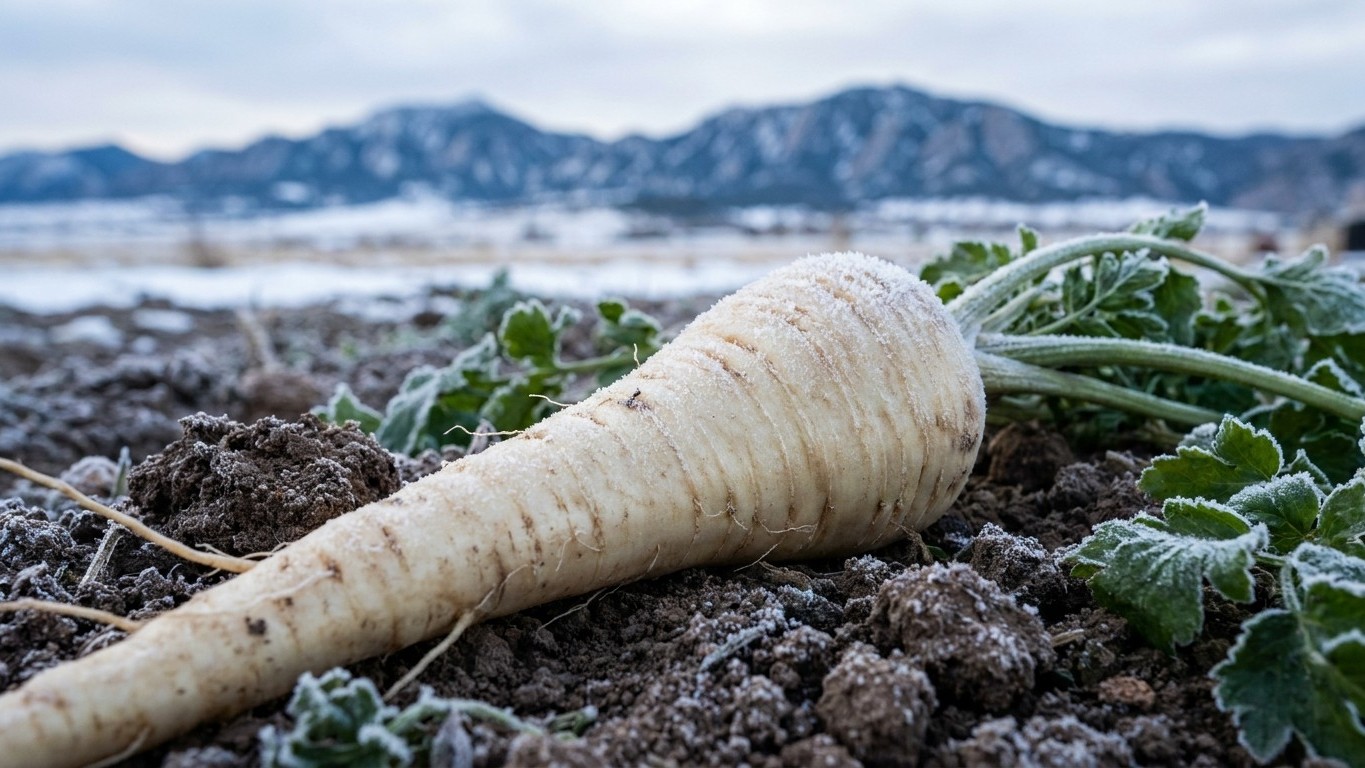
Utah State University Extension notes that parsnip tastes best after several weeks of cool, frosty weather, since that exposure converts stored starch to sugar. That’s a matter of frost exposure, not hardiness zone, so check with your local extension office on timing for lifting roots before hard ground sets in.
Why did my parsnip seedlings disappear right after they came up?
A seedling cut off at the soil line with no other damage nearby is the classic sign of cutworm feeding, which happens most often in that first stretch after germination.
Is a forked parsnip root safe to eat?
That’s a food-safety and preparation question outside what this page covers; a forked root is a shape issue from soil conditions or watering, not a pest problem, but check with your local extension office if you have concerns.