
Summer squash in Kansas signals harvest through size and skin, not the calendar: pick zucchini and yellow squash at 6 to 8 inches, when a fingernail slides through the skin without resistance. Locally, that usually lands sometime between early July and mid-October, but the plant decides the day, not the almanac.
When summer squash are ready in Kansas
The plant tells you before the weather does. A summer squash fruit that’s still glossy, with skin soft enough to dent under light thumb pressure, is at its peak. Wait for a dull, hard rind and you’ve grown a winter squash by accident, tough, seedy, and past its best use in a skillet.
The signal to watch
Size matters more than color here. Zucchini and yellow crookneck are best picked young, before the seeds inside toughen. Let one slip past you to baseball-bat size and the plant reads that as “mission accomplished,” slowing new fruit set. That’s the mechanism behind the old advice to check plants daily during peak season: a single overlooked squash can cost you a week of production.
The Kansas calendar
Timing starts with frost. At the Wichita reference station, NOAA’s 1991-2020 climate normals put the last spring freeze between April 4 and April 18, and the first fall freeze between October 23 and November 2. Gardeners typically wait until soil has warmed past that spring window before direct-seeding squash, and Clemson Extension notes fruit is generally ready to harvest about 55 days after planting. Run that math from a mid-May planting and first harvests tend to land in early July, continuing in flushes through the first fall freeze. That gives most Kansas gardens a working window of early July through mid-October. Suburban and rural yards away from the airport station often see frost arrive earlier in fall and linger later in spring, sometimes by one to two weeks, so treat this as a starting point and confirm against your own county’s typical dates.
Keeping them, and for how long
Summer squash does not store, and that’s the real answer here. Clemson Cooperative Extension’s Home & Garden Information Center states it plainly: summer squash can be harvested about 55 days after planting, and should be kept “in a plastic bag in the refrigerator for up to 1 week.” That’s it. There’s no cellar trick, no root-cellar temperature range, no six-month stretch like you’d get with butternut or acorn squash.
What Clemson’s numbers actually say
That one-week figure is a ceiling, not a guarantee. It assumes squash picked at the right size, unbruised, and refrigerated promptly, conditions a Kansas kitchen in late July doesn’t always deliver when squash sits on a counter after a hot afternoon of picking. Treat up to 1 week as the best-case outcome, and expect softer, wetter squash to go downhill faster than that.
Why freezing beats waiting
Because the fridge clock runs out fast, a real glut (and Kansas gardens produce one most summers) has to be handled by freezing or preserving, not storage. Shredding and freezing squash for winter soups and breads, or pickling it, are the standard ways extension services describe getting ahead of a plant that keeps producing faster than a household can eat it fresh. Waiting for “later” isn’t a storage plan with this crop; it’s a way to end up composting a bag of mush.
Where in the house that actually is
A domestic refrigerator crisper drawer is the closest thing a Kansas home has to what summer squash wants, but it’s not a perfect match. Standard fridge temperatures run around 35 to 40°F, colder than squash really prefers, and that chill can show up as pitting or soft spots on the skin within days. It’s still the best option in the house, just not a forgiving one.
The fridge is the closest match
Skip the pantry counter entirely once summer heat sets in. With the Wichita station averaging 57.6 days a year at or above 90°F, a kitchen counter in July is closer to a warming tray than storage. A garage or unheated porch isn’t reliable either, since it swings with outdoor temperatures rather than holding steady. The crisper drawer, loosely bagged with a little ventilation so condensation doesn’t build up, is where squash holds longest in a typical Kansas house.
What the garage and counter get wrong
The fix costs nothing but a few minutes: check your fridge’s actual temperature with a stand-alone thermometer rather than trusting the dial, since many home fridges run several degrees colder or warmer than their setting claims. A crisper running near freezing will chill-damage squash just as fast as a hot counter will rot it, just by a different route.
What goes wrong here
Three climate-driven failures show up again and again in Kansas gardens growing summer squash. Heat load is the first: with nearly 58 days a year above 90°F, squash left on the vine even a day or two past ready turns tough and bland fast, and heat-stressed plants are more vulnerable to insect damage generally.
Heat, pests, and the picking trap
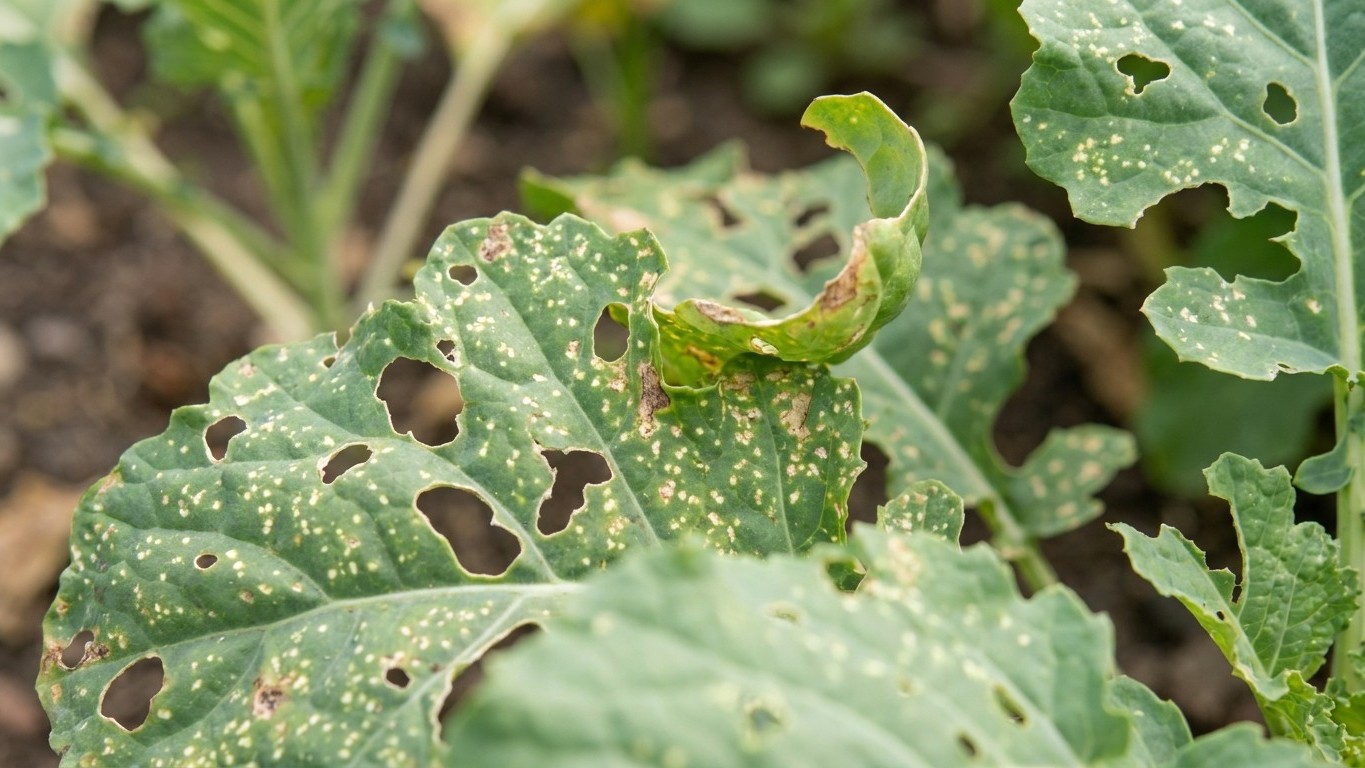
The second failure is pest pressure specific to this crop. K-State Research and Extension documents both squash bug (Anasa tristis) and squash vine borer as pests affecting this territory, and either can take down a healthy-looking plant within days, wilting from the crown outward as the borer tunnels the stem or the bugs drain sap from leaves. Scouting the base of plants weekly for egg clusters and borer entry holes catches both before they’re unmanageable.
The third failure is the glut itself, and it’s largely self-inflicted. Because the plant slows fruit production once a squash matures on the vine, skipping a few days of picking during peak season doesn’t just risk oversized, woody fruit, it throttles the whole plant’s output. Picking every day or two through July and August is what keeps a squash plant producing steadily instead of dumping ten pounds of oversized zucchini on you at once, followed by a slow, disappointing trickle for the rest of the season.