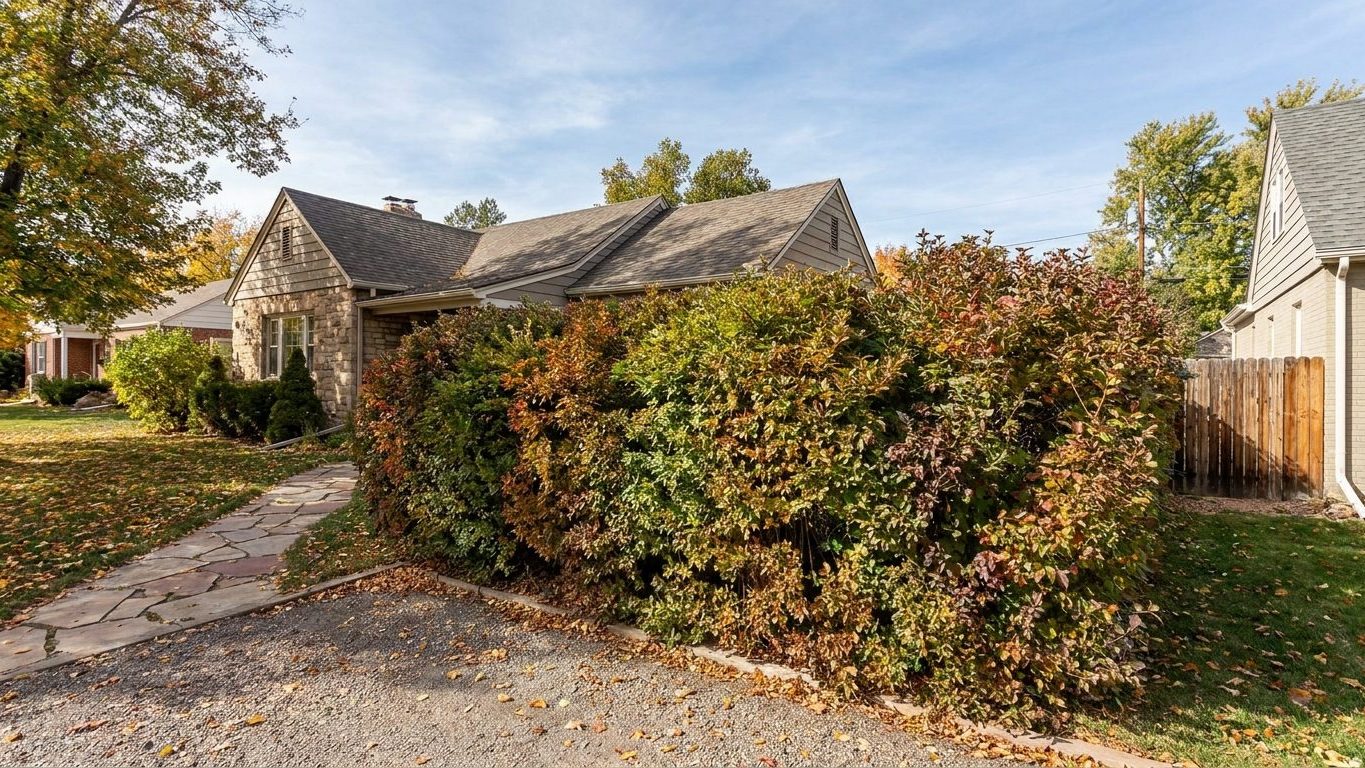

Oklahoma has no statewide hedge height limit. There’s no statute in the Oklahoma Revised Statutes that caps how tall a hedge can grow, no state agency that enforces one, and no single number that applies from Broken Bow to the Panhandle. Height is decided city by city, through municipal zoning and fence ordinances, which means your actual limit depends entirely on which town, or which county, you live in.
There is no Oklahoma hedge height law
That gap surprises a lot of homeowners, because it’s easy to assume that something as basic as “how tall can my hedge get” would be settled at the state level, the same way speed limits or property tax rates are. It isn’t. Oklahoma’s legislature has never passed a general statute regulating hedge or living-fence height on private residential property. Search the state code and you’ll find plenty about property lines, boundary disputes, and agricultural fencing between farms, but nothing that tells a suburban homeowner in Tulsa or Norman how many feet a privet or arborvitae hedge is allowed to reach.
Instead, the authority to regulate hedge and fence height sits with municipal governments, under their zoning codes. This is standard across the country, not unique to Oklahoma. Cities write their own rules because local conditions vary so much: a dense historic neighborhood near downtown Oklahoma City has different sightline and setback concerns than a large-lot subdivision on the edge of Edmond or a rural unincorporated stretch of county land. Zoning boards tailor height limits, setback requirements, and corner-lot rules to match those conditions, and they revise them independently of each other. Two towns twenty miles apart can have completely different numbers, or one might regulate hedges explicitly while the other says nothing at all.
This is also exactly where a lot of online advice goes wrong. Search around and you’ll find plenty of sites confidently naming “the Oklahoma hedge law” with a specific height, usually 4 feet in front yards and 6 feet in back yards. Those numbers aren’t fabricated out of nowhere; they tend to be the fence-height defaults commonly used in a lot of American zoning codes, treated as if they were state law. But that’s a leap the sources don’t support. Those figures might match your city’s ordinance. They might not. Presenting them as a uniform Oklahoma rule is the mistake to avoid, and it’s the exact reason a page like this one exists: to point you toward your actual local rule instead of a plausible-sounding guess.
What this means practically is that the search “hedge height law Oklahoma” doesn’t have a single correct answer, and any resource that gives you one number for the whole state should be treated with suspicion. The useful move isn’t memorizing a figure. It’s learning where your city keeps that figure, and how to read it once you find it.
How to find the rule that actually applies to you
Municipal codes in the United States are almost always published online, and most of them are hosted by one of three publishers: Municode, at library.municode.com, American Legal Publishing, at codelibrary.amlegal.com, or eCode360. If you search your city’s name along with “municipal code,” one of these three will usually turn up in the first few results. Oklahoma cities are no exception. Once you land on your city’s code page, the search bar inside the platform is more reliable than a general web search, because it lets you search the actual legal text rather than someone’s summary of it.
Where in the code to look
The rule you want almost never lives in a section labeled “hedges.” It’s usually buried inside the zoning ordinance, which is typically a separate chapter or title from the general municipal code. Within zoning, look for a section on “fences” or “accessory structures.” Height limits for boundary features, whether built or planted, tend to get grouped together there, organized by zoning district: residential, commercial, agricultural, and so on. A single city can have different hedge and fence rules for different districts, so make sure you’re reading the section that matches your property’s zoning, not just the first fence rule you find.
The word that matters most
Read carefully for how the ordinance defines “fence.” Many municipal codes regulate fences as built structures, meaning wood, vinyl, chain-link, wrought iron, and treat living hedges as something separate, sometimes under landscaping or screening rules, sometimes not addressed at all. If your city’s code only talks about “fences” as constructed barriers and never mentions vegetation, a tall hedge might technically fall outside that section entirely, which could mean either no height limit applies to it, or that it’s covered by a completely different rule about sight obstructions or nuisance vegetation. Don’t assume the fence-height number automatically applies to your boundary hedge just because it functions the same way in your yard.
If you can’t find the answer after searching the online code, call your city’s planning or zoning department directly. Most Oklahoma municipalities, even small ones, have a planning office or a building inspector’s office that fields exactly this kind of question, and staff there can usually tell you the applicable height limit and setback in under five minutes. Keep a note of who you spoke with and when, in case the question ever becomes a dispute with a neighbor.
The branches that cross the line
One rule shows up in nearly every jurisdiction, even ones with no hedge ordinance at all: the sight triangle at intersections and driveways. This is a safety rule, not a landscaping rule, and it exists specifically so drivers can see cross traffic, pedestrians, and cyclists before pulling out. At a corner lot, or where a driveway meets a street, most municipal codes limit how tall anything, hedge, fence, sign, or parked vehicle, can be within a defined triangular area near the intersection. That limit is almost always lower than the general fence or hedge height allowed elsewhere on the property, sometimes dramatically so. A hedge that’s perfectly legal along a side yard can still be a code violation, and a real safety hazard, if it grows up inside a corner sight triangle.
If your property sits on a corner or has a hedge near a driveway apron, this is the rule most likely to affect you regardless of what your city says about hedges in general. It’s worth checking even in towns that appear to have no hedge-specific ordinance at all, because sight-triangle rules are usually filed separately, sometimes in the traffic or public works section of the code rather than in zoning.
When a hedge grows onto a neighbor’s side
Height limits are one issue. Branches and roots crossing the property line are a separate one, and here the law generally doesn’t come from a statute at all, it comes from case law, the accumulated rulings courts have made over time. The general principle recognized in most states is that a property owner may trim back branches, roots, or foliage that cross onto their land, up to the boundary line and no further, and generally at their own expense. What they typically cannot do is reach onto the neighbor’s property to cut the plant back, or take action that kills or seriously damages it. This is a widely recognized common-law principle, but it varies in its details from state to state and even case to case, so it should be treated as a general rule of thumb rather than a specific Oklahoma statute with a citation attached.
If a hedge dispute with a neighbor escalates, whether over height, encroachment, or damage from trimming, a local attorney familiar with property law is the right next step, not a general legal article. The principles above explain the shape of the law, not how it applies to a specific fence line, a specific hedge species, or a specific disagreement.
What to check before you plant
The best time to sort all this out is before the hedge goes in the ground, not after it’s eight feet tall and a neighbor is asking questions. A few checks, done in the right order, save a lot of trouble later.
- Confirm your property’s zoning district first, since height and setback rules are usually written per district, not as one blanket citywide number.
- Search your city’s code on Municode, American Legal Publishing, or eCode360, and read the fence and accessory-structure sections in full, noting whether “fence” is defined to include living hedges.
- Check whether your planned hedge location falls within a corner sight triangle or near a driveway, since that limit typically overrides the general height rule.
- Call the planning or zoning department if the code language is ambiguous, and get the answer in terms you can reference later.
- If you’re near a shared boundary, talk to your neighbor about mature height and eventual width before planting, since a species that looks modest at three feet in a nursery pot can reach a very different size in ten years.
It’s also worth checking whether your subdivision has a homeowners association, since HOA covenants frequently impose their own hedge and fence height limits that are stricter than the city’s zoning code, and those are enforced through the HOA rather than the municipality. A hedge can be perfectly legal under city code and still violate an HOA rule, so both need checking separately. None of this requires a lawyer at the planting stage. It just requires reading the actual document your city publishes, rather than trusting a number that circulates online without a source.
Common questions
Is there a maximum hedge height set by Oklahoma state law?
No. Oklahoma has no statewide statute regulating hedge height on private property. Height limits come from municipal zoning ordinances, which differ from city to city, so the same hedge could be compliant in one Oklahoma town and a violation in the next.
Where do I actually find my city’s hedge or fence height rule?
Search your city’s name plus “municipal code,” which typically leads to a page hosted by Municode, American Legal Publishing, or eCode360. Once there, look in the zoning chapter under “fences” or “accessory structures,” checking which zoning district applies to your address.
Does my city’s fence height limit automatically apply to a hedge?
Not necessarily. Some ordinances define “fence” narrowly as a built structure and address hedges separately, or not at all. Read the definitions section of your code carefully before assuming the fence number covers your living hedge.
Can my neighbor cut branches from my hedge that cross onto their property?
Generally yes, up to the boundary line, and typically at their own expense, without reaching onto your side or killing the plant. This is a widely recognized common-law principle rather than a specific Oklahoma statute, and details vary, so a property attorney is the right resource for an actual dispute.