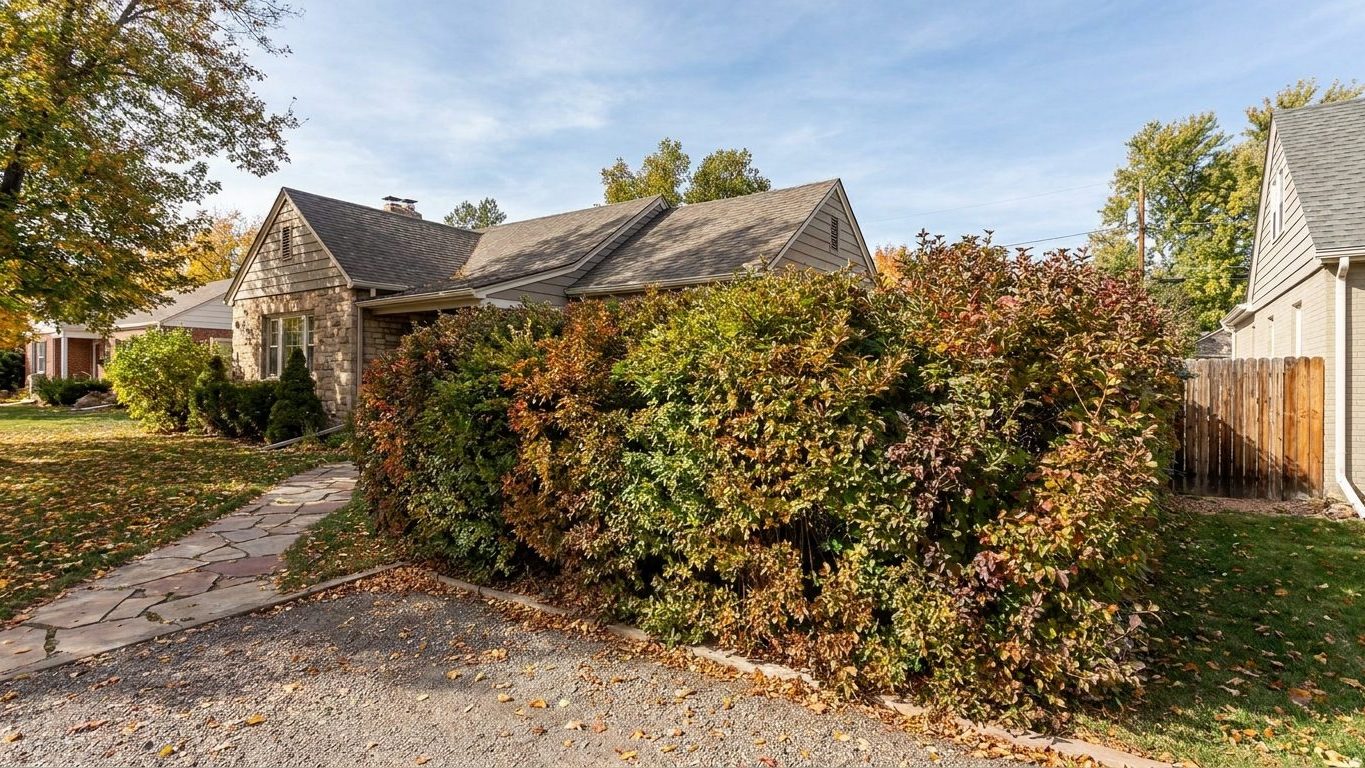

No state law sets a hedge height limit in North Carolina. Height limits come from your town or county’s zoning ordinance, and they differ from one municipality to the next. A hedge that’s perfectly legal in one town might exceed the limit two miles over in the next. The one rule that shows up almost everywhere, regardless of what the general ordinance says, is the sight triangle at corners and driveways, and it usually caps growth far lower than any general fence height.
There is no North Carolina hedge height law
Search “hedge height law North Carolina” and you’ll find pages that hand you a single number, as if the whole state operated under one rule. It doesn’t. North Carolina’s legislature hands zoning authority down to cities, towns, and counties, and each one writes its own code covering setbacks, fences, walls, and sometimes hedges. What counts as too tall in one jurisdiction may be completely unregulated three exits down the interstate.
Why the answer changes by zip code
Zoning is a local exercise almost everywhere in the country, and North Carolina is no exception. A city council or county board adopts its own zoning ordinance, and that document, not the state legislature, decides how tall a front-yard hedge can grow before it needs a variance. The state’s building code applies to structures, and a tall constructed fence sometimes triggers a permit review depending on materials and height. Living plants are a different category, and many municipal codes barely mention them, if at all.
That gap is exactly where the confusion starts. A hedge is not automatically treated as a fence in a zoning ordinance. Some codes define “fence” broadly enough to sweep in living screens; others define it narrowly as a constructed barrier, and leave hedges alone entirely, at least outside of the sight-triangle rule discussed later. Two neighboring towns can reach opposite conclusions using nearly identical language, simply because one added the word “vegetation” to its fence chapter and the other didn’t.
No single city’s ordinance is cited here as “the” North Carolina rule, because none of them are. Citing one town’s six-foot fence limit as if it applied statewide is the exact mistake that pushes so many aggregator pages to the top of search results while giving readers a wrong answer. The honest answer is that your rule lives in your municipal code, not in any statewide statute, and the next section walks through exactly how to pull it up.
How to find the rule that actually applies to you
Since North Carolina leaves this to local government, the fastest path to a real answer is your city or county’s own zoning code, and almost every municipality in the country now publishes that code online through one of three services. Searching your town’s name along with “municipal code” or “zoning ordinance” usually lands you on one of these platforms directly.
| Publisher | Domain | What to search once you’re there |
|---|---|---|
| Municode | library.municode.com | “fence,” “hedge,” “accessory structures,” “sight triangle” |
| American Legal Publishing | codelibrary.amlegal.com | Zoning chapter, definitions section, landscaping subsection |
| eCode360 | ecode360.com | Fence and wall regulations, corner lot standards |
What to look for once you’re in the code
Head straight for the zoning chapter, not the general provisions at the front of the document. Fence and hedge rules almost always sit under a heading like “fences and walls,” “accessory structures,” or occasionally a standalone “landscaping” section. Read the definitions first. If the code defines “fence” to include living screens or hedges, the numeric limit that follows applies to your hedge too. If the definition only covers constructed materials like wood, vinyl, or metal, your hedge may fall outside the ordinance entirely, aside from the sight-triangle requirement.
Reading the code only gets you so far. Call the planning or zoning department directly and ask three specific questions: what’s the maximum hedge or fence height in your zoning district, what does the corner sight triangle require if you’re near an intersection or driveway, and whether any recorded HOA overlay applies to your parcel. That third question matters because a homeowners association’s covenants are a private contract, recorded with the county register of deeds, and they can impose stricter limits than the city ever would. A city planner can tell you the public rule; only your HOA documents or a title search will tell you about the private one.
The branches that cross the line
Height limits are one issue. What happens when a hedge simply grows sideways into a neighbor’s yard is a separate one, and it’s governed by a different body of law entirely. In most states, the guiding principle comes from case law rather than a specific statute: a landowner whose property line is crossed by branches or roots generally has the right to trim that growth back to the boundary, at their own expense, without needing the other owner’s permission.
That right comes with limits worth understanding before anyone reaches for loppers. The trimming has to stop exactly at the property line; stepping onto the neighbor’s side to cut further isn’t covered by this self-help principle. Cutting so aggressively that it kills the hedge or tree can expose the person doing the cutting to a claim for damages, since the right to trim doesn’t extend to destroying someone else’s plant. And because this comes from accumulated court decisions rather than a single tidy statute, the exact boundaries of the rule can shift from state to state, and even from one court decision to the next within the same state.
Talk before you cut
Before trimming anything that crosses a boundary line, a conversation with the neighbor tends to save more time than it costs. Encroachment disputes escalate fast once shears come out first, and a five-minute conversation over the fence line often resolves what a certified letter later would not. If the boundary itself is in question, a survey settles that before anyone starts cutting. And if the disagreement doesn’t resolve informally, that’s the point to loop in the municipality, since some towns separately regulate hedges that overhang a public sidewalk or street even when they say nothing about hedge height generally, or to consult a local attorney if real money or a long-term relationship with a neighbor is at stake.
What to check before you plant
The cheapest time to sort out hedge height rules is before the first shrub goes in the ground, not after it’s four feet taller than the fence line allows. A short checklist covers most of what actually matters:
- Your zoning district’s general fence and hedge height limit, pulled from the municipal code as described above
- The corner sight triangle dimensions if your lot touches an intersection or sits near a driveway, since this limit usually overrides the general height allowance
- Any HOA covenant restrictions recorded against your property, which can be stricter than the city code
- Utility easement locations on your lot, since planting directly over a buried line can create problems well beyond a code violation
- The mature height and spread of the species you’re planting, not just its size at the nursery
That last point trips up more homeowners than any zoning technicality. A hedge planted at eighteen inches doesn’t stay eighteen inches, and many popular screening varieties reach heights within a few years that clear whatever limit the local ordinance sets. Choosing a species based on its mature size, not its container size, avoids a future call from code enforcement or a letter from the HOA architectural committee.
Before digging anywhere near a property line or a utility corridor, calling 811 to have underground lines marked is standard practice nationwide and costs nothing. It won’t tell you the zoning limit, but it prevents a much more expensive mistake than a hedge that grows a foot too tall.
Common questions
Does North Carolina limit fence height the same way as hedges?
No single statute covers either one. Both are regulated locally, and many codes treat constructed fences and living hedges as separate categories with different rules, or no rule at all for hedges specifically. Check your municipal code’s definitions section to see which term your city actually uses.
What is a sight triangle and how tall can plants be there?
A sight triangle is the area near a corner or driveway where nothing, including a hedge, may block a driver’s view of cross traffic. It’s the closest thing to a near-universal rule across municipalities, and its height limit is typically much lower than the general fence or hedge limit elsewhere on the property. The exact dimensions and height are set locally, so confirm them with your city’s planning department.
Can my neighbor cut my hedge if it crosses the property line?
Generally yes, up to the boundary line and at their own expense, under a common law principle recognized in most states. They typically can’t cross onto your side to cut, and can’t cut in a way that kills the hedge outright. Since this varies by state and by court decision, treat it as a general guide rather than a guaranteed outcome, and talk to the neighbor first.
Do HOA rules override city hedge height limits?
An HOA covenant is a private, recorded contract, and it can set stricter limits than the city’s public zoning ordinance. Both can apply to the same property at once, so meeting the city’s limit doesn’t guarantee you’re clear of an HOA restriction, and vice versa. Checking both before planting avoids a conflict down the line.