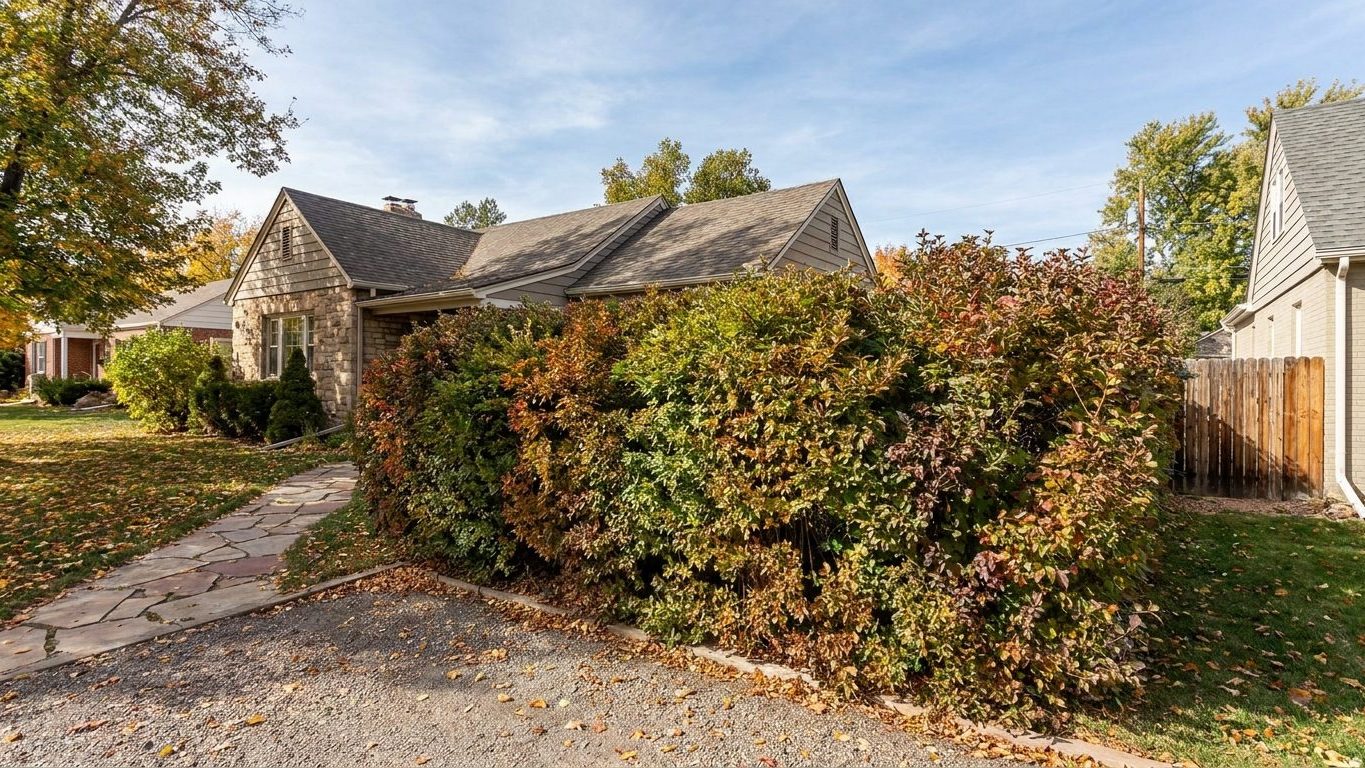

Kansas has no statewide hedge height limit. There is no statute in the Kansas Revised Statutes that caps how tall a hedge, shrub row, or living fence can grow on private property. Height limits come from municipal ordinance instead, which means the real answer depends entirely on which city or township you live in, and sometimes on which side of a street corner your hedge happens to sit.
There is no Kansas hedge height law
That absence is not an oversight. Kansas, like every other state, leaves fence and landscaping regulation to local governments as part of their zoning authority. The state legislature has never passed a general hedge or fence height statute, and it isn’t likely to. Height limits are a land-use question, and land use in the United States is handled at the municipal level, city by city, sometimes block by block within the same city if a neighborhood has its own overlay district.
This surprises a lot of homeowners who assume a “Kansas law” must exist somewhere, the way state law sets speed limits or property tax rates. Fences and hedges don’t work that way. A city council in one town can cap fences at 6 feet in a backyard and 4 feet in a front yard; a neighboring town twenty miles away might allow 8 feet everywhere except within a sight triangle at intersections. Both are perfectly legal, and both are “Kansas law” in the only sense that matters: the ordinance that actually applies where you live.
The confusion gets worse because plenty of gardening sites and generic legal-advice aggregators publish a single number and label it “Kansas hedge law.” That’s simply inaccurate. If a page tells you Kansas hedges are capped at some specific height statewide, it’s either quoting one city’s ordinance and mislabeling it as state law, or it’s inventing a figure that appears nowhere in any actual code. Neither version is going to hold up if a neighbor or a code enforcement officer ever points to the actual text.
Here’s the practical shape of the situation. Kansas counties and cities regulate hedges under their zoning codes, usually in the same section that covers fences, walls, and other “accessory structures.” Some ordinances lump hedges in with fences and apply the same height cap to both. Others treat living plant material as a separate category, sometimes with no numeric limit at all outside of the sight-triangle rule near intersections (more on that below). A few small, unincorporated areas may have no zoning code covering hedges whatsoever, in which case county nuisance ordinances, not height limits, become the operative tool if a hedge becomes a real problem.
So the honest answer to “How High Can a Hedge Be in Kansas” is: it depends on your city’s code, and there’s no shortcut around checking it. The next section walks through exactly how to do that in about ten minutes.
How to find the rule that actually applies to you
Most Kansas municipalities publish their code of ordinances online through one of three services: Municode (library.municode.com), American Legal Publishing (codelibrary.amlegal.com), or eCode360. These aren’t law firms or private databases with restricted access, they’re public hosting platforms that cities pay to keep their ordinances searchable. If your city has digitized its code at all, it’s almost certainly on one of these three.
Search the zoning chapter, not the general index
Once you land on your city’s code, don’t search “hedge” first, search the zoning ordinance’s table of contents. Look for a chapter titled Zoning, Land Use, or Development Code, then look for a subsection called Fences or Accessory Structures. That’s where height limits almost always live, because zoning codes group fences, walls, hedges, and sometimes even mailboxes and satellite dishes together as things that sit on a lot but aren’t the main building.
Within that subsection, read the definitions carefully. This is the step people skip, and it’s the one that actually matters.
Check which word the code uses
A hedge is often not legally a fence, even though it functions like one. Many ordinances define “fence” as a constructed, non-living barrier and then either define “hedge” or “living fence” separately with its own height rule, or don’t mention living plant material at all. If your city’s code only regulates “fences, walls, and similar structures” and never uses the word hedge, shrub, or vegetation, that silence is meaningful. It may mean no numeric height cap applies to your hedge, or it may mean the omission was never tested and nobody’s sure. Either way, don’t assume the fence number automatically covers your boxwoods or arborvitae.
If the search comes up empty or the code reads ambiguously, the fastest fix is a phone call to your city’s planning and zoning department or, in smaller towns, the city clerk’s office. Ask specifically: “Does our zoning code set a height limit for hedges or living fences, and is it the same as the fence limit?” That single question, asked directly to the people who enforce the code, will get you a clearer answer in five minutes than an hour of searching would.
For unincorporated areas, the county planning department is the equivalent contact. Rural Kansas counties vary widely in how much zoning detail they’ve published online, so a phone call is often the only reliable route there.
The branches that cross the line
Even where a city’s code says nothing about hedge height, two rules tend to apply almost everywhere, and both matter more in practice than the general height cap.
The sight triangle at corners and driveways
Nearly every municipal code, regardless of what it says about fence or hedge height in general, includes a sight triangle or “clear vision” requirement at street corners and driveway entrances. Within that triangle, typically measured a set number of feet back from the intersection along each property line, nothing is allowed to block a driver’s line of sight, not a fence, not a parked trailer, and not a hedge. The height allowed inside a sight triangle is almost always far lower than the general fence limit elsewhere on the same lot, sometimes low enough that even a low hedge or ornamental grass can technically violate it if it’s dense enough to obstruct a driver’s view.
This is the rule that trips up the most homeowners, because it’s easy to plant a hedge along a front property line without realizing that the last 15 or 20 feet before a corner fall under a different, stricter standard. If your hedge sits anywhere near an intersection or the end of your driveway where it meets the street, check the sight-triangle section of your code specifically, it’s usually a separate subsection with its own diagram.
When a neighbor’s hedge crosses your property line
Separate from any height rule, there’s a long-standing principle in property law, developed through court decisions rather than written into statute, that a landowner may cut back branches, roots, or foliage that cross onto their property from a neighbor’s tree or hedge. The general shape of this principle, sometimes called the “right of self-help” or “boundary line” rule, is that a neighbor can trim growth up to the property line, at their own expense, but generally can’t cut on the other side of the line and can’t act in a way that kills the plant.
This is a general principle recognized in various forms across states, not a specific Kansas statute, and the exact boundaries (whether you can enter a neighbor’s yard to trim from the far side, what counts as unreasonable damage to the plant) vary by jurisdiction and by the specific facts of a dispute. If a hedge dispute with a neighbor escalates past a friendly conversation, that’s a question for a Kansas-licensed attorney, not a gardening guide, because the answer turns on case law that shifts from one situation to the next.
What to check before you plant
If you’re planning a new hedge line this fall or next spring, the smart move is to check the rule before you plant, not after the hedge is 6 feet tall and someone complains.
- Pull your city’s zoning code from Municode, American Legal Publishing, or eCode360 and read the fence/accessory structure section in full, not just the height number.
- Confirm whether “hedge” or “living fence” is defined separately from “fence,” and note which definition governs your planting location.
- Measure your distance from any corner or driveway apron against the sight-triangle dimensions in the code, since that limit often overrides the general height cap near intersections.
- Call the planning department if anything is unclear, especially for unincorporated county land where online codes may be incomplete or outdated.
- Keep a note of the ordinance section number you relied on, so if a question comes up later you can point to the exact text rather than a memory of a phone call.
None of this takes more than an afternoon, and it’s a lot cheaper than removing or cutting down a mature hedge because it turns out to violate a sight-triangle rule nobody checked five years earlier. Given that hedges take years to establish, the ten minutes spent confirming the local rule before planting is the best return on time you’ll get in this whole process.
Common questions
Is there a Kansas state law that limits fence or hedge height?
No. Kansas has no statewide statute setting a height limit for hedges or fences. Height limits exist only at the municipal or county level, through local zoning ordinances, so the applicable rule depends entirely on where the property is located.
Where do I find my city’s fence and hedge ordinance?
Search for your city’s code of ordinances on Municode (library.municode.com), American Legal Publishing (codelibrary.amlegal.com), or eCode360. Look in the zoning chapter under “fences” or “accessory structures.” If you can’t find it online, call your city’s planning and zoning department directly.
Does the fence height limit automatically apply to my hedge?
Not necessarily. Many municipal codes define “fence” as a built, non-living structure and treat hedges or living fences under a separate definition, sometimes with a different height rule or none at all. Read the definitions section of your local code before assuming the numbers match.
Can my neighbor cut branches from my hedge that hang over their yard?
General property law principles, developed through court cases rather than statute, generally allow a neighbor to trim branches or growth that cross onto their side of the property line, at their own expense, up to the line and no further, without killing the plant. The exact rules vary by jurisdiction and situation, so a real dispute is a matter for a Kansas attorney rather than a general guide.