
Collards can be grown successfully in Montana, but only as a single-season crop timed tightly to the state’s short, cold-bound calendar. Set transplants out once the soil itself has warmed, not the moment frost risk clears, and plan on harvesting hard before the first fall freeze rather than letting the crop stand through winter. Choose fast-maturing types over the slow, large-framed varieties grown farther south, and the window is wide enough for one full harvest, sometimes two lighter ones.
When the soil is warm enough in Montana

The calendar question every Montana gardener asks first is when to put transplants or seed in the ground, and the honest answer starts with frost, not soil. At the Billings reference station, NOAA’s 1991-2020 Climate Normals put the last spring freeze (32°F) between April 29 and May 10, based on the 30-70% probability band. That’s a range, not a promise: in roughly three years out of ten frost lands outside this window, and mountain valleys elsewhere in the state can see a freeze in nearly any month of the year.
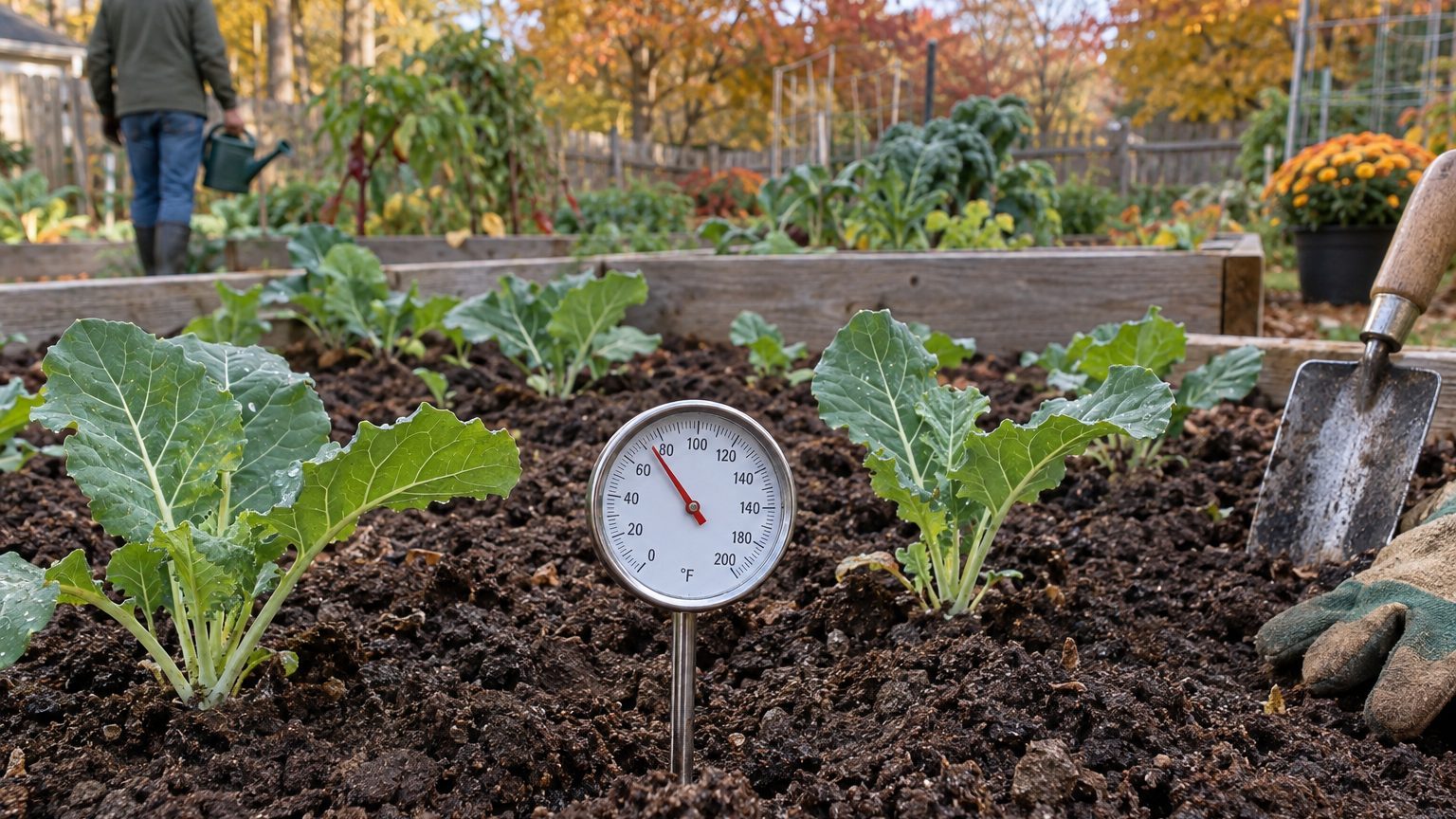
Frost date is only a proxy for the number gardeners actually need, which is soil temperature. Collard seed germinates poorly in cold, wet ground, and transplants set into soil still holding winter’s chill sit and sulk rather than grow. Soil typically takes one to three weeks to warm past that threshold after nighttime air stops freezing, so the practical planting window opens after the last-frost date passes, not on it. Waiting that extra stretch costs little in a Montana season and buys a stand that establishes fast instead of stalling.
Montana’s hardiness range spans USDA zones 3a to 6a statewide (2023 map, built on 1991-2020 normals), and Billings sits toward the milder end of that spread. A gardener in a colder valley should push planting later rather than earlier; a date that works in the Yellowstone valley can be two or three weeks too early in a mountain basin.
Whether to start from seed or transplant depends mostly on how much of that narrow window a gardener is willing to spend on establishment. Transplants set out once frost risk has cleared skip the slow germination phase and gain a head start on leaf growth that matters more here than in a longer southern season. Direct-seeded collards need consistently moist soil to germinate evenly, something Montana’s dry spring winds can undercut quickly.
One note belongs here even on a collards page: turnip and rutabaga are brassicas too, and they share the same pest and disease pressures as collards, kale, cabbage and mustard. A rotation that moves collards into a bed that grew turnips the year before hasn’t rotated anything. Check the site’s brassica rotation guide before laying out next year’s beds.
How long the season lasts here
Subtract the two frost windows and Montana’s freeze-free season comes out to roughly 154 to 156 days, depending on where each year falls within its probability band: as short as April 29 to October 1, or as long as May 10 to October 14. Either way, the growing window runs from late April through mid-October, close to five months.
| Milestone | Date range (NOAA 1991-2020, Billings) |
|---|---|
| Last spring frost (32°F) | April 29 – May 10 |
| First fall frost (32°F) | October 1 – October 14 |
| Freeze-free window | About 154 to 156 days |
A five-month window isn’t long by national standards, but it’s enough to shape how a Montana garden gets planned. It rules out the two-crop rotation gardeners in milder Territories run, where a spring planting is harvested and a second sowing goes in behind it for fall. Collards need roughly two to three months of growth before reaching a useful harvest size, so a Montana bed usually gets one full-season planting rather than two.
That single-shot reality also changes the transplant-versus-seed decision from the first section. Because there’s only one real attempt, direct-seeded collards that germinate unevenly in a cold snap cost more here than they would in a nine-month coastal season, where a poor stand can simply be reseeded. Gardeners who want to use the bed twice without gambling on a second full collard crop can look at the site’s succession sowing guide for staggering a faster-maturing green into the same space once the first frost-tender crop clears.
The narrow window makes transplant timing take priority over nearly everything else in the collard calendar here: a stand set out even ten days late loses proportionally more of the season than the same delay would in a region with a nine-month growing year.
Heat and water in Montana

Two figures usually drive how a Southern gardener plans collards through summer: the count of days above 90°F and total summer rainfall. Neither number is part of the verified climate data behind this page, and Montana’s own character explains why it matters less here anyway. This is high, dry, continental terrain, and summers tend to run short and mild rather than punishing. The crop’s real challenge in this state isn’t heat stress, it’s the opposite end of the thermometer.
The figure that actually decides how a Montana collard bed gets managed is the coldest month’s average nightly low: 17.9°F, from NOAA’s 1991-2020 Climate Normals for Billings. That number separates two entirely different ways of growing this crop. In mild-winter Southern and coastal territories, where the coldest month’s low stays well above freezing, collards become a standing crop, picked leaf by leaf from November into March without ever being pulled. Montana’s winter low sits far below any threshold collards can tolerate in open ground, which rules that approach out across essentially the whole state.
Here, collards are an autumn crop, full stop. Growth continues into fall and the flavor sweetens somewhat under light frost, the way it does with kale, but the crop ends at the first hard freeze rather than easing through winter. That fact, not summer heat, sets the harvest deadline worth tracking: watch the first-fall-frost window from the previous section and bring in the last leaves before a hard freeze locks the ground.
Montana’s dry summer air does carry one advantage worth naming: low humidity keeps the fungal and bacterial pressure that plagues collards in the humid Southeast much lower here. Downy mildew and bacterial leaf spot both need sustained leaf wetness to take hold, which is simply less common on the high plains and mountain valleys that make up most of the state. In the occasional wet, cool pocket where it does show up, the fix is the same one used everywhere: wider spacing for airflow, morning watering instead of evening, and pulling any leaf that shows early spotting rather than waiting to see if it spreads.
None of this changes the rotation rule already noted: any brassica bed, whether it grew turnips, cabbage, mustard or collards last year, needs to sit out at least a season before the next brassica goes in.
Which collards suit Montana
Montana’s climate points toward a specific type of collard rather than a specific variety, and the two shouldn’t be confused. The short freeze-free window, roughly five months as established above, favors the earliest-maturing types available over the slower, larger-framed types bred for a long southern season. With only one real planting attempt in most years, maturity speed matters more here than almost anywhere else on the collard-growing map.
Cold tolerance is the second filter, and it works differently than in milder territories. Because collards here finish their life as an autumn crop rather than standing through winter, the trait worth prioritizing is frost sweetness and a clean finish under light freezes, not the deep winter hardiness that matters farther east. A type bred to hold quality after several light frosts stretches the usable harvest right up to the hard freeze that ends the season.
Disease resistance matters less broadly here than in humid climates, but it isn’t irrelevant, especially in irrigated valley bottoms or an unusually wet summer where leaf wetness lingers longer than usual.
This page won’t name a specific cultivar, and that’s a deliberate choice rather than an oversight. Variety performance depends on trials run in local soil and local seasons, and the only trials that mean anything for a Montana garden are the ones run in Montana. Montana State University Extension publishes the region’s variety trial results and updates them as new types are tested; a reader planning next spring’s bed should check that local trial list before choosing seed rather than lean on a generic national ranking.
The same extension office is the right source for a question this page can’t answer responsibly: which rotation crops pair well with collards in a given county’s soil. Since turnips, rutabagas, cabbage, kale and mustard all share collards’ pest and disease pressures, a local extension agent can flag which of those brassicas are already established nearby and adjust rotation planning accordingly, something no statewide climate page can do reliably.