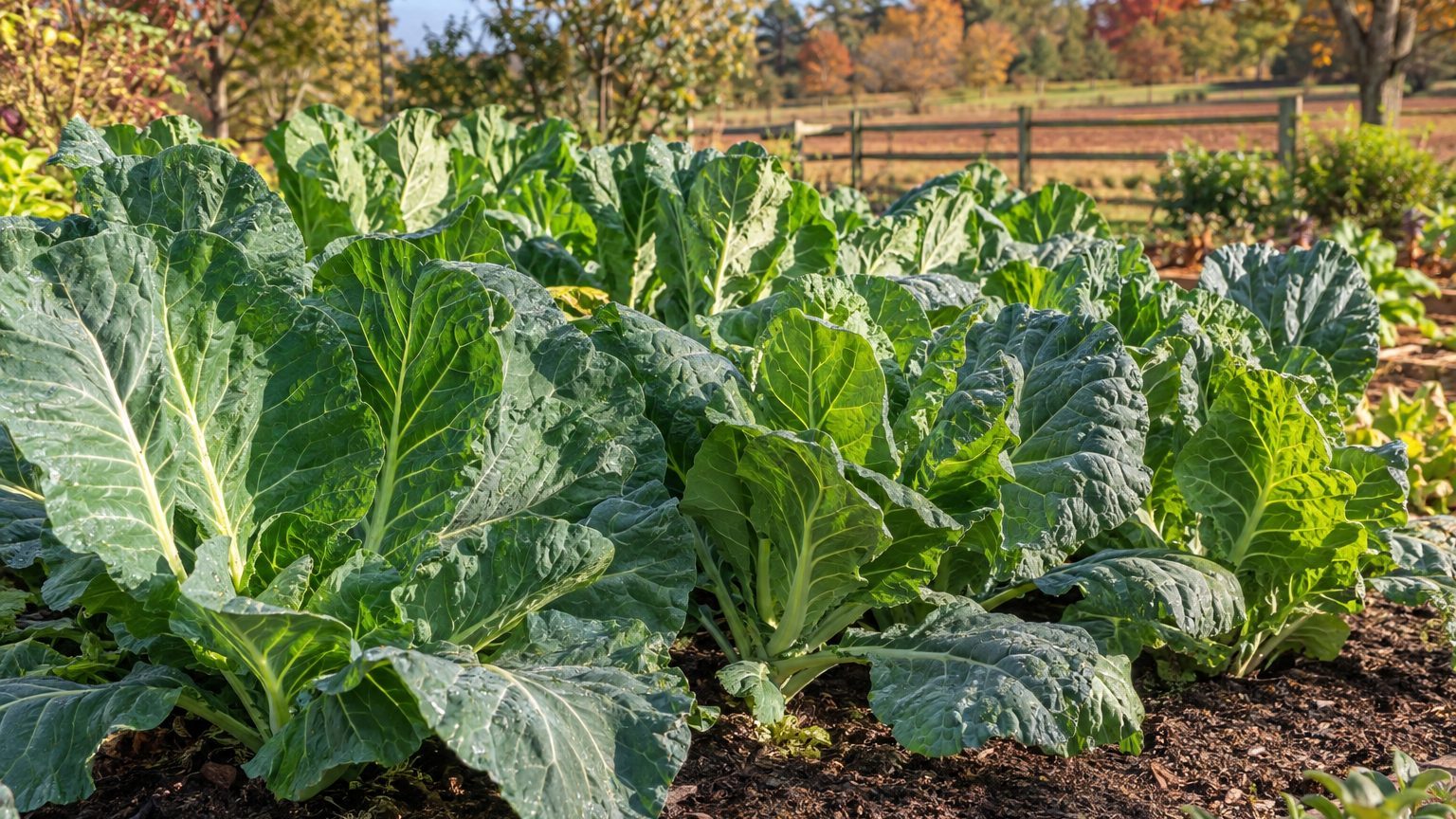

Colorado’s collard growers face two extremes in one state: high, dry plains around Denver with a workable season, and mountain valleys where frost can hit in July. The safest bet across most of the state is a fast, heat-tolerant variety picked for a short window, not the slow-maturing heirlooms that Southern gardeners favor. Match the variety to your elevation first, then worry about flavor.
The short answer for Colorado
At the Denver reference station, the frost-free window runs from the last spring freeze (May 1 to May 11) to the first fall freeze (September 30 to October 12). That gives a plains gardener something like 140 to 165 days to work with, which is enough for almost any collard variety on the market. But that number belongs to Denver’s elevation, not to a mountain town or a western slope valley, where the same calendar can shrink by a month or more on either end.
Given that spread, the decision comes down to type rather than brand name. Fast, compact varieties bred to mature in under 60 days are the ones that forgive a short or unpredictable season: they get a full head of leaves in before a surprise June hailstorm or an early September cold snap wipes out a slower plant still building size. These are the dwarf, curly-leaf types often sold as quick-season or baby-leaf collards.
Slower, larger-leafed varieties, the kind that take 70 to 80 days and produce the big, flat, tender leaves Southern cooks prize, still work fine on the Front Range if they’re started right after the frost-free window opens. They’re a riskier choice anywhere the growing season runs shorter than Denver’s, because there’s no cushion left if a cold spell arrives early or a heat wave in July stalls growth for two weeks.
For most home gardens, a two-track approach solves the type question without guesswork: plant a fast variety for an early spring harvest, then use the extra weeks of a longer summer to try a slower, richer-flavored variety for fall, timed so it finishes before the first freeze arrives. The detailed sowing dates for that approach are laid out separately in When to Plant Collards in Colorado, and the full rundown of technique, from soil prep to harvest, is covered in Growing Collards in Colorado.
What will not work here

The variety that fails most often in Colorado is the one bred for the Deep South’s long, muggy summer. Heirloom types developed around steady rainfall and thick, humid air don’t have any reason to tolerate the dry heat and intense high-altitude sun that defines a Colorado July. Leaves that would stay tender in South Carolina turn tough and bitter here, and plants that would keep pushing new growth through August instead bolt to flower weeks early, chasing what little moisture is left in the soil.
Watering schedules copied from a Southern gardening guide run into the same problem. A once-a-week deep soak works where afternoon thunderstorms top off the soil in between. In Colorado’s arid climate, with humidity often sitting far below what collards evolved to expect, a week between waterings can mean the topsoil is bone dry by day three. The plant responds by shutting down leaf production and putting energy into a flower stalk instead, which ends the harvest early no matter how good the variety is on paper.
Cold tolerance is the other trap. Collards are famous for surviving light frost and even tasting better for it, but that reputation comes with a limit. The coldest month at the Denver reference station averages a daily minimum of 18.4°F, well below the range where an unprotected collard plant keeps producing usable leaves. Treat any advice suggesting collards can be left in the ground through a Colorado winter with real caution: what protects a plant through a mild Southern frost does nothing against a hard freeze at that depth of cold, and a fall crop left too long past the first freeze window will be lost, not just slowed.
Dense spacing borrowed from humid-region guides also backfires here in a different way than it does back East. In the Southeast, tight spacing is sometimes used to shade the soil and hold moisture. In Colorado’s dry air, the same tight spacing mostly just crowds roots competing for water that isn’t there, without the humidity benefit that made the practice worthwhile in the first place.
What changes across Colorado
Colorado is not one growing zone, and treating it as one is where most planting mistakes start. The USDA Plant Hardiness Zone Map places the state anywhere from 3b to 7b, a spread wide enough to separate a garden that barely survives winter lows near minus 35°F from one that rarely sees anything colder than 5°F. That range is built on a single measure, the average annual extreme minimum temperature, so it says nothing directly about summer heat or frost-free length, but it’s still the fastest signal for how much margin a reader actually has.
A gardener at the cooler, higher end of that range should shift the whole calendar earlier and shorter: fast varieties only, transplants started indoors rather than direct-seeded, and a fall crop planned to finish well before the state’s earliest frost dates rather than its latest ones. A gardener toward the warmer end, closer to the Denver reference conditions used throughout this page, has more room to experiment with slower-maturing varieties and a longer fall season.
Altitude complicates this further in a way the hardiness zone number doesn’t fully capture. Mountain towns can sit in a milder USDA zone on paper while still carrying a much shorter frost-free season than a plains location in a colder-rated zone, because zone ratings track winter extremes, not the length of the growing season in between. This page can’t tell an individual reader which zone applies to their own address; the USDA’s interactive map does that, and it’s worth checking before locking in a variety choice based on anything written here.
Where to check this for your own county
Everything above describes Colorado using one reference station and one statewide hardiness range. That’s useful for comparing this state to others in the same regional silo, but it’s not a substitute for county-level advice, and no state-wide page can be. Colorado State University Extension, at extension.colostate.edu, publishes the local planting calendars and variety trial results that this page can’t provide, because those numbers vary too much county to county to compress into one statewide answer.
Two things are worth pulling from a county extension office specifically. First, the local planting calendar: many Colorado counties have their own frost date data collected from a nearer weather station than the Denver reference used here, and that local number can shift a recommended sowing date by a week or more in either direction. Second, the list of collard and green varieties actually trialled in that county’s demonstration gardens, since extension offices test what performs under their specific soil, elevation, and microclimate rather than relying on seed catalog descriptions written for a national audience.
A county recommendation beats a state one every time, and a state page beats nothing, but it’s not the last word. If a county’s own numbers differ from what’s written here, they’re right and this page is not, simply because they’re measuring a smaller, more specific place. That’s the tradeoff of any statewide resource: broad enough to be useful as a starting point, not detailed enough to replace the office that’s actually watching that one county’s weather station.
Checking this against your own garden
Frost dates and hardiness zones describe averages built from decades of data at one station. They don’t know what’s happening in a specific backyard on a specific week, and a reader’s own observations will beat every date on this page when the two disagree.
Soil warmth is the first check, and it doesn’t require a thermometer. Collard seed germinates poorly in cold soil, so before sowing, dig down two or three inches and grab a handful. If it still feels cold and slightly damp in a way that clings rather than crumbles, the soil hasn’t caught up to the calendar yet, no matter what the average frost date says for that week.
Germination timing is the second signal. Under decent conditions, collard seed pushes up its first true leaves in 10 to 14 days. A much slower emergence than that usually means the soil was colder than it felt, or the seed went in deeper than intended, and it’s a fair warning to hold back on the next planting until conditions improve.
The third thing to watch is the earliest sign of a flower stalk starting to form at the center of the plant, sometimes called bolting. It shows up as a slightly raised, tighter cluster of leaves at the crown rather than the flat spread of a healthy collard head. Once that stalk starts, leaf quality drops fast, and its appearance earlier than expected is usually the plant’s own report that the local summer arrived hotter or drier than the season’s averages suggested. That’s a more reliable signal for next year’s planting date than any calendar entry, because it came from the actual bed, not a regional average.