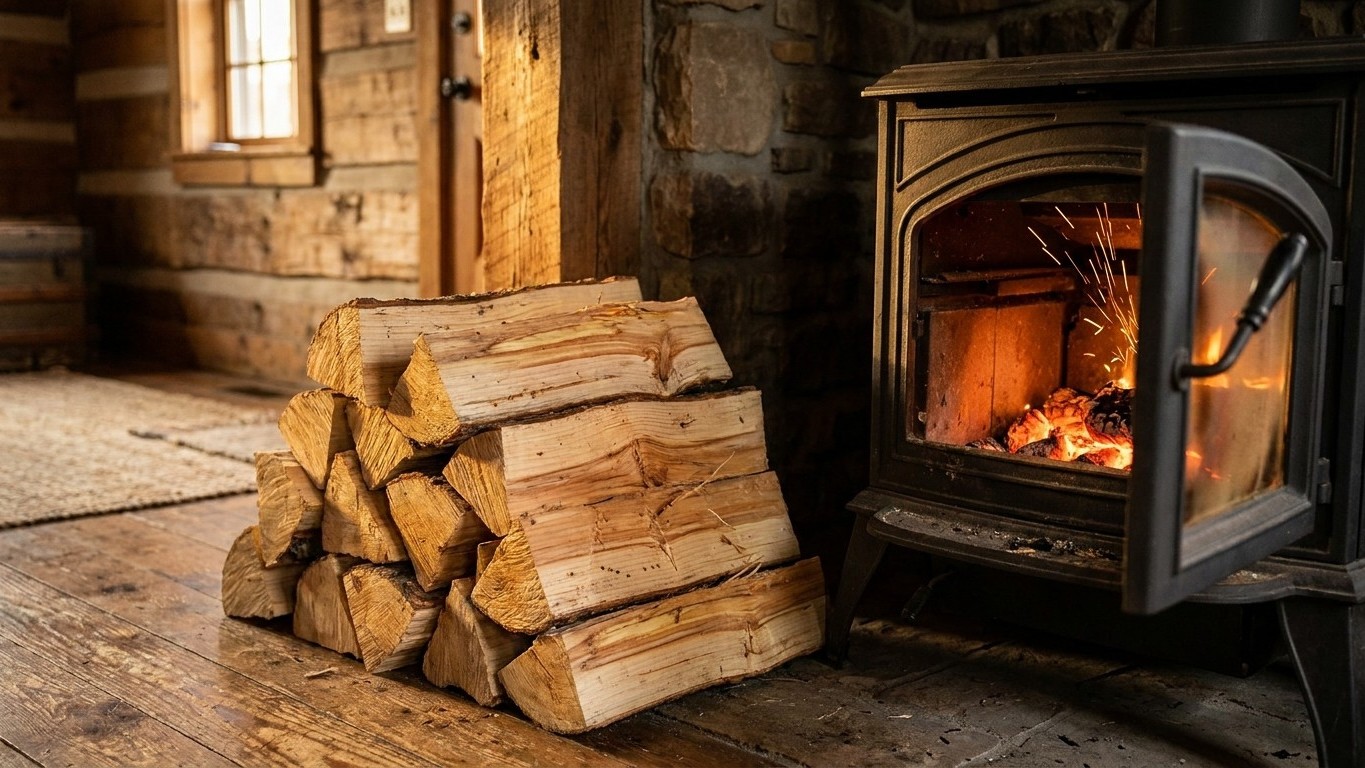

Shortleaf pine burns hot enough for shoulder-season fires and camping, but it’s not the wood you want stacked next to your wood stove for a January overnight burn. It splits easy, lights fast, throws more sparks than oak or hickory, and demands a cleaner chimney schedule because of its resin content. If you’ve got a stand of shortleaf pine on your property in the Ozarks, the Ouachitas, or anywhere from Missouri down through the Gulf states, here’s what that wood actually does once it hits your firebox.
What Kind of Heat Does Shortleaf Pine Produce?

Shortleaf pine (Pinus echinata) is one of the four major southern yellow pines, alongside loblolly, longleaf, and slash pine. Like most softwoods, it falls well below the dense hardwoods on the BTU chart. According to the Missouri Department of Conservation, a full cord of well-seasoned shortleaf pine puts out somewhere in the neighborhood of 19 million BTUs, compared to 24 to 30 million for oak or hickory. That’s a real gap, not a rounding error.
What that means in practice: you’ll load the stove more often. A pine fire that would keep a hardwood burner comfortable for six or seven hours might tap out in three or four, especially once the coal bed thins. The wood itself is light and porous, so it ignites quickly and reaches peak temperature fast, but it also burns through faster than denser species. Homeowners who switch from oak to pine for a season often report needing roughly 30 to 40 percent more volume to heat the same space over the same stretch of cold weather.
Where shortleaf pine earns its keep is in shoulder-season heating, October evenings, early spring mornings, the kind of nights where you want quick warmth without babysitting a fire until midnight. It’s also a strong choice for kindling, since the resin-rich sapwood catches almost instantly even in damp conditions.
Smoke Output and Creosote: The Real Tradeoff
Pine has a reputation problem, and it’s mostly earned. The resin (or pitch) that runs through the wood is exactly what makes it catch fire so easily, but that same resin produces heavier, sootier smoke than hardwood, particularly if the wood hasn’t fully seasoned. Burn shortleaf pine that’s still at 30 percent moisture or higher and you’ll see it: thick gray smoke, a sluggish draft, and a chimney liner coating up faster than it should.
Creosote is the real concern here. It’s the tar-like residue that condenses inside a flue when smoke cools before fully exiting, and resinous softwoods like pine generate it at a noticeably higher rate than oak, ash, or maple. The EPA’s Burn Wise program notes that creosote buildup is a leading cause of chimney fires nationwide, and pine’s higher resin content is a documented contributor when burned unseasoned or in an oxygen-starved, smoldering fire.
The fix isn’t complicated, it’s just a habit. Burn shortleaf pine hot and bright rather than damped down low, season it properly before it ever touches your firebox, and inspect your chimney more often than you would with a strictly hardwood-burning household. If pine makes up a regular part of your fuel mix, an annual inspection isn’t enough; check the flue at midseason too.
Mixing Pine with Hardwood
A lot of experienced burners split the difference: pine for the quick-catch kindling and early evening fire, hardwood loaded on top of the coal bed once things get rolling. This cuts down on the total smoke output over a burn cycle and reduces how much creosote-heavy pine smoke actually makes it up the flue while the fire is still cool and inefficient.
Sparks and Popping: What to Expect Around an Open Flame
Shortleaf pine pops. It’s the resin pockets and trapped moisture inside the wood grain, and when they heat up fast, they vent with a crack and a spark. This is more pronounced with green or partially seasoned pine, where sap hasn’t had time to harden and dry out, but even well-cured pine will throw more sparks than a dense hardwood like hickory or beech.
For an open fire pit or a campfire, that’s mostly a nuisance, something to watch for around bare feet, tents, or dry grass nearby. For an indoor fireplace without a glass door or spark screen, it’s more than a nuisance. A pine log popping in an open masonry fireplace can send an ember a few feet onto a rug or wood floor. If shortleaf pine is going into an open hearth, a screen isn’t optional.
Wood stoves and fireplace inserts with sealed glass doors handle this issue automatically, since the sparks stay contained behind the glass. That’s actually one of the better arguments for burning pine in a modern EPA-certified stove rather than an old-style open fireplace: you get the fast heat and easy ignition without the ember risk.
Seasoning Shortleaf Pine the Right Way
Here’s the one place shortleaf pine has a genuine advantage over hardwood: it dries fast. Because the wood is less dense and more porous, moisture escapes the grain more readily. Where a hardwood like oak can take a full 12 to 24 months to season properly, shortleaf pine often reaches burnable moisture content (below 20 percent) in six to nine months if it’s split and stacked correctly.
Timing the split matters more with pine than with most hardwoods. Cut and split it soon after felling, while the resin is still soft and workable. Wait too long and the pitch hardens, making the rounds gummy and difficult to split by hand or even with a hydraulic splitter. Once split, stack it off the ground on pallets or rails, in a single row if possible, with the top covered but the sides open to airflow. Full sun exposure and a breeze do more for pine than shade ever will.
A cheap moisture meter, the kind sold at most hardware stores for under $30, takes the guesswork out of this. Split a piece, press the probes into the freshly exposed face rather than the bark, and look for a reading under 20 percent before burning. Above that, expect the smoke and creosote problems described earlier to get noticeably worse.
Where Shortleaf Pine Fits in Your Firewood Plan
Shortleaf pine is native across a wide swath of the country, from the Ozark and Ouachita Mountains through the Piedmont region and down into the Gulf Coastal Plain, according to the U.S. Forest Service’s Fire Effects Information System. For homeowners in that range clearing pine from their own land, it’s a practical, no-cost fuel source, just one with a specific role rather than an all-purpose one.
- Kindling and fire-starting, thanks to fast, reliable ignition
- Shoulder-season heating in fall and spring when you need quick warmth, not eight-hour burns
- Outdoor fire pits and campfires, where sparks and smoke matter less
- Mixed loads with hardwood, for a faster-catching fire that still holds heat overnight
What it’s not well suited for is serving as your only cold-weather fuel. If shortleaf pine is what’s available on your property, pairing it with even a modest supply of oak, hickory, or ash for the deep winter months will save you from reloading the stove every two hours during a January cold snap.
One more detail worth knowing: the same resin that makes pine smoky and spark-prone also makes fatwood, the pitch-saturated heartwood found at the base of dead pine limbs, one of the most reliable natural fire starters around. A few slivers of it will catch with a single match even in damp weather, no lighter fluid required. It’s a small upside to a wood species that otherwise asks a little more attention than most.