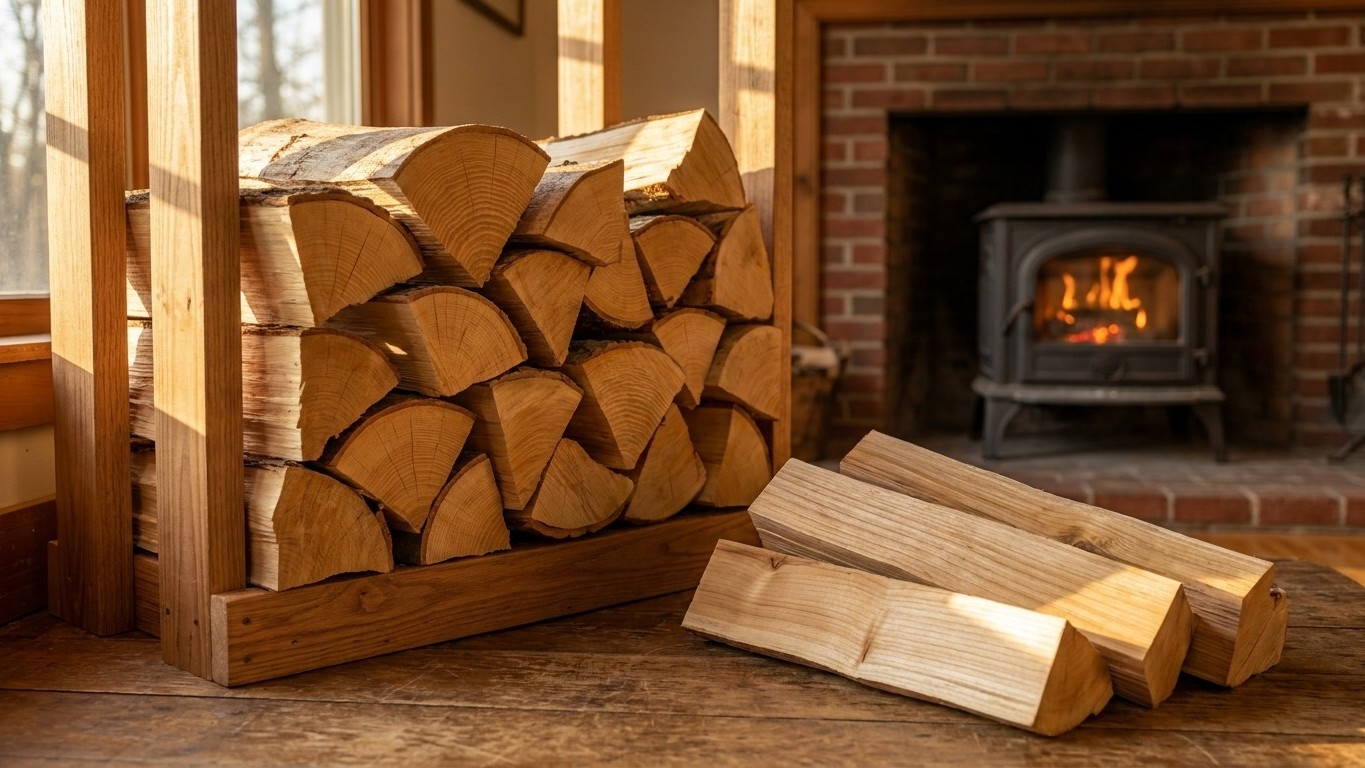

According to SDSU Extension, sugar maple burns hot, clean, and steady, putting out roughly 24 million BTUs per cord once properly seasoned. That puts it in the same league as red oak and ash, well above softwoods like pine, and just behind heavyweights like hickory or black locust. It splits with moderate effort, seasons in about a year, and throws almost no sparks, which makes it a favorite for wood stoves, fireplaces, and outdoor fire pits alike.
Heat Output: How Sugar Maple Stacks Up

Density drives heat output in firewood, and sugar maple (also called hard maple) is dense wood. A cubic foot of dry sugar maple weighs around 44 pounds, similar to white oak and noticeably heavier than red maple or silver maple, its softer cousins. That extra mass translates directly into BTUs per cord: roughly 24 million, compared to about 21 million for red maple and closer to 20 million for silver maple.
Put that number in context. A cord of sugar maple delivers about the same heat as 175 gallons of heating oil or 250 gallons of propane, according to figures used by extension services across the Northeast and Midwest. For a household burning two to three cords a winter, choosing sugar maple over a softer species can mean the difference between refilling the stove every four hours instead of every two.
Compared to the rest of the maple family, sugar maple sits at the top. Silver maple and red maple grow faster and softer, which means shorter burn times and more frequent reloading. Sugar maple’s slow growth (some trees take 40 years to reach harvestable size) is exactly why the wood packs in more energy per log.
Smoke, Sparks, and Creosote Buildup
Once seasoned, sugar maple burns with minimal visible smoke and produces a moderate, manageable flame rather than the aggressive sparking you get from softwoods like pine or spruce. Homeowners who use open fireplaces or outdoor fire pits often name maple as one of the safer species to burn near flammable surfaces, decks, or dry grass, though no wood is entirely spark-free.
The real variable is moisture, not species. Green or unseasoned sugar maple, sitting at 40 percent moisture content or higher, produces thick white smoke and deposits creosote inside the flue at a much faster rate than dry wood. The Environmental Protection Agency notes that burning unseasoned wood is one of the leading causes of chimney fires nationwide, a risk that applies to every hardwood, sugar maple included, if it hasn’t dried long enough.
Dry sugar maple, brought down to 20 percent moisture or less, burns with a clear orange flame and produces a fine, light gray ash rather than heavy soot. That’s the signal chimney sweeps look for during inspections: excessive black, flaky creosote almost always traces back to wood that went into the stove too wet.
Splitting and Seasoning Sugar Maple
How Long It Takes to Season
Freshly cut sugar maple carries somewhere between 40 and 50 percent moisture content. Dropping that to the 20 percent threshold recommended for efficient burning typically takes six to twelve months, depending on climate, log diameter, and how the wood is stacked. In humid Southern states, expect closer to a full year. In drier Western or high-plains regions, six to eight months of good sun and wind exposure can be enough.
Splitting logs into pieces no wider than 4 to 6 inches speeds up the process considerably, since moisture escapes far faster through split faces than through bark. Stacking off the ground on pallets or rails, with rows oriented to catch prevailing wind, and covering only the top (never the sides) keeps airflow moving through the pile instead of trapping humidity underneath a tarp.
Splitting Difficulty
Sugar maple splits with moderate resistance, easier than elm or sweetgum, which are notorious for interlocked grain that fights back against every swing of the maul, but tougher than straight-grained softwoods like pine or fir. Rounds with a diameter under 12 inches usually split cleanly with a standard splitting axe or maul. Larger rounds, especially those with knots near old branch unions, often call for a hydraulic splitter to avoid wasted effort and bruised knuckles.
Cold weather actually helps here. Wood fibers become more brittle when frozen, so many people save their maple rounds for splitting in January or February rather than fighting green, pliable wood in late summer.
Identifying Sugar Maple Firewood
Before it’s split and stacked, sugar maple can be tricky to tell apart from red maple or even some ash at a glance. A few field clues help narrow it down. The heartwood runs pale cream to light reddish-brown, while the bark on mature trees develops long, vertical plates that curl outward at the edges, distinct from the smoother, more tightly furrowed bark of red maple. Freshly split sugar maple also has a faint, slightly sweet smell, a lingering trace of the same sap that gets tapped for syrup each spring.
Weight offers another test. Pick up two similarly sized rounds of maple; if one feels noticeably heavier and denser, it’s more likely sugar maple. Firewood sellers who mix maple species in a single load rarely separate them, so a truck of “mixed maple” often contains a blend of sugar, red, and silver, which explains why burn quality can vary from one delivery to the next even when the invoice says the same thing.
Where Sugar Maple Firewood Works Best
Wood stoves and modern EPA-certified inserts get the most out of sugar maple’s steady, long burn time, since these appliances are built to regulate airflow and extract maximum heat from dense hardwood. Overnight burns are where sugar maple earns its reputation: a full load of dry maple, damped down correctly, can hold coals for six to eight hours, enough to still have hot embers by morning.
Open masonry fireplaces benefit too, mainly because of the low spark output, though efficiency in an open fireplace is always lower than in a closed stove regardless of species. Outdoor fire pits and chimineas are a good fit as well, particularly for anyone who wants a fire that doesn’t send embers popping onto nearby patio furniture or dry lawn during a summer cookout.
One place sugar maple isn’t the top pick: quick kindling or fast-starting fires. Its density, the same trait that makes it burn long, also makes it slower to catch. Pairing a few split maple logs with faster-igniting softwood kindling, or with a smaller hardwood like birch, gets a fire established before the maple takes over and carries the heat through the evening.