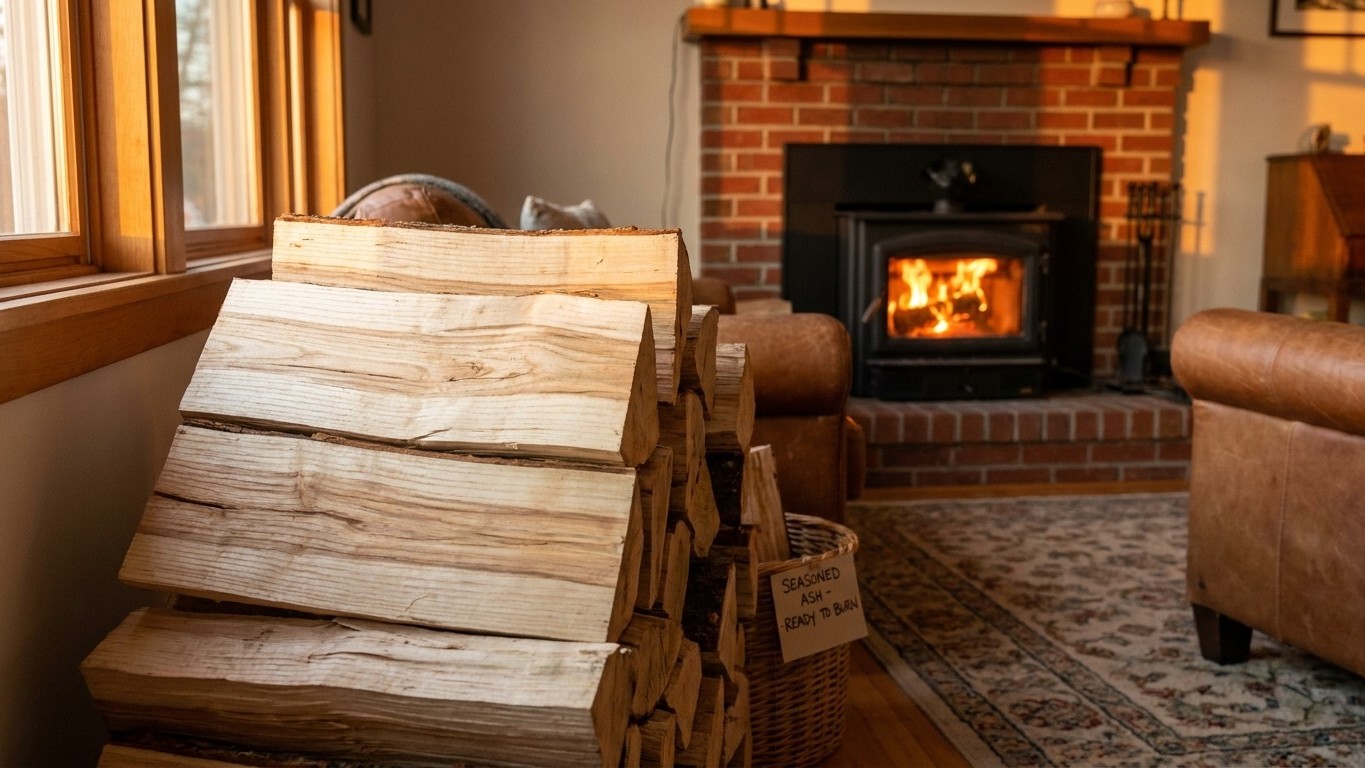

Green ash splits clean, lights fast even before it’s fully dry, and throws off a solid 20 to 22 million BTUs per cord once seasoned, according to SDSU Extension, putting it in the same conversation as red oak for a mid-tier hardwood that won’t disappoint. It burns with a clean, low-spark flame and minimal smoke when properly dried, making it one of the more forgiving firewoods for anyone with a wood stove insert or an open hearth close to furniture and rugs.
One quick clarification before going further: “green ash” here means two things at once, and it’s worth untangling them. Green ash (Fraxinus pennsylvanica) is a specific tree species, native to the eastern and central United States, distinct from white ash. But “green” also describes any wood that’s freshly cut and still loaded with sap moisture. This article covers the species primarily, while also addressing what happens when you burn it in that green, unseasoned state, because that question comes up constantly among people cutting their own supply.
What Makes Green Ash a Solid Firewood Choice

Density is where firewood earns its reputation, and green ash lands in a respectable middle ground. It’s lighter than hickory or hard maple but denser than poplar or pine, giving it a burn time that outlasts softwoods without demanding the brute-force splitting that oak requires. A well-seasoned cord weighs in around 3,500 to 3,800 pounds, depending on how much moisture remains and how the wood was stacked during drying.
The straight, consistent grain is the biggest selling point for anyone splitting by hand. Ash rarely twists or knots the way elm does, so a maul goes through a round in one or two clean strokes almost every time. Homeowners who’ve fought with a stubborn piece of sweetgum or sycamore know exactly why this matters when you’re processing several cords before the season starts.
Heat output translates to roughly 75 to 80 percent of what you’d get from a top-shelf hardwood like shagbark hickory or white oak. For a household relying on a wood stove as a primary heat source through a Midwest or Northeast winter, that’s enough to keep a 1,500-square-foot space comfortable through single-digit nights, provided the stove is properly sized and the wood is dry.
Smoke, Sparks, and What Happens Indoors
Ash has a long-standing reputation among firewood users as one of the cleaner-burning hardwoods, and that holds up in practice. Properly seasoned rounds produce a bright, steady flame with noticeably less popping and spitting than woods like elm or box elder. That matters if your fireplace lacks a full glass door or screen, since flying embers are a leading cause of house fires linked to wood heating according to the National Fire Protection Association.
Smoke output stays low as long as moisture content is under control. The trouble starts when green ash is burned too soon. Unseasoned rounds still holding 45 percent or more moisture will smolder rather than combust cleanly, sending more particulate and creosote up the flue. That creosote buildup is the same substance responsible for the majority of chimney fires reported each year, which is why seasoning timelines aren’t just a suggestion for efficiency, they’re a safety matter.
Ash does carry one quirk worth flagging: it’s known for burning reasonably well even at higher moisture levels compared to species like oak or beech, which has fueled the myth that it can be burned “green” without consequence. It can be coaxed into burning green in a pinch, but the trade-off is a smokier, less efficient fire with more residue left behind in the flue. Treat that reputation as a backup plan, not a burning strategy.
Seasoning Green Ash Firewood: Realistic Timelines
Split and stacked in a location with good sun and airflow, green ash typically reaches burnable moisture content (below 20 percent) in six to nine months. That’s faster than oak, which often needs a full 18 to 24 months to season properly because of its dense, tight grain. Ash’s more open cell structure lets moisture escape faster, which is part of why it’s often recommended to beginners who don’t want to wait two winters before using their first cord.
A moisture meter takes the guesswork out of this. Split a round, press the probes into the freshly exposed face rather than the bark side, and look for a reading at or below 20 percent. Wood above that threshold will still light, but expect more hissing, more smoke, and a noticeable drop in heat output as energy gets wasted boiling off residual water instead of producing flame.
Stacking method matters more than most people expect. Rows exposed to prevailing wind and at least a few hours of direct sun daily will outseason wood tucked against a shaded fence line by a couple of months. Elevating the stack off the ground with pallets or rails, and covering only the top (leaving the sides open), prevents the wood from wicking ground moisture back up while it dries.
The Emerald Ash Borer Complication
Green ash firewood availability has changed dramatically over the past two decades, and not for a good reason. The emerald ash borer, an invasive beetle first detected in Michigan in 2002, has killed hundreds of millions of ash trees across the eastern and midwestern United States, according to the USDA Animal and Plant Health Inspection Service. That’s left an enormous amount of standing dead and dying ash available to homeowners and firewood dealers, which explains why ash has become one of the most commonly sold species at roadside stands and co-ops in affected states.
This abundance comes with a catch. Because the beetle spreads through infested firewood moved between regions, most affected states enforce quarantines restricting how far ash firewood can travel before it’s burned. Transporting untreated ash logs across county or state lines, even for personal camping trips, can violate these rules and carry fines in several states. Anyone sourcing green ash should buy locally, ideally within 10 to 50 miles of where it will be burned, and check current state agriculture department guidance before hauling a load any real distance.
Beetle-killed ash also behaves a little differently once seasoned. Trees that died standing often have already lost significant moisture before cutting, meaning some “green ash” sold at yards is actually closer to seasoned than the term suggests. It’s worth asking a supplier directly whether the wood came from a live-cut tree or a standing dead one, since that changes how long you’ll need to season it further before burning.
Green Ash Compared to Other Common Firewoods
Stacked against white oak, green ash falls short on raw BTU output, oak can produce close to 26 to 29 million BTUs per cord, but it wins on splitting ease and drying speed. Against soft maple or birch, ash pulls ahead on both heat and burn duration, making it a better choice for overnight loads in a wood stove. Compared to hickory, which tops most BTU charts at around 27 to 28 million per cord, ash burns cooler but produces noticeably less ash residue to clean out, a small but real convenience during a long heating season.
Where green ash really stands apart is in its balance. It doesn’t demand the patience oak requires, doesn’t spark the way elm or spruce does, and doesn’t burn out as fast as poplar or cottonwood. For someone splitting their own supply without a hydraulic splitter, or for a household that wants dependable heat without babysitting the stove every hour, it hits a practical middle ground that few other widely available species match.
One more distinction worth noting for anyone buying rather than cutting: ash bark is thin and tends to separate from the wood as it dries, which is a normal part of the seasoning process, not a sign of rot or insect damage beyond what’s already visible from emerald ash borer galleries. Those D-shaped exit holes, when present, indicate the tree was infested, but they don’t affect the wood’s suitability for burning once it’s dry.