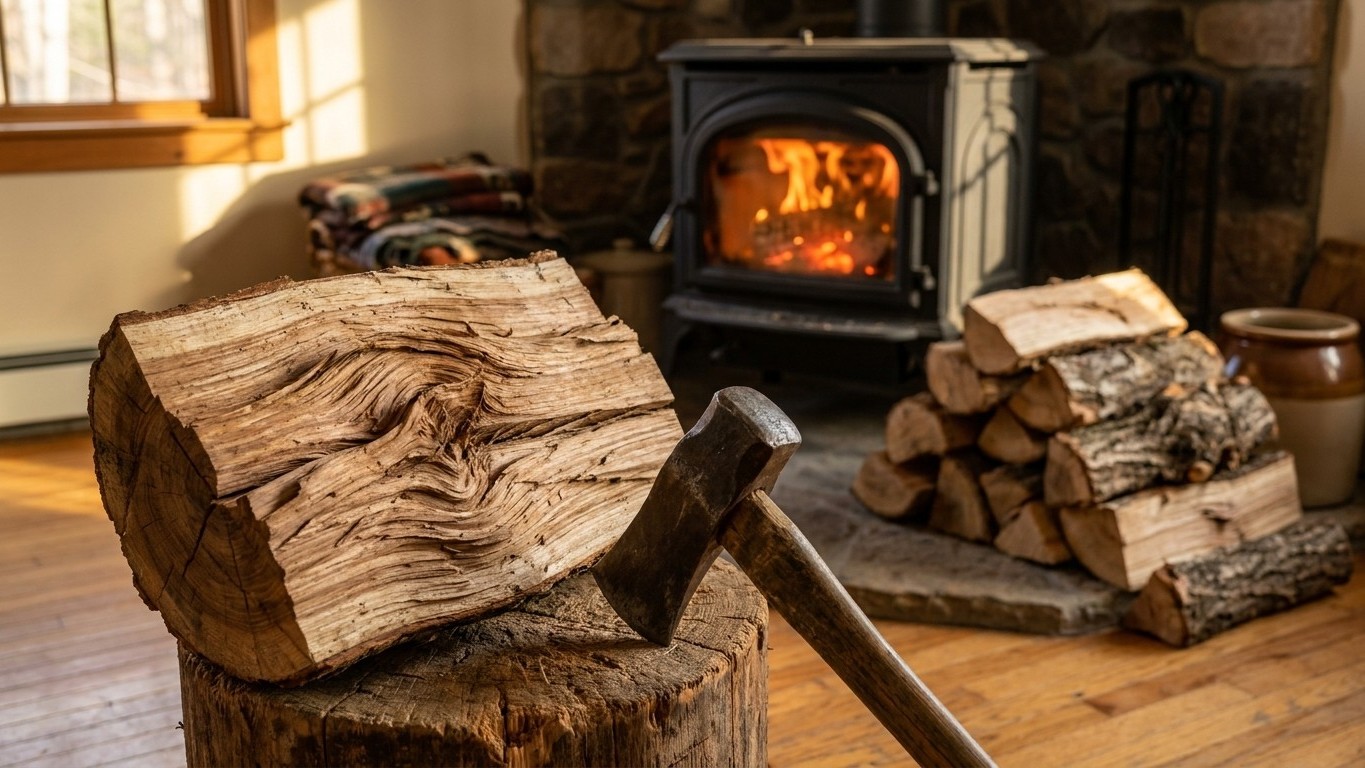

According to SDSU Extension, American elm burns at a moderate 19 million BTU per cord, roughly 20 percent less than red oak, and it’s known in firewood circles for one thing above all: it’s a pain to split. The grain twists and interlocks like rope fibers, which means a maul that snaps oak apart in one swing might just bounce off a round of elm. Once it’s seasoned and burning, though, elm throws decent heat, produces manageable smoke, and rarely spits sparks across your hearth rug.
That combination, decent BTU output paired with a genuine splitting headache, is why elm has a split reputation among people who cut their own wood. Some swear it off entirely. Others keep cutting it because dead and dying elms are often free for the taking, especially in states still dealing with the long tail of Dutch elm disease.
Heat Output: Where American Elm Ranks

Dried American elm delivers around 20.0 million BTU per full cord, based on wood density and moisture research compiled by the USDA Forest Service. That puts it in the middle of the firewood pack, well below dense hardwoods like hickory (27-28 million BTU) or white oak (24 million BTU), but ahead of lighter woods like white pine or cottonwood, which barely clear 15 million BTU.
For comparison, think of it this way: a cord of hickory might heat a 1,500-square-foot home through a cold snap with wood to spare. A cord of elm will get you through most of that same stretch, just with a bit more feeding of the stove overnight. It’s a solid choice for shoulder-season fires in October and April, but homeowners in northern climates relying on wood heat as a primary source often mix elm with a denser species to stretch their heat output through January.
Elm’s moderate density, around 35 pounds per cubic foot when green and closer to 30 pounds dry, means it burns hot but doesn’t hold coals quite as long as oak or ash. That’s worth knowing if you like to bank a fire overnight and wake up to usable embers. Elm tends to burn down faster than the dense oaks, so you’ll want a slightly larger load before bed.
Why Splitting Elm Is Its Own Skill
Ask anyone who’s spent an afternoon at the chopping block and they’ll tell you: elm doesn’t split, it tears. The wood’s interlocking grain pattern, the same structural trait that made elm popular for wagon wheel hubs and tool handles a century ago, resists the clean separation you get with straight-grained oak or ash. A maul that would fly through a birch round might just wedge itself stubbornly into elm and stay there.
Practical Splitting Tips
Most experienced firewood cutters handle elm one of three ways. Splitting it fresh, right after the tree comes down, works better than waiting, since the wood hasn’t had time to case-harden and knit its fibers even tighter. Splitting frozen rounds in winter also helps, because ice inside the wood adds brittleness that fights back against elm’s natural stringiness. And for anyone processing more than a rick or two, a hydraulic log splitter is close to mandatory. Hand-splitting elm at scale is the kind of task that turns a Saturday project into a weekend grudge match.
A few practical notes worth keeping in mind:
- Rounds under 12 inches in diameter split noticeably easier than larger trunk sections
- A splitting wedge combined with a sledgehammer often outperforms a maul on stubborn elm
- Crotch wood and knotty sections should be set aside for the splitter rather than fought by hand
- Gloves matter more with elm than most species, since torn fibers leave sharp, splintery edges
None of this means elm is unworkable. It just means budgeting more time and, ideally, more horsepower than you would for a load of ash or cherry.
Seasoning Time and Moisture Content
Elm holds onto moisture longer than most common firewood species, largely because of that same dense, interlocked grain that makes splitting difficult. Where seasoned ash might be stove-ready in six to eight months under good drying conditions, elm typically needs a full year, and two years is safer if you’re starting with green rounds cut in late winter.
Moisture content matters more with elm than with easier-burning woods. Green or under-seasoned elm burns cool, hisses and sizzles at the ends of the logs, and produces noticeably more smoke than the same wood properly dried. A cheap moisture meter, the kind sold at most hardware stores for under $30, takes the guesswork out of this. Wood reading below 20 percent moisture is ready to burn efficiently; anything higher and you’re better off letting it sit through another summer.
Splitting elm early, right after cutting, also speeds up seasoning considerably, since exposed surface area lets moisture escape faster than it would through intact bark and unsplit rounds.
Smoke, Creosote and Sparks
Properly seasoned American elm produces a moderate amount of smoke, less than softwoods like pine but somewhat more than dense, well-dried hardwoods like oak or hickory. Burned green, elm’s smoke output climbs noticeably and takes on a sharper, more acrid smell, which is one more reason seasoning time isn’t optional if you’re burning it indoors.
Creosote buildup follows a similar pattern. Seasoned elm, burned in a properly drafted stove or fireplace, leaves creosote deposits comparable to most mid-density hardwoods, manageable with the routine chimney inspections the National Fire Protection Association recommends at least once a year. Unseasoned elm, on the other hand, produces the cooler, incomplete combustion that drives up creosote formation, since moisture in the wood lowers flue temperatures and lets more unburned particles condense on chimney walls.
Sparks are where elm quietly earns some goodwill. It’s a low-spark wood compared to notorious poppers like spruce or hemlock, which makes it a reasonably safe choice for open fireplaces or fire pits without a spark screen. That said, no wood is entirely spark-free, and any firewood burned in an open setting should still be paired with basic precautions, particularly during dry, windy conditions when outdoor burning restrictions often apply at the county level.
Finding American Elm Firewood
Mature American elms are scarcer than they were before Dutch elm disease swept through North American forests starting in the 1930s, wiping out an estimated 75 percent of the species’ population across its range according to research tracked by the U.S. Forest Service. That history actually works in favor of firewood cutters in one specific way: dead and dying elms killed by the disease remain a steady, often free source of firewood in many regions, since municipalities and property owners are frequently eager to have infected or hazardous trees removed.
Craigslist listings, local tree service companies, and county extension offices are common sources for elm rounds, often at lower prices than premium hardwoods like oak or hickory simply because demand runs lower. Anyone accepting free elm from a disease-killed tree should confirm the wood has been down and drying for at least several months, since standing dead elm can still carry unusually high moisture in the trunk core even after the tree has died.
One caution worth flagging: bark beetles associated with Dutch elm disease can survive in unseasoned elm wood and firewood transport is one of the documented ways the disease spreads to new areas. Many states and counties restrict moving elm firewood across quarantine lines, similar to rules already familiar to anyone who’s dealt with emerald ash borer restrictions. Checking with a state agriculture department before hauling elm firewood any real distance is a five-minute step that avoids both fines and the risk of spreading disease to healthy elm stands nearby.
For a homeowner weighing elm against the usual firewood lineup, it lands as a practical, mid-tier choice: not the hottest-burning wood in the shed, and certainly not the easiest to split, but reliable, reasonably clean-burning, and often available at a price that’s hard to beat once you’ve found a local source.