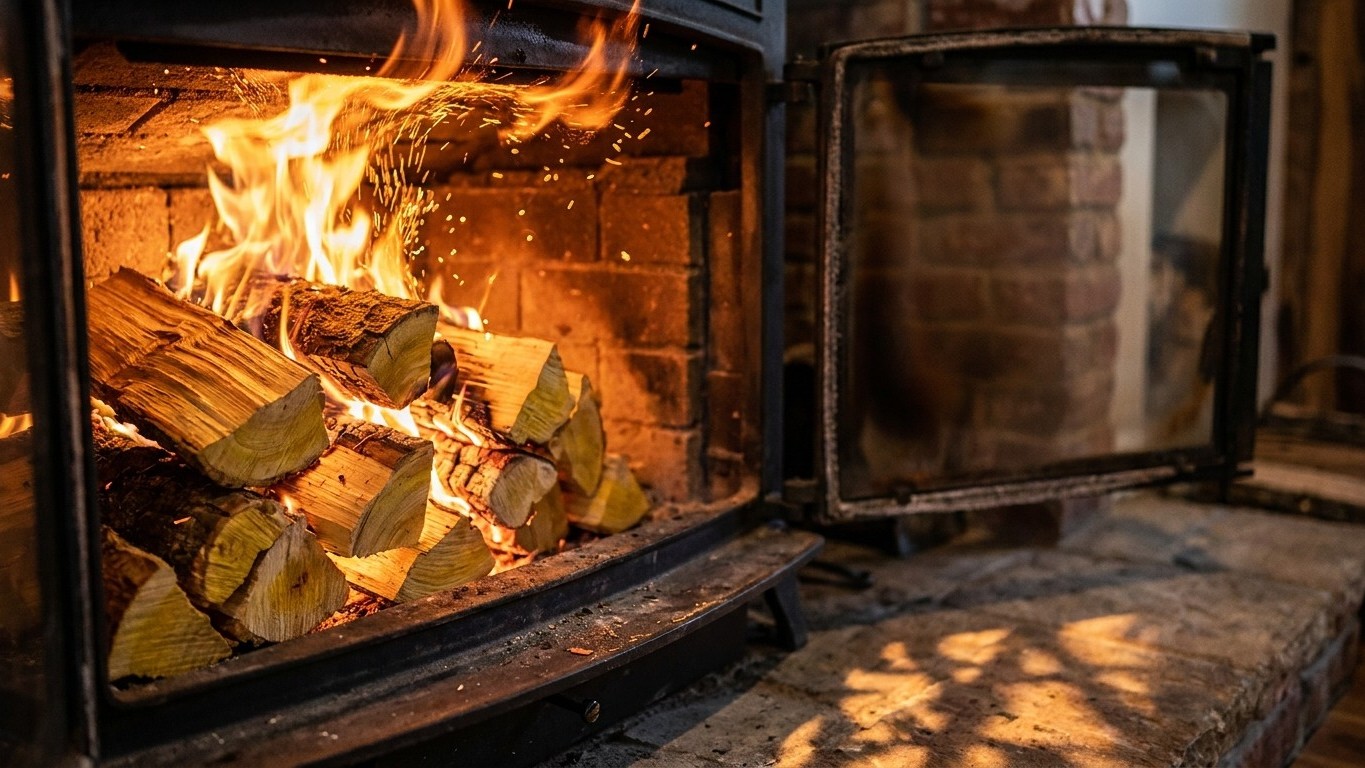

Osage orange burns hotter than almost any other wood you can put in a stove or fireplace, hitting 30.7 million BTU per cord when properly seasoned, according to the Missouri Department of Conservation. That heat output comes with a trade-off: heavy sparking, a resinous smoke, and wood dense enough to test your splitting maul. If you’ve got a load of this hedge wood sitting in your yard, here’s what you need to know before it goes in the firebox.
Heat Output: Why Osage Orange Tops the Charts

Most firewood charts put white oak around 26 million BTU per cord and shagbark hickory near 27.7 million. Osage orange blows past both, landing in the low 30s, some tables even push it higher. That’s roughly 20 to 30 percent more heat per cord than the oak most people consider a gold standard for wood heat.
The density explains the number. Osage orange wood weighs in at roughly 48 to 50 pounds per cubic foot when dry, heavier than almost every other tree native to the eastern and central United States. Dense wood packs more combustible material into the same volume, so it releases more energy as it burns. A rancher in Kansas or Oklahoma clearing an old hedge row is sitting on some of the highest-BTU firewood available anywhere on the continent, whether they realize it or not.
That heat comes on fast and stays high. A firebox loaded with well-seasoned Osage orange will run noticeably hotter than the same firebox loaded with ash or maple. For a wood stove rated for a specific heat output, this matters. Overloading with Osage orange in a small stove can push internal temperatures past what the stove’s baffles and gaskets are designed to handle over time. Stove manufacturers generally recommend mixing high-BTU woods like this with something milder, at least until you know how your particular stove responds.
Sparks: The Real Reason People Warn You About This Wood
Ask anyone who’s burned Osage orange in an open fireplace and the first thing they’ll mention isn’t the heat. It’s the sparks. This wood is famous, or infamous, for throwing sparks farther and more aggressively than oak, maple, or birch. Pockets of sap and trapped gas inside the dense wood grain ignite and pop, sending embers shooting out well past a standard fireplace opening.
This isn’t a minor annoyance. It’s a legitimate fire safety concern for anyone burning wood in an open hearth without a solid glass or metal screen. A carpet, a rug, or a stack of newspapers sitting a few feet from an open fireplace is well within range of an ember thrown by burning Osage orange. Homeowners who’ve had good luck with other hardwoods in an open fireplace sometimes get caught off guard the first time they toss on an Osage orange log expecting similar behavior.
A few practical steps cut the risk substantially:
- Always use a fireplace screen rated for spark containment, not just a decorative mesh curtain.
- Burn Osage orange primarily in an enclosed wood stove or fireplace insert, where the sparking is contained behind glass.
- Keep flammable materials at least six feet from any open hearth burning this wood.
- Avoid Osage orange for outdoor fire pits near dry grass, wood decking, or during any local burn ban or high-wind advisory.
Enclosed wood stoves handle the sparking issue well since the glass door contains flying embers. That’s actually where Osage orange performs best overall. Open hearths and uncovered fire pits are where the wood’s reputation for spitting sparks becomes a genuine hazard rather than just a curiosity.
Smoke and Smell: What to Expect
Osage orange doesn’t produce the acrid, choking smoke of a wood like pine or spruce. Its smoke has a distinctive sweetish, slightly resinous smell that some people find pleasant and others describe as heavier than oak or hickory smoke. It’s not commonly used for smoking meat the way hickory or fruitwoods are, but the smell isn’t unpleasant sitting around a stove.
The bigger consideration is creosote. Any wood burned unseasoned or at low, smoldering temperatures produces excess smoke and creosote buildup in a chimney or stovepipe, and Osage orange is no exception. Burned hot and burned dry, it actually produces relatively little smoke for how much heat it generates, since the fire runs efficiently at higher temperatures. Burned green or damped down too far, it smolders and lays down creosote just like any other hardwood, maybe more so given its density and slower-burning coals.
Chimney sweeps who work rural areas of Kansas, Missouri, and Texas, where Osage orange hedge rows are common, generally report no unusual creosote issues specific to this species, provided it’s seasoned properly and burned at a reasonable air setting. The wood itself isn’t the problem. How it’s seasoned and how the fire is managed matters more.
Splitting and Seasoning: The Hard Part
Density that makes Osage orange burn hot also makes it miserable to split by hand. Fresh-cut rounds are tough, stringy, and resistant to a maul in a way that surprises people used to splitting oak or ash. A hydraulic log splitter handles it far more reliably than swinging an axe, especially on larger diameter rounds with interlocking grain, which Osage orange trees often produce.
Seasoning takes patience. Because the wood is so dense, moisture takes longer to work its way out of a split log compared to lighter species like poplar or pine. Plan on a full year of seasoning under cover, sometimes longer for larger splits, before moisture content drops to the 15 to 20 percent range that burns cleanly. Wood moisture meters are inexpensive and worth using here, since Osage orange can look dry on the outside while still holding significant moisture in the core.
Splitting sooner rather than later helps speed the process along. A round left whole for months before splitting will season far slower than wood split immediately after cutting, since the exposed surface area of split wood allows moisture to escape much faster than through intact bark and dense end grain.
Best Uses for Osage Orange Firewood
Given the heat output and spark behavior, Osage orange makes the most sense in specific situations rather than as an everyday, all-purpose firewood.
Wood stoves and fireplace inserts with enclosed glass doors are the ideal setting. The high BTU output translates into long, hot burns overnight, and the enclosed firebox neutralizes the spark issue entirely. Many rural households in the Great Plains states, where Osage orange hedge rows were planted extensively in the early 1900s as living fences before barbed wire took over, still rely on this wood as a supplemental heat source specifically because of how efficiently it heats a stove through the coldest stretches of winter.
Mixing it with a milder wood like ash, maple, or seasoned pine extends a load and moderates the heat output, which is useful in stoves rated for lower maximum BTU input. A common approach is loading two or three Osage orange splits alongside a larger volume of a moderate-heat wood, getting a longer, steadier burn without pushing stove temperatures into the danger zone.
Open fire pits and uncovered fireplaces are where this wood is best used sparingly, if at all, and only with a solid screen in place. For campfires, cookouts, or any setting near dry vegetation, most experienced burners steer toward woods with a calmer spark profile.
Availability and Sourcing
Osage orange isn’t sold in every region the way oak or maple firewood is. It’s most commonly available in states where the tree was historically planted as a hedgerow species: Kansas, Oklahoma, Missouri, Nebraska, and parts of Texas. Homeowners in these areas sometimes have access to it for free or low cost from landowners clearing old fence lines, since the tree’s thorny growth and tendency to spread make it a nuisance species many farmers are actively removing.
Outside its historic range, Osage orange firewood shows up less often at retail firewood suppliers, partly because the tree isn’t as widespread and partly because its difficulty splitting makes it less appealing for commercial firewood processors working with hydraulic splitters on a schedule. Where it is available, it’s often priced at a premium given the heat output, or bundled in mixed hardwood loads rather than sold as a standalone species.