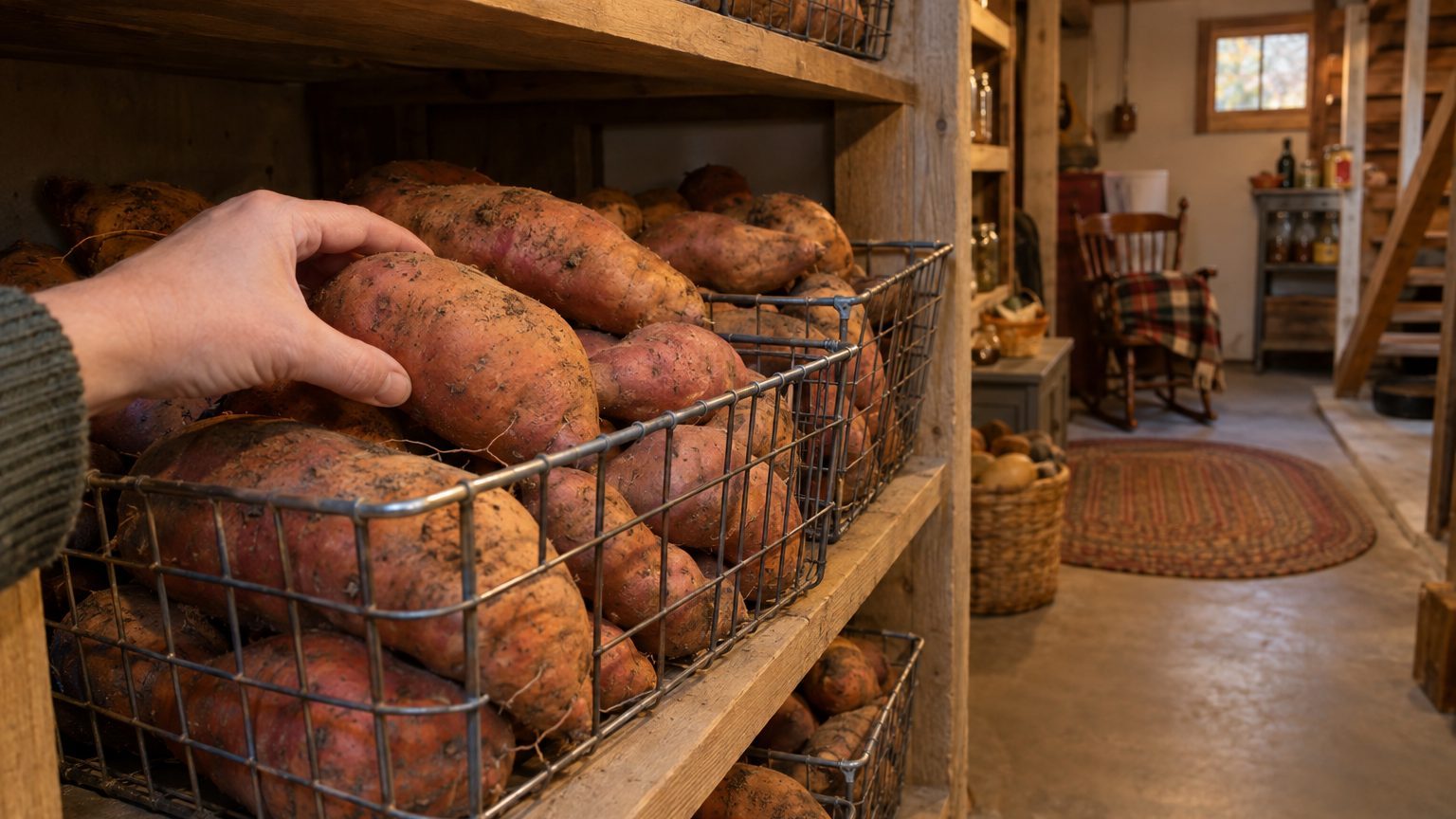

Cured sweet potatoes belong in a dark, ventilated spot inside the living part of the house, holding somewhere around 55 to 60°F. The refrigerator and the cold cellar, which suit nearly every other root, are the wrong answer here. Cold damages the flesh for good, and the damage often shows up only after cooking.
What is actually going on
Sweet potato is a tropical plant, Ipomoea batatas, a relative of morning glory. It is not a potato, it is not a nightshade, and despite the supermarket label it is not a yam, which is an unrelated tropical tuber rarely sold in ordinary US stores. That matters here because potatoes shrug off cold storage and even improve in it. Treat a sweet potato the same way and you get the most common failure of a good crop: a root stored somewhere sensible that turned out to be exactly wrong.
How chilling injury works
Below its storage range, commonly given as about 55°F, the cells of a sweet potato are injured. Time and temperature stack up. A few days just under the line does less harm than weeks in the crisper drawer, which sits far lower still. Once the membranes fail, the damage cannot be reversed by warming the root back up.
The symptoms are what make it so frustrating. Roots can look perfectly normal when they come out of the cold. Then you bake one and find hard patches or a stubborn core that stays firm no matter how long it cooks, along with off flavors and dark discoloration in the flesh. Injured tissue also breaks down faster once the root warms, and decay organisms get an easy way in. Cooking does not fix any of it.
Why curing comes first
Storage only works on a cured root. Curing means holding freshly dug roots in warm, humid air for a period so skin nicks heal over and some starch converts to sugar. Extension guidance generally describes roughly 80 to 85°F with high humidity for about a week, though your own service will give its preferred numbers. The full method is in Growing Sweet Potatoes: Slips, Heat, and a Careful Cure. An uncured root loses moisture quickly and rots more readily, so curing is the step that makes everything after it possible.
After that, you inspect. Look for firm roots with intact skin. Nothing here lets you call a root safe because it looks sound, and no page can promise how long yours will keep. What you can do is check often. A soft patch, a sunken spot or a weeping, wet spot ends the question for that root, and it should leave the box before it affects its neighbors.
In the garden
Once you understand the mechanism, choosing a spot becomes a matter of matching conditions rather than memorizing a location. The table lists what to look for and what happens when it goes wrong, including the two places that seem obvious and are not.
| Condition or place | What to look for | What goes wrong |
|---|---|---|
| Temperature | Steady, around 55 to 60°F | Below that, chilling injury: hard cores, off flavors. Much warmer for long stretches: sprouting, shriveling, faster moisture loss. |
| Humidity | Moderately humid, never damp | Too dry and the roots shrivel. Too wet and condensation feeds mold and rot. |
| Air movement | Some circulation: a ventilated crate or a cardboard box with holes | Sealed plastic traps moisture, and one rotting root spreads trouble to the rest. |
| Light and handling | Dark or dim, dry roots, gentle handling, soil brushed off rather than washed | Bruises and wet skin give rot an entry point. Warm, bright spots encourage sprouting. |
| Refrigerator | Nothing. Skip it for raw roots. | Far below the safe range, so injury sets in fast and shows up later as hard, bad-tasting flesh. |
| Cold cellar, unheated basement, garage | Only if it stays reliably above the range, which is rare in fall and winter | Same chilling injury, just slower. A single cold snap can do it. |
The two wrong places
The refrigerator is wrong for an obvious reason once you know it. The root cellar is trickier, because it is the traditional answer for potatoes, carrots, beets and apples. A cellar that holds ideal potato conditions is, by definition, colder than a sweet potato can handle. Garages and porches behave the same way, and they are worse because they swing with the weather.
Where it does belong
Think interior. A closet on an inside wall, a pantry away from exterior walls or a spare bedroom kept at a modest temperature all tend to run steadier than the rooms people actually use. A cheap thermometer left in the spot for a few days tells you more than any guess. If your best spot runs a bit warmer than the range, that costs some quality over time but does not cause the permanent injury that cold does. Check the box more often and use those roots first.
Boxes work better than bags. Layer roots loosely, with newspaper between them if you like, and keep the container off a cold concrete floor. Cold floors chill the roots in contact with them even when the room air is fine.
What it depends on where you are
Some of this is national and holds in every state. The chilling rule, the need to cure, the value of airflow and the inspection habits do not change from Georgia to Ohio. If a root is cold-injured in Michigan, it is cold-injured in Louisiana.
The rest is local, and this page does not know your situation. Season length decides how much time the crop has before fall chill arrives, and that affects how mature and how well-finished the roots are at digging. Summer heat and summer rainfall shape skin quality and how wet the soil is at harvest, and wet soil at harvest means more nicks, more mud and more work to get roots clean and dry. Your fall nights determine whether curing happens comfortably in a warm room or needs a little help, and your house decides where the steady 55 to 60°F spot actually is. A heated basement is a fine choice in one home and a cold trap in another.
Planting date is part of the same chain, because it sets when you dig relative to the first hard cold. Planting Sweet Potatoes: Wait for Warm Nights covers that timing. For conditions in your own state, use the state pages on this site, then check with your state cooperative extension service. It can tell you which types have been trialled in your area, what curing setup gardeners nearby use and what the local storage advice looks like. Extension offices answer these questions all the time in fall.
The mistake that costs the most
Refrigerating or cold-storing raw sweet potatoes. Everything else on this page is a matter of degree: a spot slightly too warm costs you quality, too little airflow costs you a few roots. Cold costs you the crop, and it does so quietly.
The quietness is the problem. Nothing looks wrong when the roots go into the cellar or the crisper. Weeks later, a root bakes hard in the middle, another tastes strange, and a third has gone soft. By then the cause and the effect are too far apart to connect, and gardeners often blame the variety, the soil or the summer. The real culprit was a decision made in an afternoon because the cold place seemed like the responsible one.
What to do instead is simple to say. Cure first, then bring the roots into the living space of the house, in a box with airflow and a thermometer nearby. If a cold night is forecast while roots are still in the ground or drying outdoors, get them under a roof and into warmth, because chilling starts before storage does.
If it already happened, cooking will not repair the hard patches, but you can use the roots soon and cut away any firm, dark or bad-tasting tissue. Anything soft, sunken or weeping goes in the trash. Sorting out the roots that are failing for other reasons is covered in Sweet Potatoes That Spoil After Harvest.
Common questions
Can I refrigerate cooked sweet potatoes?
Yes. The chilling problem applies to raw, uncooked roots. Cooked leftovers can go in the refrigerator like any other cooked food, and cooking has already changed the texture that cold would otherwise harm.
Should I wash sweet potatoes before storing them?
No. Brush off loose, dry soil and leave the rest. Wet skin invites rot, so wash roots right before you cook them.
Can I store them alongside regular potatoes?
Not as a rule. Potatoes prefer colder storage than sweet potatoes tolerate, so the two need different spots. Keeping them apart also stops a problem in one box from reaching the other.
How do I know if a stored root has gone bad?
Check for soft or sunken patches, weeping moisture, mold and sour or musty smells. Any one of those ends the question for that root. Don’t trim it and eat around the problem, and remove it promptly so it doesn’t spread to nearby roots. A firm, sound-looking root can still have internal chilling damage, which is why cooking tells you the truth only after the fact.