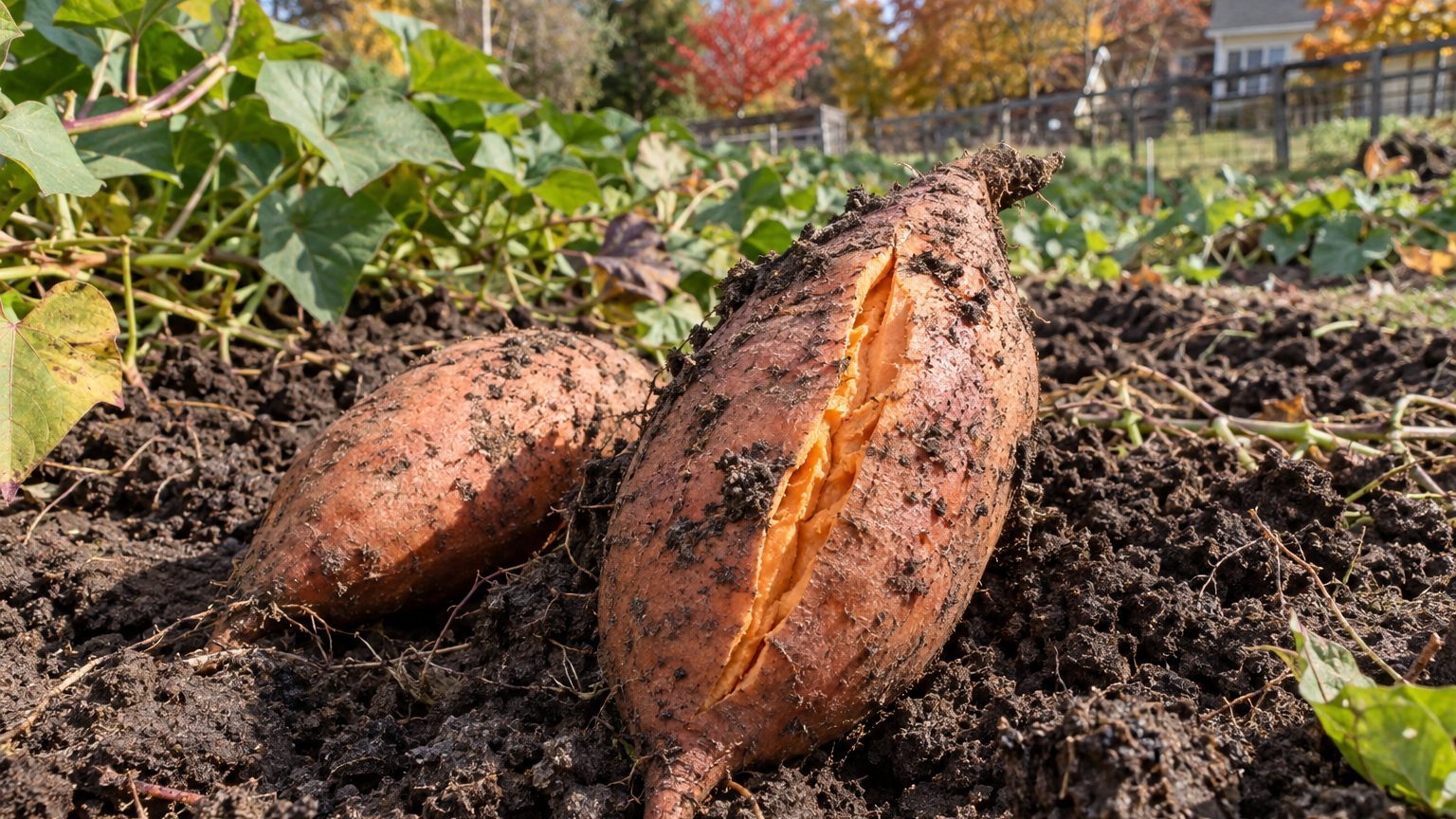

Water sweet potatoes steadily while the vines establish and the roots bulk up, then pull back for the last few weeks before you dig. About an inch a week, rain included, is the usual midsummer target. The taper matters as much as the rhythm. A big drink after dry weather is what splits roots, and wet soil at harvest scuffs skins and makes curing harder.
What is actually going on
Why roots split
The thing to understand is root splitting. A sweet potato root is mostly stored starch and water, wrapped in a skin that grows more slowly than the flesh inside. If the soil stays dry for a stretch and then floods, the root drinks fast. The flesh swells faster than the skin can stretch, and the skin cracks, often lengthwise. Growth cracks like these are the visible sign of a moisture swing, not of too much water in total.
Late in the season the risk goes up. The roots are large, the skin is at its tightest, and the plant has little reason left to slow its uptake. A wet week after a dry one can do in a night what a whole summer of even watering avoided.
Why the taper helps at the end
This is another crop where the last weeks call for less water, not more. Sweet potato is a relative of the morning glory. It is not a potato, not a nightshade, and not a yam (the supermarket label is wrong on that last point). It does not follow potato logic, where a late soaking can still bulk up tubers. Once the roots have reached a good size, extra water mostly adds swelling stress and soft, wet tissue.
Drier soil at the end also does three useful things. The skin toughens a little. The roots come out of the ground cleaner, since soil crumbles off instead of clinging in clods. And digging is easier on the roots, because a wet, heavy soil makes it much more likely that you nick one with the fork. Every nick is an opening for rot later.
The mechanism also explains what to do when the weather ignores your plan. You can’t stop a storm, but you can avoid adding to it. Skip supplemental watering when heavy rain is coming, and be careful about what you do after a long dry spell. That case comes up again in the last section.
In the garden
The curve below runs from planting to digging. Read the last column as carefully as the middle one, because most problems show up as the failure of a stage. The full growing guide covers heat, spacing and curing. This page covers only the water.
| Stage | What the soil should do | If it goes wrong |
|---|---|---|
| Newly set slips, first couple of weeks | Stay evenly moist around the young roots. Water in well at planting. | Dry soil kills the slips or leaves gaps. Soggy soil rots the buried stem. |
| Vines taking off | Deep watering less often. Let the top inch or two dry between drinks. | Light daily sprinkling keeps roots shallow. Constant wetness with rich soil gives big vines and thin roots. |
| Roots bulking, midsummer | Even moisture, about an inch a week counting rain. Mulch helps hold it. | Swings between parched and soaked make misshapen roots and start cracks. |
| Final few weeks | Taper. Water only enough to keep vines from collapsing in a long drought. | Late soaking splits roots and softens tissue. Wet spots invite rot. |
| Day of digging | Soil that is crumbly, not muddy. | Wet soil scuffs skin, hides damage and clings to roots that then cure poorly. |
Reading the vines and the soil
A finger works better than a calendar. Push it two or three inches into the soil near the vines. Cool and slightly damp means you’re fine. Dry and dusty down that far means it’s time. Sweet potatoes handle heat and short dry spells better than most vegetables, and vines that droop in the afternoon and perk up by evening are not asking for water. Vines still limp in the morning are.
Raised beds and ridges drain fast and can dry out sooner than flat ground, so check them more often. Heavy clay does the reverse and holds moisture long after the surface looks dry. Mulch smooths out both kinds of swing.
Before you dig, check for cracks, soft patches and any spot that is weeping. A soft or weeping spot ends the question for that root, and it goes to the compost. Don’t cut around it and hope. A firm root with a shallow growth crack can be eaten soon, but it isn’t a candidate for storage.
What it depends on where you are
Some of this is true everywhere. Roots split when moisture swings. Young slips need steady moisture. The last weeks call for restraint. Those rules hold from a dry garden to a humid one, and they’re the part of this page I’d stand behind for any reader.
The rest is local, and this page doesn’t know your garden. Three things change the answer. The first is season length. If your growing season is short, the window for bulking is tight and the taper has to fit around an early frost, not a leisurely finish. That situation is covered in sweet potatoes where the summer is short. The second is summer heat, because hotter stretches dry the soil faster and call for more frequent checks. The third is summer rainfall. In a place with reliable summer storms you may go weeks without touching a hose. In a dry place, every drop is yours to manage, and you control the taper completely.
Soil matters too. Sandy ground drains quickly and needs more frequent, smaller applications. Heavy clay needs fewer waterings and takes longer to dry out for harvest. A garden with both, such as a sandy bed next to a clay one, may need two different schedules.
For the specifics, look at the state pages on this site, which put these variables in local terms. Then check with your state’s cooperative extension service, the land-grant university office that serves your county. It can tell you which types of sweet potato have been trialled where you live, and which local habits (a flooding spring, a late dry fall) tend to trip up growers nearby. Local advice beats general advice on timing, and any timing I gave you here would be a guess.
The mistake that costs the most
The costly mistake is a heavy watering late in the season to rescue vines that look tired. Late in the season, vines often look rough. Leaves yellow, and some vines look thin in the afternoon heat. It looks like thirst, so the gardener soaks the bed. After a dry spell, that soak is exactly what makes the roots swell too fast and crack.
Those splits are also easy to miss. The roots are under the soil, so the damage doesn’t show until digging day. By then you’ve lost the best part of the crop. The cracked roots won’t cure or store reliably, and the wet ground you created makes for a muddy, damaged harvest.
What to do instead comes down to three habits:
- Keep the middle of the season even, so the roots never face a big swing to begin with.
- Begin easing off well before you plan to dig, and let the soil dry down gradually.
- If a real drought arrives late, give small, shallow waterings just to hold the vines. Don’t flood the bed.
If heavy rain has already swollen the roots, wait for the soil to drain, then dig gently and go through the roots by hand. Use the split ones first. Whole, sound roots go on to curing, and after curing they need a warm, dry spot. Never put them in a refrigerator or a cold cellar. Cold injury below their storage range is irreversible, and it is one of the most common ways a good harvest gets ruined. You often can’t see the damage until the roots turn hard in the center or rot.
Common questions
How much water do sweet potatoes need each week?
About an inch a week, counting rainfall, is the usual figure through the bulking stage, once the slips have established. Treat it as a starting point and check the soil two or three inches down. Sandy soil and hot weather push the need up, and clay soil and cool, cloudy weather bring it down.
When should I stop watering before harvest?
Begin tapering in the last few weeks before you plan to dig, and let the soil dry gradually instead of shutting the tap off in one move. The exact window depends on your season and soil, so check your state extension service for guidance for your area. The aim is crumbly soil on digging day.
Can I eat sweet potatoes that split from too much water?
A clean, shallow growth crack on a firm root is a cosmetic flaw, and the root is best eaten soon, since the opening invites rot in storage. Inspect every root. Any soft patch or weeping spot ends the question, and the root should not be eaten or kept.
Do sweet potatoes need the same watering as regular potatoes?
No. Sweet potatoes are not potatoes and not nightshades, and they tolerate dry soil far better once established. Potatoes want steady moisture through their whole tuber-forming period, while sweet potatoes want a taper at the end. Treating the two alike is how many gardeners end up with split roots.