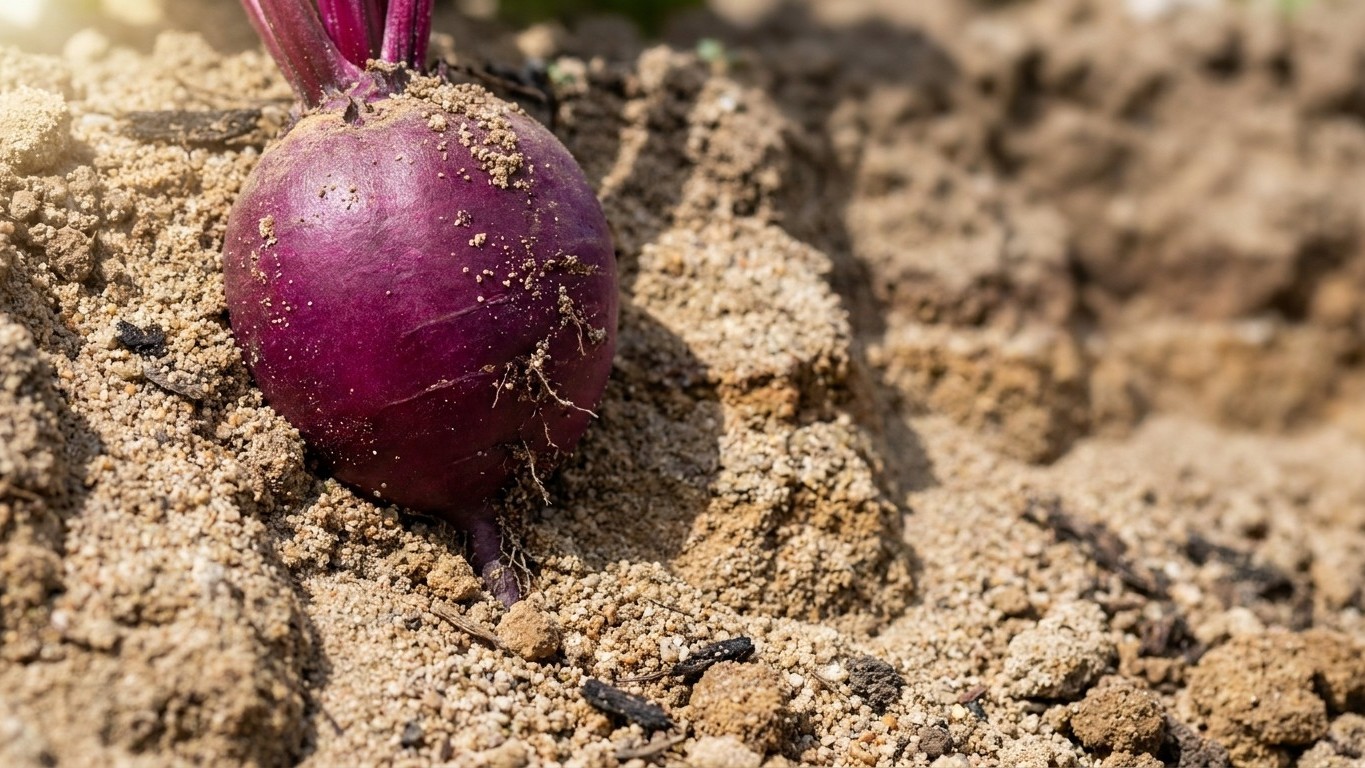

The LSU AgCenter documents ten pests for Louisiana, and most of them have no interest in beets. The ones with a plausible reach are fall armyworm, vegetable weevil and, less often, leaf-footed bug. Timing follows heat rather than frost, because south Louisiana barely freezes and winter rarely resets anything. The list is statewide and not specific to beets, so treat it as a short list of suspects, not a diagnosis of any one bed.
Which pests attack beet in Louisiana

The LSU AgCenter lists cowpea curculio, crape myrtle bark scale (Acanthococcus lagerstroemiae), fall armyworm, leaf-footed bug, pepper weevil, pickleworm, squash bug, squash vine borer, tomato pinworm and vegetable weevil. None is labeled a beet pest in that list, so sorting it comes down to what each insect actually feeds on.
Seven that can be set aside
Crape myrtle bark scale lives on a woody ornamental, so it has no reason to visit a vegetable bed. Squash bug, squash vine borer and pickleworm are tied to the squash and cucumber family. Pepper weevil follows peppers, tomato pinworm follows tomatoes and their relatives, and cowpea curculio follows southern peas. Beets belong to a different plant family, alongside chard and spinach. If one of these insects turns up near a beet row, it most likely came for the squash or tomatoes growing next door.
Three worth watching
Fall armyworm is a caterpillar with a wide appetite, which is why a beet bed beside lawn, corn or weedy ground is exposed. Vegetable weevil is named for the crops it goes after, and leafy growth is its target. Leaf-footed bug sucks sap from many plants but is better known for fruit and seed, so it is the weakest suspect for a root crop. All three reach the leaves, not the buried root. The AgCenter list does not say how hard any of them hits beets, and that gap is a question for your parish office.
When each one shows up, and what it does first
Start with the calendar Louisiana gives you. The last spring frost falls between January 18 and February 8 (NOAA NCEI climate normals, 32 F freeze probabilities in the 30 to 70 percent band). At the south Louisiana station behind those normals, a 32 F freeze happens in only 86.8 percent of years, so roughly one year in seven has none at all. The fall window straddles the New Year. North Louisiana freezes far more reliably.
Beets are sown in place, so the clock runs from seeding: 60 to 80 days from seeding, never from a transplant. A crop seeded near the end of the freeze window spends those weeks as warmth builds. Pests do not wait for a calendar month, they arrive when conditions suit them. For sowing windows, see When to Sow Beets in Louisiana.
Fall armyworm
The first sign is usually small, pale, scraped patches on a leaf, then ragged holes and dark droppings. It tends to appear once warm weather has settled in, not around sowing. Young caterpillars are small and easy to miss, so look at the leaf underside.
Vegetable weevil and leaf-footed bug
Vegetable weevil damage looks like notched leaf edges and chewed foliage. It is commonly described as a cooler-season feeder, which would point to fall sowings that straddle the New Year and to early spring. Confirm that with the AgCenter before you count on it. Leaf-footed bug works differently. It pierces and sucks, leaving speckled or discolored patches and sometimes drooping leaf tips. The adults are large, and they drop or fly off when you approach, so the insect is often gone by the time you see the damage.
Telling the damage apart from everything else
Many beet problems in Louisiana have nothing to do with insects. Sandy, well-drained ground dries fast and tends to shed nutrients. The USDA NRCS lists the Ruston series, an Ultisol, as the state soil: about 65 percent sand, 11 percent clay, 24 percent silt, surface pH about 5.5 and organic matter about 1.8 percent. That is the soil that represents the state, not necessarily yours, and river bottoms, hill country and scraped building lots differ completely. More on that in Beet Soil in Louisiana: What the Root Will Meet.
Two failures get mixed up constantly. Utah State University Extension says water stress in the first 6 weeks causes premature flowering (bolting). Heat above 85 F combined with water stress makes the root woody. Different cause, different timing, and neither is an insect.
| What you see | Non-insect cause to rule out | What settles it |
|---|---|---|
| Ragged holes in leaves | Hail, wind or a hose or foot catching the leaf | Insects leave droppings, scraped patches or the animal itself under the leaf; mechanical damage leaves none |
| Yellowing leaves | Nutrient shortage, or dry sandy ground | A soil test, and whether the whole bed yellows or single leaves |
| Flower stalk forming early | Water stress in the first weeks | Insects do not cause bolting; think back over early watering |
| Tough, woody root | Heat with water stress later in the crop | Compare the harvest to the hottest, driest stretch |
| Midday wilting | Dry soil | Check moisture a few inches down before assuming a pest |
| Spots with no chewing | Leaf disease | A sample examined by your extension office |
If a symptom still doesn’t fit, bring the leaf and a photo of the plant to your parish extension office. Naming the insect from a description alone is a guess.
What actually works here, and what is a waste of time
A physical barrier beats a treatment. Because beets are sown in place, put a light insect barrier over the row the day you seed, with the edges buried or weighted so nothing crawls under. Beets are grown for roots and greens, so pollination is not an issue and the cover can stay on. Heat is the catch: since heat above 85 F with water stress makes roots woody, lift or loosen the cover as the weather warms rather than baking the bed.
Calendar counts for more than product. Seed so the 60 to 80 days finish before the worst heat, and the crop is out of the ground before pest numbers peak. In sandy, well-drained ground, steady watering matters most in the first weeks, since early thirst is what triggers bolting. Keep compost to no more than 1 inch per 100 sq ft, per Utah State University Extension. Check leaf undersides every few days, pick off what you find, and clear old debris after harvest.
What does not work is reaching for a spray at the first hole. Without an identification you may be treating hail damage, thirst or a visitor from the squash bed. Some of the listed insects have nothing to do with beets. This site names no pesticide, active ingredient or dose, because only the LSU AgCenter knows what is labeled in Louisiana. Transplanting to dodge pests also fails, since beets are meant to be seeded where they grow. And extra water will not undo bolting once it has started.
Where to check this for your own county
Louisiana has parishes rather than counties, so the office you want is your parish extension office, part of the LSU AgCenter. That is where the list in this article comes from, and the people there know what is active near you.
Presence of a pest varies inside a state. A listing on the statewide roster doesn’t mean the insect is in your garden, and its absence from the list doesn’t mean it isn’t. North and south Louisiana differ in freezes, and pests follow that difference. The general guide to the crop is at Growing Beets in Louisiana, but it can’t tell you what is on your rows this week.
When you call or visit, bring the damaged leaf in a sealed bag, a photo of the whole plant, the sowing date, and a note on how you watered the first weeks. Ask what is currently active in your parish, when it usually peaks, and what is labeled for use on beets in Louisiana. Ask how to get a soil test too, because the Ruston figures are only a starting point.
Today, photograph the underside of one damaged leaf next to a ruler-free hand for scale, and put that photo in your pocket for the parish office.
Common questions
Do squash bugs eat beets? The AgCenter documents squash bug for Louisiana, but it is tied to the squash family and beets are not in it. If you see them near beets, they probably came from nearby squash. Ask the parish office to confirm.
Is every hole in a beet leaf an insect? No. Hail, wind and tools make holes too. Insects usually leave droppings, scraped patches or the animal itself, and the table above shows what to check.
Can I transplant beets to get ahead of pests? Beets are sown in place, and the 60 to 80 days run from seeding. A barrier over the seeded row does more than a transplant.
Does a mild winter mean more pests? The AgCenter list does not say how winter affects each insect. A 32 F freeze occurs in 86.8 percent of years at the south Louisiana station, so about one year in seven has none. North Louisiana freezes more reliably. Ask your parish office what to expect locally.