
In Michigan, dahlias, cannas and gladiolus have to come out of the ground for winter. The trigger is the first frost that blackens the leaves. In USDA zone 6a that frost arrives between October 6 and October 21, according to MSU Extension’s Michigan Garden Calendar. Lift the plants within a week or two of it, let them dry, then keep them somewhere cool, dark and frost-free. Gardens farther north get that frost sooner, so their lifting moves earlier too.
Do you have to dig them up in Michigan?
Yes. Plan to lift all three after the first frost that blackens the foliage, and store them indoors until spring. Dahlia tubers, canna rhizomes and gladiolus corms all come from warm climates. They keep their energy in fleshy underground parts that cannot take frozen soil, and Michigan soil freezes.
What the zone map says
The USDA Plant Hardiness Zone Map 2023, built on 1991-2020 climate normals, places Michigan between zones 4a and 6b. That system rests on a single variable: the average annual extreme minimum temperature, the coldest night of a typical year. It says nothing about how long the cold lasts, which matters a great deal to a tuber sitting in wet ground. Because Michigan covers such a wide range, no single zone speaks for the whole state. The fall frost dates in this article are the zone 6a range from MSU Extension. Gardens in the northern Lower Peninsula and the Upper Peninsula run colder and see frost earlier than that range.
A second measure is more useful for the ground itself. NOAA’s NCEI Climate Normals for 1991-2020, at the Detroit station, put the mean daily minimum of the coldest month at 19.2°F. That is an ordinary night in the coldest stretch of winter, not a record low, and it sits well below freezing. Nights like that repeated for weeks push frost down into the soil, right to the depth where tubers and corms sit.
The rule is simple. Where the ground does not freeze deeply, these plants can stay put under mulch. Where it does, they come up. Nothing in Michigan’s 4a to 6b range fits the first description, and that includes the milder southeast around Detroit. So the answer is the same statewide, and only the calendar shifts as you go north.
Why heavy mulch does not change the verdict
Gardeners do try it. A thick blanket of shredded leaves over a dahlia clump can hold frost back in a mild winter, and that success is what keeps the rumor alive. In a normal Michigan winter the gamble usually fails. Mulch slows freezing but does not stop it. Even when the tubers never freeze, cold soggy ground in late winter and early spring rots them. A whole bed of plants is a lot to bet on a mild January.
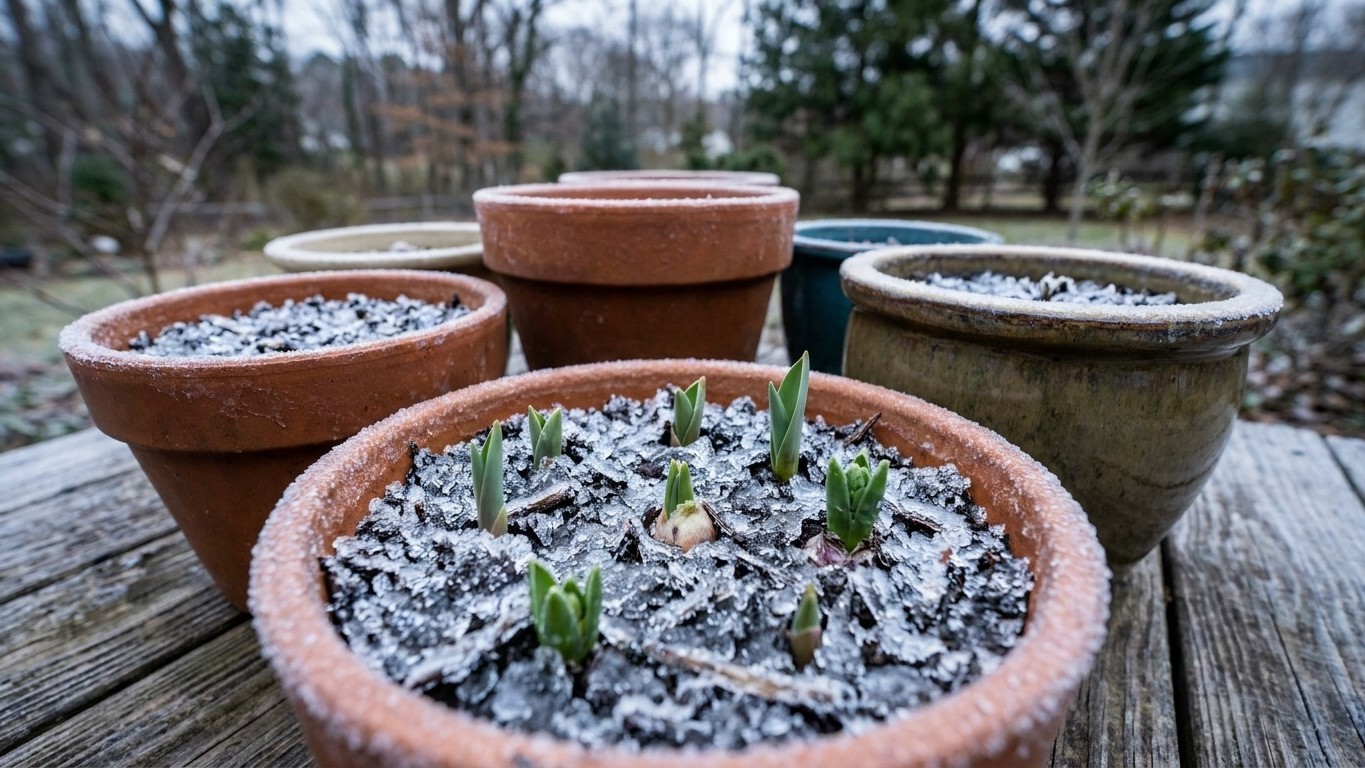
Hardy bulbs are the opposite case. Tulips, daffodils and their relatives need the cold and are meant to stay in the ground. The Spring Bulbs section covers that side of bulb gardening, and Which Spring Bulbs Survive Your Winter sorts out which ones can be left alone and which cannot. Dahlias, cannas and gladiolus belong to the second group, and they are the ones this article is about.
When to lift them
The signal is a frost hard enough to blacken the foliage. Lift within a week or two after that frost; in zone 6a it falls between October 6 and October 21, so the lifting window runs from those dates through the following week or two. That source is the MSU Extension Michigan Garden Calendar. In a year when the frost comes at the late end of the range, lifting can slide well into the last days of October or just beyond. Anywhere colder, the frost comes before the range and lifting starts earlier. In milder pockets it comes later. For a closer read on your own county, the First and Last Frost Dates in Michigan page breaks it down by area.
Reading the frost
A light frost that only nips a few leaf tips is not the signal. Wait for the frost that leaves dahlia and canna foliage limp, dark and collapsed. Up to that point the plant is still feeding the underground parts, and the skins of tubers and rhizomes are still toughening. When the top growth dies, that work stops, and the roots are as ready as they will get. Pulling them within a week or two keeps them from sitting in cold, wet soil while they wait.
Gladiolus is more flexible than the other two. The leaves often start yellowing and browning on their own before the first frost, and the corms can come up then. A frost that blackens the tops is still the outside limit, since cold ground is the real danger to corms that stay in it. If the tops have died back, don’t wait for anything more.
Why lifting early backfires
The urge to get ahead of the cold is understandable, especially with a forecast that shows a hard freeze coming. But pulling plants while the foliage is still green gives you tubers with thin, soft skin and a lot of water in them. They have not finished maturing. Once they are in storage, that moisture and those soft skins are exactly what invites rot, and rot spreads. A tuber lifted a little late is almost always in better shape than one lifted a little early.
Lifting late has limits, though. Waiting until the soil is frozen or saturated for days makes the digging harder, and a deep freeze can damage tubers before you get to them. Pick a dry day when the soil is not soggy. Cut the stems back near the crown, then work a garden fork in a wide circle around the clump before prying it up. Dahlia necks, the thin stem joining each tuber to the crown, snap easily, and a broken neck usually means a tuber that will not sprout. Digging wide protects them better than yanking on the stem.
Storing them over winter
Cure first, clean lightly, then store cool, dark and slightly moist so nothing rots and nothing shrivels. Check every stored tuber, rhizome and corm once a month all winter. That monthly look does more to save a stored collection than any special packing material.
Cure and clean
Set the lifted clumps somewhere sheltered from rain and frost, such as a garage, porch or shed, and let the outer skin dry. The goal is a dry surface, not a dried-out tuber. Shake off loose soil and leave the rest. Scrubbing or hosing the roots clean adds moisture and takes off the skin that protects them. Any that are cut, mushy or bruised should be trimmed or set aside, because one rotting tuber can spread trouble to the rest.
Label as you go. Tags tied to the clump or written on the bag will save you a lot of guessing next spring, when dahlia colors and gladiolus varieties all look the same as bare roots.
Three plants, three sets of needs
The three do not want quite the same thing, and the differences matter more than most storage advice admits.
| Plant | What you are storing | Curing | Moisture in storage | Packing |
|---|---|---|---|---|
| Dahlia | Tuberous roots with a fragile neck | Brief drying, just until the surface is dry | Slightly moist; too dry and they wrinkle, too damp and they rot | Boxes or crates with barely damp peat, vermiculite or wood shavings |
| Canna | Thick rhizomes | Brief drying, sheltered | Slightly moist; they shrivel if left bare and dry | Similar packing, lightly covered and not sealed airtight |
| Gladiolus | Corms | Longer, airy drying until the husk is papery | Dry; moisture invites rot and mold | Mesh bags or paper with air flow, no damp medium |
Dahlias are the fussiest. A dahlia tuber that loses too much moisture turns wrinkled and leathery, while one that is too damp molds at the neck. Cannas tolerate a little more neglect but still shrivel if stored in open air. Gladiolus corms are the odd ones out because they do best dry, and the damp packing that suits dahlias would rot them. Once the corms are cured, the old shriveled corm from last season can be pulled off the new one, and any tiny cormlets can be saved or discarded.
Where to put them
Look for a spot that stays cool and dark but never freezes. An unheated basement, a cool closet or a root cellar works. Keep them away from a furnace or water heater, where the air is warm and dry. Be wary of an attached garage. With NOAA’s Detroit normal for the coldest month’s average nightly low at 19.2°F, a garage with an outside wall can drop below freezing during a cold snap, and frozen tubers turn to mush.
The monthly check
Once a month, open the boxes and look. Wrinkled tubers need a light misting of the packing material, not the tubers themselves. Soft, discolored or moldy ones should come out right away, and the rest can be repacked with fresh, drier material if things look damp. A few minutes a month catches problems while they are still small.
What goes wrong
Most losses trace back to a handful of causes, and each one leaves clues. Lift after the frost, not before, and never leave them in the ground over a Michigan winter. That rule covers most of what follows.
Problems in storage
Rot shows up as soft, brown or black spots, often with a sour smell or a fuzz of gray mold. It comes from too much moisture, poor air flow or tubers that were lifted before they matured. Cut off small affected areas with a clean knife and let the cut dry, and throw out anything mostly soft. Prevention is a lighter hand with moisture and more ventilation.
Shriveling is the opposite problem. Tubers and rhizomes turn wrinkled and lightweight, and some never sprout. It usually means the storage air was too warm or too dry, or the packing material had dried out completely. A slightly moist medium and a cool, steady spot prevent it, and the monthly check is how you catch it early.
Problems with timing and location
Lifting too early gives tubers that never toughened up, the same soft skins that rot in storage. The fix is patience: wait for the blackening frost. The reverse mistake is leaving plants in the ground because a neighbor’s dahlias came back once. Frozen soil kills the tubers outright, and wet cold soil rots them slowly. With every Michigan zone from 4a to 6b seeing freezing nights, the safe call is to lift.
One last way to go wrong is borrowing dates from a warmer area. A garden farther north or at higher elevation gets its first frost before the zone 6a range of October 6 to October 21, so its lifting date moves earlier as well. Working from a downstate friend’s calendar can leave northern plants sitting in frozen ground.
Common questions
Can I leave any of them in the ground if I mulch heavily?
You can try, but the odds are poor in Michigan. The USDA Plant Hardiness Zone Map 2023 places the state in zones 4a to 6b, and Detroit’s coldest-month mean daily minimum is 19.2°F (NOAA NCEI, 1991-2020). Soil freezes in those conditions, and mulch only slows it down. Treat any tuber left outside as a bonus if it survives, not a plan.
Do all three need to wait for frost?
Dahlias and cannas do, since the frost is what tells them to stop growing and firm up. Gladiolus can come up earlier once the tops turn yellow and brown, but a blackening frost is the latest you should wait. Cold soil is the real danger to corms.
What if a hard freeze hits before I lift them?
If the foliage is already blackened, you are on schedule, so lift within a week or two. If the ground itself has frozen solid, wait for a thaw and dig carefully. Tubers that froze look water-soaked and turn mushy, and those should be discarded. Firm ones are fine to store.
What can I plant in the bed once it is empty?
Fall is when hardy bulbs go in, and the empty dahlia and canna bed is a good spot for them. Planting Spring Bulbs in Michigan covers the details, and more seasonal tasks are collected in the Michigan guides. Keep track of where the tender plants grew, though, because tulips or daffodils planted on top of next year’s dahlia spot will make replanting awkward.