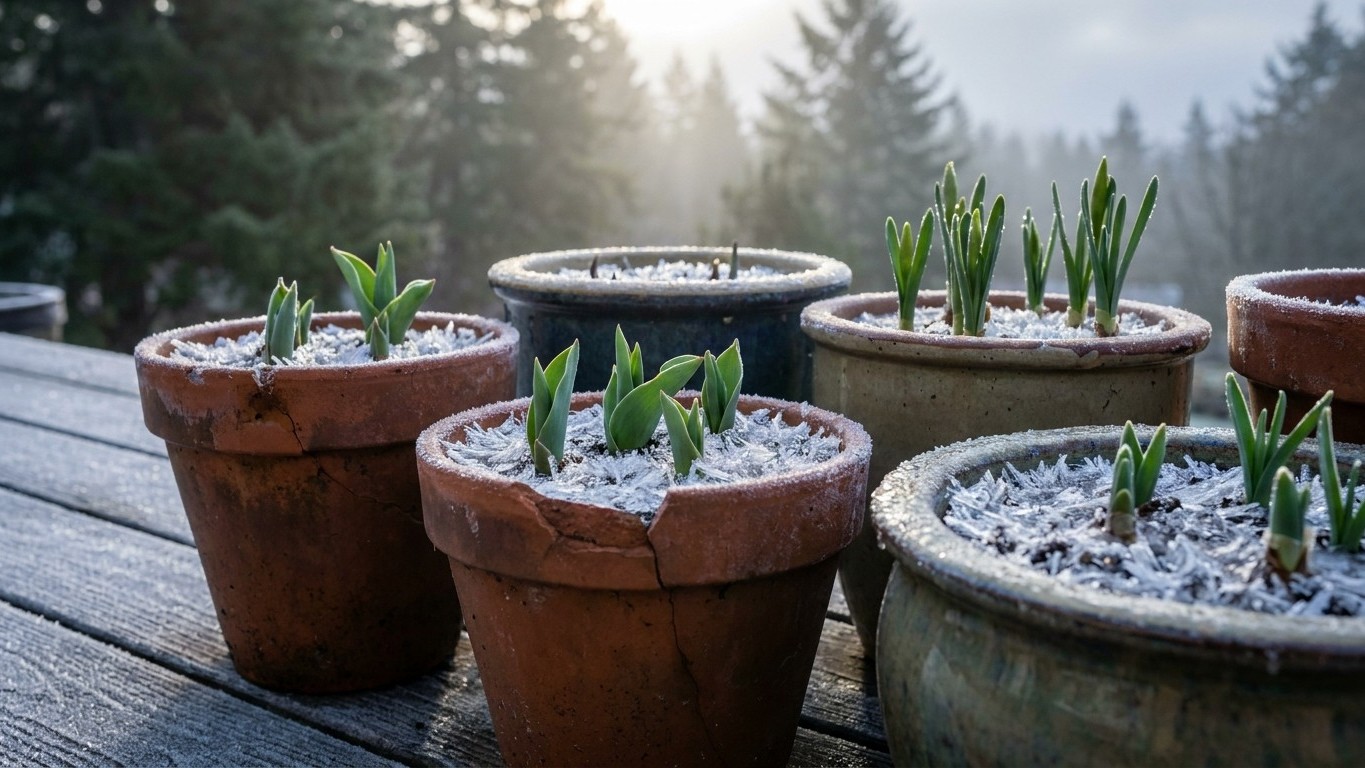

In Ohio, dahlias, cannas and gladiolus come out of the ground once a frost has blackened their foliage. OSU Extension places the first fall frost between October 5 and October 15 in zone 6a, and lifting follows within a week or two. Leave the tubers in the soil all winter and most will turn to mush. Lift them on time, cure them, store them right, and the same tubers, rhizomes and corms will bloom again next summer.
Do you have to dig them up in Ohio?
Yes. On the USDA Plant Hardiness Zone Map (2023 edition, built on 1991-2020 normals), Ohio runs from zone 5b to zone 6b, and across that range the ground freezes. Where soil stays unfrozen at depth, these plants can sit out winter under a layer of mulch. Ohio does not qualify. Dig all three every fall, once frost has blackened the foliage. That is the line to write on the calendar.
What the numbers say about Ohio winters
The USDA system rests on a single variable: the average annual extreme minimum temperature. It tells you how cold the worst night of a typical winter gets. It does not tell you how long soil stays frozen or how wet it is. For a second reading, NOAA’s NCEI Climate Normals for 1991-2020 put the mean daily minimum of the coldest month at 22.0°F at the Columbus station. That figure is an average, so plenty of nights run colder. A month whose typical low sits that far under freezing is a month when the top layer of soil locks up and stays that way.
These three plants never evolved for that. Dahlias come from the highlands of Mexico, cannas from the warm parts of the Americas, and garden gladiolus descend largely from southern African species. All three keep water in fleshy underground parts. A hard freeze turns that water to ice, the ice ruptures the cells, and the tissue thaws into mush. Nothing looks wrong until spring, when nothing comes up. It is a quiet kind of failure, which is partly why so many gardeners keep gambling on mulch.
Where the line falls inside the state
Because Ohio spans more than one zone, the fair question is whether the warmer end gets a pass. The colder parts of the state, generally farther north and at higher elevation, sit toward the 5b end, and the warmer parts toward 6b. Nothing in the map suggests any corner of Ohio escapes freezing, and the Columbus normal points the other way for the middle of the state. So the decision stays the same everywhere. Only the timing moves: the colder north gets its frost earlier and lifts earlier, while the warmer south gets frost later and lifts later.
Hardy bulbs follow different rules. Tulips and daffodils go in during fall and stay put, and the Spring Bulbs section covers that group. For a sorting of which types come through a cold winter in the ground, see Which Spring Bulbs Survive Your Winter. Planting dates for the fall-planted kinds are in Planting Spring Bulbs in Ohio. Dahlias, cannas and gladiolus belong to the opposite camp: in the ground in spring, out of it in fall.
When to lift them
Let the frost give the signal
The signal is a frost that blackens the foliage. Dahlia and canna leaves go limp, dark and papery overnight, and that is the plant’s cue to stop growing. OSU Extension’s Ohio Gardening Calendar lists the first fall frost for zone 6a as October 5 to October 15. The lifting window opens right after: within one to two weeks of the first frost that blackens the leaves. In zone 6a, that points to roughly mid to late October. Since the frost range is an average, the real date slides a bit from year to year.
Other parts of Ohio differ. Farther north and on higher ground, frost arrives earlier than the zone 6a range, so lifting moves earlier too. In the warmer south the first frost comes later, and so does the shovel. Trust your own garden over the calendar: when the leaves turn black, start counting. First and Last Frost Dates in Ohio is the place to check where your town falls.
Why waiting beats rushing
A frost kills the tops. It does not reach the underground parts, which sit insulated by soil. In the days after, the plant pulls what is left in its stems and leaves down into the tubers, and the skins firm up. On dahlias, the small buds near the crown (the eyes) become easier to spot, which pays off in spring when you divide the clumps. Cut the stems back to a short stub and leave the clump in place for that stretch.
Lift early, while the foliage is still green, and you get immature tubers: thin skin, soft tissue, plenty of moisture. In storage they either shrivel or, more often, rot, because soft tissue is where fungi get in. That is a common reason a carefully packed box of dahlias is slimy by midwinter. Waiting too long carries its own risk, since a hard freeze that reaches the soil can damage the crowns. The target is the stretch between the first frost and the first deep freeze, not “as late as possible.”
Gladiolus keep their own schedule
Gladiolus corms are tidier about it. After flowering, the leaves yellow and brown on their own, and that browning tells you the corm has finished refilling. Many gardeners lift as soon as the foliage has died back, which can be before the first frost. If a frost finishes the leaves for you, the frost rule above applies. Either way, do not let the corms sit until the ground freezes.
For all three, dig a generous circle around the clump, well away from the stems, and lever the whole mass up with a garden fork. Pulling on the stalks snaps the necks off dahlia tubers, and a snapped neck means a tuber that will not sprout.
Storing them over winter
Cure first, then clean lightly
Curing means letting the surfaces dry before they go into storage. Set the clumps in a sheltered, airy spot out of rain and direct sun until the skin feels dry and set. Dahlias are often turned upside down for a short spell so water drains out of the hollow stems, because water trapped in a stem runs straight into the crown. Then brush off loose soil with your hands or a soft brush. Skip the scrubbing. Skin scraped off in cleaning is skin that no longer protects the tuber. Cut away anything soft or obviously damaged now rather than packing it with the healthy ones.
How the three differ
The goal for all three is the same: cool, dark and just damp enough that nothing rots and nothing shrivels. The details are where they split.
| Plant | What you store | Curing | Packing | Moisture |
|---|---|---|---|---|
| Dahlia | Tuber clump | Dry until the skin is set; drain hollow stems | Boxes or crates with barely damp peat, vermiculite or wood shavings | Slightly moist; too dry shrivels, too wet rots |
| Canna | Rhizome | Brief drying only, since rhizomes dislike drying out fully | Similar damp packing medium, loosely covered | Slightly moist throughout winter |
| Gladiolus | Corm | Cure longer, until the husks turn papery; remove the old shriveled corm base | Mesh or paper bags, or open trays, in single layers | Dry and airy; moisture invites mold |
Dahlias and cannas want a hint of dampness around them, while gladiolus corms want none. Pack the first two as if you were tucking in a houseplant’s roots, and the third as if you were storing onions. Small cormels that form around glad corms can be saved and stored separately, though they take longer to flower.
Where to keep the boxes
The best spot stays cool and dark and never freezes. A basement corner or an insulated crawl space usually fits. An unheated garage is riskier: with the coldest month at Columbus averaging a nightly low of 22.0°F (NOAA NCEI Climate Normals, 1991-2020), a cold snap can get through a thin garage wall. Warm rooms are the other trap, since they push tubers to sprout too early or dry out.
Open every box about once a month through winter. Look for soft spots, mold, or wrinkled skin. Cut out rot with a clean knife and let the cut surface dry before repacking. If tubers look wrinkled, lightly mist the packing material, not the tubers. If the medium is wet or smells sour, spread it out to dry and repack with fresh material. Ten minutes a month is the step that rescues most boxes.
What goes wrong
Rot is the most common loss. Affected tubers turn soft, dark and sometimes smelly, often with gray or white fuzz. It follows from lifting before the tubers matured, packing them too wet, skipping the cure, or storing them somewhere warm and stagnant. Waiting for the frost signal, curing properly and keeping the packing barely damp prevent most of it. Cut out small soft spots early and the rest of the tuber can survive.
Shriveling is rot’s opposite. Tubers go wrinkled, light and hollow, like a raisin that used to be a grape. It comes from storage that is too dry or too warm, and thin dahlia tubers show it first. A monthly check catches it while a light misting of the packing material can still reverse it. Left unchecked until spring, a shriveled tuber is a lost one.
Lifting too early produces both problems at once. The tubers are soft, immature and thin-skinned, so they dry out and rot with equal enthusiasm. The fix is patience: blackened foliage, then one to two weeks, then digging.
The last mistake happens before any digging. Plenty of advice online was written for milder places, where these plants overwinter in the soil. Applied to Ohio, zones 5b to 6b on the USDA map, it leaves tubers a zone or more too far north for the plan. The sign is a bare patch in spring. Dig down and you find mush. In Ohio, lift all three each fall rather than counting on mulch. A winter that looks mild in December can still bring a hard cold snap by February.
Common questions
Can I leave dahlias in the ground in Ohio under heavy mulch?
It is a gamble you will lose often enough to regret. Columbus’s coldest month averages a nightly low of 22.0°F (NOAA NCEI, 1991-2020), and the ground freezes across the zone 5b to 6b range. Mulch slows the freeze but does not stop it. Lifting costs a weekend, while a failed winter costs the whole planting.
What if the first frost comes late?
The October 5 to October 15 range from OSU Extension for zone 6a is an average, so some years the frost arrives later. Wait for it if the forecast is mild. If a hard freeze is predicted before any frost has blackened the leaves, cut the stems back and lift anyway, since a deep freeze in the soil does more harm than slightly immature tubers.
Do gladiolus come up at the same time as dahlias?
Often a bit earlier. Glad corms are ready once the leaves have yellowed and browned, which can happen before the first frost. Dahlias and cannas wait for the frost to blacken their tops. If a frost catches the gladiolus first, treat it like the others and lift within a week or two.
Do I need to wash tubers before storing them?
Not required, and a heavy wash can scrape skin and push moisture into the clump. A gentle brush after curing is enough. If you do rinse off clay, let the tubers dry thoroughly before they go into a box. For more timing help across the state, browse the Ohio guides; frost dates shift enough between Lake Erie and the Ohio River that your own town’s calendar matters more than any statewide date.