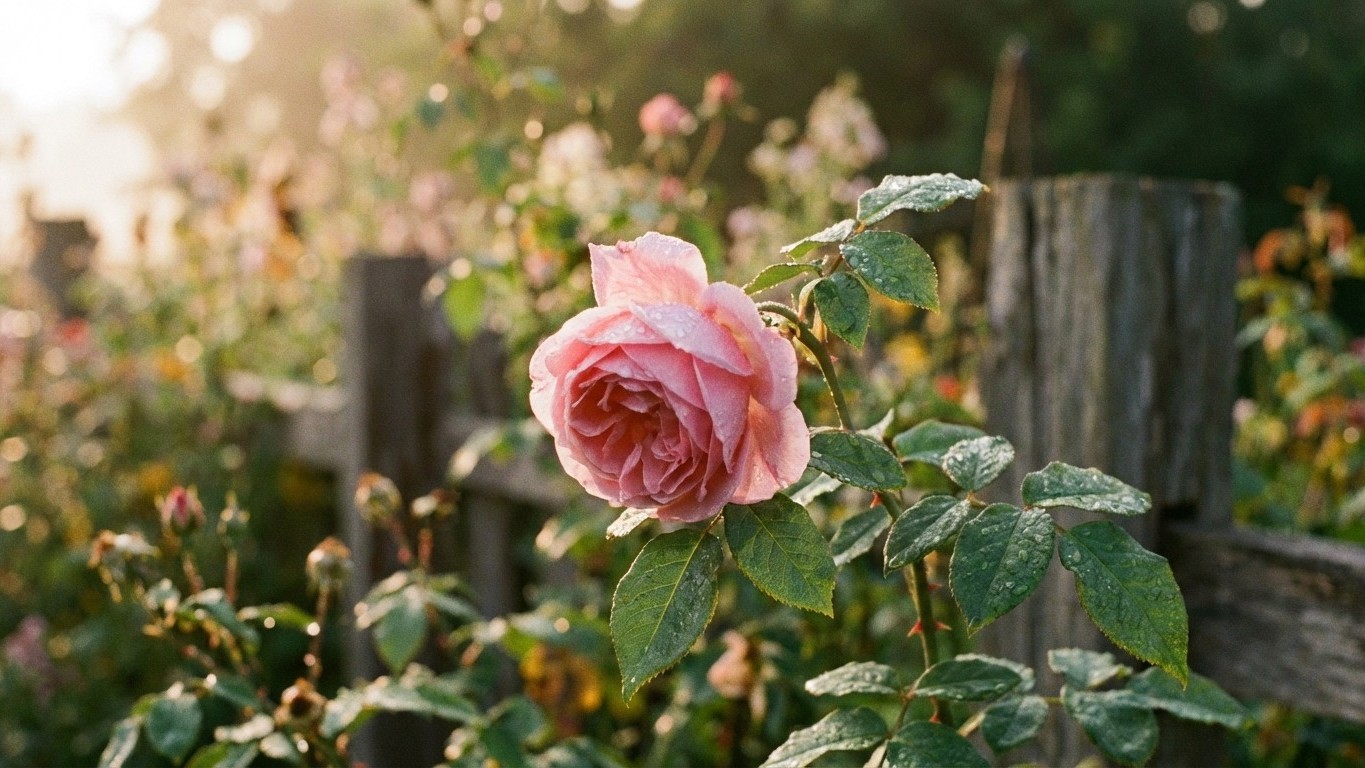

Growing roses in Iowa works best on a simple schedule. Plant bare-root roses in April as soon as the soil is workable, and set out container roses after the last spring frost (April 12 to April 24 at the Des Moines airport station, a few days later in many counties). Favor own-root, cold-hardy shrub roses over fussy hybrid teas. Japanese beetles are the pest to plan around, because they emerge in mid-June just as the first flush of blooms opens.
When to plant Roses in Iowa

Des Moines is the reference city here. NOAA’s 1991-2020 Climate Normals for the Des Moines airport station put the last spring 32°F freeze between April 12 and April 24, and the first fall freeze between October 14 and October 25 (both are the 30-70% probability band; the NOAA NCEI data are public). An airport sits in a warm urban pocket, so treat those numbers as the optimistic end. Iowa State Extension county figures from 1950 to 2021 run about 4 days later in spring and 10 days earlier in fall. Northern Iowa, and any exposed high ground, runs later still in spring and ends sooner in fall. If you garden north of Des Moines, shift every date below back by a week or so and confirm with your county office.
Bare-root and container roses
Bare-root roses ship dormant in March and April and want to go in the ground as soon as you can dig, usually early to mid April. Dormant canes shrug off a hard frost. Soak the roots in a bucket of water for 8 to 12 hours first, no longer.
Container roses arrive in leaf, and leaves freeze. Start from the end of the NOAA band (April 24), add the four days the Extension county records suggest, and you land at about the end of April. Many Iowa gardeners simply wait for early May and plant through early June without trouble.
Fall planting has a narrower window. The common rule of thumb is to get roses in about six weeks before the ground freezes so roots can settle. Counting back six weeks from October 14 gives you September 2. Plant much later than that and frost heave becomes the risk, not cold itself.
Starting roses from seed
Most gardeners never do this, and it deserves a straight warning. Rose seed needs a cold, moist chill (stratification) of roughly 8 weeks before it germinates, and hybrid varieties will not come true from seed. It suits species and wild roses well.
Here is the count-back. Pick May 1 as your outdoor date, a week past the end of the NOAA band so the county figures are covered. Hardening off takes about 7 days, shuttling seedlings outdoors in shade for an hour or two and lengthening the time daily, so they go outside for good on April 24 and begin hardening off on April 24. Seedlings need about 8 weeks under lights before that, which means sowing around February 26. Working back another 8 weeks for the chill puts the seeds in the refrigerator, in damp sand or paper towel in a bag, around January 1. Expect uneven germination, and expect some seed to sit until the following year.
Soil and site preparation
Roses want at least six hours of direct sun, and morning sun matters most because it dries dew off the leaves and cuts down on black spot. Give them airflow, too. A bed jammed against a solid fence or tucked under a maple will fight fungus all summer and sulk in the shade. Keep them out of low spots where cold air pools and water lingers.
Drainage decides more rose failures than fertility does. Dig a hole about a foot deep, fill it with water, let it drain, and fill it again. If the second fill is still standing after several hours, build a raised bed or pick a different spot. Heavy clay is common across much of Iowa and drains slowly. It holds nutrients well, though, so the fix is organic matter, not sand. Sand mixed into clay tends to make something closer to concrete.
Start the work weeks ahead. In March or early April, mark out the bed and smother sod with cardboard or strip it. Get a soil test through your county Extension office before adding anything, since roses generally prefer slightly acidic to neutral soil and guessing at lime or sulfur can backfire. Work 2 to 3 inches of compost into the top foot of soil at least a couple of weeks before planting.
On planting day, dig the hole about 18 inches wide and deep. For grafted roses in Iowa’s winters, set the swollen graft union about 2 inches below the soil surface, which protects it from cold. Own-root roses go in at the same depth they grew in the pot. Space compact hybrid teas 2 to 3 feet apart, shrub roses 3 to 4 feet, and large shrubs or climbers farther. Crowded roses stay damp, and damp roses get sick.
Varieties that suit Iowa
Iowa’s season is short on the front end and cold at the back, so the traits that matter are winter hardiness, disease resistance, and repeat bloom. Own-root plants matter too. If a hard winter kills a grafted rose to the ground, what regrows may be the rootstock, not the variety you bought. An own-root rose that dies back regrows true.
Bloom habit does the work here that determinate and indeterminate habit does for vegetables. Once-blooming roses give one big show in June and set no more flowers, which suits low-maintenance gardeners. Repeat bloomers flower from June to frost but need more feeding and deadheading. Neither is better. Choose by how much weekly attention you will give.
| Variety | Type | Bloom habit | Good for |
|---|---|---|---|
| Knock Out series | Shrub | Repeats through the season | Low-maintenance beds, strong black spot resistance |
| Carefree Beauty | Shrub | Repeats | Fragrant pink blooms, bred by Griffith Buck, who taught horticulture at Iowa State University |
| Therese Bugnet | Hardy rugosa hybrid | Heavy early flush, lighter repeat | Cold tolerance, fragrance, informal hedges |
| William Baffin | Explorer climber | Big flush, some repeat | Fences and trellises in cold exposures |
| Mister Lincoln | Grafted hybrid tea | Repeats | Cutting and fragrance, needs winter mounding |
One caution on the disease-resistant shrubs. Resistance to black spot is not immunity to rose rosette disease, which has spread across much of the central and eastern US and shows up as distorted red growth with extra thorns. If you see it, pull the whole plant. Gardeners comparing climates can read how the calendar shifts in Growing Roses in Rhode Island: Planting Dates, Varieties and Local Pests and Growing Roses in Prince Edward Island: Planting Dates, Varieties and Local Pests, both of which handle milder, maritime winters.
What to plant alongside
The best companions earn their place in dull ways. Ground covers like hardy geranium and low catmint shade the soil, hold moisture, and keep mud from splashing onto lower leaves, where black spot spores wait. Catmint and salvia also pull in pollinators and predatory insects, which gives you real, if modest, aphid help. Lavender wants sharper drainage than most Iowa clay gives, so tuck it on the sunniest, best-drained edge or skip it.
Alliums, chives and garlic are the classic rose partners. The evidence that they repel rose pests is thin and mostly anecdotal. Plant them because they bloom well, stay compact and do not compete much, not because you expect them to stop beetles. Marigolds fall in the same bucket. They can suppress certain soil nematodes, but there is no good evidence they protect roses from the chewing insects above ground.
One pairing has a documented quirk. Zonal geraniums contain compounds that can temporarily paralyze Japanese beetles that feed on the petals, but the beetles recover, and the flowers draw them in. Don’t count it as protection.
Irises and lilies are tidy neighbors for roses, but they carry their own problems. The iris borer and the lily leaf beetle both appear on Iowa State Extension’s home garden pest list, so a mixed bed does not spare you from scouting. Squash and cucumber, with their own bug list, belong in a different part of the yard.
Keep roses away from anything that will out-compete them. Turf grass roots reach into the bed edge and steal water, so leave a mulched ring. Lawn herbicides containing broadleaf killers can drift or wash into the bed and twist rose foliage. Large tree roots are another competitor. And never plant other roses of a susceptible type shoulder to shoulder, since they share diseases.
Watering, feeding and support
Water deeply and less often. About an inch a week, delivered at the base in one or two soakings, pushes roots down. Light daily sprinkling keeps them shallow and wets the foliage. Water in the morning so leaves dry by midday. A soaker hose or a slow trickle at the crown beats an overhead sprinkler.
Mulch with 2 to 3 inches of shredded bark or compost, once the soil has warmed in May, and keep it a couple of inches from the canes. Mulch holds moisture, blocks weeds, and cuts the splash that spreads spores.
Feed when new growth starts in spring, then again after the first flush finishes in early summer, using a balanced rose or all-purpose fertilizer on the label rate. Stop feeding about six weeks before the first fall frost so plants harden rather than push soft growth. Counting back from October 14, that is early September. Compost in spring does a lot of the work for tough shrub roses.
Prune in late March to mid April, when buds begin swelling, and cut back to live green tissue (the center of the cane should look white or pale green, not brown). Remove dead, crossing and weak canes. Once-blooming roses are different. Prune them right after they flower, because they bloom on last year’s wood and spring pruning cuts off the show.
Suckers are shoots that come from below the graft union and carry different leaves, often with seven or more leaflets. Follow them down to where they grow from the root and tear them away. A cut just leaves a bud that regrows. Climbers need to be tied to a trellis or wires as canes grow, fanned out horizontally to encourage more flowers, and tall hybrid teas in windy sites sometimes need a stake.
Common problems

Black spot shows up as round black blotches with fringed edges, then yellowing leaves that drop from the bottom of the plant up. It spreads in wet weather. Water at the soil level, space plants for air, rake up fallen leaves, and treat with a labeled fungicide if it returns every year. Resistant varieties help most.
Powdery mildew is a white, dusty coating on new leaves and buds, common when days are warm and nights are cool and humid. It distorts growth more than it kills. Better airflow and morning sun cut it down.
Winter dieback means canes turn brown or black and stay bare in spring. Wait until buds swell, then cut to green wood. If all the growth comes from below the graft, you have lost the grafted variety and the rootstock has taken over. That’s why own-root roses suit Iowa so well.
Few flowers usually point to too little sun, over-feeding with nitrogen (lots of leaves, little bloom), or pruning a once-bloomer in spring. Yellow leaves with green veins suggest iron chlorosis in alkaline soil, which a soil test will confirm. Buds that turn brown, stay closed and rot (“balling”) come from wet, cool weather, so cut them off.
Rose rosette disease deserves a separate mention because there is no cure. Witches’-broom clusters of red, thickly thorned shoots mean the plant should be bagged and removed, roots and all. Don’t compost it.
Aphids and spider mites are general rose pests rather than anything the state lists as a dominant problem. Clusters of tiny insects on new shoots call for a blast of water from the hose. Stippled, dusty-looking leaves in hot, dry spells often mean mites, which also respond to regular rinsing of the undersides. The pests below are the ones Iowa State Extension specifically highlights for home gardens.
Pests that actually show up in Iowa
Iowa State University Extension calls the Japanese beetle (Popillia japonica) the most destructive insect pest in the landscape and garden, first found in Iowa in 1994. Its season runs May through September overall, peaking from mid-June to August, with adult beetles active from mid-June through July and peaking by mid-July. The gardener sees lacy, skeletonized leaves and chewed flowers, often with several beetles stacked on a single bloom. The control that works at home scale is hand-picking in the cool of early morning, when they are sluggish, and dropping them into soapy water. Skip the pheromone traps, which tend to draw in more beetles than they catch.
Grasshoppers are also on the extension list. You will see ragged chewing along leaf edges and notched petals, and sometimes the insects themselves, from early summer on. Established roses tolerate a lot of damage, but young plants can be set back. Lightweight netting over newly planted roses is the one control worth the trouble. Keeping grassy margins trimmed helps a little.
The common stalk borer is easy to overlook until a stem wilts. Larvae move into larger stems in mid to late June, and what you notice is a sudden drooping tip on a cane with a small entry hole and sawdust-like waste below it. Cut the stem below the damage and destroy it, splitting the stem to find the larva if you want proof. Grassy and weedy borders are where young larvae often start, so keeping the bed’s edges clean gives them fewer places to begin.
The rest of the list mostly targets other plants. Squash bugs, squash vine borers and striped and spotted cucumber beetles are garden crop pests, though the cucumber beetles can wander onto blossoms. Iris borer damage runs May to June, with rhizome destruction in July to early August, and lily leaf beetle goes for lilies. They matter if roses share a bed with irises or lilies. For any insect you can’t identify, take a sample to your county Extension office, since pest pressure varies across the state.
Harvest and end of season
Cut roses for the vase in the early morning, when stems are full of water. Pick buds just as the outer petals begin to loosen and show color. Cut above a leaf with five leaflets, at an angle, and plunge the stems into water right away. Strip leaves that would sit below the waterline. Roses cut at tight bud stage can last longer in a cool room, and they will not ripen or open well if cut too early.
Don’t cut too many stems from a young bush. Leaving most of the foliage gives the plant what it needs to build roots and hardiness in its first two seasons.
As fall approaches, back off. Stop feeding about six weeks before the first fall frost, which is early September if your frost falls October 14. Stop deadheading repeat bloomers around then too, so the plant can form hips and slow down. Rugosa types make the best hips, which are the orange-red fruits you can harvest after a frost for tea or jam, if the plants were not sprayed.
Remember that the airport normals run optimistic. NOAA puts the first fall freeze at October 14 to October 25 in Des Moines, while Iowa State Extension county records run about 10 days earlier, which could mean a first freeze in early October. Keep watering until the ground freezes, since dry roots winter badly. After the ground freezes, mound 8 to 12 inches of soil or compost over the base of grafted roses. Leave pruning for spring, and remove the mound gradually as forsythia blooms.
Local help
County-level frost dates, pest identification and soil testing are the things this guide can’t give you. Iowa State University Extension and Outreach runs a county office in every part of the state where you can submit a soil sample or bring a bug in a jar. For more on the state, browse the Iowa guides, or return to How to Grow Roses: The Complete Guide for the general rules.
Common questions
Do roses survive Iowa winters without protection?
Hardy own-root shrub roses, rugosas and Explorer types usually do, though a brutal winter can kill canes back. Grafted hybrid tea roses need soil mounded over the crown after the ground freezes.
When should I prune roses in Iowa?
Late March to mid April, once buds swell and the worst cold has passed. Prune once-blooming roses right after they flower instead, since they bloom on last year’s wood.
Is it too late to plant roses in September?
Early September is the cutoff for the six-weeks-before-freeze rule of thumb, counting back from October 14. Later than that, wait until spring.
Do I need to spray for Japanese beetles?
Not for established roses. Hand-picking in the morning handles small plantings, and most roses regrow after the mid-June to July beetle peak. Sprays are mainly a question for young plants, and your county Extension office can advise on labeled products.
Can I grow roses from seed?
Yes, with an 8-week chill first, but hybrids won’t match their parents. Native wild roses grow readily this way, and the wild rose has been Iowa’s state flower since 1897.