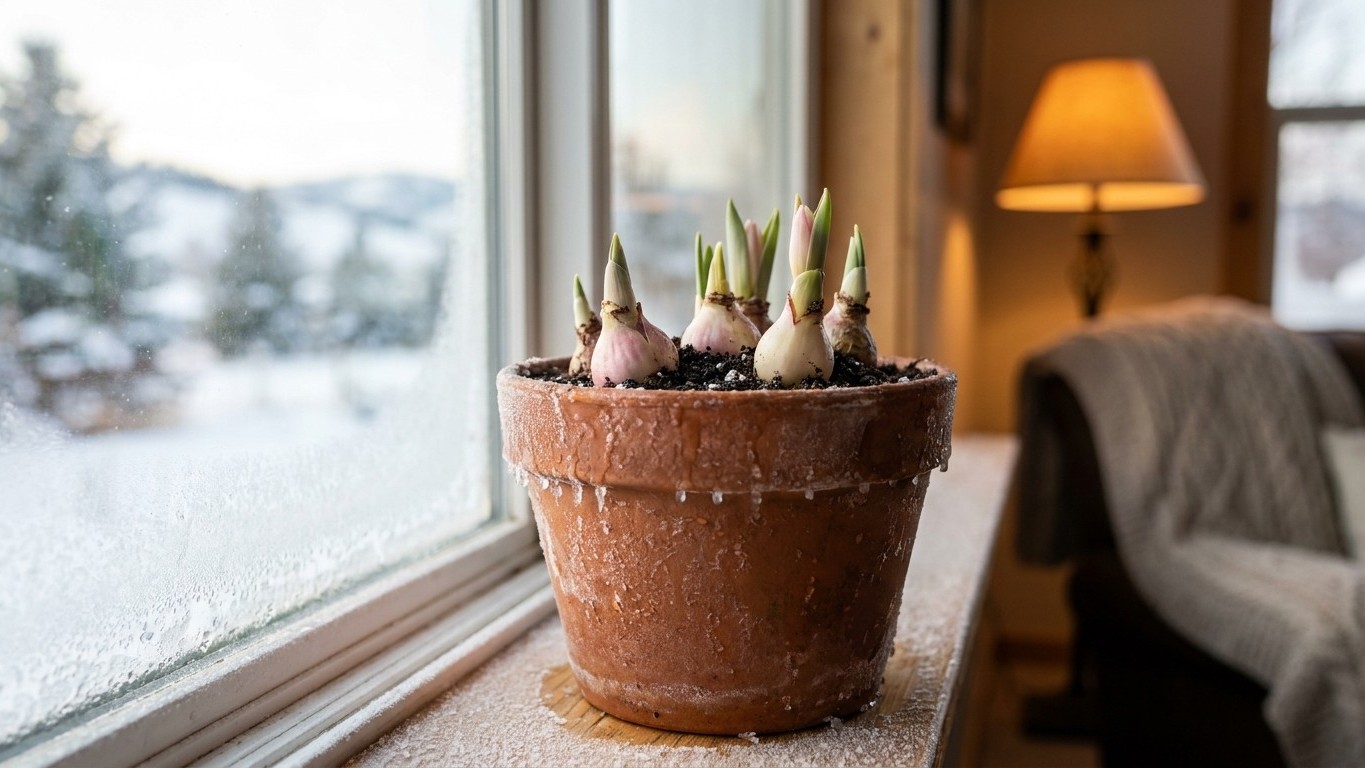

Dig dahlias, cannas and gladiolus in Nebraska after the first hard frost blackens the foliage, within a week or two of it. At the Omaha airport station, NOAA’s 1991-2020 normals put the first 32°F freeze between October 15 and October 26, so lifting runs from late October into early November there. Suburban and rural yards, and anything farther north, usually freeze sooner, and the shovel should follow the frost.
Do you have to dig them up in Nebraska?
Yes, everywhere in the state. The USDA Plant Hardiness Zone Map 2023 places Nebraska between zones 4a and 5b, and in that range the ground freezes deeply enough to kill the soft storage organs of all three plants. Plan to lift every dahlia, canna and gladiolus you want to see again next summer. Mulch alone will not carry them through.
The mechanism is simple. A dahlia tuber, a canna rhizome and a gladiolus corm are fleshy and full of water, built for climates where the soil never gets cold enough to freeze them. Once ice crystals form inside that tissue, it turns to mush at the first thaw. Nothing sprouts in June.
The zone number tells you less than it seems to, because the USDA system rests on a single variable, the average annual extreme minimum temperature. It says nothing about how long the cold lasts or how deep it reaches. The NOAA NCEI Climate Normals for 1991-2020 give a more useful picture for Omaha: the mean daily minimum of the coldest month is 15.2°F. That is an average night, not the worst one. Plenty of nights run colder, and the soil stays frozen for weeks.
Where the line falls inside the state
There is no line to find. Zone 4a and zone 5b both land on the same answer, so the question across Nebraska is when to lift, not whether to. What shifts from place to place is the calendar. Farther north and at higher elevation, the first fall frost comes earlier, so lifting comes earlier too.
The frost figures in this article come from the Omaha airport station. Gardens in the suburbs and out in the country often see the first fall frost one to two weeks earlier than the airport does, and more than that on high ground. Look up your own county before you pick a weekend.
Gardeners sometimes assume that what works for tulips works for everything bulb-shaped. Hardy spring bulbs do stay in the ground all winter, and Which Spring Bulbs Survive Your Winter sorts out which ones. Dahlias, cannas and gladiolus belong to the opposite group, the summer-flowering tender types. If you are planning fall planting alongside this lifting, the broader Spring Bulbs section covers the hardy side, and Planting Spring Bulbs in Nebraska adds the state-specific timing.
When to lift them
The signal is a frost that blackens the foliage. Once the leaves of a dahlia or canna go limp and dark, the plant has shut down, and you lift in the week or two after that frost, not before it and not weeks later.
Reading the frost
The Omaha reference figure is October 15 to October 26 for the first fall freeze. That range comes from NOAA’s 32°F probability band, the stretch of dates over which the odds of a freeze climb from 30 percent to 70 percent. It is a range of likelihood, not a calendar appointment. Some years the freeze comes at the early end, some years the late end, and a few years it lands outside the range.
Count forward from the frost you actually get. At the Omaha airport, that puts lifting from late October into early November. A garden in the suburbs or the country, where the frost tends to arrive earlier, should start earlier too. Local first-freeze timing is laid out in First and Last Frost Dates in Nebraska.
A light frost that only nips leaf edges is not the signal. Dahlias and cannas often shrug off a first brush with 32°F and keep blooming for days. Wait for the black, collapsed foliage. Gladiolus work a little differently, since their leaves tend to yellow and fade on their own, so many gardeners dig them once the tops have browned, around the time of the first frost.
Why early lifting backfires
Lifting a healthy green plant in a warm September feels like getting ahead of the weather. It usually backfires. Until frost shuts the top growth down, the foliage keeps sending energy to the storage organs below. Frost ends that flow, and over the following days the tubers firm up, the skin thickens, and the crown settles.
Tubers dug before that happens are thin-skinned and carry extra moisture. In storage they turn soft, grow mold, or shrivel, and the failure often shows up in January when nothing can be done about it. Waiting for the blackened foliage is the cheapest insurance in this whole routine.
The opposite mistake also costs you. Leave the clumps in the ground for weeks after the frost, and a hard freeze can push into the soil and reach the tubers. A week or two is the target. Pick a dry day, loosen the soil well out from the stem with a garden fork, and lift the clump with its soil still attached. Dahlia necks snap easily, so lever, don’t yank. Cut the stalks back to a short stub first so you have a handle without a floppy mess of stems.
Storing them over winter
Storage comes down to three steps: cure, clean lightly, then keep them cool, dark and slightly moist so they neither rot nor shrivel. The part gardeners skip is the checking. Look at them once a month through winter, because a single soft tuber can spoil its neighbors.
Curing and cleaning
Curing means letting the surface dry in a sheltered spot, out of rain and direct sun, with air moving around. A garage, porch or covered patio works. The soil clinging to the roots dries and flakes off, and the skin toughens enough to resist rot. Brush off loose dirt by hand and leave it at that. A hose adds moisture right where you least want it, and it can scrub away protective skin. Cut away anything already soft or broken.
Then find a storage spot that stays cool and dark and never freezes. This is where Nebraska winters make a difference. With the coldest-month mean minimum at 15.2°F in Omaha (NOAA NCEI, 1991-2020), an unheated garage or an uninsulated shed can easily dip below freezing on the nights that matter. A basement corner, away from the furnace and away from outside walls, is the safer bet.
How the three differ
All three want the same general conditions, but they differ in how much moisture they tolerate.
| Plant | What you are storing | Packing | Moisture | What to look for monthly |
|---|---|---|---|---|
| Dahlias | Clumps of tuberous roots with a crown | Lightly damp wood shavings, vermiculite or similar, in a box or crate | Slightly moist | Wrinkling (mist the packing lightly) or soft, dark spots (cut away) |
| Cannas | Thick rhizomes | Barely damp peat moss or similar, in a box or crate | Slightly moist | Shriveling or mold on the cut surfaces |
| Gladiolus | Round corms, with small cormels attached | Paper or mesh bags that let air through | Dry | Soft corms, mold, or dampness in the bag |
Dahlias are the fussiest because their tubers are thin-skinned and prone to drying out. Cannas, with their heavy rhizomes, tolerate a bit more neglect. Gladiolus are the odd ones out: corms keep best dry, and they need to be cured longer before bagging. When the old, withered corm separates from the new one, remove it, and pull off the small cormels if you don’t plan to grow them on. Label each bag or box. Last year’s red and this year’s pink look identical when they are brown lumps in March.
What goes wrong
Most losses fall into four groups, and each leaves a recognizable sign.
Rot and shriveling
Rot shows up as soft, mushy patches, often dark, sometimes with fuzzy mold or a sour smell. It comes from tubers stored too wet, packed before they were cured, or dug too early. Cut away the bad tissue to clean flesh, let the cut surface dry, and give the rest more air. Isolate any piece that keeps going soft.
Shriveling is the reverse. Tubers turn wrinkled and light, like an old apple, because the storage spot is too warm or too dry or the packing has dried out. A light misting of the packing usually rescues them if you catch it in time. A cooler location prevents the next round. Gladiolus corms are the exception, since a dry bag is correct for them.
Timing mistakes
Lifting too early gives thin-skinned tubers that rot or shrivel no matter how well you store them. The prevention is boring: lift after the first hard frost, not before, even when the weather is pleasant and the plants look done.
The last one is leaving them in the ground in a place the cold reaches. Nebraska sits between USDA zones 4a and 5b, and a tag or a neighbor’s story from somewhere milder does not change that. One easy winter can lull a gardener into thinking the plants are hardy. The next hard winter, with the ground frozen for weeks, takes everything. A tuber that survived once did so by luck, not by hardiness.
Common questions
Can I leave cannas in the ground in Nebraska under heavy mulch?
Not reliably. The state runs from USDA zone 4a to 5b, and the Omaha mean daily minimum of the coldest month is 15.2°F per NOAA’s 1991-2020 normals. Mulch slows the cold but does not stop the soil from freezing around the rhizomes. If you want to experiment, divide the clump and mulch only half of it. Keep the other half in a box in the basement.
Do I have to wait for frost before digging gladiolus?
Not strictly. Gladiolus foliage often yellows and browns before a hard frost, and many gardeners dig the corms when the tops have died back. Dahlias and cannas are the ones where you wait for the blackened foliage. If frost arrives first, cut the tops and dig within the following week or two.
What if a hard freeze hits before I have dug anything?
That is the normal way it happens, and it is fine. The blackened foliage is your cue, not an emergency. Cut the stalks back, dig within about a week or two, and cure the clumps as usual. The danger starts when they sit for weeks and the ground freezes around them.
How often should I check stored tubers, and what am I looking for?
Once a month is enough. Pick up a few pieces from each box or bag and look for soft spots, mold, or wrinkling. Soft pieces get trimmed or thrown out, wrinkled dahlias and cannas get a light mist on the packing, and damp gladiolus bags get swapped for dry ones. A basement corner that never freezes makes the whole job easier, and more of Nebraska’s gardening timing is collected in the Nebraska guides.