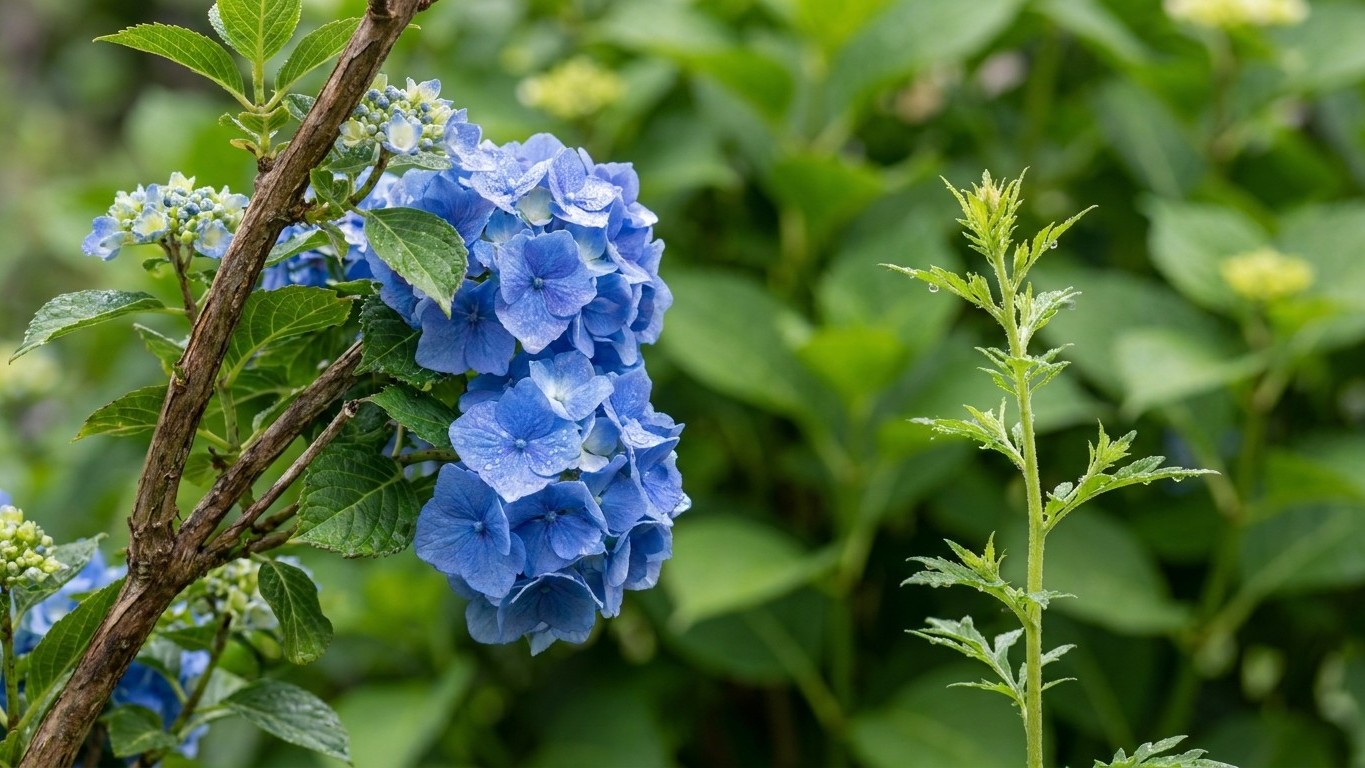

Hydrangeas that bloom on old wood, mainly bigleaf types, need protection in a Nebraska winter. Those that bloom on new wood, such as panicle and smooth hydrangeas, usually come through with little help. The protection is simple: a deep mulch over the crown, a wire cage filled with dry leaves for the tender ones, and a good drink before the ground freezes. When you put it on matters as much as what you use.
What this comes down to in Nebraska

At the Omaha airport weather station, the first fall frost arrives between October 15 and October 26, and the last spring frost falls between April 12 and April 23. Winter protection goes on after that first-frost window, once the shrub is dormant, and comes off as the spring window closes.
Those dates describe one reference city, not the whole state. Suburban and rural gardens can see the last spring frost later and the first fall frost earlier than an airport does, sometimes by one to two weeks, and more at elevation. The current (2023) USDA Plant Hardiness Zone Map puts Nebraska across zones 4b to 6a. That system rests on a single variable, the average annual extreme minimum temperature, so it says how cold the worst night usually gets and nothing about wind, dry air or thaws.
Those other things do much of the damage. A hydrangea rarely dies from one cold night. It loses flower buds and upper stems to deep cold, wind and swings between warm days and hard freezes, and it loses roots when soil dries out or heaves.
Which hydrangeas actually need winter protection?
The answer depends on where the flower buds form. Old-wood types set next year’s buds on stems that grew this year, so a stem killed back to the snow line means no flowers. New-wood types grow their flowering stems from the base each spring, so winter dieback costs them very little. The longer breakdown of which types suit the state is in Which Hydrangeas Survive a Nebraska Winter.
| Type | Blooms on | Winter risk | What to do |
|---|---|---|---|
| Bigleaf | Old wood (some rebloomers also on new) | High: buds and stems often die back | Mulch the crown, cage and fill with leaves, shelter from wind |
| Mountain | Old wood | Moderate to high | Same as bigleaf, a little less insulation |
| Oakleaf | Old wood | Moderate: buds can suffer in cold, windy sites | Deep mulch, protect from wind |
| Smooth | New wood | Low | Light mulch, cut back in late winter |
| Panicle | New wood | Low | Light mulch for young plants, cut back in late winter |
What does winter do to a hydrangea besides cold?
Plains wind is the second threat. It dries out exposed stems and strips away the snow that would otherwise insulate the base. A shrub in the open, with no windbreak, loses more than one sheltered by a house, fence or evergreens where snow cover stays steady.
Thaws are the third. A warm spell in midwinter or early spring can wake buds, and the next hard freeze then kills them. Young plants add a fourth risk, since shallow roots can heave out of the soil as it freezes and thaws. Rabbits chew bark and tender stems once snow covers other food.
Working it out for your own garden
Start with the plant, then the calendar. Check whether you have an old-wood or new-wood hydrangea (the tag, or the bloom habit described in your growing hydrangeas in Nebraska guide, will tell you). Then use the frost window to time each step, since the reference-city dates move with your location.
How do you time winter protection from the frost window?
Work forward from the first fall frost. At the reference station that window runs October 15 to October 26. Protection should wait until the shrub is dormant, which means the leaves have dropped and several hard frosts have passed. Check your own county extension office for how much later your garden’s frost window runs. Mulch piled on too early can hold warmth and give mice a place to nest, so let the plant tell you when it is ready.
The groundwork comes earlier. Stop fertilizing by midsummer, so the plant is not pushing soft new growth when frost arrives. Finish any pruning of old-wood types soon after they flower, never in fall. In late fall, water deeply while the soil is still workable, because a dry root zone is a common cause of winter injury.
How do you build a leaf cage for a bigleaf hydrangea?
Drive three or four stakes around the shrub and wrap them with chicken wire or hardware cloth to make a cylinder. Make it taller than the plant and a few inches wider all around. Fill it loosely with dry shredded leaves or straw, and top it with a board or a bit of burlap to shed rain. Keep the plastic out of it, because plastic traps heat on a sunny day and then lets moisture sit against the stems. A wet pile of matted leaves does more harm than none, so fill it dry.
For new-wood types, a few inches of shredded bark or leaves over the crown is enough. Young new-wood plants in their first and second winters should get that mulch every year; only old-wood types need the full leaf cage.
When do you take protection off in spring?
Count forward from the last spring frost. At the reference station, April 12 to April 23, plus one to two weeks for a suburban or rural garden with a later frost, gives a window from the third week of April into the first week of May. Take the cage and mulch off in stages, not all at once, and keep the material close by for a late cold snap. Uncover a bit more each week as buds swell.
How can you tell if a hydrangea survived the winter?
Old-wood hydrangeas often look dead into spring and then sprout from lower down. Scratch a stem lightly with a fingernail. Green and moist under the bark means it is alive, and brown and dry means it is dead. Wait until the shrub has had time to leaf out, often well into late spring, before cutting anything down. Cut only the wood that is clearly dead, and expect fewer flowers from a bigleaf that lost its upper stems.
What changes across the state
The reference-city dates fit Omaha and the Missouri River valley. A state this wide runs from the humid east to the high, dry Panhandle, and the numbers shift as you move.
Going west, elevation rises and the air gets drier. Winters are colder and windier, springs are later and falls come sooner. A garden in the Panhandle should expect a shorter protection-free season than one in the southeast, and should lean on windbreaks and deeper mulch. Northern Nebraska is generally colder than the south, so a gardener near the South Dakota line is closer to zone 4b conditions than one near the Kansas border.
The east, with a milder climate, still gets sharp swings. Snow cover helps wherever it sticks, because a blanket of snow insulates the crown. On open ground the wind strips it, which is why a shrub next to a fence, a house or a row of evergreens often does better than one in the middle of a lawn. City plots in Omaha or Lincoln run a little warmer than farms outside town, thanks to buildings and pavement.
Microclimates matter at every scale. A south-facing wall warms early and invites buds to open before the last frost, so on that side the main danger is a premature thaw. A north or east exposure stays cold and steady. Your own yard may sit a full zone away from the one on the map.
The mistakes this state punishes

Mulching too early is a common mistake. A warm October can tempt you to pile on leaves while the plant is still active and the ground is warm. Rodents move in, the crown stays damp, and rot follows. Wait for several hard frosts.
Pruning an old-wood hydrangea in fall or winter removes next year’s flower buds. If you cut a bigleaf back to the ground, expect a green shrub with no blooms. Remove only dead wood in spring, once new growth shows where the live stems end.
Feeding late in the season pushes tender growth that the first hard freeze can kill. Skip nitrogen after midsummer.
Pulling the protection off during a March warm spell is another way to lose the buds. Nebraska can swing from mild weather to a hard freeze in a few days. Keep the mulch on until the spring frost window is behind you, and then take it off in stages. Wrapping a shrub in plastic fails for the opposite reason, since the stems cook on a sunny January day and then freeze at night.
Skipping water is a quiet mistake. Plains autumns are often dry, and a hydrangea going into winter with dry roots loses more stems. Soak the ground well in late fall before it freezes. Finally, planting a new shrub in late fall gives it too little time to root, so spring is the safer season. In bigleaf hydrangeas, flower color follows soil pH, which is a separate matter, covered in Why Hydrangeas Are Pink in Nebraska, and How to Turn Them Blue.
Checking this against your county
The Omaha dates are a starting point for your garden, not an instruction. Your county extension office knows the local frost pattern, the soils and the winters that have caught gardeners off guard. Start with University of Nebraska–Lincoln Extension to find your county office, and read our guide to growing hydrangeas in Nebraska for planting and care beyond winter.
Common questions
Do hydrangeas need winter protection in Nebraska?
Bigleaf, mountain and oakleaf hydrangeas benefit from it, since they bloom on old wood. Panicle and smooth hydrangeas bloom on new wood and usually need only a light mulch, mainly while they are young.
Should I cut hydrangeas back before winter?
Leave old-wood types alone, because the buds for next year’s flowers are already on the stems. New-wood types can be cut back in late winter or early spring, before growth starts. Leaving the stems up through winter also helps trap snow and protect the crown.
When should I take off the mulch or cage in spring?
Begin after the last spring frost window, which at the Omaha reference station runs April 12 to April 23. Rural and suburban gardens with a later frost pattern may need to wait one to two weeks longer. Remove protection gradually over a couple of weeks, and keep leaves or straw handy in case a cold night returns.
Can potted hydrangeas stay outside all winter?
Pots are riskier than ground planting, because roots sit above the soil’s insulation and freeze solid. Move them to an unheated garage, shed or sheltered porch once the plants are dormant, and water lightly now and then so the root ball never dries out completely. Bring them back out after the spring frost window has passed, and keep an eye on the forecast for a late cold night.