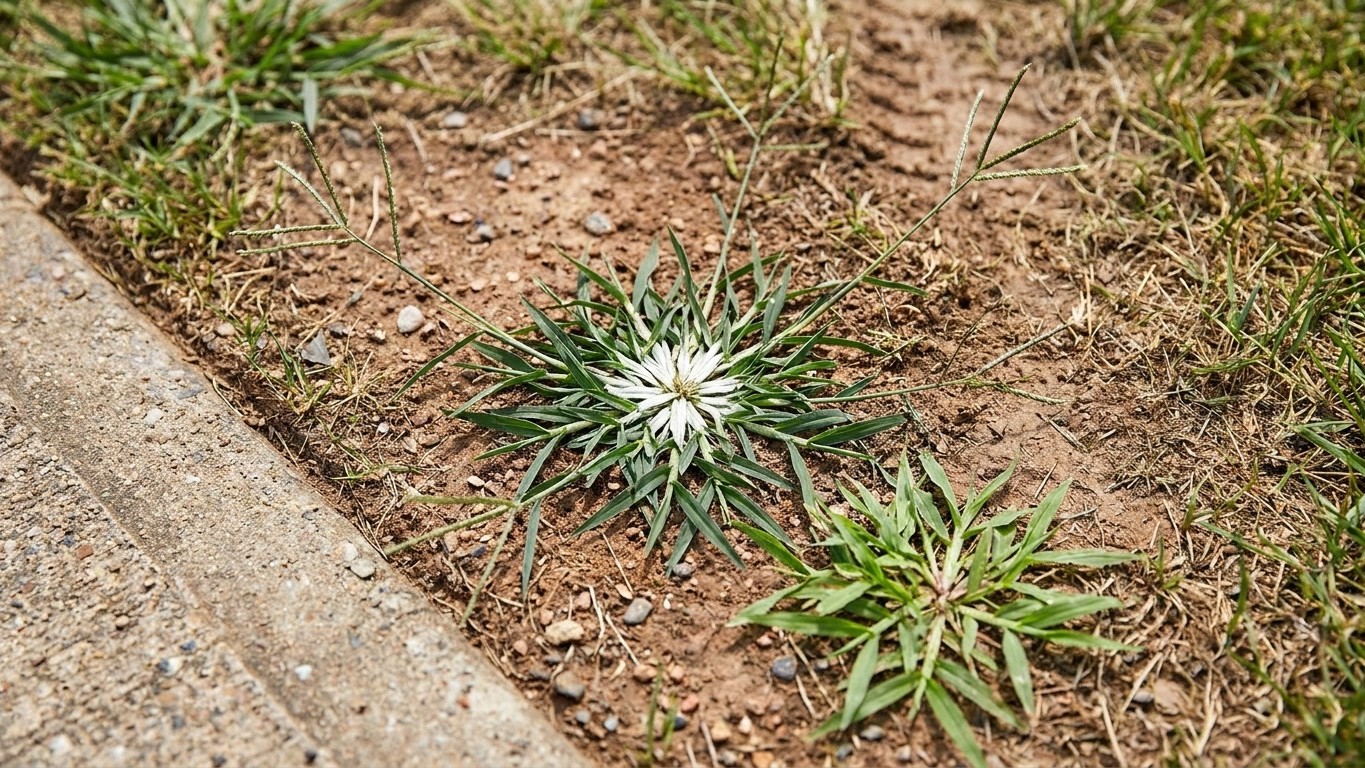

In most of Pennsylvania, a cool-season lawn gets aerated in fall, while the grass is still growing and well ahead of the first freeze. At the Philadelphia weather station that freeze arrives between November 5 and November 16. A warm-season lawn of zoysia or bermudagrass gets aerated in summer instead. Which grass you actually have decides the calendar.
When to aerate a lawn in Pennsylvania
Pennsylvania lawns fall in the transition zone, a label The Homestead Post assigned from climate normals and read against the season tolerances in Clemson Cooperative Extension’s HGIC 1214. That label describes the reference city. Higher ground and the northern tier can lean cooler, so treat it as a starting point and not a state-wide verdict.
Transition means neither type of grass has it easy. The grasses recommended here, drawn from Clemson’s HGIC 1214 and Penn State Extension for the cool-season species, split into two camps. Tall fescue, Kentucky bluegrass and perennial ryegrass are cool-season. Zoysiagrass and bermudagrass are warm-season. A cool-season lawn suffers in July. A warm-season lawn is brown from October to April. No single grass wins, which is why the best grass seed for Pennsylvania lawns depends on how much summer stress or winter brown you will tolerate.
The best-known timing rule comes from University of Nebraska-Lincoln Extension: “Cool season grasses, including Kentucky bluegrass, fescues, and perennial ryegrass, can be aerated in spring from early April through the end of May and again in fall from late August through the end of October.” For warm-season grasses it says they “should also be aerated when they are growing actively, which is late May though late August.”
Those months are Nebraska’s. Pennsylvania’s frost arrives on a different schedule, so don’t copy them onto your calendar. What carries over is the condition: aerate when the grass is actively growing, so it can fill the holes before it stops.
For a cool-season lawn here, aerate in fall while the grass is still growing, and finish well ahead of the November 5 to November 16 first-frost window. That window comes from NOAA NCEI’s 1991-2020 U.S. Climate Normals, using the 30 to 70 percent band of 32°F freeze probabilities. Philadelphia is the mildest corner of the state. Farther north and at higher elevation the first frost comes earlier, so the fall job moves earlier too. Spring is the optional second pass for these grasses, but fall is the one worth protecting. The full first and last frost dates in Pennsylvania show how much your own area can shift.
Warm-season lawns follow the other half of the rule: aerate in summer, when the grass is growing hard. Not sure which you have? A lawn still green into late fall is cool-season. One that turns tan in October is warm-season.
Core aeration, not spikes
A spike pushes a hole by shoving soil sideways, which can compact the walls of that hole even tighter. A core aerator removes a plug and leaves a real channel for air, water and roots. The Nebraska Extension article is blunt about it: solid-tine or spike aeration is “not effective in clay/silt soil,” and core aeration is the method for compacted ground.
That matters here because of the soil Pennsylvania is known for. USDA lists the Hazleton series, an Inceptisol, as the state’s representative soil. An Inceptisol is a young soil that has not built strong horizons yet. USDA NRCS Soil Data Access gives the surface values for this series: 46 percent sand, 12 percent clay and 42 percent silt, with about 3.0 percent organic matter, and it is well drained. The surface pH is about 4.6, which is strongly acid.
Read that as a tendency, not a promise. Ground like this sheds water well, yet the large silt share means it can pack down under mowers, kids and years of foot traffic. This is the soil that represents the state, not necessarily yours. River bottoms, hill country and any lot a builder scraped or filled can look completely different. Aeration helps compaction, but a soil test tells you your own pH and whether acid soil is also holding the lawn back.
When the job is done right, the lawn is dotted with intact plugs of soil, each about as thin as a finger, lying on the surface. Leave them. They break down within a couple of weeks and work back into the turf. If the machine only dimples the ground, the soil is too dry or too hard. Pull cores, not spikes, and run the machine when the soil is moist but not wet, such as the day after a soaking rain has drained. A screwdriver should slide in without a fight. In wet soil the tines smear the sides of each hole and the cores turn to mud.
Aerating and overseeding together
For cool-season lawns, fall aeration and overseeding belong on the same day. Seed scattered on bare thatch and compacted turf mostly sits there. Seed that drops into fresh holes meets soil, stays damp and gets covered as the cores crumble. That is the reason lawn care folks treat the two as one job. The timing for overseeding a lawn in Pennsylvania is the companion decision, since it uses the same fall growing window.
The order is simple. Mow a bit shorter than usual, aerate, spread seed across the whole lawn so plenty falls in the holes, leave the cores where they land, and keep the surface damp while the seed sprouts. Tall fescue, Kentucky bluegrass and perennial ryegrass all fit this routine. Aerating without seeding is still worthwhile on a thin lawn, but the combination is where the visible payoff shows up, especially on a lawn that browned out in a July heat spell.
Aerate first, then seed the same day, so the seed goes into open holes and not into soil that has had time to crust over.
The pairing does not fit a warm-season lawn. Zoysia and bermudagrass are aerated in summer because that is when they grow actively and can close the holes themselves. Fall seeding makes little sense on them, because the grass is heading toward its October-to-April brown stretch and there is no growth left to knit the new holes together. Warm-season owners should aerate in summer and skip the fall seeding step. Month-by-month placement of both jobs is laid out in the Pennsylvania lawn care calendar, and the wider Lawn Care section covers what comes before and after.
What goes wrong
Most aeration failures come down to timing and soil moisture, not to the machine. A dormant lawn is the first. A cool-season lawn in deep winter and a warm-season lawn in its October-to-April brown period have no growth to heal the holes, and open ground in winter mostly invites weeds. Aerating when nothing is growing does the lawn no good.
Aerating too close to frost is the second. Grass that is slowing down for winter cannot recover from the disturbance, and fresh seed that sprouts just before a freeze can be lost. Treat the November 5 to November 16 window as a deadline you want to be well ahead of, and finish even earlier in the northern tier and higher elevations, where frost comes sooner than at the Philadelphia reference station. Scheduling the job early also leaves room for a rainy weekend or two.
Soil moisture ruins plenty of good intentions. Waterlogged soil smears and the cores come up as mud. Bone-dry soil can stop the tines from penetrating, leaving shallow dimples that do nothing. The fix is to water deeply a day or so ahead in a dry spell, or wait a day or two after a hard rain. The screwdriver test takes ten seconds.
The last mistake is expecting spikes to rescue compacted ground. On silty or clay-heavy soil, the Nebraska Extension source says they are “not effective.” If your ground feels like pavement in August, rent or hire a core aerator rather than buying spiked shoes.
Common questions
Can I aerate in spring in Pennsylvania?
Yes, for a cool-season lawn it is the optional second pass, after the grass is actively growing again. Fall remains the priority. Warm-season lawns should wait for summer, once they have fully greened up.
Should I aerate before or after overseeding?
Before. Seeding into freshly opened holes gives the seed soil contact, which is the whole point of combining the two jobs. Leave the soil cores on the lawn afterward.
How do I know if my lawn is cool-season or warm-season?
Watch it through the cold months. Zoysia and bermudagrass are brown from October to April, while tall fescue, Kentucky bluegrass and perennial ryegrass stay green much later. If your lawn is a mix, aerate for whichever grass dominates.
Do I need a soil test before I aerate?
Aeration does not require one, but a test is the only way to know your own soil. The state soil figures, including that 4.6 surface pH, are representative values for a mapped soil series, not a reading from your yard, and they are only a rough guide to what your lawn is sitting on.