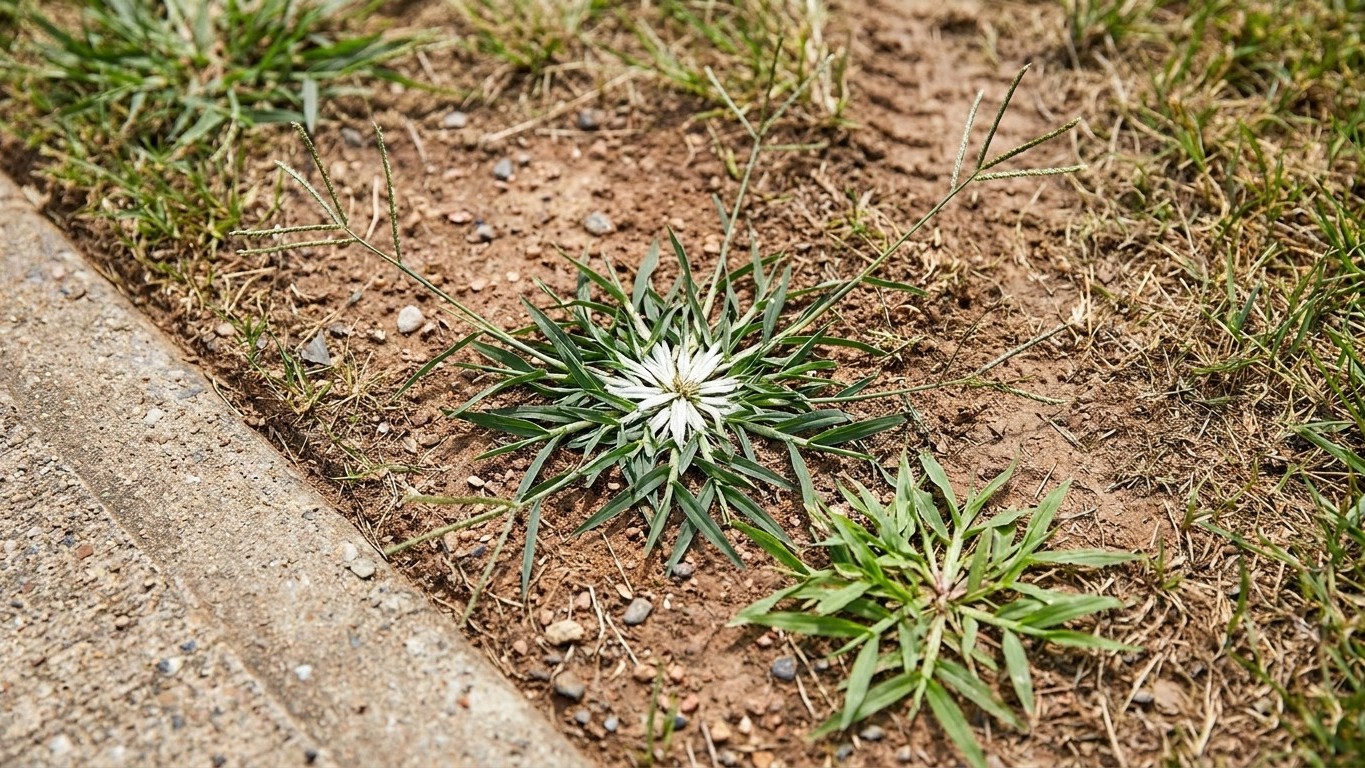

Most New Brunswick lawns do not need dethatching. Cut a wedge of turf and measure the brown, spongy layer: under 0.5 inch is healthy, and only above 0.75 inch is it worth acting. If yours does qualify, early fall is the best time, but the average first frost in Moncton falls on October 2, which is today. The fall window is closing, and spring is a perfectly good fallback.
Do you need to dethatch at all?
Thatch is the tight mat of living and dead stems and roots that builds up between the green blades and the soil. A thin layer is useful. It cushions foot traffic and insulates the crown of the plant. Trouble starts when the layer thickens enough that water and fertilizer sit in it instead of reaching the roots, and when roots begin growing up into the mat rather than down into the soil.
How to measure it
Use a spade to cut a small wedge of turf and lift it out. Look at the side of the plug. Green growth sits on top, soil is at the bottom, and the brown, spongy band in between is your thatch. Measure that band with a ruler, and do it in two or three spots, because thatch is rarely even across a yard.
Under 0.5 inch, leave the lawn alone. Between 0.5 and 0.75 inch, you are in a gray zone where watching and adjusting care usually beats machinery. Above 0.75 inch, the layer is thick enough to justify removal. That is the line Clemson Cooperative Extension and Penn State Extension turfgrass guidance both work from.
Why most lawns skip this chore
A lot of dethatching happens out of habit, and a lot of it is unnecessary. The grass types suited to this region differ in how much thatch they build. Kentucky bluegrass spreads by underground stems and is the usual culprit. Tall fescue and perennial ryegrass grow in bunches and rarely build a thick mat. Fine fescues fall somewhere in between.
Grass clippings, despite the old myth, are not the cause. They break down quickly. Thick thatch more often comes from heavy nitrogen feeding, constant shallow watering, or compacted soil that slows the microbes doing the decomposing. If your wedge measures under half an inch, put the rake back in the shed. Aggressive dethatching on a healthy lawn just tears out good grass and opens bare soil to weeds.
The season to do it in New Brunswick
Cool-season grasses recover fastest when two things line up: active growth and mild temperatures. In this province that means early fall and, second best, spring. Summer heat stresses the turf, and a lawn pulled apart in July has a hard time bouncing back.
The numbers that frame the window come from Environment and Climate Change Canada’s Canadian Climate Normals for 1981-2010, at the Moncton station. The average last spring frost is May 23. The average first fall frost is October 2. Those are mean dates, which means the midpoint of a spread. In one year out of two, the frost arrives later than the average, and in the other half it arrives earlier. Treat them as the center of a window, never as a safe date.
Two further cautions apply. One station is not a province. Moncton sits in the southeast, and northern and upland districts run weeks behind it. A lawn in the Edmundston area or on higher ground works to a different calendar. Also, Canadian normals cover 1981-2010, so do not compare the two sets line by line.
If you are reading this in early October
Seedlings need several weeks of growing weather to establish before the ground freezes. On the Moncton average, that time is nearly gone, and in colder parts of the province it already has. If your thatch is clearly above 0.75 inch and you are on the milder southern or coastal side, you can still dethatch and overseed this week and accept some risk. If the layer is borderline, wait.
Spring is the safer choice for a late start. Wait until the grass is growing steadily and the soil is no longer soggy, which in a typical year points to late May or after, once the average last frost has passed. The trade-off is that weed seeds germinate in the same weeks as your grass seed, so spring seedings face more competition than fall ones. For the general method behind all of this, see Dethatching a Lawn. The Maritime neighbor has its own calendar, covered in When to Dethatch a Lawn in Prince Edward Island, and the far north runs on a very different one, as When to Dethatch a Lawn in Yukon explains.
Rake, power rake, or core aeration
The right tool depends on how thick the thatch is and how big the lawn is. Matching the two keeps you from either wasting a weekend or shredding turf that did not need it.
| Method | Best for | What to expect |
|---|---|---|
| Dethatching rake | Small lawns, thatch just over 0.75 inch | Hard physical work, but gentle on the turf. Good for patches rather than whole yards. |
| Power rake (vertical mower) | Larger lawns, clearly thick thatch | Fast and effective, but it leaves a mess to rake up and a thinned, scruffy lawn for a few weeks. |
| Core aeration | Borderline thatch, compacted soil | Pulls plugs of soil, which feed microbes that break thatch down. Less dramatic, and less damaging. |
A manual dethatching rake has curved tines that pull the mat up as you drag it across the lawn. On a small yard with a layer just past the threshold, it is enough. Expect a pile of brown debris that is worth composting.
A power rake, also called a vertical mower, is the machine for a lawn that really is clogged. Rental yards stock them. Set the blades so they just reach into the thatch layer and not deep into the soil, and make one pass before deciding whether you need a second at right angles. Going too deep is the classic mistake, and it can scar a lawn badly.
Core aeration is the quiet option, and for lawns sitting between 0.5 and 0.75 inch, or for soil that has gone hard from foot traffic, it often does more good. Leave the plugs on the surface to crumble back in. Many homeowners find aeration plus a modest change in feeding and watering stops thatch from coming back, which raking alone does not.
Whichever you choose, mow the lawn a little shorter than usual first, work when the soil is moist but not saturated, and plan to seed straight afterward, because dethatching leaves bare spots.
What the lawn needs afterwards
A freshly dethatched lawn is thinner than it looks like it should be, and this is the moment to overseed. The species that hold in New Brunswick are the cool-season ones: fine fescues, Kentucky bluegrass, perennial ryegrass, rough bluegrass and tall fescue. Warm-season grasses such as bermudagrass and zoysia do not hold here. They grow in heat, stall as temperatures drop, and cannot be counted on to survive a long, cold winter, so a patch of one tends to turn up as a brown hole the next spring.
Seeding rates in pounds per 1,000 square feet are for a brand-new lawn, and an existing lawn being overseeded takes half. Ranges come from Penn State Extension, University of Maryland Extension, NC State Extension, Rutgers NJAES and University of Illinois Extension, and where they disagreed the range covers them.
| Grass | New lawn (lb per 1,000 sq ft) | Overseeding (half rate) |
|---|---|---|
| Tall Fescue | 6 to 8 lb | 3 to 4 lb |
| Fine Fescues | 4 to 6 lb | 2 to 3 lb |
| Rough Bluegrass | 2 to 3 lb | 1 to 1.5 lb |
| Kentucky Bluegrass | 1 to 3 lb | 0.5 to 1.5 lb |
| Perennial Ryegrass | 4 to 10 lb | 2 to 5 lb |
After seeding, keep the surface damp with short, frequent watering until the new grass is up, then ease back to deeper, less frequent soaking. Hold off on heavy nitrogen, since overfeeding is one of the things that built the thatch in the first place. Mow on a regular schedule once the new blades are tall enough, and keep foot traffic off the seeded areas for the first weeks.
A local soil test will tell you far more about your yard than any general rule, and it is the cheapest way to find out whether acidity or poor fertility is holding the lawn back.
Common questions
Is it too late to dethatch this fall?
It depends on where you are. At the Moncton station the average first frost is October 2, and half of years bring it later. On the milder southern and coastal side you may still have a short window. Farther north or on higher ground, the season is already well advanced, and waiting for spring is the better call. If the thatch is under 0.75 inch, skip it entirely.
Can I overseed without dethatching first?
Yes, and on a lawn with under 0.75 inch of thatch that is usually the better plan. Core aeration before seeding opens up the soil and improves seed contact. Use half the new-lawn rate for the species you choose, so for tall fescue that is 3 to 4 lb per 1,000 square feet.
Related guides
Sources : eastrivernursery.com