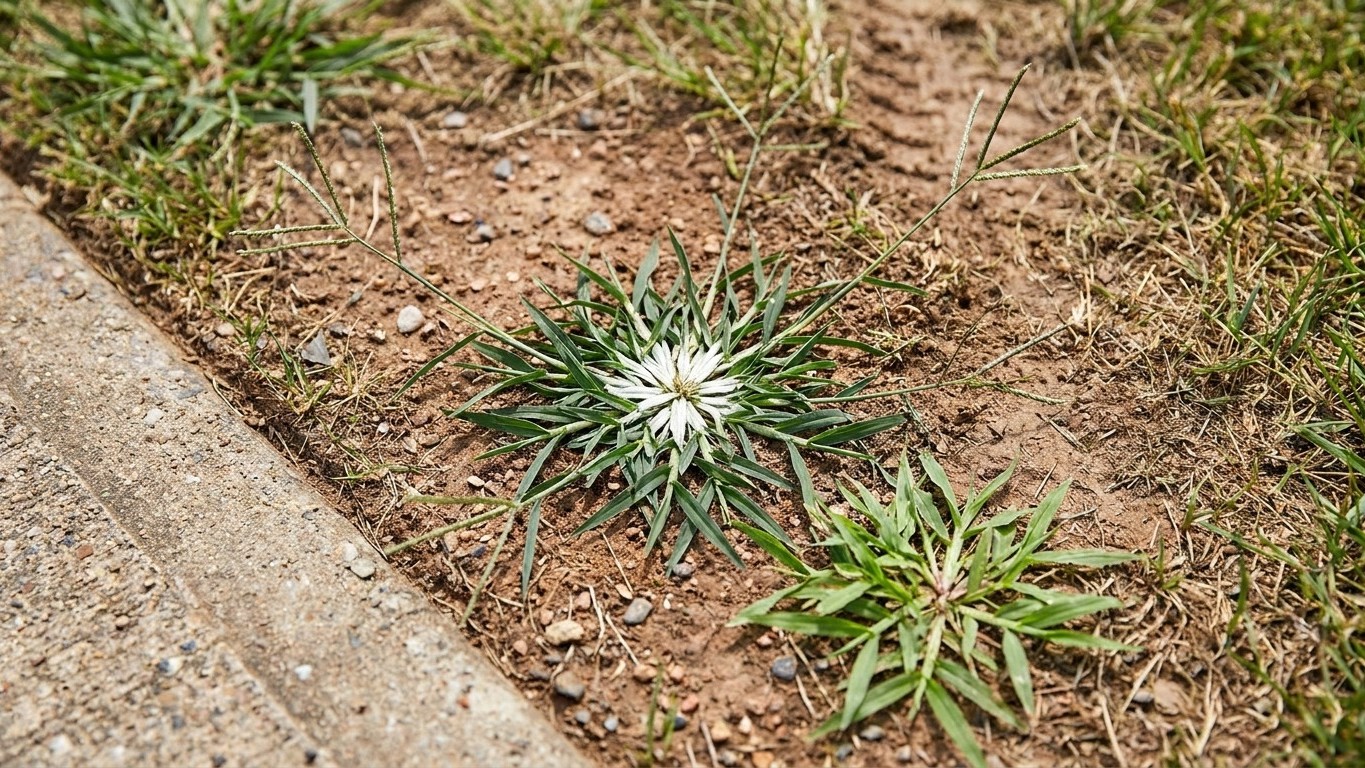

Set the mower between 2 and 3 inches for most New Hampshire lawns, which usually means Kentucky bluegrass or fine fescue. Tall fescue wants more, 3 to 3.5 inches. Perennial ryegrass and rough bluegrass do better lower, at 1.5 to 2.5 inches. The grass species decides the number, not the calendar, and a few adjustments in midsummer and at each end of the season keep the turf thick. The basics of the job itself are covered in Mowing a Lawn.
The mowing height for New Hampshire lawns
Five cool-season species make up the lawns this state can reliably grow: Fine Fescues, Kentucky Bluegrass, Perennial Ryegrass, Rough Bluegrass and Tall Fescue. They do not share a mowing height, and the gaps are wide enough to hurt. A lawn of tall fescue cut at the 1.5 inches that suits ryegrass is being scalped. Cut ryegrass at 3.5 inches and you are running it well above its range.
Height by species
| Grass | Mowing height |
|---|---|
| Tall Fescue | 3 to 3.5 inches |
| Fine Fescues | 2 to 3 inches |
| Kentucky Bluegrass | 2 to 3 inches |
| Rough Bluegrass | 1.5 to 2.5 inches |
| Perennial Ryegrass | 1.5 to 2.5 inches |
Each figure sits inside the range published by land-grant extension programs, and the full list of species comes from Clemson Cooperative Extension’s lawn grass guide and Penn State Extension. Most home lawns are blends rather than a single species. For a blend, mow for the species that dominates the turf. If you cannot tell, 3 inches is a workable default, because it falls inside the ranges for tall fescue, fine fescues and Kentucky bluegrass. It sits above the range for ryegrass and rough bluegrass, so a lawn that is mostly those two can be mown lower.
Why warm-season grasses are not on the list
Grasses such as bermudagrass are built for long, hot seasons. They stop growing and turn brown after the first fall frosts and are slow to wake up in spring. In New Hampshire they would spend much of the year dormant and straw-colored, and a hard winter can finish them off. Cool-season grasses grow in spring and fall and slow down in summer heat. That rhythm fits this climate, so the mowing advice below follows it.
Neighboring cold-climate states show how the answer shifts with the grass and the season. See How High to Mow a Lawn in Wisconsin or How High to Mow a Lawn in Alaska for comparison.
Raising the deck when the heat comes
July is the driest summer month in the NOAA NCEI Monthly Climate Normals for 1991-2020, at 3.3 inches. June brings 4.04 inches and August 3.35. Add them up and summer delivers about 10.7 inches, roughly a quarter of the 40.4 inches that fall over the year. On paper that is a wet summer. A lawn can still struggle in it.
The first reason is soil. The same inch of rain behaves differently on sand than on clay. A sandy surface lets it drain through within the day, so a yard on sand can need water every second day even in a rainy stretch. Clay holds the water for about a week. The second reason is heat. Days at or above 90°F pull moisture out of the ground quickly, and summer rain often arrives as one thunderstorm that mostly runs off instead of soaking in.
Those figures are normals for the reference airport station, not a forecast and not your yard. A slope, a rain shadow or a paved-in lot will change them. A cheap rain gauge on your own plot settles the question better than any regional average.
The mowing response is simple: move the deck to the top of your species range for the hot weeks. That means 3.5 inches for tall fescue, 3 inches for fine fescues and Kentucky bluegrass, and 2.5 inches for ryegrass and rough bluegrass. Longer blades shade the soil and slow evaporation, and a lawn mown at the top of its range tends to root a bit deeper. Cutting lower in July gives you a thinner canopy and bare soil heating in the sun.
Raise the deck before the heat arrives rather than after the lawn turns gray-green. If a dry spell has the grass dormant, stay off it as much as you can. Mowing a stressed lawn adds one more injury to a plant already conserving energy.
The one-third rule, and why it is not arbitrary
Never remove more than one-third of the blade height in a single cut. The rule has a reason behind it. Leaves are where the plant makes its food, and a heavy cut strips that capacity at once. The grass then pulls on its reserves to regrow leaf, and root growth slows while it does. A lawn scalped repeatedly looks fine for a few days and thins out over a season.
Work the rule backward from your cutting height. With the deck at 3 inches, mow when the grass reaches 4.5 inches. A tall fescue lawn kept at 3.5 inches can grow to 5.25 inches before it is due. For ryegrass held at 2 inches, the trigger is 3 inches. Mowing “on Saturday” is a habit. Mowing when the grass reaches the trigger height is the actual rule.
Weather will sometimes put you behind. After a wet week, a lawn at 6 inches cannot go straight to 3 inches without losing half its height. Set the deck high for the first pass, then lower it a notch every few days until you are back in range. It takes more passes, but the grass tolerates it far better than one big cut.
Clippings follow from the same logic. A frequent cut leaves small pieces that drop between the blades and break down. A cut that removes too much leaves clumps that smother the grass beneath them. If you see windrows of clippings behind the mower, you waited too long. You can mow a second time at a higher setting, or rake them up.
The first and last cut of the year
The reference-station figures from NOAA NCEI’s 1991-2020 normals put the last spring frost between April 16 and April 27. The first fall frost falls between October 13 and October 26. Those dates describe one airport station, not the whole state. Suburban and rural yards usually see the last spring frost one to two weeks later and the first fall frost one to two weeks earlier, with a bigger gap at higher elevation. Your county Extension office, University of New Hampshire Extension, is the place to confirm local timing.
Starting in spring
Do the first cut when the grass is actually growing and the ground is firm, not on a date. Mowing soft, saturated turf leaves ruts and tears at the crowns. Start at the upper end of your species range and apply the one-third rule as usual. If the lawn has grown tall during a wet April, bring it down over two or three passes. Wait until the frost window has passed for your own yard, because new growth is the part most easily hurt by a late freeze.
Ending in fall
Keep mowing for as long as the grass keeps growing. For many yards that means into October, and in rural spots it could stop by the last days of September if frost arrives early. Cool-season grass grows vigorously in fall, so the mower is not done just because leaves are coming down. For the last cut, keep the deck within your species range, toward the lower end of it, and do not scalp the lawn to “go into winter short.” Remove or mulch fallen leaves so they do not mat over the turf.
Common questions
What is the best mowing height for a typical New Hampshire lawn?
For a blend dominated by Kentucky bluegrass or fine fescue, 2 to 3 inches. Tall fescue lawns do best at 3 to 3.5 inches. Perennial ryegrass and rough bluegrass take 1.5 to 2.5 inches.
Should I cut the grass shorter in spring?
No. Start within your species range and stay there. The one-third rule still applies, so if the lawn is overgrown, lower the deck in steps over several mowings.
Do I need to water if New Hampshire gets plenty of summer rain?
It depends on the soil. NOAA normals show about 10.7 inches over June through August, but sandy ground drains quickly and heat dries it out. A rain gauge on your own lawn tells you what actually fell.
When should I stop mowing in fall?
When the grass stops growing, which usually follows the first fall frost. At the reference station that frost comes between October 13 and October 26, and your yard may see it a week or two earlier.