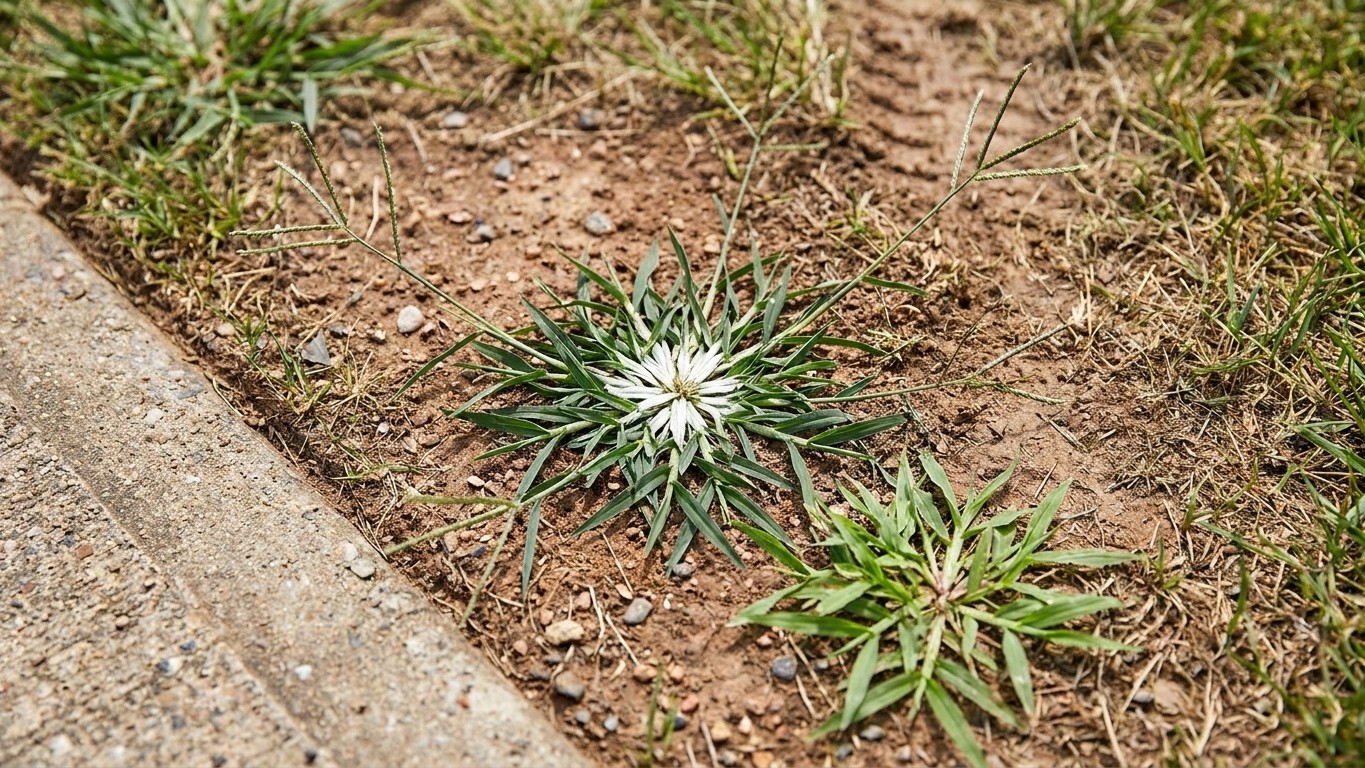

Most Alaska lawns do best cut to 2 to 3 inches, which suits the Kentucky bluegrass and fine fescue that make up many seed mixes here. Tall fescue wants a taller 3 to 3.5 inches. Perennial ryegrass and rough bluegrass sit lower, at 1.5 to 2.5 inches. The right setting depends on which species is actually in your yard, and the gap between them is bigger than it looks.
The mowing height for Alaska lawns
Grass blades are the plant’s solar panels. Cut them short and the plant has less surface to feed its roots, so it recovers slowly and thins out. Cut them taller and the roots go deeper, the crown stays shaded, and weeds have a harder time getting light. That matters more in a place where the growing season is compressed into a few months.
Here is the height by species for the cool-season grasses that grow here:
| Grass | Mowing height |
|---|---|
| Tall Fescue | 3 to 3.5 inches |
| Kentucky Bluegrass | 2 to 3 inches |
| Fine Fescues | 2 to 3 inches |
| Perennial Ryegrass | 1.5 to 2.5 inches |
| Rough Bluegrass | 1.5 to 2.5 inches |
These figures sit within the ranges published by land-grant extension programs, including Clemson, NC State, Purdue and K-State. Selection guidance for the cool-season species comes from Clemson Cooperative Extension and Penn State Extension. The numbers are not close together, and that is the catch. A lawn of tall fescue mowed at 1.5 inches is being scalped, while a ryegrass lawn left at 3.5 inches will flop over and mat.
Why cool-season species are the only real option
Every grass in that table is a cool-season type, and that is not a stylistic preference. Warm-season grasses put on growth when soil is hot and stay dormant through cold weather. Anchorage, the reference point for the climate figures on this page, has roughly 143 frost-free days. A warm-season lawn would green up late, stall early, and face a winter it was never bred for. Cool-season grasses grow in cool soil and tolerate hard freezes, which is the whole job here.
Working out which grass you have
If you seeded the lawn yourself, check the bag. If you inherited it, pull a few plants and look. Fine fescue blades are thin, almost wiry. Kentucky bluegrass has flat blades with a boat-shaped tip and spreads by underground runners. Tall fescue is coarse and clumpy. For a mixed lawn, mow to a height that works for the main species, and the closing questions below cover how to handle an overlap. For the general mechanics behind all of this, see Mowing a Lawn.
Raising the deck when the heat comes
A warm, dry stretch is the signal to move the deck up to the top of your species range. If you have Kentucky bluegrass or fine fescue, that means 3 inches. For tall fescue, 3.5 inches. Ryegrass and rough bluegrass go to 2.5 inches. Taller blades shade the soil surface and slow evaporation, and a deeper root system reaches water that a closely clipped lawn cannot.
The rainfall pattern shows why. At the Anchorage reference station, NOAA NCEI Monthly Climate Normals for 1991-2020 show about 5.8 inches of rain across June, July and August, out of 16.4 inches for the whole year. June is the driest summer month at 1.02 inches, then July brings 1.82 and August 2.93. Early summer, when the grass is growing hard in long daylight, is actually the thinnest stretch for rain.
Those totals never tell the whole story on their own, though. The same inch of rain behaves differently depending on what is under your lawn. Sandy soil lets it drain through within the day, so a lawn on sand can need water every second day even in a wet month. Clay holds an inch for about a week. Heat adds another layer: warm days pull moisture out of the soil quickly, and rain that comes down in one heavy burst mostly runs off instead of soaking in. This page does not carry a count of hot days, so use the weather you see as the trigger instead of a calendar date.
Treat the rainfall numbers as what the region can usually expect, not a forecast. They come from one station, and a slope, a rain shadow or a spot near the city can change them. A cheap rain gauge on your own plot settles the question better than any normal. If it has collected less than an inch in a week of warm weather, the lawn needs a deep soaking rather than a light sprinkle.
The one-third rule, and why it is not arbitrary
Never remove more than one-third of the blade in a single mowing. That is the rule, and it comes straight from how the plant works. Each cut takes away leaf area, which is the plant’s food factory. Remove too much at once and the grass has to rebuild leaves from stored reserves, which slows root growth until the canopy recovers.
The math gives you a mowing trigger instead of a schedule. At a 3-inch setting, mow when the grass reaches 4.5 inches. A tall fescue lawn at 3.5 inches should be cut when it hits about 5.25 inches. A ryegrass lawn kept at 2 inches gets mowed at 3 inches. Mowing by the calendar, say every Saturday, ignores the fact that growth speeds up and slows down with the weather.
Alaska adds a twist. Long summer daylight partly makes up for the short season, and grass can push growth quickly in early summer. A week away from the mower in June can put you past the one-third limit before you notice. If that happens, do not chop it all down in one pass. Cut to about a third off, wait a few days, and then lower toward your target height.
Sharp blades matter too. A dull blade tears the tips, leaving a brownish cast across the lawn a day later, and each torn blade is an open wound.
Neighboring cold-climate regions follow the same logic with their own seasons. You can compare with How High to Mow a Lawn in Yukon and How High to Mow a Lawn in Newfoundland and Labrador, where the species lists overlap but the calendar does not.
The first and last cut of the year
At the Anchorage station, NOAA NCEI 1991-2020 Climate Normals put the last spring freeze (32°F, in the 30 to 70 percent probability band) between May 3 and May 12. The first fall freeze falls between September 22 and October 1. That leaves about 143 frost-free days. Anchorage is one of the mildest inhabited parts of Alaska, so do not apply these dates to the Interior or the north, where the season is much shorter.
For the first cut, ignore the date and watch the grass. Wait until the lawn has dried out after snowmelt and has grown enough that you can remove about a third of the blade. Soggy ground gets rutted by mower wheels, and the damage lasts the season. Start at the top of your species range, then work down gradually if your grass prefers a lower cut.
For the final cut, keep mowing as long as the grass keeps growing, which near the first fall freeze window means the last few weeks of September. Drop the deck to the lower end of your species range for the last pass, but stay inside it. Long grass heading into winter can mat under snow and invite disease in spring, while grass cut too short loses protection for its crown. Rake up leaves before snow arrives, since a layer of wet leaves has the same smothering effect as long grass.
If you want guidance specific to your part of the state, the University of Alaska Fairbanks Cooperative Extension Service is the place to ask. Your local conditions, from soil to elevation, will shape what works better than any single station.
Common questions
Can I mow shorter to cut less often?
It backfires. A lawn cut below its range has less leaf area and shallower roots, so it dries out faster and lets weeds in. You end up watering and weeding more, which costs more time than the extra mowing would have.
What height works for a mixed lawn?
Look for the overlap. Kentucky bluegrass and perennial ryegrass share 2 to 2.5 inches. Kentucky bluegrass and fine fescue share 2 to 3 inches. Tall fescue overlaps with Kentucky bluegrass only at 3 inches, so a lawn mixing those two belongs right there.
Do these numbers apply across all of Alaska?
The mowing heights come from the grasses themselves and hold anywhere those species grow. The climate figures come from a single Anchorage station, so frost dates and rainfall will differ in the Interior, on the coast and in the north. The University of Alaska Fairbanks Cooperative Extension Service can help you adjust to your area.
Should I bag the clippings?
If you follow the one-third rule, leave them. Short clippings break down quickly and return nutrients to the soil. Bag them only when a missed mowing leaves clumps that smother the grass underneath, and in that case spread the clumps thinly instead of piling them up.