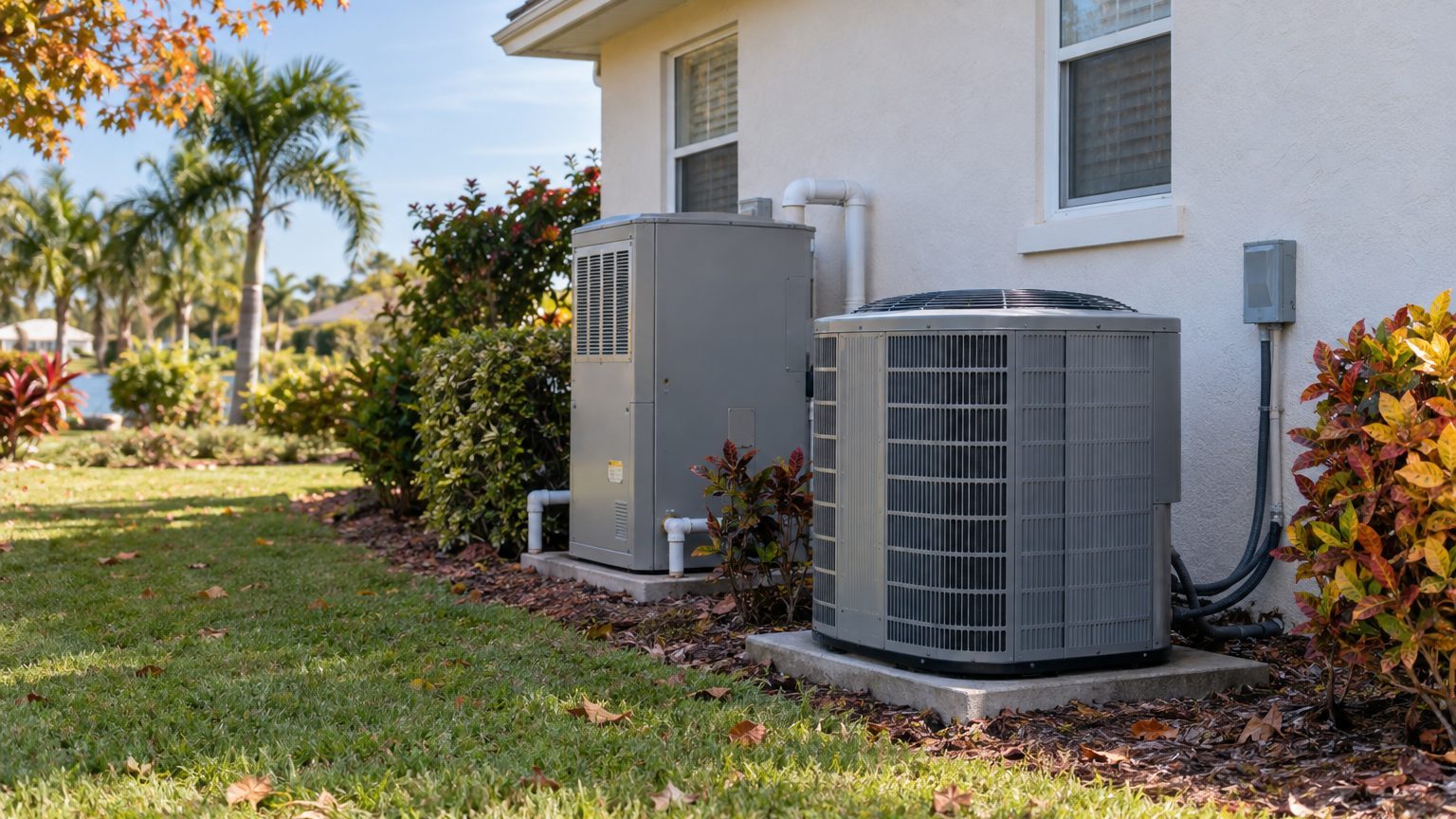

On running cost alone, a natural gas furnace beats a heat pump in Missouri, but the gap is smaller than most people expect. Both leave electric baseboard far behind. The margin is a couple of dollars per million Btu, thin enough that cooling needs, a missing gas line, or the age of your current system can flip the right call.
The short answer for Missouri
Here are the computed numbers. They use average Missouri residential prices from the U.S. Energy Information Administration (EIA), efficiencies from ENERGY STAR, and EIA unit conversions. A natural gas furnace at 97% AFUE delivers a million Btu of heat for $14.85. A heat pump at 8.1 HSPF2 (a seasonal COP of about 2.4) delivers the same heat for $17.23. That leaves the gas furnace $2.38 less per million Btu than the heat pump. Electric resistance, meaning baseboard heat at 100% efficiency, comes in at $40.91.
Read these as what it costs to run the same unit of heat, not as a yearly bill. Your annual cost depends on square footage, insulation, duct condition and how warm you keep the house. The figures also say nothing about what the equipment costs to buy and install, which is a separate calculation.
The gas price behind the computation is the EIA’s residential average. Your local utility’s rate may sit higher or lower, so check a recent bill before trusting any statewide number. If a gas line already serves the house, the furnace is the cheaper system to run; if there is no gas, the heat pump is the cheaper way to heat with electricity, by a wide margin.
What each option costs to run in Missouri
| System | Efficiency used | Cost per million Btu delivered |
|---|---|---|
| Natural gas furnace | 97% AFUE | $14.85 |
| Heat pump | 8.1 HSPF2 (seasonal COP about 2.4) | $17.23 |
| Electric resistance (baseboard) | 100% efficient | $40.91 |
The prices behind the table
Electricity averages 13.96 cents per kWh for Missouri residential customers, year-to-date through July, according to the EIA’s Electric Power Monthly, Table 5.6.B. That is a statewide average. Rate plans differ between utilities, and a time-of-use plan or a winter discount for heat pump customers would change the result.
The gas side comes from the EIA’s residential natural gas price, converted at about 1,037 Btu per cubic foot. This page does not restate that price per unit, so confirm it against your own utility’s rate. One kilowatt-hour holds 3,412 Btu, which is the conversion used for the electric rows.
Why efficiency matters as much as the fuel price
Baseboard turns each kWh into one kWh of heat, nothing more. A heat pump moves heat from outside air into the house, delivering about 2.4 units of heat for every unit of electricity over a season. That multiplier is the whole reason it costs far less than baseboard on the same electric rate. A gas furnace at 97% AFUE wastes almost none of the fuel it burns, and gas energy is cheaper per Btu than electricity here. Price and efficiency work together, and either one alone misleads.
The heat pump row uses the ENERGY STAR minimum for ducted systems, 8.1 HSPF2, so a better unit would run cheaper than the table shows. ENERGY STAR sets the bar at 8.5 for non-ducted systems, and the reasoning is in What HSPF2 Measures, and Why Ductless Asks for More. Compare units on HSPF2 for heating, never on SEER2, which only measures cooling.
How cold it gets, and what that does to a heat pump
Kansas City International Airport, the reference station here, logs about 5,071 heating degree days a year (base 65°F), according to NOAA’s 1991-2020 Climate Normals. That figure adds up, for every day, how far the average temperature sat below 65°F. Double the degree days and you roughly double the fuel for the same house. Missouri’s winters are long enough to matter without being brutal.
The coldest month has a mean daily minimum of 19.5°F at the same station. That is an average of nightly lows, not a record, so some nights run colder than that. It is one station too, and other corners of the state can differ from Kansas City.
The $17.23 heat pump figure is a seasonal average. In deep cold a heat pump’s efficiency falls, and it has to work harder per Btu delivered. A backup, either electric resistance strips or a furnace, usually carries the coldest nights. Any hour on resistance strips is billed at roughly the baseboard rate of $40.91 per million Btu, so the more a house leans on backup, the thinner the heat pump’s advantage over gas becomes. For the details on how performance behaves as temperatures fall, see How Cold Is Too Cold for a Heat Pump.
Two houses on the same street can behave differently. A tight, well-insulated home needs little backup, while a drafty one calls on it often. Count on a heat pump for most of the season, and ask any installer, in writing, what carries the house on the coldest nights.
What homes in Missouri already heat with
The EIA’s 2020 Residential Energy Consumption Survey (RECS) state tables show that 76% of Missouri homes heat with a furnace and 10% with a central heat pump. By fuel, natural gas leads at 59%, electricity follows at 31%, and propane covers 7%. For steam or hot-water boilers the survey suppressed its estimate as unreliable, and for fuel oil or kerosene it reported none. Neither is a zero. The survey simply does not publish a figure for them.
These shares describe what was installed, which tells you which fuel was cheap when the houses were built. They are not advice. They are also state shares from a national survey, not a count of your county or your street.
The 31% on electricity matters most for this comparison. A house with no gas line is not choosing between a furnace and a heat pump. It is choosing between baseboard or an electric furnace and a heat pump, and that contest is $40.91 against $17.23. Propane homes face a different test, since no propane price appears in our data. Get a delivered price from your supplier before comparing.
A boiler house is a different conversion again. With no ducts for a heat pump to use, the choices become ductless heads or new ductwork. For the wider regional picture, Heating a Home in Missouri covers more ground. Before comparing anything, find out whether your house has a gas line and usable ducts.
When the other choice wins
The furnace is cheaper to run, yet several situations make the heat pump the better call. The first is the plainest: no gas service. Without it, the heat pump beats every other electric option by a wide margin, and bringing a gas line to the house is its own project with its own cost.
The second is cooling. Kansas City logs about 1,363 cooling degree days a year, so air conditioning is not optional for most Missouri households. A heat pump heats and cools with the same equipment, and ENERGY STAR sets its cooling floor at 15.2 SEER2 for the label. If an air conditioner is also near the end of its life, one machine replacing two changes the math more than a $2.38 running gap does. The question of ducted versus ductless is worked through in Ductless or Central.
Dual fuel and aging equipment
A dual-fuel setup pairs a heat pump with a gas furnace. The heat pump handles the mild stretches and the furnace takes over when the cold arrives, which avoids resistance strips altogether. It suits a house that already has gas and wants cooling too, though it adds controls and two systems to maintain.
Then there is the old furnace that still works. A running gap of $2.38 per million Btu does not justify tearing out heating equipment that has years left, especially when the repair question is genuinely open. Repairing a Furnace or Replacing It lays out how to weigh that decision. A working furnace with years of life left rarely justifies replacement on running cost alone.
Common questions
Is a heat pump cheaper than baseboard heat in Missouri?
Yes. At average Missouri residential prices, the heat pump at 8.1 HSPF2 delivers a million Btu for $17.23, while electric resistance costs $40.91. Both figures come from the same computation using EIA prices and ENERGY STAR efficiencies.
Does a heat pump keep up with Missouri winters?
Mostly. The coldest month at Kansas City averages a daily low of 19.5°F, and the area logs about 5,071 heating degree days a year. Heat pump efficiency drops in deep cold, so a backup such as resistance strips or a furnace usually carries the coldest nights.
Does the $2.38 difference tell me my yearly bill?
No. It compares the two fuels on the same unit of delivered heat. Your annual cost depends on the size of the house, how well it holds heat, the condition of the ducts and your local utility rates.
Is a ductless heat pump better than a ducted one?
ENERGY STAR asks more of ductless systems, at least 8.5 HSPF2 versus 8.1 for ducted, because a ductless system has no duct losses and starts with an advantage. Those are minimums to earn the label, not typical values and not a recommendation for a specific house.