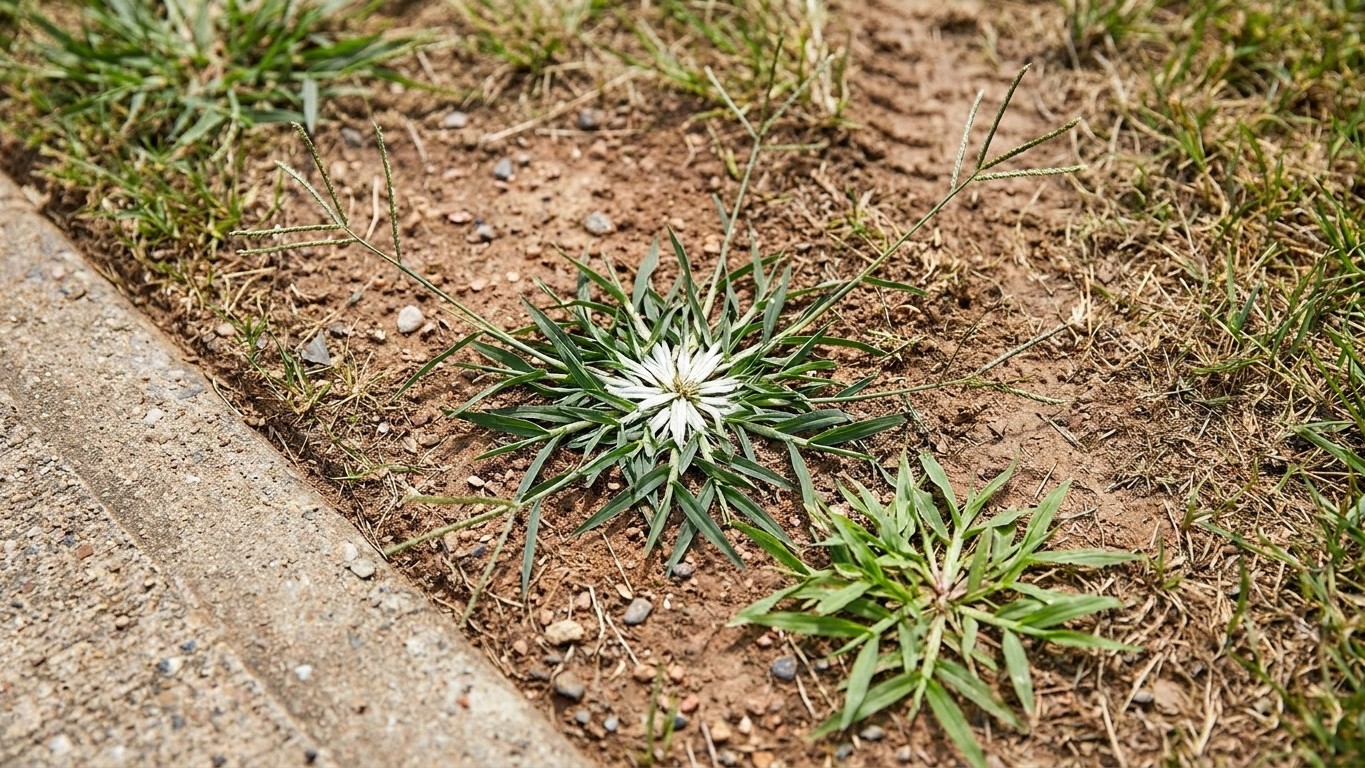

Late August into the first days of September is the best window for sowing grass seed on Prince Edward Island, with spring as the fallback. Cool-season seed needs soil between 50 and 65 °F, and a fall sowing needs about 45 days of growing weather before the first freeze. Today is October 2, so this year’s fall window has closed or is nearly shut. The sections below show how to judge that for your own yard.
The best time to sow grass seed in Prince Edward Island
Why late summer beats everything else
Grass seed does not care what the calendar says. It cares about the soil, and cool-season species germinate when the ground sits between 50 and 65 °F, measured two inches down in mid-morning. Late summer gives you that range with a bonus: warm days that push growth and cooling nights that keep the seedbed from baking. Weeds are also fading by then instead of ramping up.
The other half of the equation is time. A new lawn needs roughly 45 days of growing weather before the first fall freeze, enough to put down roots that survive winter. For Charlottetown, Environment and Climate Change Canada’s 1981-2010 climate normals put the average first fall frost on October 17. Count back 45 days and you land on September 2. That is the latest date the arithmetic supports, not the target. Aim for late August and you leave yourself a cushion.
Treat that October 17 figure as the middle of a window, not a promise. It is a mean, which means the first frost arrives later than October 17 in about one year out of two, and earlier in the other half. Sowing on the last workable day is a coin flip with your seed money.
Spring as the second choice
The same station shows an average last spring frost of May 16. Again, a midpoint: in roughly half of years, frost comes after that date. Spring sowing works once the soil reaches that 50 to 65 °F band, and it does not have to wait for frost to be entirely behind you. The trade-off is that spring seedlings must build roots while summer heat and weed competition close in, so they get less margin than a late-summer lawn does. Buy a cheap soil thermometer and check it two inches down rather than guessing from the air.
Neighbors in the Maritimes face a similar calendar, and the guide on when to plant grass seed in New Brunswick shows how the same logic plays out one province over. Readers used to Midwestern timing can compare it with when to plant grass seed in Indiana, where the window opens later and runs longer.
Which grasses belong here
Stick to cool-season species: Fine Fescues, Kentucky Bluegrass, Perennial Ryegrass, Rough Bluegrass and Tall Fescue. They are built for cold winters and moderate summers. Warm-season grasses want hotter soil to germinate and go dormant when it cools, and they are not reliably winter-hardy this far north, so a warm-season lawn would be a gamble the climate usually wins. Most store mixes labeled for shade, sun or general use are blends of the species above.
The last date that still works
Back to the calendar. The rule is simple: take the first fall freeze and subtract 45 days. Using the Charlottetown A average of October 17, the last sensible sowing date comes out at September 2. Seed that goes down after that point often germinates, then meets winter with roots too shallow to hold. The seedlings die, and the lawn you thought you planted never shows up in spring.
That makes this October 2 a poor date for a fresh sowing. If the mean holds, only about 15 days remain before frost, a third of what the seed needs. In a mild year you might get a patchy stand. In a cold one you get nothing. Wait for spring, prepare the bed this fall if you want a head start, and sow when the soil thermometer reads in range.
Two cautions on the figures. First, they come from one station, Charlottetown A, and the province is not one climate. Districts away from the capital, especially exposed or higher ground, can run weeks behind it, so a yard there should pull its own date back accordingly. Second, Canadian normals cover 1981-2010, while the US figures cover 1991-2020. The decades differ, so do not compare numbers across the border as if they were measured the same way.
For the full sequence from bare ground to mowing, the walkthrough on starting a new lawn from seed covers the steps.
Seed rate and soil preparation
What the island’s ground tends to do
Soil mapping from Agriculture and Agri-Food Canada gives a picture of the typical ground. Across the mapped agricultural surface of the province, the most common soil is a Podzol, the acid, leached soil that forms under conifers, covering 33 percent of the mapped area. Gleysolic soils come next. The median surface pH is about 4.8, which is strongly acid. The texture is sandy: 66 percent sand, 7 percent clay and 27 percent silt, with organic matter around 2.2 percent, and drainage is typically imperfect.
What does that mean for a lawn? Sandy ground with little organic matter lets water slip through and dries at the surface quickly, yet imperfect drainage means low spots can stay soggy after heavy rain. Acid soil can hold back grass growth, so lime is often part of the plan. Those are tendencies, not your numbers. The survey covers agricultural areas, a province holds hundreds of soils, and ground that a builder has scraped or filled can look nothing like the median. A soil test tells you your real pH and how much lime, if any, to add. The Government of Prince Edward Island’s agriculture pages are the place to start for local testing and advice.
How much seed, and how deep
Rates below are pounds per 1,000 square feet for a new lawn. Overseeding an existing lawn takes half.
| Grass | New lawn (lb per 1,000 sq ft) |
|---|---|
| Tall Fescue | 6 to 8 lb |
| Fine Fescues | 4 to 6 lb |
| Perennial Ryegrass | 4 to 10 lb |
| Rough Bluegrass | 2 to 3 lb |
| Kentucky Bluegrass | 1 to 3 lb |
The ranges look uneven because seed sizes differ, and extension sources do not always agree, so the ranges cover them. More seed is not insurance. Crowded seedlings fight for water and light, and many thin out on their own, leaving weak turf behind.
Depth matters more than rate. Cover seed with no more than 0.25 inch of soil, then press it down for good seed-to-soil contact. Seed buried deeper often never emerges, and it is the most common reason a new lawn comes up patchy. Rake lightly, roll or tamp, and stop there. On sandy ground, a light pass with a roller helps keep seed from washing out.
Watering a new lawn until it holds
The seedbed should never dry out while seed is germinating. On sandy soil that means checking often, because the surface dries faster than it would on clay. Short, light waterings, possibly more than once a day in warm or windy weather, keep the top layer damp without flooding it. Soaking the bed does more harm than good: puddles wash seed into low spots, and those spots end up thick while the rest stays bare.
Once grass is up, ease off. Water less often and more deeply so roots follow the moisture down instead of staying near the surface. Imperfect drainage is the reason to watch the low corners of the yard: if water sits there, skip the next session. Fine Fescues and Tall Fescue generally tolerate a little dryness once settled, while Kentucky Bluegrass is slower off the mark and can take longest to fill in, so do not give up on a bluegrass lawn that looks thin in its first weeks.
Common questions
Can I still sow grass seed in October on Prince Edward Island?
It is a long shot. With an average first fall frost of October 17 at Charlottetown A, seed sown now gets far less than the 45 days it needs, and seedlings that germinate late tend to die over winter. Spring sowing is the safer plan.
Can I grow a warm-season grass here?
Not reliably. Warm-season species need hotter soil to germinate and go dormant in cool weather, and the island’s winters are hard on them. The cool-season group (Fine Fescues, Kentucky Bluegrass, Perennial Ryegrass, Rough Bluegrass and Tall Fescue) is the one that holds.
How much seed do I need to overseed a thin lawn?
Half the new-lawn rate. For Tall Fescue, that means 3 to 4 lb per 1,000 square feet rather than 6 to 8 lb. Cover with no more than 0.25 inch of soil, or less.
Does the Charlottetown frost date apply to my yard?
Only as a starting point. The May 16 and October 17 averages come from a single station, Charlottetown A, and cover 1981-2010. Half of all years run later than those dates, and yards in other districts, especially higher or more exposed ones, can run weeks behind. Pull your own sowing date earlier if you are away from the capital.
If you follow the almanac, here is when to plant grass seed by the moon. It is a tradition, not a proven method.