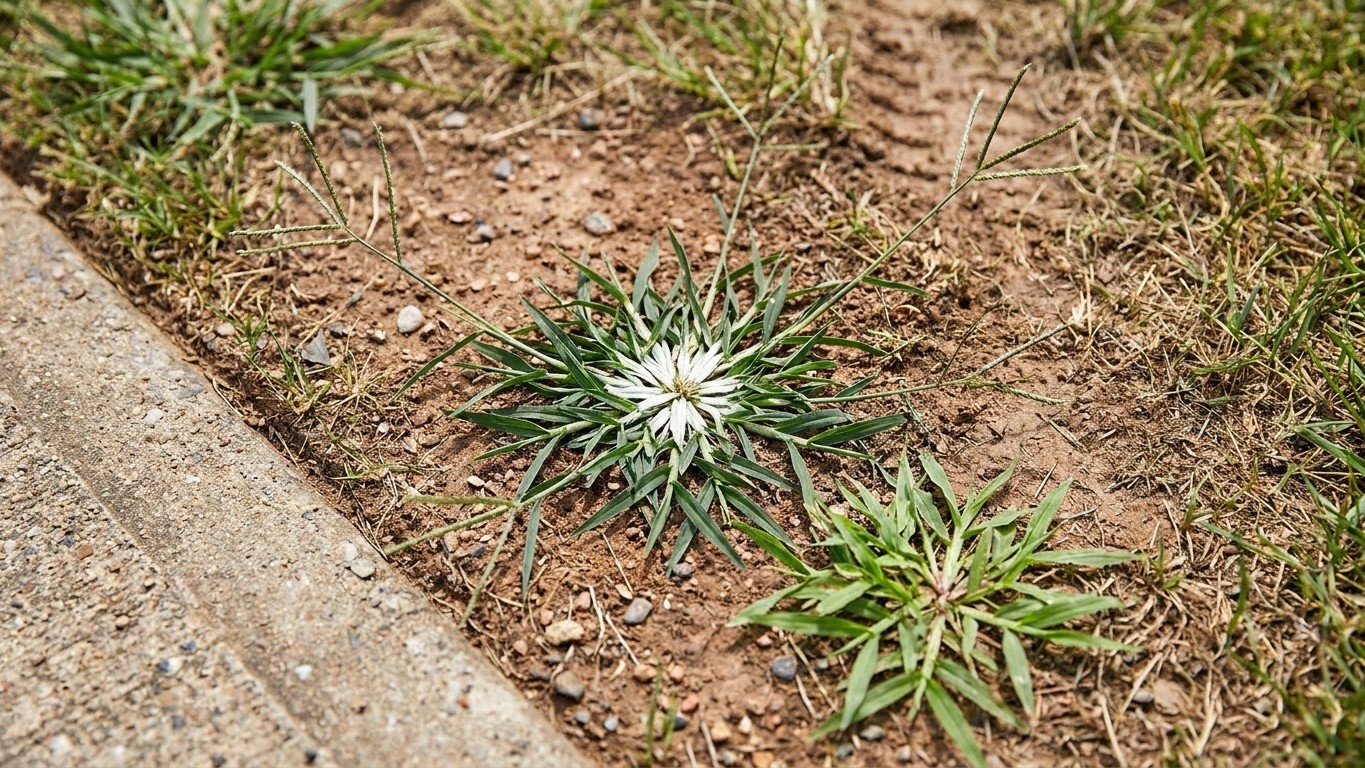

On Prince Edward Island, most lawns do best at a mowing height between 2 and 3 inches, and the right number depends on the grass underfoot. Tall fescue wants 3 to 3.5 inches. Kentucky bluegrass and fine fescues sit at 2 to 3 inches. Perennial ryegrass and rough bluegrass can go as low as 1.5 to 2.5 inches. Match the setting to what you actually grow, then nudge it upward in a dry July.
The mowing height for Prince Edward Island lawns
Grass blades work like solar panels. Cut a lawn short and you shrink the panel, which shrinks the roots underneath it. Leave it taller and the roots go deeper, the soil stays shaded and cooler, and weed seeds find less light to germinate in. On an island where summer rain is decent but never guaranteed, a deep root system is the cheapest drought insurance a lawn has.
Height by species
The five cool-season species that suit the island do not share one height. Mow tall fescue at 2 inches, a height ryegrass handles fine, and you have scalped it.
| Grass | Mowing height |
|---|---|
| Tall Fescue | 3 to 3.5 inches |
| Kentucky Bluegrass | 2 to 3 inches |
| Fine Fescues | 2 to 3 inches |
| Perennial Ryegrass | 1.5 to 2.5 inches |
| Rough Bluegrass | 1.5 to 2.5 inches |
Most home lawns are blends, not a single species. If you cannot tell what you have, no one height fits all five ranges. A setting of 2.5 inches falls inside four of them (everything except tall fescue), and 3 inches falls inside three. For a typical bluegrass and fescue mix, 3 inches is the safer default. Check the result with a ruler on a flat driveway, because the numbers stamped on a mower deck lever are often approximate.
Why only cool-season grasses hold here
At the Charlottetown A weather station, Environment and Climate Change Canada’s 1981-2010 normals put the average last spring frost on May 16 and the average first fall frost on October 17. That is the frost-free window, and it is short. Warm-season grasses need sustained heat to grow and turn brown when temperatures drop, so on the island they would spend much of the year dormant or struggling to recover from winter. Cool-season species do their growing in the mild weather of spring and fall, and they come through cold winters. Across the Northumberland Strait the same logic runs through How High to Mow a Lawn in New Brunswick.
Raising the deck when the heat comes
Hot weather calls for a taller cut, not a shorter one. Cool-season grass slows down in a heat spell and spends its reserves just staying alive. A lawn mowed short at that moment has less leaf to shade its own crowns and less root to chase moisture. Move to the top of your species range for the summer: 3.5 inches for tall fescue, 3 inches for Kentucky bluegrass and fine fescues, 2.5 inches for perennial ryegrass and rough bluegrass.
What a Prince Edward Island summer usually delivers
Summer rain is what decides how much you will have to water, and the island gets a fair amount of it. The Charlottetown A normals show about 274 mm (10.8 inches) falling across June, July and August, out of 1158 mm (45.6 inches) over the whole year. July is the driest of the three summer months at 80 mm (3.15 inches). Those are 1981-2010 normals from one station, so they describe what the region can usually expect. They are not a forecast, and they are not directly comparable with the 1991-2020 figures used for US states elsewhere on this site.
Sand, clay and the thunderstorm problem
An inch of rain does not do the same work everywhere. On a sandy surface it drains through within the day. On clay it can sit for a week. A wet summer on sandy ground can still leave a lawn needing water every second day, while a clay lot may go much longer between waterings. Heat adds to the problem. Days at or above 90°F pull moisture out of the soil quickly, and rain that arrives as a single thunderstorm mostly runs off instead of soaking in.
A straight-sided can set on the lawn works as a rain gauge, and a screwdriver pushed into the soil tells you how deep the last storm actually got. Those two checks settle the question better than any regional average. For a hotter-summer comparison, the How High to Mow a Lawn in Indiana page shows how a warmer state sets its numbers.
The one-third rule, and why it is not arbitrary
Never remove more than one third of the blade height in a single mowing. It sounds like folk wisdom, but it follows from how grass feeds itself. The leaf is the part of the plant that makes sugar. Strip away more than a third at once and the plant must draw on reserves stored in its crown and roots to regrow, and root growth stalls while it does. A lawn that gets that treatment every week looks fine for a month, then thins out.
The arithmetic
The rule works backward from your mowing height. Tall fescue kept at 3.5 inches should be cut when it reaches about 5.25 inches. Kentucky bluegrass kept at 3 inches gets mowed at 4.5 inches. Perennial ryegrass kept at 2 inches gets mowed at 3 inches. Past those points you are taking more than a third, and the clippings come off in heavy clumps that mat on the surface and smother the grass below. The full routine of sharp blades, clipping management and timing lives on the Mowing a Lawn page.
When you miss a week
Rain, travel and a stubborn mower all produce the same overgrown lawn. Resist cutting it straight back to your normal height. Raise the deck for the first pass, mow, then lower it a notch every few days until you are back in range. Growth is fastest in late spring and slows in July heat, so follow the grass instead of the calendar. When it is a third taller than your target, it is time to mow, whether that takes five days or ten.
The first and last cut of the year
First cut in spring
At Charlottetown A the average last spring frost falls on May 16. That is a mean date, the midpoint of a window. In one year out of two the last frost comes later, so it is no guarantee that the cold is over. Northern and upland districts of the island can run weeks behind Charlottetown, and a province is not one climate.
Start mowing when the grass is actively growing and the ground is firm enough that the mower does not leave ruts. Set the first cut at the top of your species range. The Government of Prince Edward Island agriculture pages are the place to look for provincial contacts if you want advice tied to your district.
Last cut in fall
The average first fall frost at the same station is October 17, again a mean date from the 1981-2010 normals. In half of all years the frost arrives later, and cool-season grass keeps growing in cool autumn weather. Keep mowing as long as the lawn is putting on height.
Over the last few cuts, step the deck down toward the low end of your species range. Do not go below it. Long grass that lies flat under snow stays wet and can develop snow mold by spring, while a scalped lawn goes into winter with little leaf to store energy. Fallen leaves count too: mulch them with the mower or rake them off, because a thick layer will smother the turf just as heavy clippings do.
Common questions
What height should I use if I do not know my grass type?
Use 3 inches. It sits inside the ranges for tall fescue, Kentucky bluegrass and fine fescues. If you suspect a ryegrass or rough bluegrass lawn, 2.5 inches is the upper edge of their range and a safe compromise.
Should I mow shorter in spring to get an early green lawn?
No. A short cut in April exposes crowns to late frosts, which can arrive after the May 16 average. Start at the top of your range and lower it only within the range.
With 274 mm of summer rain, do I still need to water?
Possibly. The 274 mm (10.8 inches) is a 1981-2010 normal for one station, and July averages only 80 mm (3.15 inches). Sandy soil drains within a day and may need water every second day, while clay holds moisture far longer. A rain gauge on your own lawn will tell you more than the regional average.
When do I stop mowing in fall?
Stop when the grass stops growing, usually around the first frost. The average date at Charlottetown A is October 17, but frost comes later in half of all years. Take the last two or three cuts toward the low end of your species range, and keep the leaves off the turf.