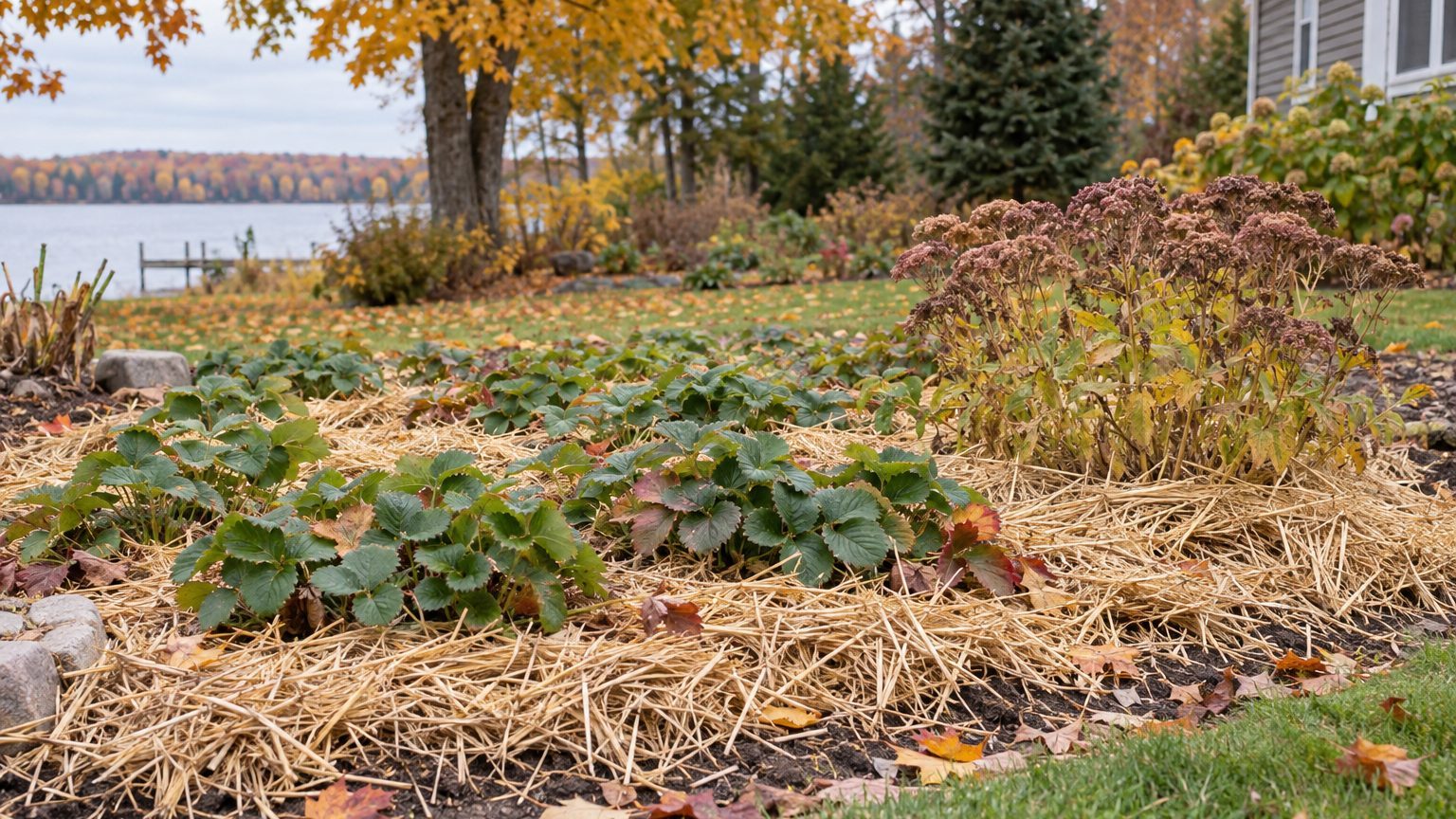

Wait for the ground to start freezing. In central Indiana, winter mulch goes on after the first fall frost, which NOAA’s 1991-2020 normals put at October 21 to October 30 for Indianapolis, and usually after that, once the soil surface stays cold and plants have stopped growing. Strawberries and borderline perennials get the same late, loose, even layer. Put it down in early October and it can do more harm than good.
When to put winter mulch down in Indiana
Winter mulch is not a blanket meant to keep plants warm. It works more like a cooler lid. It holds the soil at whatever temperature it already is, so the real job is to keep frozen ground frozen and stop the stop-and-start cycle of thawing and refreezing that pushes shallow roots up out of the soil. Put the lid on warm soil and you have only insulated a mild, damp spot that rot and rodents will enjoy.
Indiana has the cold to make this worth doing. The NOAA NCEI 1991-2020 Climate Normals for Indianapolis list a mean daily minimum of 20.9°F for the coldest month. That is an average night, not a record, which means plenty of nights fall below it, and plenty of winter days climb back above freezing. Those swings are what heave plants.
The window, and the decision to write down
The same NOAA normals, based on 32°F freeze probabilities in the 30 to 70 percent band, put the first fall frost at October 21 to October 30 in Indianapolis. A frost at that point does not mean it’s time to mulch. It tells plants to slow down and harden off, and that process needs a few cold nights without a cover. The call for mulch is after the October 21 to October 30 first-frost range, once the soil surface stays cold through the day and the plants have gone dormant. In practice that is the stretch of late fall when a trowel meets a stiff, cold crust and the tops of hardy perennials have collapsed.
If a warm spell arrives after that first frost, hold off. Mulch is easy to add and annoying to remove, and a mild week in November is not the start of winter.
Shifting the window north and south
Indianapolis is the reference point here, not the whole state. Southern Indiana runs a fortnight or more later in autumn than the north, so gardeners down there wait longer before the ground firms up. In the northern tier the first fall frost arrives earlier, so the mulching window opens earlier too. Never move it the other way: colder places get their cover on sooner, not later.
The USDA Plant Hardiness Zone Map 2023, built on the average annual extreme minimum temperature, places Indiana in zones 5b to 7a. A zone figure shows how cold a plant can survive, though, and says little about the date to mulch. For your own county’s frost range, see First and Last Frost Dates in Indiana, then add the waiting period described above.
Strawberries
A strawberry plant keeps its growing point in the crown, a short woody stem right at the soil line. Everything it needs to make next summer’s berries sits just above the ground, exposed to wind and cold. That makes strawberries tougher than they look in some ways (the roots and crowns tolerate cold well once hardened) and more vulnerable in others, because they have no depth to hide in.
Two things hurt them. Bare cold dries and damages crowns, especially during a dry, windy stretch with no snow cover. Heaving is the second: when the soil freezes, thaws, and freezes again, the shallow roots get lifted and the crown ends up perched above ground like a loose tooth. Straw softens both problems by evening out the soil temperature and shielding the crown from wind.
Use clean straw. That means wheat or similar cereal straw that has been threshed, not hay. Hay is full of seed, and you will spend next June weeding grass out of your strawberry rows. Whole leaves are a poor substitute, because they pack down into a wet mat. Straw stays springy and lets air through, which matters when a January thaw soaks everything.
For depth, the figure in hand comes from the NC State Extension Gardener Handbook: “A 2-inch to 3-inch layer of mulch suppresses most annual weed seeds and makes it easy to hand-pull any that do germinate.” That passage is about weeds in general, not strawberries in particular, but it gives a useful ceiling. Straw is fluffy and settles after the first wet snow, so spread it loosely and evenly over the plants and aim to stay within that range. Deeper is not better. A thick pile holds moisture against the crowns and slows them down when they should be waking up.
Timing follows the rule from the section above: after the October 21 to October 30 frost range at Indianapolis, once the plants are dormant and the ground is cold. A wet strawberry bed with straw already on it in mid-October is a good place for slugs and rot. For more on the plant itself, Growing Strawberries covers planting and bed setup.
In spring, pull the straw back before the plants get stuck under it. Uncover the crowns as soon as new growth turns pale yellow-green, rake the straw into the aisles, and keep it close enough to throw back over the plants on a frost night. Purdue notes roughly a 10 percent chance of a 32°F event after the published spring date, so an early flower cluster can still be caught out. Straw in the aisles keeps berries clean and weeds down while you wait.
Perennials and borderline plants
Most established perennials in Indiana do not need winter mulch. Hostas, daylilies, and coneflowers have been through enough Indiana winters to handle them. Mulching them lightly is fine, but it is not what separates a good spring from a bad one. The plants that benefit are the ones with a weakness: roots that have not settled in, shallow crowns, or a hardiness rating that sits right at the local edge.
The USDA zone range for Indiana is 5b to 7a (USDA Plant Hardiness Zone Map 2023). That is a statewide range, so a plant rated for a colder zone than yours is a gamble in the north and easier in the south. The Indianapolis reference point sits in the middle, which is why a rose or hydrangea that sails through in one county may need a little help in another.
| Plant group | What the mulch does | How to apply |
|---|---|---|
| Perennials planted this fall | Holds roots in place while they are still shallow | Ring over the root zone after the ground starts to freeze |
| Shallow-rooted perennials such as coral bells and garden mums | Prevents heaving from repeated freezing and thawing | Light, loose cover around the crown, not on it |
| Borderline shrubs such as hybrid tea roses and bigleaf hydrangea | Shields the lower stems and buds from bare cold | Mound or ring around the base, kept off the crown |
| Evergreen herbs such as lavender, sage and thyme | Moderates the soil, but wet mulch invites rot | Thin, dry material, with air space at the center |
| Established hostas, daylilies, coneflowers | Little added benefit | Usually skipped |
Perennial herbs deserve extra caution, because lavender and sage hate wet feet more than cold ones. Getting Perennial Herbs Through the Winter goes into what each one tolerates. The short version is that a thick, soggy pile against a woody herb does more damage than the weather.
On depth, the NC State Extension Gardener Handbook, chapter 11, says to “Provide a 3-inch layer of mulch to reduce water loss and maintain uniform soil moisture and temperature around roots.” That line is written about trees, but the logic carries over to a ring around a perennial. Treat 3 inches as the upper limit. And make it a ring, not a pile: leave a gap at the crown so air can move and moisture does not sit on the stems. The same stem-clearance rule applies for trees and shrubs, and Mulching Without Killing the Plant lays out how to avoid burying them.
Put it together as a single decision: a ring no deeper than 3 inches, kept back from the crown, applied only after the ground has begun to freeze. If you do not know whether a plant needs it, check its hardiness against your location, not the zone on the plant tag alone.
What goes wrong
Four mistakes cause nearly all the winter mulch damage in Indiana gardens, and each leaves a recognizable mark.
Mulch placed before the October 21 to October 30 frost range is almost always too early. The soil is still warm and wet underneath, and the plant has not hardened off. The sign is a mushy, brown crown in spring or leaves that stay green and soft under the cover in December. The fix is simply patience: wait for the first frost, then wait for the ground to chill and plants to go dormant.
Matted mulch is the second. Whole leaves and wet grass clippings press into a slick layer that holds water and blocks air. Under it you will find slimy stems and a sour smell. Choose straw or shredded material that stays loose, and use a rake or hand to fluff down any section that has packed flat after a thaw.
Voles are the third. These small rodents tunnel under snow and mulch, and a thick, early layer is exactly the kind of cover they like. Signs are chewed bark at the base of young woody plants, gnawed crowns, and runways at the soil surface. Prevent it by keeping mulch off woody stems, applying it late rather than early, and keeping the grass around beds mown short through fall so there is less cover to hide in.
The fourth is forgetting to uncover. Strawberries left under straw into spring produce pale, stretched, yellowing growth and flower late, and the crowns stay wet enough to rot. Mark a reminder in your calendar for the first warm spell after winter, and check under the straw rather than waiting for a date.
Common questions
Can I mulch strawberries right after the first frost?
Not usually. The first frost starts dormancy, and plants need cold nights to harden off before they are covered. In Indianapolis, NOAA’s 1991-2020 normals put the first 32°F freeze in the October 21 to October 30 range, based on probabilities in the 30 to 70 percent band. Mulch after that, when the soil surface stays cold and the plants have stopped growing. A frost one night followed by a warm week is not the signal.
Does southern Indiana mulch later than northern Indiana?
Yes. Southern Indiana runs a fortnight or more later in autumn than the north, so the first frost and the point at which the ground firms up both arrive later there. The northern part of the state gets its first fall frost earlier and mulches earlier. Use the Indianapolis range as a middle reference and adjust. More seasonal timing for your area is in the Indiana guides.
Can I use wood chips or shredded bark on strawberries?
Straw is the better choice. Wood chips are heavy, hold moisture against the crowns, and slow the soil from warming in spring. They suit trees, shrubs, and perennial rings, where the 3-inch layer from the NC State Extension Gardener Handbook applies. For strawberries, keep to clean straw, spread loosely, and remove it from the crowns when growth begins.
When should I take winter mulch off in spring?
Pull it back from crowns when new growth appears, but keep it on hand. Purdue notes roughly a 10 percent chance of a 32°F event after the published spring date, so a late frost can still catch early growth or flower buds. Rake the straw into the aisles for weed control and re-cover plants on any frost night. For perennials, ease the ring back from the crown as the soil warms.