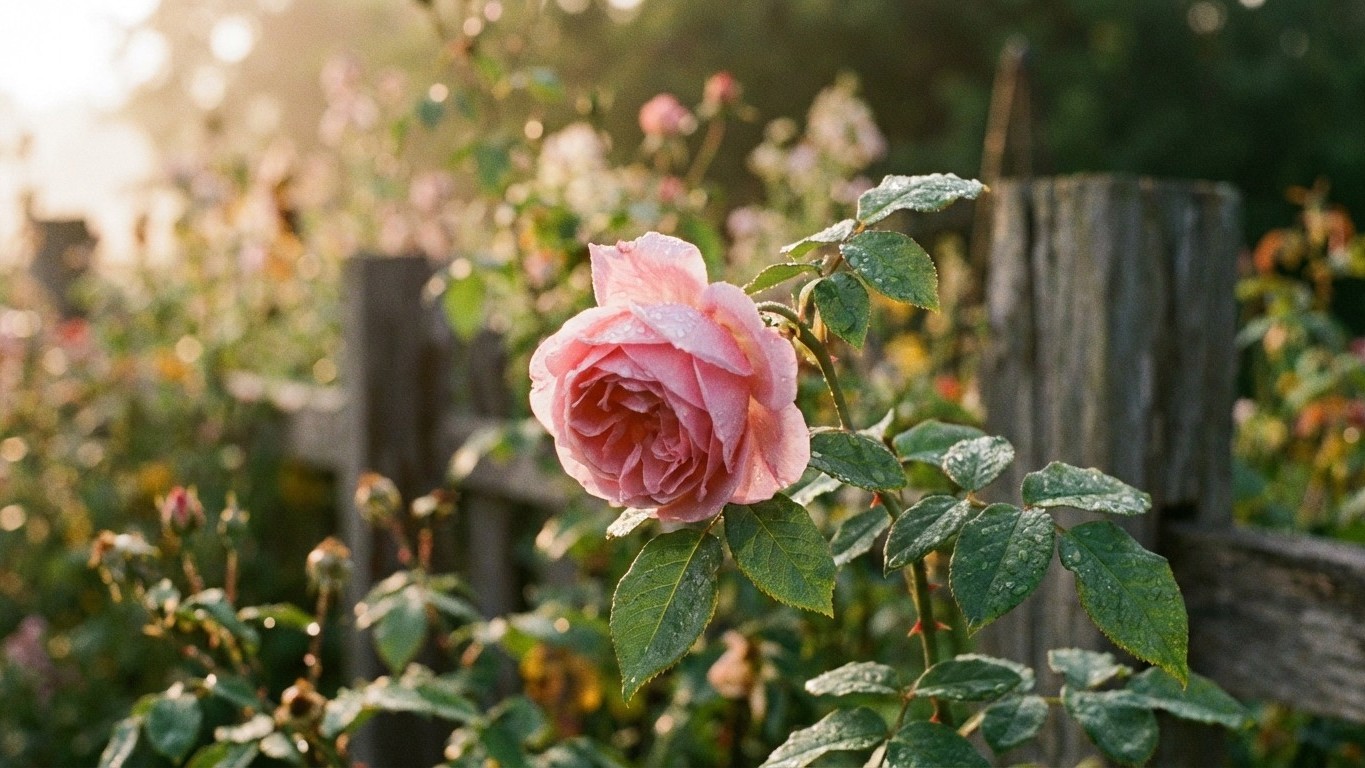

Plant container roses in Maine once the last spring freeze is behind you, which at Portland falls between April 22 and May 1. Dormant bare-root roses can go in as soon as the soil is workable. Choose cold-hardy shrub and rugosa types over fussy hybrid teas, and watch for browntail moth caterpillars rather than the pests southern guides warn about. This page covers the Maine specifics. How to Grow Roses: The Complete Guide covers the basics.
When to plant Roses in Maine

Reading the frost window
The reference city here is Portland. The NOAA NCEI 1991-2020 Climate Normals put the last spring 32°F freeze in a 30-70% probability band from April 22 to May 1. Inside that stretch, a freeze is anywhere from a decent bet to a coin flip. The first fall freeze lands between October 9 and October 21 in the same data.
Portland sits on the coast, which makes it the mild end of the state. Inland Maine, the north and higher elevations all run substantially later in spring and earlier in fall. If your garden is in Aroostook County or on a hillside in the western foothills, treat the Portland dates as the earliest possible, not the typical. Your county extension office can tell you how far to shift them.
Dormant bare-root roses are the exception to the frost rule. They have no leaves to burn, so they can go in the ground as soon as the soil is thawed and crumbles instead of smearing in your hand. In Maine that usually means the front edge of the frost window on the coast, and later inland. Container roses that have already leafed out should wait until the window closes, or get covered with a sheet or overturned bucket on nights when a freeze is forecast.
Fall planting is a gamble. With a first fall freeze as early as October 9 at the mild end of the state, and earlier inland, a new rose gets only a few weeks to root before the ground stiffens. Spring planting gives it the whole season.
Starting from seed: the count-back
Most Maine gardeners buy roses as grafted or own-root plants, because named hybrids do not come true from seed. Species roses are the exception. Rugosa roses grown from seed come reasonably close to the parent, and the project costs almost nothing. Rose seed needs cold, moist stratification before it will sprout, commonly 8 to 12 weeks in the refrigerator. These are rules of thumb, not published dates, so adjust them to your own conditions.
Work backward from May 1, the end of the Portland window:
- May 1: seedlings go into the ground.
- April 21: hardening off begins, 10 days earlier. Start with an hour or two of shade and build up to full sun and a night outdoors.
- About February 24: seedlings should have sprouted, which gives them 8 weeks of indoor growth.
- About December 16: seeds go into a bag of damp sand in the fridge, 10 weeks of stratification before sprouting.
Inland, add the gap between your last freeze and Portland’s to every date. Nursery roses that spent spring in a greenhouse need the same 7 to 10 days of hardening off before they go into the garden. Move them outside in shade first, then plant on a cloudy afternoon.
Soil and site preparation
Choosing the spot
Roses want at least six hours of direct sun, and morning sun matters most. It dries dew off the leaves, and wet foliage is where black spot starts. A site facing east or south, with open air moving through it, beats a sheltered corner. Skip spots under tree canopies, where roots will compete for water and the shade will cut flowering.
Drainage matters more than fertility. Roses sulk in soil that holds water, and Maine’s spring mud season will show you which corners of the yard stay soggy. Dig a hole, fill it with water, and see whether it drains within a few hours. If it does not, build a raised bed or choose another spot. Aim for a loose, loamy soil that is slightly acidic, around pH 6.0 to 6.5. Many New England soils lean acidic, but a soil test is the only way to know, and the extension office can arrange one.
The weeks before planting
Do the groundwork before the plants arrive. Test the soil in fall or as soon as it thaws, so lime or sulfur recommendations have time to work. Two to four weeks before planting, spread 2 to 3 inches of compost over the bed and fork it in about a foot deep. Do not work soil that is still wet. A squeezed handful should break apart, not hold as a ball.
On planting day, dig a hole about 18 inches wide and deep enough that the roots spread without bending. Soak bare-root roses in a bucket of water for several hours first. In Maine’s cold winters, set the graft union (the swollen knob where the canes join the roots) about 2 inches below the soil surface, which protects it from freeze-thaw swings. Own-root roses have no graft, so plant them at the depth they grew in the pot.
Spacing depends on the type. Hybrid teas and compact shrubs need 2 to 3 feet, larger shrubs 3 to 4 feet, and rugosas up to 5 feet because they spread by suckers. Water in deeply, then mulch.
Varieties that suit Maine
Traits that matter in a short season
Winter hardiness comes first. A rose that dies back to the ground every winter wastes the season regrowing wood before it can bloom. Own-root roses have an advantage here. If the canes freeze, what regrows is still the variety you bought, while a grafted rose can regrow as the rootstock. Disease resistance is next, since a shorter season means less time to recover from a black spot defoliation. Last is bloom habit. Once-blooming old roses flower in a burst around late June and July, while repeat bloomers keep going until frost. Both work in Maine, but repeat bloomers need a longer season to pay off, so they are better suited to the coast than to the north.
Roses bred in Canada for prairie winters are a good starting point, and rugosas are the classic Maine rose, naturalized along the coast. In South Dakota, with a similar fight against winter, gardeners lean on many of the same hardy groups. Compare notes in Growing Roses in South Dakota: Planting Dates, Varieties and Local Pests.
Widely available choices
| Variety | Type | Good for | Watch for |
|---|---|---|---|
| ‘Hansa’ | Rugosa shrub | Fragrant double blooms, large hips, tough foliage | Suckering; needs room |
| ‘William Baffin’ | Explorer climber | Fences and trellises, strong disease resistance | Large and vigorous; needs support |
| ‘Morden Blush’ | Parkland shrub | Compact beds, repeat bloom | Smaller flowers than hybrid teas |
| Knock Out series | Repeat-blooming shrub | Low maintenance, resists black spot | May die back to the ground inland and resprout |
| Hybrid teas | Grafted bush | Cut flowers, classic form | Need winter mounding; prone to black spot |
None of these is a recommendation from any institution, only a list of widely sold roses that carry the traits above. Hybrid teas can still work if you accept the extra winter chores.
What to plant alongside
Neighbors that genuinely help
Catmint is the strongest all-around partner. It tolerates the same sun and drainage, covers bare soil around the base, and draws bees from late spring on. Hardy geraniums and lady’s mantle do a similar job at the front of the bed, shading the soil and holding moisture. Clematis can scramble through a climbing rose, and the shaded roots stay cooler, but give it an extra foot of space so air still moves through the canes.
Alliums, including chives and ornamental onions, are the traditional pest-confusion planting. The idea is that their scent masks the roses from aphids. The evidence is thin. Gardeners swear by it, trials are mixed, and an aphid that wants a rose will usually find one. Plant them because they bloom well and bees like them, and count any aphid reduction as a bonus. French marigolds get a similar claim. Their root exudates do suppress certain soil nematodes, but that is not proof they protect roses growing beside them.
What to keep away
Lavender looks right with roses, but it wants lean, dry soil, and roses want feeding and moisture. One of them will lose. Turfgrass is another rival, so keep a 2 to 3 foot mulched ring clear of lawn. Dense perennials that crowd the canes block airflow and invite mildew. And keep roses away from other rose-family plants such as crabapples and cherries, since browntail moth feeds across the family. Lilies are a classic rose-bed neighbor, but they draw lily leaf beetles, which is covered in the pest section below.
Watering, feeding and support
Water and mulch
Deep, infrequent watering beats a daily sprinkle. Aim for about an inch of water a week, counting rainfall, delivered at the base in the morning. A slow soak sends roots downward, where they are less exposed to dry spells and winter cold. Overhead watering wets the leaves and invites black spot. New plants need the soil kept evenly moist for the first season.
Mulch 2 to 3 inches deep with shredded bark, leaf mold or compost, and keep it a few inches back from the canes. It holds moisture, suppresses weeds and moderates soil temperature swings. Refresh it each spring after the soil warms.
Feeding, support and pruning
Give the first feeding when new growth starts in spring, using a balanced slow-release rose fertilizer or a few shovelfuls of compost. Repeat bloomers benefit from a second feeding after the first flush of flowers. Stop feeding about six weeks before the first fall frost. Counting back from October 9 at Portland, that is late August, and earlier inland. Late feeding pushes soft growth that winter will kill.
Climbers need support from the start. Tie canes loosely, and train them as close to horizontal as the structure allows, because horizontal canes produce more flowering shoots. Tall shrub roses in windy sites do better with a stake in their first year.
Prune in spring when buds begin to swell. Cut out any cane that is dark brown or black inside, working down until you see green bark and white pith. Once-blooming roses should be pruned after flowering, since they bloom on last year’s wood. Suckers from the rootstock of a grafted rose have a different leaf, often with seven leaflets, and should be pulled off at the base. On rugosas, suckers are part of the plant and can be thinned or left.
Common problems

Foliage and flower trouble
Black spot shows up as round black spots with fringed edges, followed by yellowing and leaf drop. It spreads in warm, wet weather and overwinters on fallen leaves. Rake and discard them in fall, water at the base, and choose resistant varieties. In humid, hot places such as those covered in Growing Roses in South Carolina: Planting Dates, Varieties and Local Pests, it is a constant fight. In Maine it is manageable with airflow and sanitation.
Powdery mildew appears as a white coating on young leaves and buds, usually in cool nights and warm days with crowded stems. Thin the center of the bush and move watering to the morning. Aphids cluster on new shoots and buds. A hard spray of water knocks them off, and ladybugs and lacewings usually catch up with them.
Yellow leaves on an otherwise healthy rose usually point to waterlogged soil or a missed feeding, not disease. A rose with lush leaves and no flowers is often getting too little sun, or too much nitrogen.
Winter damage and weak growth
Winter dieback is the most common Maine problem. Canes turn dark and brittle by spring, and the fix is to prune back to live green wood and wait. Many roses will regrow from the base, and own-root plants regrow true to variety. If the rose has not leafed out by early summer, scratch a cane with a fingernail to check for green.
Blind shoots, which grow leaves but never form a bud, usually come from cold snaps during early growth or too little light. Cut them back to a healthy outward-facing bud. Rabbits and deer chew canes in winter and early spring, especially in rural parts of the state, and a wire cylinder or burlap screen around the plant stops it.
Pests that actually show up in Maine
The list below comes from what University of Maine Cooperative Extension’s home and garden pest pages highlight. It is not exhaustive, and pressure varies by county. Several entries on that list, including Colorado potato beetle, the two root maggots, striped cucumber beetle, squash vine borer, spotted wing drosophila and emerald ash borer, attack vegetables, fruit or ash trees, not roses. These three matter to a rose gardener.
Browntail moth
The first thing you see is not a caterpillar. It is a tan, silk nest at the tip of a branch on a host tree or shrub, visible through winter. In spring the overwintered caterpillars emerge as leaves open and feed in groups, and the moths fly in July and August. Roses belong to the plant family the caterpillars favor. The tiny hairs cause a poison-ivy-like rash, so wear gloves, long sleeves and a mask when handling anything near an infestation. The control that works is clipping off winter nests, dropping them in a bucket of soapy water and sealing them in a bag. For tall trees, call a licensed arborist.
Winter moth
You will see ragged holes in opening buds and young leaves in spring, with small green caterpillars hiding in the folded foliage. Winter moth feeds on many deciduous trees and shrubs, so roses growing near infested apples or oaks can get chewed. On a few bushes, hand-picking works. For heavier damage, a spray of Bacillus thuringiensis (Bt) applied while the caterpillars are small kills them without harming most other insects.
Lily leaf beetle
This one does not eat roses, but lilies are common rose-bed neighbors and the beetle is hard to miss: bright scarlet, about a quarter inch long. Adults emerge from very early spring through June, with one generation a year. Pick them off by hand into soapy water as soon as they appear, since they drop and play dead if disturbed. Bring a cup under the leaf before you touch it.
If you cannot identify what is chewing your roses, bring a sample to your county extension office.
Harvest and end of season
Cutting and storing blooms
Cut roses in the morning, when the stems are full of water. Pick when the bud is showing color and starting to loosen, since fully open blooms drop petals fast indoors. Cut at a 45-degree angle just above a leaf with five leaflets, which pushes the next flowering shoot from a strong spot. Strip leaves below the water line, set stems in a bucket of cool water, and keep them out of direct sun. Fresh water and a clean vase can keep cut roses going for most of a week.
Roses will not ripen off the plant, so cut buds that show color but do not pick tight green ones. Rugosa hips are the exception for harvest. Pick them when they are fully colored and slightly soft, usually after the first fall frost sweetens them, and use them for tea or jelly.
Preparing for winter
Stop deadheading by late summer so the plant sets hips and starts hardening off. At Portland the first fall freeze arrives between October 9 and October 21, and inland and northern gardens run earlier. Keep watering through dry autumn spells, then rake up fallen leaves to reduce black spot spores.
Wait until the plant is dormant and the soil has had a few hard freezes before mounding. Pile 10 to 12 inches of soil or compost over the base of grafted roses and hybrid teas, and cover with evergreen boughs. Mounding too early traps warmth and invites rot. Hardy rugosas and Explorer types usually need no protection at all. Skip heavy fall pruning, and trim only canes long enough to whip in the wind.
Local help
County-level frost dates, soil testing and pest identification are the kinds of questions the University of Maine Cooperative Extension handles. Bring a soil sample in spring, and a bagged insect or damaged leaf any time you are unsure. For more state-specific advice, browse the Maine guides.
Common questions
When is the safest time to plant roses in Maine?
Plant container roses after the last spring freeze. At Portland that falls between April 22 and May 1, and later inland. Bare-root roses can go in earlier, as soon as the soil is workable. Spring beats fall in most of the state.
Do roses need winter protection in Maine?
Hybrid teas and other grafted roses do. Mound 10 to 12 inches of soil or compost over the base after the plant goes dormant and the ground has had a few hard freezes. Rugosas and Explorer-type shrubs usually do fine without it.
Can I grow roses from seed?
Yes, but named hybrids will not come true. Species roses such as rugosas are the best choice. Count on 8 to 12 weeks of cold stratification, then indoor growing and hardening off, starting around mid-December for a May 1 transplant.
What pests should Maine rose growers watch for?
Browntail moth is the one to take seriously, both for the foliage and for the skin-irritating hairs. Winter moth can chew buds in spring. Lily leaf beetle attacks lilies planted nearby, not roses. Your county extension office can identify anything unfamiliar.
Which roses are easiest for a beginner in Maine?
Rugosas such as ‘Hansa’ and Explorer climbers such as ‘William Baffin’ are forgiving and widely sold. Choose own-root plants where you can, because a rose that dies back and regrows will still be the variety you wanted.