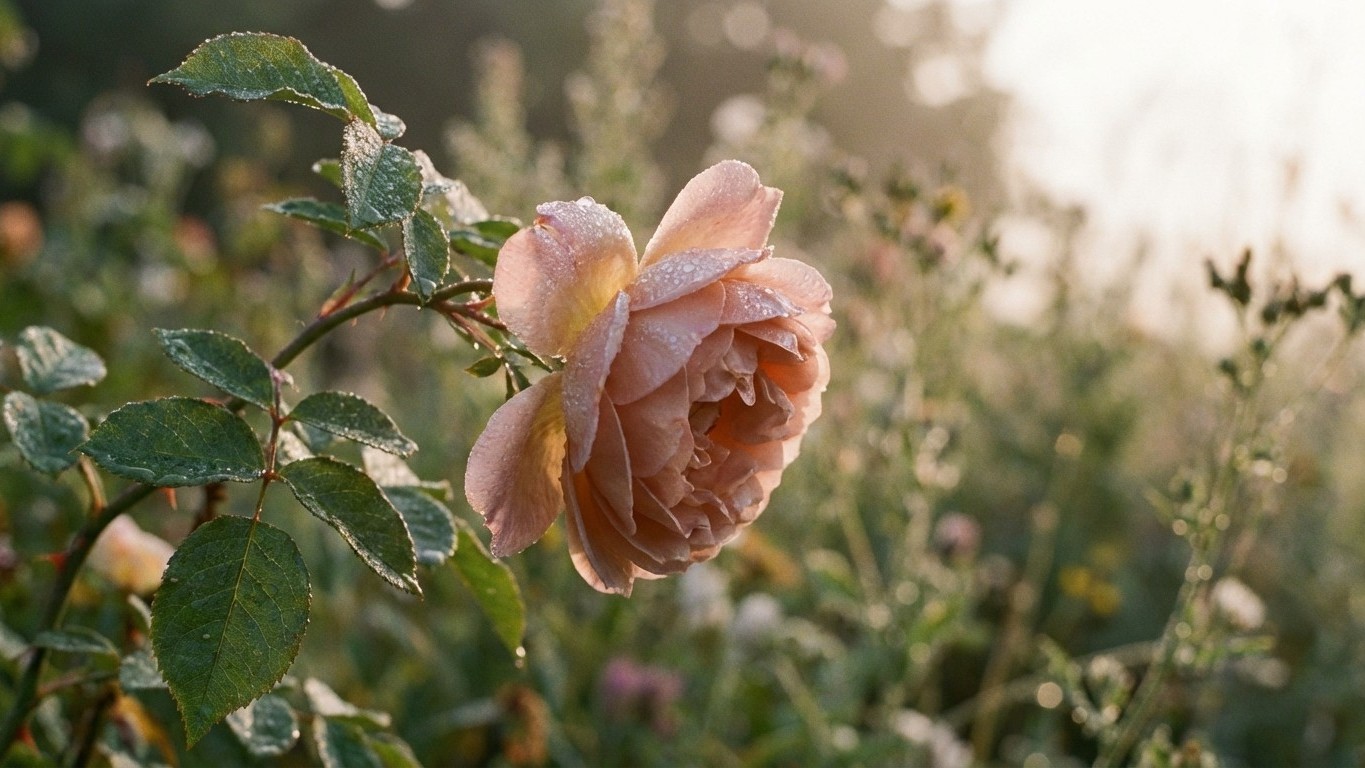

Container roses go into South Dakota ground in mid-to-late May, once the freeze risk has passed. Bare-root plants can go in during April while they are still dormant. The bigger decision is the variety: own-root shrub roses bred for cold winters will bloom reliably where a fussy hybrid tea sulks. Expect some winter dieback, plan for grasshoppers and beetles, and test your soil before you dig.
When to plant Roses in South Dakota

Reading the frost window for your yard
The reference figure comes from the NOAA NCEI 1991-2020 Climate Normals for the Sioux Falls airport station. It puts the last spring 32°F freeze between April 29 and May 9, the band where the odds of another freeze sit between 30 and 70 percent. The first fall freeze lands between September 24 and October 4.
That is one airport in the southeast corner of the state, not a statewide promise. Suburban and rural yards usually see the last spring frost later than the airport, often by one to two weeks, which stretches the Sioux Falls window to roughly May 6 through May 23. Northern counties and anywhere with real elevation, the Black Hills most obviously, run later still. Your county extension office can tell you how far your own ground sits from the reference city.
Bare-root, container and seed
Bare-root roses arrive dormant, as sticks with roots, and dormancy is what lets them go in early. Plant them in April as soon as the soil is workable and no longer frozen or soggy. Soak the roots in a bucket of water for several hours (overnight is fine) before planting. The canes can handle a cold snap because nothing has leafed out yet.
Container roses are different. They come with soft new growth that a late freeze will blacken, so they wait for the back half of the frost window or later. If the plant has been in a greenhouse, harden it off first: set it outside in a sheltered spot for an hour or two, then lengthen the time over 7 to 10 days, ending with a night outdoors before it goes in the ground.
Seed is the long road. Rose seed needs weeks of cold, moist stratification before it will sprout, germination is uneven, and seedlings from hybrid parents rarely resemble the flower you admired. Most gardeners buy plants. If you want to try seed anyway, count backward from your target planting date. Here is one illustration, so adjust it to your seed source:
- Target planting date in a rural yard: May 15.
- Subtract 10 days of hardening off: start outdoors around May 5.
- Subtract 8 weeks of indoor growth after sprouting: sow-to-sprout is done by about March 10.
- Subtract 10 weeks of cold stratification: seed goes into the refrigerator around December 30.
Fall planting is a poor bet here. A rose set out in September has only a few weeks to anchor before the ground freezes, and spring-planted roses get a whole summer of root growth before their first winter.
Soil and site preparation
Six hours of direct sun is the floor. Eight is better, and morning sun matters most because it dries dew off the leaves before fungus gets going. South Dakota wind is the other site factor. A spot beside a fence, a shed wall, or a loose shelterbelt takes the edge off, but crowding a rose against a solid wall kills the airflow and invites mildew. Leave a foot or two of gap.
Roses want loose, fertile soil that drains. Test drainage a month ahead: dig a hole about a foot deep, fill it with water, let it drain, then fill it again. If the second fill is still standing after several hours, choose another site or build a raised bed. A soil test from your extension office, ideally in March, gives you pH and nutrient numbers instead of guesses. Roses do best in slightly acidic to neutral soil, roughly 6.0 to 6.5, and a test will tell you whether yours needs adjusting. Lime and sulfur work slowly, so a test taken the same week you plant is too late to help this year.
A workable timeline looks like this. In March, send off the soil sample. In early April, once the ground thaws, spread two to three inches of finished compost and work it into the top 8 to 10 inches of the planting area. A week before planting, dig the hole about 18 inches wide and as deep as the root mass needs. Mix some of the compost into the backfill, but do not fill the hole with pure amendment. Roots that find a rich pocket surrounded by tight clay tend to circle inside it.
Spacing depends on the rose. Compact shrub roses need about 3 feet between plants, large shrubs and Explorer-type climbers 4 to 6 feet, and vigorous climbers 6 to 8 feet. Grafted roses (a named top bonded onto a different rootstock) go in with the graft union an inch or two below the soil surface in cold climates, so the union is insulated. Own-root roses are simply planted at the depth they grew in the pot.
Varieties that suit South Dakota
Rose catalogs are written for mild climates. In South Dakota the traits worth sorting by are winter hardiness, whether the plant is grafted or own-root, disease resistance, and how it blooms. Once-blooming roses flower on last year’s canes, so a hard winter that kills canes can cost you the whole show. Repeat bloomers flower on new wood and recover quickly after dieback, which makes them the safer choice for a harsh climate.
Own-root plants matter because when a grafted rose freezes to the ground, you may be left with the rootstock variety, which usually blooms differently. When an own-root rose dies back, what regrows is the rose you bought. Here are widely sold varieties that carry the useful traits:
| Variety | Type | Good for | Keep in mind |
|---|---|---|---|
| Knock Out family | Repeat-blooming shrub | Low-maintenance beds, strong disease resistance, blooms until frost | Often cut back by winter, so prune hard in spring |
| John Cabot (Explorer series) | Arching climber-shrub | Fences and trellises in cold exposures, early bloom | Bred in Canada for cold; needs room and a support |
| William Baffin (Explorer series) | Tall climber-shrub | Screens and tall backdrops, very cold-tough | Large plant; plan 6 to 8 feet of space |
| Hansa | Rugosa shrub | Fragrance, large hips, wind-exposed sites | Needs less spraying, but suckers if disturbed |
| Therese Bugnet | Rugosa hybrid | Repeat bloom on a hardy frame, loose informal hedge | Open habit; fewer flowers than a hybrid tea |
| Prairie Joy (Parkland series) | Repeat-blooming shrub | Prairie-tough plants for cold winters | Soft-pink blooms, less showy than a hybrid tea |
Wild prairie rose (Rosa arkansana) is native to the Great Plains and worth a look if you want a naturalized planting. It blooms once, early in summer, on a low plant that spreads by suckers, and it has no trouble with the climate. Hybrid teas and grandifloras can be grown here, but expect to mound soil over them every fall and to accept a smaller, later first flush.
What to plant alongside
Start with what the evidence supports. Roses need air movement and sun, so the best neighbors are low or open plants that leave the base of the shrub uncrowded. Catmint and hardy geraniums form a loose, low skirt that shades the soil and hides bare canes. Both draw pollinators and bloom alongside the first rose flush. Neither is a heavy feeder, so they don’t starve the rose.
Alliums, including chives, garlic, and ornamental onions, are the classic rose companion, and the claim is that their smell confuses aphids or reduces black spot. Evidence is thin. Plenty of gardeners report fewer aphids, but controlled trials are scarce, so treat alliums as attractive and harmless rather than a pest-control program. French marigolds have better support for suppressing root-knot nematodes in the soil, and they add a splash of color at the front of a bed. They won’t help with the foliage pests that bother roses.
Plants that compete are the real danger. Turf grass growing up to the canes steals water and nitrogen, so keep a clear mulched ring of at least 2 to 3 feet. Large shade trees such as maples and cottonwoods outcompete roses for water with their shallow roots, and they also steal sun. Aggressive spreaders like mint, or perennials that seed wildly, crowd the rose crown and hold moisture against the canes. Keep tall, dense plantings from blocking airflow on the south and west sides.
Keep roses away from the vegetable patch as well. Many of the beetles and caterpillars that chew vegetables will also feed on roses, and a rose crowded among squash vines will take damage from the same insects. A bed with its own space, mulch, and drip line is easier to manage than a mixed plot.
Watering, feeding and support
Roses want deep, infrequent watering. Aim for about 1 to 2 inches of water a week from rain and irrigation combined, delivered at the base in the morning. A slow soak or drip line is better than a sprinkler, because wet leaves are what black spot and mildew are waiting for. Newly planted roses need steady moisture for the first season, so check the soil a few inches down. If it is dry at 2 inches, water.
Spread 2 to 3 inches of shredded bark or wood chips over the root zone after the soil has warmed in late spring, and keep it a few inches away from the canes. Mulch holds moisture through dry Plains summers and blocks weeds, and it moderates soil temperature in both directions. Topping it up every spring also builds organic matter.
For feeding, give the first dose as new growth leafs out in spring, using a slow-release rose fertilizer or a layer of compost, then repeat after the first big flush of flowers finishes. Stop roughly six weeks before the first fall frost. Counting back from the Sioux Falls reference date of September 24, that is mid-August, a bit earlier in rural gardens that freeze sooner. Late feeding pushes soft new growth that winter will kill.
Climbers and tall shrubs need support from the start. Tie canes loosely to a trellis or wire with soft ties, spreading them toward horizontal, which encourages more flowering shoots along the cane. Tall plants in wind-exposed yards can whip around and loosen their roots, so a stake the first year is cheap insurance.
Pruning happens in spring, when buds swell and you can see which canes survived, typically late April to early May. Cut dead wood back to healthy tissue (green or white inside, not brown), and make cuts about a quarter inch above an outward-facing bud. Remove suckers, which are shoots from the rootstock on grafted plants. They look different, usually with seven leaflets and more thorns than the cultivar, and should be pulled or cut at the point where they emerge.
Common problems

Disease and weather damage
Black spot shows up as round black blotches with fringed edges, followed by yellowing and leaf drop. It spreads in splashing water and wet foliage, so water at the base, give plants space, and rake up fallen leaves in autumn. Powdery mildew coats new growth in a white film and favors warm days with cool nights and poor airflow. Both are best handled by resistant varieties and airflow, with a fungicide only as backup.
Brown or black canes in spring are winter dieback, not disease. Cut to live tissue. A rose that fails to bloom after a harsh winter is often a once-blooming type whose canes died, or a grafted plant that has sent up rootstock suckers. Sparse flowering can also come from too much shade or too much nitrogen.
Yellow leaves with green veins point to chlorosis, which can come from high-pH soil that locks up iron. Only a soil test can say for sure. Rose rosette disease is rarer but serious. Look for thick, red, overly thorny shoots and a witches’ broom of distorted growth. It has no cure, so dig the plant and bag it rather than composting.
Insects
SDSU Extension’s garden and yard insect articles highlight a list of pests built mostly around vegetable gardens: Colorado potato beetle, squash bug, squash vine borer, cabbage-family caterpillars, wireworms, asparagus beetles, and others. Most of those belong in the vegetable patch. On roses, the ones from that list that matter are grasshoppers, blister beetles, and striped and spotted cucumber beetles, which chew foliage and flowers. Flea beetles leave tiny shot-holes in leaves.
Handpick beetles into soapy water in the morning when they are sluggish, and wear gloves with blister beetles, which can raise welts on skin. Aphids, Japanese beetles, and spider mites are rose pests nationally, but they are not on the SDSU list used here, so check the exact bug with your county office before you spray anything. The list is not exhaustive, and pressure varies across the state.
Cutting flowers, hips and end of season care
Cut flowers in the morning, when the bud is loosely open and just starting to unfurl, using sharp pruners. Make the cut above a leaf with five leaflets, which also positions the plant for the next flush. Strip leaves that will sit below water, set the stems in a bucket of cool water immediately, and recut under water at home. Roses will keep for a week or so in a cool room, longer if you change the water. Buds cut too tight often fail to open.
Rugosas and wild prairie rose make hips. Leave late-season blooms on to let the hips form, and harvest them once they are fully colored. Many gardeners prefer them after a frost, for tea or jelly, once the seeds are removed.
As the reference first fall frost window of September 24 to October 4 approaches, and remember that rural yards often freeze one to two weeks earlier, stop deadheading so the plant starts to harden off. Keep watering until the ground freezes. Skip fall pruning beyond removing damaged canes. After hard frosts have put the plant to sleep, mound 10 to 12 inches of soil or compost over the crown of grafted and tender roses, and bring it from elsewhere in the yard rather than scraping it from around the plant. Add a layer of straw or leaves. In spring, pull the mound back gradually as the buds swell.
Local help
South Dakota State University Extension has county-level frost dates, soil testing, and insect and disease identification. Bring a cutting in a sealed bag to your county office if something looks wrong. For more on growing here, see our South Dakota guides. If you garden in a neighboring climate, compare Growing Roses in Idaho: Planting Dates, Varieties and Local Pests and Growing Roses in Maine: Planting Dates, Varieties and Local Pests, and see How to Grow Roses: The Complete Guide for the basics.
Common questions
When is the safest time to plant roses in South Dakota?
Plant bare-root roses in April while dormant, and container roses after your last frost. At the Sioux Falls airport reference station, that falls between April 29 and May 9. In rural and northern yards, wait an extra week or two.
Do roses survive South Dakota winters?
Hardy shrub and Explorer-type roses generally do, though some dieback is normal. Grafted hybrid teas need soil mounded over the crown each fall, and may still die to the ground.
Why are my rose canes brown in spring?
Brown, dry canes are winter dieback. Prune each one back until the center is green or white, and wait until buds swell to be sure of where living wood ends.
How often should I water established roses?
About 1 to 2 inches of water a week, total from rain and irrigation, delivered deeply at the base. Water more often in the first year and in extended heat and wind.
Which insects should I watch for on roses?
From the SDSU Extension highlights, grasshoppers, blister beetles, and striped and spotted cucumber beetles are the ones that feed on rose foliage and flowers. Take a sample to your county extension office if you cannot tell what is chewing.