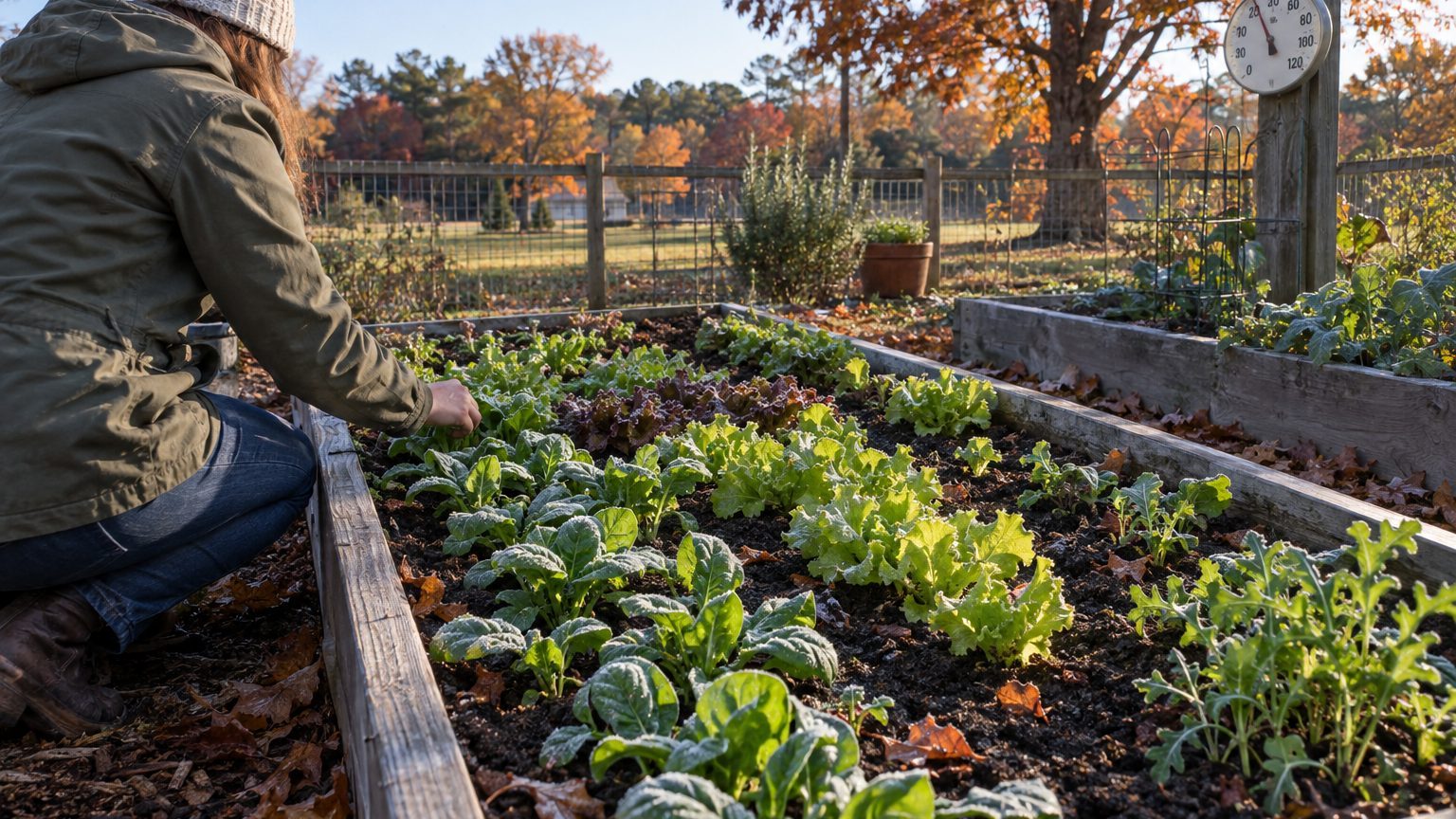

Sow winter salads in Arkansas in the weeks before the first fall frost. NOAA’s 1991-2020 normals put that frost between November 7 and November 20 at 32F, and the National Weather Service in Little Rock gives October 31 for the gentler 36F light frost. Spring sowing opens once the last freeze has passed, March 12 to March 28. Those are probabilities, not promises, and the way you read them changes the answer.
The short answer for Arkansas
The two ranges above describe odds, not deadlines. According to the NOAA NCEI normals, March 12 to March 28 is the band in which the chance of a 32F freeze runs from 30 to 70 percent. November 7 to November 20 is the same band in fall. On the early date in either range, a freeze is still a real possibility. On the late date it is more likely than not.
| Threshold | Last spring date | First fall date |
|---|---|---|
| 32F freeze, 30-70% probability band (NOAA NCEI) | March 12 to March 28 | November 7 to November 20 |
| 36F light frost (NWS Little Rock) | April 3 | October 31 |
For a winter salad, the fall row matters most. Sow so that seedlings have real leaves before the cold arrives, and measure that against October 31, not November 20. The 36F date is the safer anchor for tender lettuce, because plants start to suffer well before a hard freeze. Frost-tolerant greens can stretch toward the 32F band, which is one reason variety choice is half the calendar. The The Best Winter Salads for Arkansas page sorts that out by type.
Working backward is simple. Find the days to maturity on the seed packet, add a buffer for slower growth in cooling weather, and count back from October 31. This page does not carry a verified days-to-maturity figure for individual varieties, so the packet is your source for that number.
Spring works in mirror image. Sowing opens inside the March 12 to March 28 band for hardy types, while anything tender waits for April 3. If you want the full picture of what grows here through the cold months, start with Winter Salads for Arkansas Gardens.
What will not work here
Trusting a single date fails first. Because the frost figures are a 30-70 percent band, a gardener who sows tender lettuce on November 1 and assumes the season is “safe” is gambling. In a year when the first freeze lands near the early end of the range, those seedlings meet it with almost no leaf.
Leaving everything uncovered fails next. The mean daily minimum of the coldest month is 30.9F. That is an average of nightly lows, so the average night in the coldest month sits just under freezing and plenty of nights run colder. Hardy greens shrug that off. Tender lettuce, left bare, will be burned back, turned to mush, or lost outright on the worst nights. A row cover or low tunnel is no luxury at that number; it is the difference between a harvest and a bed of brown leaves.
Sowing too late is just as common a mistake. Seeds put in after the 32F band has passed may germinate, then sit. Growth slows as days shorten and nights cool, and a seedling with only its first leaves can stall from December through February. It will not be ready when you want salad.
Sowing too early is a quieter failure. Arkansas autumns often stay warm well into October, and lettuce seed is unhappy in warm soil, germinating poorly or not at all. The fix is to hold your sowing until the soil feels cool, or to start seed in shade and move the seedlings out. You don’t need a thermometer; Section 5 explains the hand test.
Crowding is the problem humidity creates. Arkansas winters are damp as well as cold, and dense plantings hold moisture on the leaves, which invites fungal disease. Spacing that works in a drier climate can lose a bed here. Give leaves room to dry out.
Finally, don’t expect a late spring sowing of cold-season greens to carry on. The last freeze here comes in March, so warm weather arrives early. Greens sown after the March 12 to March 28 band, and especially after April 3, run out of cool weather quickly and bolt.
What changes across Arkansas
The USDA Plant Hardiness Zone Map (2023 edition, built on 1991-2020 normals) places Arkansas in zones 6b to 8a. That covers four half-zone steps: 6b, 7a, 7b and 8a. There is no single answer for the state, and any date on this page is a middle reading, not a rule.
The zone is built on one variable, the average annual extreme minimum temperature. It tells you how cold the worst night of the year tends to get. It does not tell you when the first frost comes, so use it to judge how hard winter will hit, not when to sow.
The frost dates in this article come from one NOAA reference station, and the 36F dates come from the NWS office in Little Rock. They fit central Arkansas best. A reader in the northern tier or in the Ozark highlands should expect frost to arrive earlier in fall and linger later in spring, so the sowing window shifts earlier in autumn. Higher ground and colder pockets also push toward more protection. A reader in the southern part of the state sits at the warmer end of the zone range and may find that fall soil stays warm longer, which puts the emphasis on waiting for cool soil rather than racing the frost.
I can’t tell you which zone your garden falls in, and neither can this page. Look up your location on the USDA Plant Hardiness Zone Map, then compare it with the range above. If you are a step or two colder than the reference, move your fall sowing earlier and plan on covers. If you are warmer, lean on frost-tolerant types and mind the heat when seeds go in.
Where to check this for your own county
The best next stop is the University of Arkansas Cooperative Extension Service. It runs a county office system, and the people there know local frost patterns, soil conditions and which crops do well nearby.
Look for two things. The first is a local planting calendar for cool-season vegetables, which will list fall and spring sowing dates for greens in your part of the state. The second is a list of varieties that have been trialled in your county, meaning grown and evaluated under local conditions rather than recommended from a seed catalog. A variety that performs well in a county trial has already survived the cold, damp and disease pressure you will face.
A county recommendation beats a state one. This page is the state one: it summarizes frost probabilities from a reference station and one NWS office and tells you how to think about them. It does not know your elevation, your soil or your low spot where cold air collects. If the extension office gives you a date that differs from the ones here, go with the extension office.
Be aware of what this page does not have. It has no county-level calendar and no verified variety-by-variety days to maturity. The sources behind it are NOAA’s 1991-2020 Climate Normals and the USDA hardiness map. A local calendar fills those gaps.
Checking this against your own garden
Your own observations outrank every date here. Three are worth tracking.
- Soil warmth by feel. In early morning, push your hand a couple of inches into the bed. If it still feels warm, lettuce seed will likely sulk. Cool and just damp is when to sow. Beds in sun or against a south wall will stay warm longer than shaded beds, which shows you where your warm spots are.
- The first flush of male flowers. In spring, spinach plants that send up flower stalks have decided the season is over, and the male plants tend to go first. Note the date. In a year when this happens early, your garden is warming ahead of the average, and next year’s spring sowing should come earlier too.
- The first true leaves. The first pair a seedling shows are seed leaves. The true leaves that follow tell you the plant is actually growing. If they appear quickly, your timing is good. If they take a long time as the nights cool, you sowed late for your spot.
Write the dates down. After two seasons, your notes will tell you more about your microclimate than a regional table can.
Common questions
Is November too late to sow winter salads in Arkansas?
Often, yes, for tender lettuce. The first 32F freeze falls between November 7 and November 20, and the light-frost date is October 31. Seedlings need leaves before that. Hardy greens have more room, and protection helps, but the safe plan is to sow earlier.
Are the frost dates on this page guaranteed?
No. They are a 30-70 percent probability band for a 32F freeze, from NOAA’s 1991-2020 normals. A frost can come before or after the range in any given year.
Does my hardiness zone tell me when to sow?
No. The USDA zone reflects the average annual extreme minimum temperature, and Arkansas spans 6b to 8a. It speaks to winter cold, not to frost timing, so check the zone map for severity and your county office for dates.
Do I need row cover in Arkansas?
For tender lettuce, plan on it. The mean daily minimum of the coldest month is 30.9F, so an average night is already near freezing, and the cold nights below that average are the ones that damage unprotected leaves. Hardy types may not need it in a mild winter.