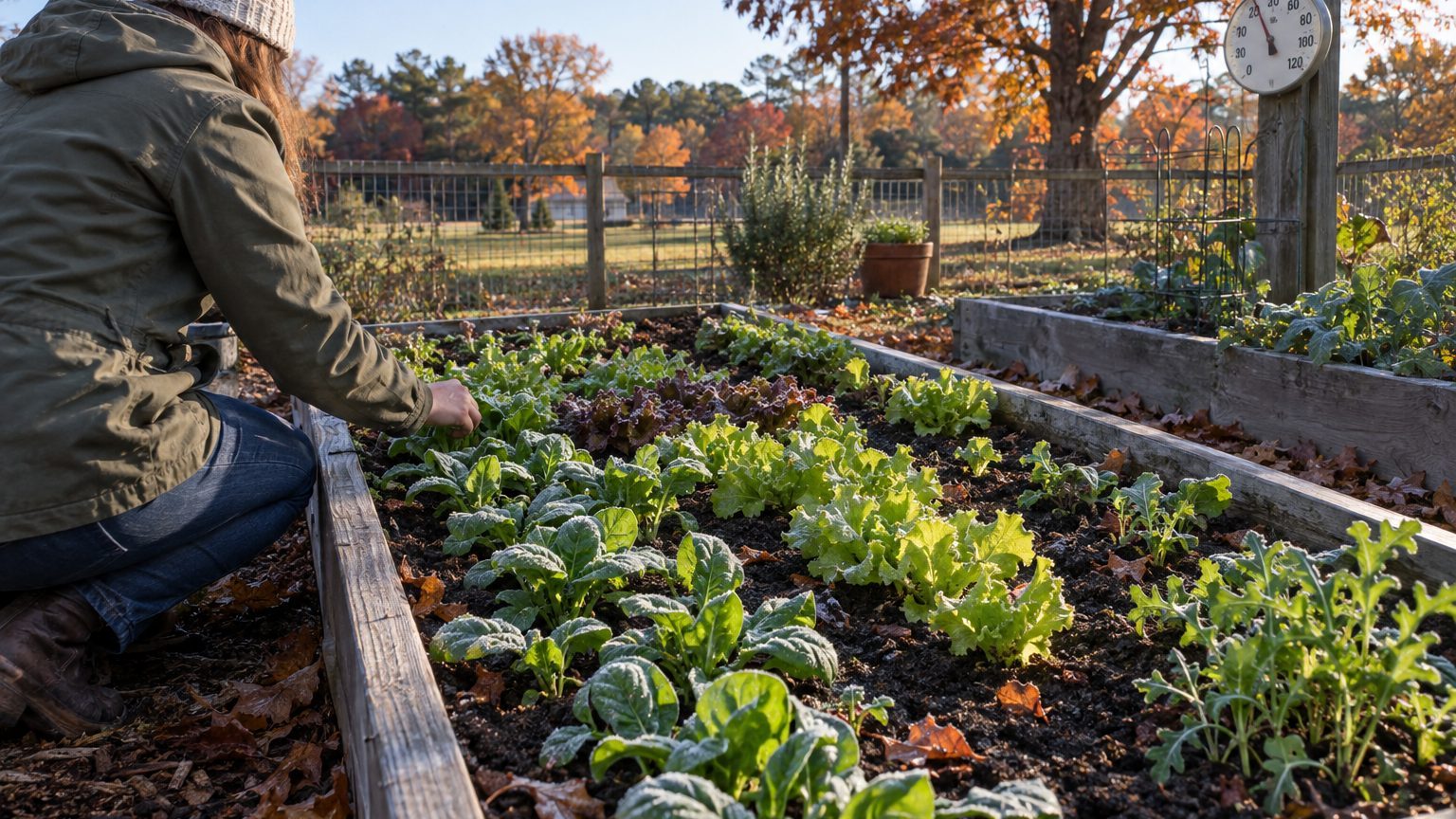

Sow winter salads in West Virginia from late summer into early fall, and finish before the first fall freeze arrives. At the Charleston reference station, that freeze window runs from October 18 to November 1. Spring sowings of hardy greens start as the last-freeze window closes, April 9 to April 23. Both ranges come with caveats, and the state’s terrain stretches them considerably.
The short answer for West Virginia
For fall-sown winter salads, aim to have seed in the ground well before October 18. Plants need to be close to harvest size when growth slows in late fall, because a salad green does most of its growing in mild weather and then mostly holds. Sown after the freeze window opens, it stays a seedling all winter.
What the frost dates actually measure
These dates are probabilities, not deadlines. The figures come from NOAA’s 1991-2020 Climate Normals for Charleston (station USW00013866) and mark the band where the chance of a 32°F freeze sits between 30 and 70 percent. Inside that band, a freeze on any given date is more or less a coin toss. Before it, a freeze is less likely than not. After it, more likely than not.
| Event | Date range (Charleston) | What it describes |
|---|---|---|
| Last spring frost | April 9 to April 23 | 30-70% odds of a 32°F freeze |
| First fall frost | October 18 to November 1 | 30-70% odds of a 32°F freeze |
| Coldest month, mean daily minimum | 26.1°F | Average overnight low, not the record low |
That last row matters more for winter salads than the frost dates do. A mean daily minimum of 26.1°F in the coldest month means the average night is below freezing, and some nights run colder than the average. Hardy greens such as spinach, mâche and claytonia are built for that. Tender lettuce usually is not, at least not without cover. For a closer look at which types fit these conditions, see The Best Winter Salads for West Virginia.
The spring window works differently. Winter salads are not a spring crop in the usual sense, but the hardy ones can be sown outdoors as soon as the soil is workable, which can fall before the last-freeze window closes. Their goal is a harvest before summer heat arrives, not a long run through cold. For the wider picture of how the whole crop group behaves in the state, the hub page Winter Salads for West Virginia Gardens covers the ground this one narrows down.
This page does not have days-to-maturity data for individual varieties, so it cannot hand you a single sow-by date. Count back from the freeze window, using the seed packet’s maturity figure, and leave a cushion.
What will not work here
Waiting for the first frost to start is the classic failure. By the time October 18 arrives, the soil is cooling, days are short, and a seedling that has barely unfolded its first leaves faces a January where the average low is 26.1°F. It will not die so much as stall, then sit there until March. A gardener who sowed in early November is not growing winter salad. They are keeping seedlings on life support.
Slow crops fall short first. Heading types and slow chicories that need a long stretch of mild weather to fill out are the ones a late sowing defeats. The season between the last summer heat and the first freeze is short in this state, and the slowest crops simply do not finish in it. Fast, hardy leaf crops forgive a late start. Big, tightly headed ones do not.
The opposite mistake happens in August. Sowing too early into hot soil tends to give patchy germination in lettuce and its relatives, and humid Appalachian summers keep the top inch of a bed warm and damp. Seedlings that do come up then face fungal pressure. West Virginia’s humidity is the quiet enemy here, more than the cold.
Terrain is the other trap. Charleston sits in a river valley, and the source data says plainly that higher elevations across the state freeze noticeably earlier in fall. A gardener on a ridge who borrows the Charleston dates will sow too late. Hollows add a different problem: cold air drains downhill and pools, so a low corner of a hillside garden can freeze before the slope above it.
What changes across West Virginia
There is no single West Virginia garden. The USDA Plant Hardiness Zone Map (2023 edition, based on 1991-2020 normals) places the state anywhere from 5a to 7a. That is five half-zone steps, and the gap between the ends is large enough that a winter-hardy crop in one county is a gamble in another.
The zone system is built on a single variable, the average annual extreme minimum temperature. It tells you how cold the worst night of the year tends to be. It says nothing about when the first freeze arrives, which is what a sowing calendar needs. A garden can sit in a mild zone and still get an early October frost if it sits in a pocket where cold air settles. Use the zone for survival questions and the frost window for timing questions.
The dates on this page belong to Charleston, so treat them as the middle of the range and not the whole of it. Readers in the northern part of the state, and anyone gardening at altitude, should expect the cold end of that 5a-7a spread and a fall freeze earlier than the October 18 to November 1 window. The practical shift is to sow earlier and let your own first frost, not this page’s calendar, set the final date. Gardeners in the lower valleys may find the Charleston dates close to right, or even a little conservative.
Which zone applies to your property is not something this page can tell you. Look it up on the USDA Plant Hardiness Zone Map, which lets you search by ZIP code. Then check it against what your own beds do, which the last section covers.
Where to check this for your own county
A county recommendation beats a state one. This page is the state one, built from a single station in a river valley, and it was never meant to settle a question about your hillside. The place to settle it is West Virginia University Extension, the state’s land-grant extension service, which has offices that work with growers at the county level.
Two things are worth looking for there. The first is a local planting calendar, ideally one broken out by region or county and not issued as one set of dates for the whole state. If it lists fall sowing dates for cool-season greens, those dates already account for elevation and local frost behavior in ways this page cannot.
The second is the varieties trialled in your county. Seed catalogs describe a variety’s performance in their own test gardens, often far from Appalachia. An extension trial, run in West Virginia soil and weather, tells you which ones actually held up through a wet fall and a freezing January. If a trial result disagrees with a catalog description, trust the trial.
If the website does not answer a specific question, the county office is the next step. Staff there can tell you things no state page can: whether your area is prone to early frost, which neighborhoods sit in cold-air pockets, what usually goes wrong with fall plantings nearby. Bring your approximate elevation and the kind of bed you are planning.
Checking this against your own garden
Your garden outranks every date above. Two observations will tell you more about your own microclimate than a state table can, and neither requires equipment.
Soil warmth, by feel. In late summer, push your fingers a couple of inches into the bed in the morning. If the soil still feels warm, germination of cool-season salad seed may be patchy and you should wait or shade the bed. Compare a sunny slope with a shaded hollow. The difference you feel is the difference your seedlings will live with.
The first true leaves. A seedling shows its seed leaves first, then the true leaves that look like the mature plant. If your fall sowings have true leaves by the time the nights begin to dip toward freezing, you sowed on time. If they are still at the seed-leaf stage, you were late, and a row cover is your best remaining tool. Keep notes, because next year’s date comes straight from this year’s result.
The Charleston numbers describe one station on one valley floor, and a ridge a few miles away can run a full freeze window earlier. Your own notes, kept for a couple of seasons, become the most local dataset you will ever have.
Common questions
Can I still sow winter salads in November in West Virginia?
You can, but expect little. By November the first fall frost window (October 18 to November 1 at Charleston) has passed or is closing, and seedlings will mostly sit small until spring. Under a cold frame or tunnel you may still get cut-and-come-again leaves from the hardiest types, but do not count on a heavy winter harvest.
Do the frost dates mean I will not have frost before October 18?
No. October 18 to November 1 is the band where the odds of a 32°F freeze run from 30 to 70 percent, based on 1991-2020 normals. A freeze before the band is possible, just less likely, and it is more likely at higher elevations than at Charleston.
Is 26.1°F the lowest temperature I should plan for?
No. It is the mean daily minimum of the coldest month, an average of overnight lows. Individual nights run colder, and it is not a record low. It tells you the typical January night is below freezing, which is why hardy greens suit winter here.
Which hardiness zone should I use for my sowing date?
Neither one. Zones, which run from 5a to 7a across the state, measure extreme winter cold and say nothing about when the first freeze falls. Use the frost window for timing, check your zone on the USDA map, and confirm both with your county extension office.