
Sweet potatoes and sunchokes are the safest unusual roots for an Alabama summer. Daikon, black radish and turnip-type roots are the safest for fall. Ginger and turmeric are a long-season gamble worth taking in a container. Slow cool-season roots like parsnips and celeriac disappoint most often here. The reason is a long, warm frost-free season paired with mild winters.
The short answer for Alabama
Pick by type, not by novelty. The reference station figures in the NOAA 1991-2020 Climate Normals put the last spring 32°F freeze between March 19 and April 3, and the first fall freeze between November 2 and November 16. Those are the dates inside a 30-70% probability band for a 32°F freeze, so they are odds, not promises. They also come from an airport station. Suburban and rural gardens typically see the last spring frost one to two weeks later and the first fall frost one to two weeks earlier, and more at elevation. Count the span between the dates and you get roughly 213 to 242 days. That is a generous season, and it favors crops that like heat.
Match the type to the season
Heat-loving, frost-tender roots (sweet potato, ginger, turmeric) use the long warm stretch that cool-climate gardeners never get. Tough perennial tubers like Jerusalem artichoke and horseradish handle winter without fuss. Fast cool-season roots slot into the cooling weeks of fall. The slow cool-season roots are the weak link, for reasons the next section lays out.
A quick comparison
| Type | Examples | Fit in Alabama | Timing logic |
|---|---|---|---|
| Heat-loving, frost-tender | Sweet potato, ginger, turmeric | Strong for sweet potato; ginger and turmeric need the whole season | Plant only after the last-frost band has clearly passed |
| Tough perennial | Jerusalem artichoke, horseradish | Strong; winters are mild enough | Early spring planting, harvest after tops die back |
| Fast cool-season | Daikon, black radish, turnip types | Strong in fall | Sow as summer heat breaks, well before the first-frost band |
| Slow cool-season | Parsnip, celeriac, salsify | Unreliable | Fall sowing is the only realistic trial |
Exact sowing and planting dates for each of these live on When to Plant Unusual Roots in Alabama. For the broader picture of what to grow, start with Growing Unusual Root Crops in Alabama.
What will not work here
Parsnips sown in spring are the classic Alabama letdown. The seed is slow to sprout and the crop wants months of cool weather, but warm days arrive long before the roots size up. Celeriac has the same problem: it is a long-haul crop that sulks in summer heat. Growers further north can sow in spring and harvest after frost. Here, that plan runs straight into a hot, humid July.
Winter is the second problem. The mean daily minimum of the coldest month at the reference station is 33.1°F. That is barely below freezing on an average night. Roots such as parsnips taste sweeter after a real stretch of hard cold, and mild Alabama winters supply less of it. You can still harvest them, but expect a milder flavor than the northern gardening books promise. The same mildness is why sunchokes and horseradish overwinter without protection.
Humidity punishes crowding. A tight row of daikon or turnips with a dense canopy holds moisture around the crowns, and that invites rot and leaf disease. Give plants more room than the seed packet’s minimum, and thin early. Weekly watering is also a poor fit for sandy soils, which dry quickly between rains. A short, deep soak every few days beats a weekly drench for forked-root-prone crops.
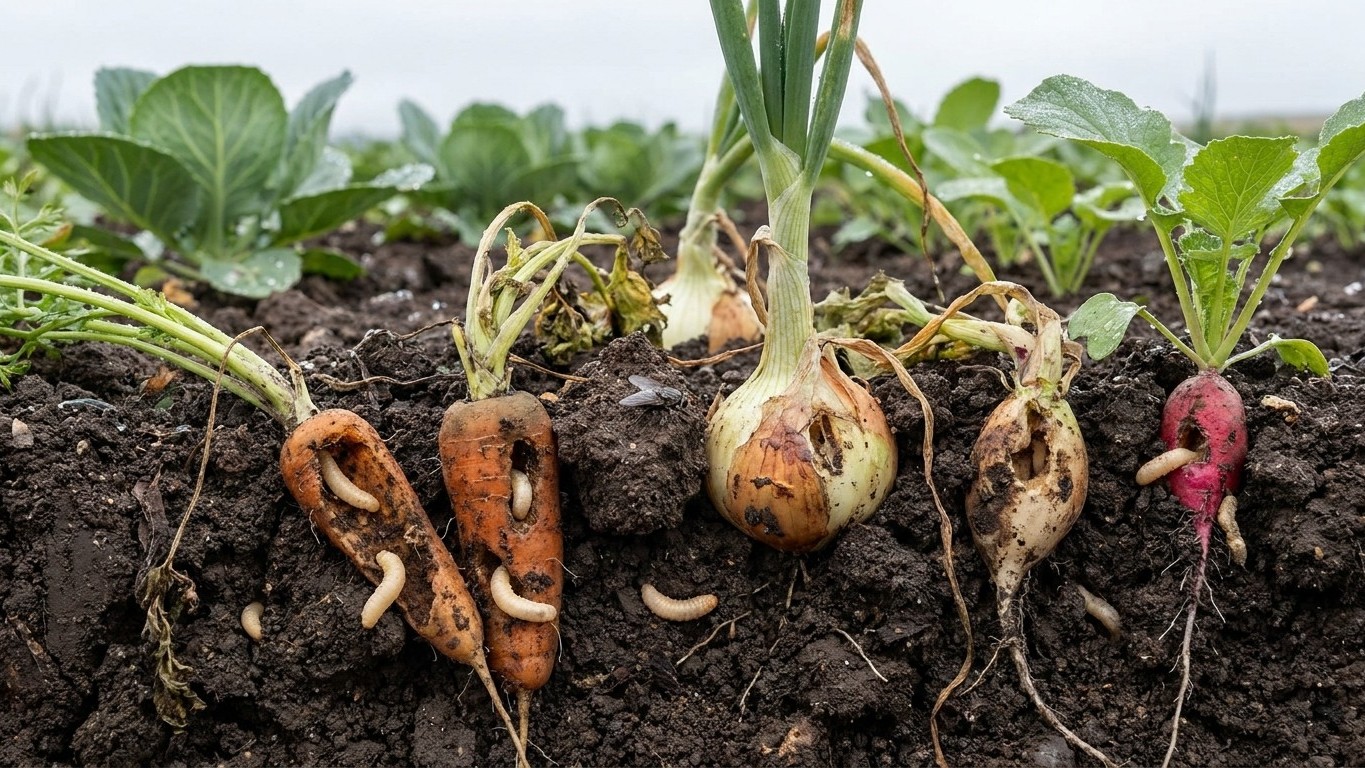
Soil defeats others. Heavy red clay, common across much of the state, makes long roots fork and stunt unless you loosen the bed deeply or build raised rows. In sandy ground, root-knot nematodes are a known hazard for many root crops, and they gall roots badly in warm soil. Rotating crops and choosing varieties sold as resistant, where they exist, helps more than extra fertilizer.
Last, ginger and turmeric planted too late. They need most of a year to bulk up, and the first fall freeze, which could arrive as early as November 2 at the reference station and earlier in a rural garden, ends the show. Start them early indoors or in containers you can move, and treat the harvest as a bonus.
What changes across Alabama
Alabama is not one garden. The USDA Plant Hardiness Zone Map (2023 edition, built on 1991-2020 normals) places the state between 7a and 9a. That covers several zones, so there is no single answer. The system rests on one variable, the average annual extreme minimum temperature, and says nothing about summer heat or season length. Look up your own ZIP code on the map rather than guessing from a neighbor.
Readers in the northern part of the state or at higher elevation should shift in a few directions. Expect the last spring frost to land later and the first fall frost earlier than the reference figures above, which means a shorter run for sweet potatoes, ginger and turmeric. Choose sweet potato varieties that mature earlier, plant slips once the soil has truly warmed, and keep ginger in pots. On the other hand, colder winters help the cool-season group. Parsnips and salsify have a better shot in the north than on the Gulf side, and a fall sowing there gets some real cold to sweeten the roots.
Gardeners near the coast and in the southern zones have the opposite situation. The warm season runs long, so tender crops get more time, and you can sow fall daikon and black radish later than anywhere else in the state. Heat lingers into autumn, though, so sow too early and the seedlings struggle. Nematode pressure and rot worry also rise in warm, sandy soils.
Central Alabama sits between those poles, and the reference-station numbers are the best starting point. Treat them as a baseline to adjust, not a rule.
Where to check this for your own county
A county recommendation beats a state one, and this page is the state one. Frost dates, soil and rainfall can differ a lot from one end of Alabama to the other, and a local agent knows what has actually worked in your area. The place to go is the Alabama Cooperative Extension System, the state’s land-grant extension service.
Once you are there, look for three things:
- The vegetable planting calendar for your region or county, which should show planting windows tied to local frost timing.
- Variety trial results, ideally from research stations or demonstration plots near you, since a variety that thrives in one part of the state may fail in another.
- Your county extension office contact, for soil testing and questions about nematodes or disease pressure.
This page does not carry an Alabama county-level root crop calendar, and it does not list variety trial results, so it cannot say which named varieties performed best in a given county. The extension office can. Bring a question that is specific: what you want to grow, where, and in what soil. The answer you get back will be worth more than any state-level date printed here.
Checking this against your own garden
Your own observations outrank every date on this page. Three are worth watching, and none needs equipment.
Soil warmth by feel. Push your hand into the bed about 4 inches down in the morning. If the soil feels cool and damp against your skin, sweet potato slips and ginger will stall. If it feels comfortably warm, they will root quickly. A bed that warms earlier than a neighbor’s tells you about drainage and sun exposure.
The first male flowers on squash or cucumbers. If anyone nearby grows them, the first flush of male blooms shows that nights and soil have warmed for real. It is a handy cue for planting heat-lovers, and it varies from yard to yard by a week or more.
First true leaves on a test sowing. Sow a short row of radishes or turnips as a scout. The first true leaves, which appear after the rounded seed leaves, show how quickly your soil is waking up and whether germination is even. In fall, the same scout tells you whether heat is still too intense for daikon.
Common questions
Can I grow ginger and turmeric in Alabama?
Yes, with a caveat. They need most of a year and cannot take frost. The first fall freeze could arrive as early as November 2 at the reference station, and often earlier in rural areas. Starting early in pots and moving them to shelter works better than planting in open ground.
Are parsnips worth trying?
As a fall-sown experiment, maybe. As a spring crop, they tend to fail in the heat. The 33.1°F average minimum in the coldest month also means less cold sweetening than a northern winter delivers.
What is the easiest unusual root to start with?
Sweet potatoes and daikon forgive a lot. Sweet potatoes thrive in the long warm season, and daikon is quick in a fall bed. Both are good first picks before you take on slower, fussier crops.
Will Jerusalem artichokes take over the garden?
They can. Any small tuber left in the ground will resprout, so give them their own bed and dig thoroughly at harvest. Mild winters mean they overwinter easily, which is the very reason they spread.