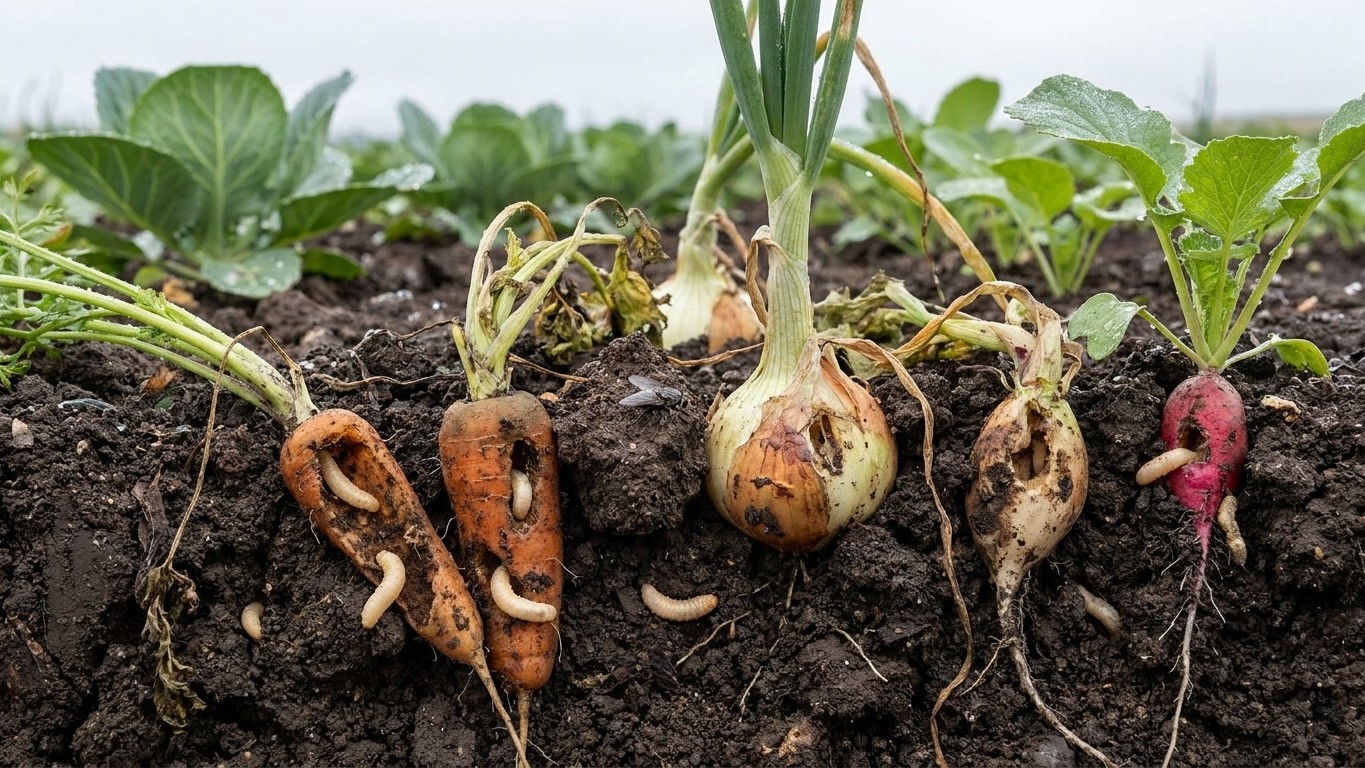

Match the root to the season, not the state. Where winters are frost-free, as in coastal and southern California, sweet potatoes, ginger, turmeric and jicama suit the warm months, while parsnips, celeriac and daikon suit the cool ones. Where freezes arrive, in Northern California, the Central Valley and the Sierra, hardy roots such as sunchokes, salsify and horseradish are the safer picks. The rest of this page explains the split.
The short answer for California
The best unusual roots for California fall into three types: tender warm-season roots, cool-season roots, and hardy roots that overwinter in the ground. Each one is tied to how long and how hot your growing year runs. The reference station for this page is Los Angeles, the mildest end of the range, so read what follows as the mild-winter answer first and the cold-winter answer second.
NOAA’s 1991-2020 Climate Normals show no freeze in an average year at that station. The daily records show zero days at or below 32°F in 30 years, and the frost-free season is listed as 365 days. The mean daily minimum of the coldest month is 49.1°F. So there is no last spring frost date to give, and no first fall frost date either. The limits in a frost-free garden are heat, drought and water restrictions.
| Type | Examples | Where it fits | Main limit |
|---|---|---|---|
| Tender warm-season | Sweet potato, ginger, turmeric, jicama | Frost-free coast and south; hot inland summers with irrigation | Needs a long warm stretch and steady water |
| Cool-season | Parsnip, celeriac, daikon, black radish | Cooler months in mild areas; shoulder seasons elsewhere | Bolts or turns woody in heat; thirsty |
| Hardy, overwintering | Sunchoke, salsify, scorzonera, horseradish, burdock | Anywhere, including freezing areas | Spreads or needs deep, loose soil |
Where there is no freeze
Tender roots can stay in the ground with no cold-kill risk, so warmth and water set the window rather than frost. Sweet potato is the most forgiving of the tender group. Ginger and turmeric prefer shade and moisture to full blast sun, and jicama asks for the longest warm spell of all. Cool-season roots go in as summer heat fades. Parsnips and salsify get less chill to sweeten them on the coast, so expect a milder flavor than a cold-winter garden produces.
Where freezes arrive
Lean on the hardy group. Sunchokes, horseradish, salsify, scorzonera and burdock can wait in the ground through winter and be dug as needed, and parsnips left in the soil sweeten with the cold. Tender roots become a gamble outside the warmest valleys. Exact sowing windows by region live on the When to Plant Unusual Roots in California page.
What will not work here
Heat and water
Weekly deep soaking is the quickest way to ruin celeriac, daikon and black radish in a hot, dry summer. These crops want even moisture, and swings between bone dry and soaked give roots that crack, turn woody or taste harsh. Parsnips fail earlier: the seed germinates slowly and must stay damp the whole time, which is hard to manage on a restricted watering schedule. Many California water districts have limited outdoor watering in drought years, so a root crop that needs daily attention is a poor fit for those gardens.
A 365-day frost-free season also tempts people to plant everything all year. It does not work. Cool-season roots sown into summer heat bolt or turn pungent. And mild is not warm: a coldest-month mean minimum of 49.1°F means winter nights rarely threaten a plant, yet soil in that month is still too cool for ginger, turmeric and sweet potato slips, which stall instead of growing.
Cold and altitude
A short season defeats the slowest roots first. In the Sierra and other high, cold ground, outdoor jicama, ginger and turmeric are poor bets, and long-vining sweet potatoes will struggle to size up. This page does not carry frost dates for Northern California, the Central Valley or the Sierra. The only freeze figures in its sources are for Los Angeles, where there is no freeze, and borrowing them for a colder place would mislead you.
One failure is not about weather. Sunchokes survive almost anything, and that is the trouble: every small tuber left in the soil sprouts next year. Give them a bed you will not mind losing, or a large container.
What changes across California
The USDA Plant Hardiness Zone Map (2023 edition, built on 1991-2020 normals) places California in zones 5a through 11a. That is seven numbered zones in one state, so no single answer fits. Los Angeles sits near the warm end, and Sierra gardens sit near the cold end, with the Central Valley and the northern counties in between.
The zone system rests on one variable, the average annual extreme minimum temperature. It tells you whether a plant survives winter. It says nothing about summer heat, rainfall or how many warm weeks you get, which matters for jicama and sweet potato. Two gardens in the same zone can still behave very differently if one is in a hot interior valley and the other in a cool, foggy coastal strip.
If you garden in the north or at altitude, shift three things. Lean toward the hardy group, and expect to dig it later. Treat tender roots as container crops that can move to shelter, not as field crops. And mulch anything you leave in the ground over winter, so the soil does not swing between frozen and thawed. Where you are on the map is something to check for yourself: look up your location on the USDA Plant Hardiness Zone Map instead of assuming a zone from a neighbor or a nursery tag.
Where to check this for your own county
Start with University of California Agriculture and Natural Resources, the state’s extension arm, and find the page for your county’s UC Cooperative Extension office. Many counties also run a UC Master Gardener program that answers local questions and publishes local guidance.
Look for two things there. The first is a vegetable planting calendar written for your county, with sowing windows that reflect your local frost risk or lack of it. The second is any list of varieties trialled in your county. A variety that does well in a coastal fog belt can sulk inland, and a county trial is the quickest way to find out which.
A county recommendation beats a state one, and this page is the state one. It averages a coastline, a hot interior valley, rainy northern ridges and snowy mountains, so treat it as a shortlist, not a schedule. Nothing on it replaces a calendar built from decades of local records. For the wider picture of how these crops behave across the state, the pillar page Growing Unusual Root Crops in California covers the ground this page narrows down.
Checking this against your own garden
Your own beds outrank every date on this page. Three observations cost nothing and need no gear.
Soil warmth by feel. Push your bare hand into the bed in mid-morning. If it still feels cool, tender roots can wait. Try this in a sunny bed and a shaded one, or beside a south-facing wall and out in the open, and the difference shows how much your microclimate varies within a few feet.
The first male flowers. Squash and cucumbers send up male blooms first, and they appear when the season has truly warmed. If your squash flowers weeks after a friend’s across town, your garden runs cooler, and your sweet potato slips should go in later too.
The first true leaves. The first pair a seedling shows are seed leaves. The true leaves come next. Daikon or parsnip seedlings that stall before true leaves usually point to cold soil or uneven moisture, and a bed that gets there quickly is telling you it suits the crop.
Common questions
Can I grow ginger and turmeric outdoors in California?
In frost-free coastal and southern gardens, often yes, in part shade with steady moisture. Where freezes occur, or summers are short, containers you can move are the safer route.
Do parsnips need frost to grow well?
No. They grow without it, but cold weather sweetens them, so a frost-free garden tends to give a milder root. Sow into cooler conditions and keep the seedbed damp until they sprout.
Which unusual root is easiest for a first try?
Sunchokes. They tolerate a wide range of climates and need little care, but they spread, so choose their spot carefully.
Does a hardiness zone of 5a to 11a mean I can grow anything?
No. That range covers the whole state, and the zone measures only the coldest winter temperatures. Summer heat, water supply and season length decide most of what thrives in your yard.