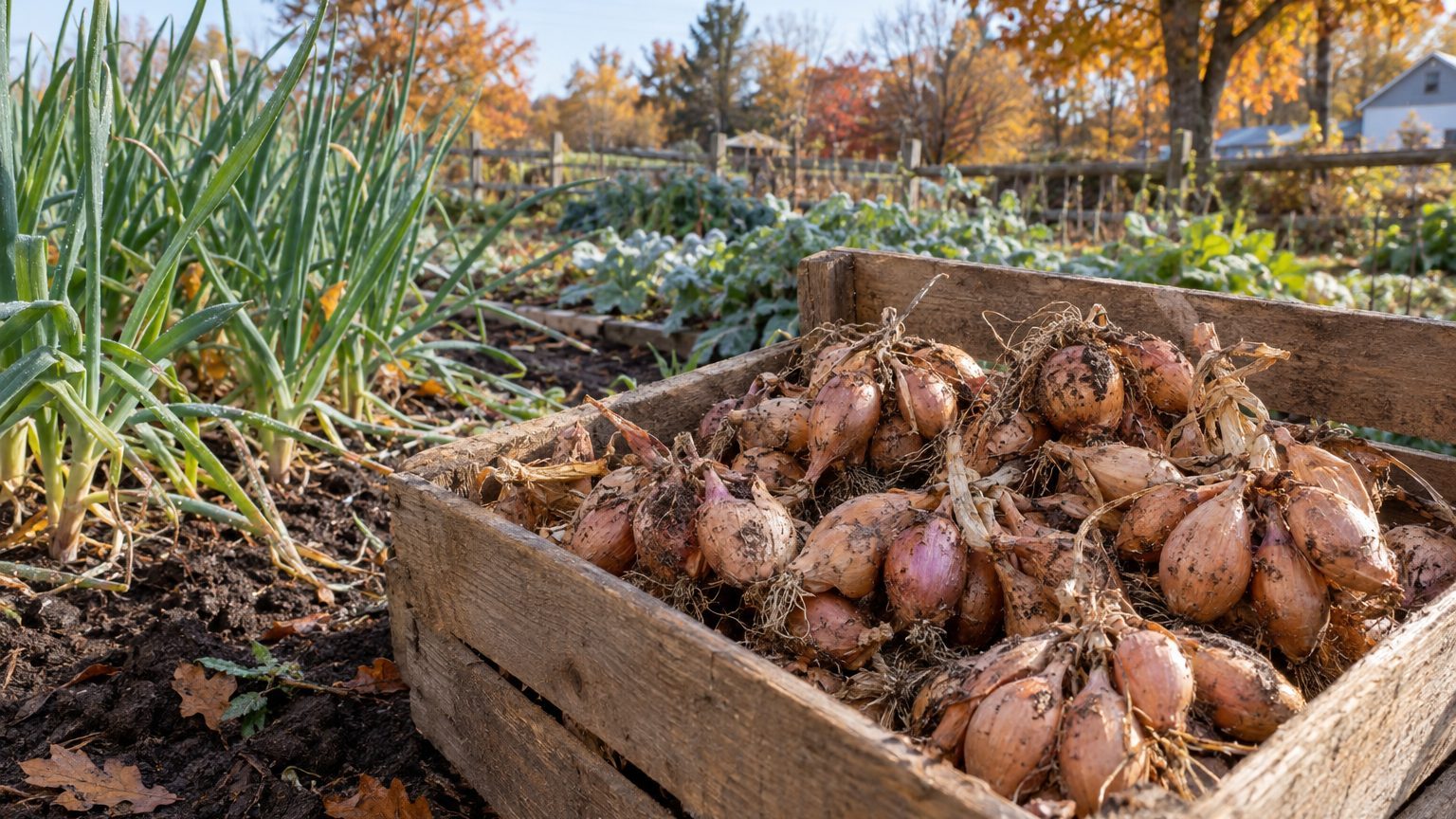

Choose shallots by type, not by name. In most Colorado gardens, multiplier shallots grown from bulbs (sold as sets) beat seed-grown shallots, because they finish earlier and shrug off the cold. This page has no county trial data, so it sorts your options by type and points you to the people who do. For the full growing routine, start with Growing Shallots in Colorado.
The short answer for Colorado
Bulb-grown multiplier shallots are the safest choice, planted in fall for an early-summer harvest, with early spring planting as the backup. Seed-grown shallots work only where the season is long enough to finish them, and that is not everywhere in this state.
The reasoning starts with the frost dates. For Denver, the reference station here, the last spring frost falls between May 1 and May 11, and the first fall frost between September 30 and October 12. Both ranges come from the NOAA NCEI 1991-2020 Climate Normals and describe the 30 to 70 percent band of probability for a 32°F freeze. They are odds, not promises. A freeze after May 11 can still happen, and so can one before September 30. Denver sits at 5,280 feet on the plains, so mountain towns run much shorter seasons and the western slope differs again.
Cold is the second number. The mean daily minimum of Denver’s coldest month is 18.4°F. That is cold enough to punish tender plants but well within what a mulched shallot bulb handles, which is why fall planting is workable here.
The decision by type
| Type | Best fit in Colorado | Main risk |
|---|---|---|
| Multiplier shallots from bulbs, planted in fall | Front Range and lower valleys; first choice | Top growth too early, exposed to winter swings without mulch |
| Multiplier shallots from bulbs, planted in early spring | Colder or higher gardens where fall planting feels risky | Smaller bulbs if spring turns hot fast |
| Seed-grown shallots, started indoors | Gardeners with a long season and patience | Running out of season before bulbs size up |
One caution on names. Catalogs list many shallot varieties, but this page does not have Colorado trial results for any of them, so it will not crown a winner by name. Pick a type from the table, then check which named varieties have actually been grown near you (the county section below explains how). Timing details live in When to Plant Shallots in Colorado.
What will not work here
Start with the slowest option: seed-grown shallots sown outdoors in spring. Between the last spring frost band (May 1 to May 11) and the first fall frost band (September 30 to October 12), a plant raised from seed has to germinate, grow a root system, and then bulb. Seeds started late or direct-sown often end up with thin, pencil-necked bulbs when the fall freeze arrives.
Weekly watering in a dry summer
Colorado summers are dry and bright, and shallots have shallow roots. A single deep soak once a week, the schedule that suits many established garden plants, can leave the top inch or two of soil parched for days. Bulbs sized by stress tend to be small, split, or bitter. Mulch and a steadier, lighter schedule tend to do more than a bigger weekly dose, especially in sandy or fast-draining beds. Heavy clay is the opposite problem: it holds water, so watch it rather than watering by the calendar.
Planting too early, or with no mulch
Fall planting works because bulbs root in cool soil and sit through winter. Plant too soon, during a warm October stretch, and green tops race ahead and then take the brunt of a hard cold snap. Plant with no mulch at all and the bulbs face the freeze-thaw cycles that heave shallow plantings out of the ground. A coldest-month minimum of 18.4°F in Denver is mild next to what higher towns see, so the same plan that works on the plains can fail at altitude.
Frost that does not follow the plains calendar
Mountain towns can frost in July. A shallot needing the whole summer to bulb is a poor bet in a garden like that, so assume the plains dates do not apply and choose the earliest-finishing approach, bulbs planted early. Seed-grown types are the first thing to drop from the plan.
One more thing that will not work: copying a calendar from a coastal or southern garden site. A schedule built for a mild-winter state tells you nothing about a state where the first fall freeze may arrive on September 30.
What changes across Colorado
Colorado does not have a single hardiness zone. The USDA Plant Hardiness Zone Map (2023, built on 1991-2020 normals) runs from 3b to 7b across the state. That spread is huge, and it rests on one variable only, the average annual extreme minimum temperature. Zone 3b means some gardens see extreme lows far below anything in Denver, while 7b reaches warmer pockets. There is no single answer for shallots, only a spread to work within.
The numbers on this page are tied to Denver, the reference city, so treat them as a plains baseline. If you garden in the northern part of the state or at altitude, shift in three directions. Plant earlier in fall so roots establish before the ground freezes, or go to early spring planting if your fall freeze comes early. Add a thicker mulch layer over fall plantings. Drop seed-grown shallots from your plan, since the season rarely allows them to finish.
Lower-elevation gardens, including parts of the western slope, run warmer and often have more room. There the choice among types is looser, and fall planting is the easy default. Still, the western slope differs from the plains in its own way, so Denver’s dates are a starting point, not an answer.
Which zone applies to your address? That is something to look up, not something this page can tell you. The USDA map lets you enter a ZIP code and read the result directly. Use it, then compare the result with the Denver baseline above to see how far you need to shift.
Where to check this for your own county
Your state extension service is the next stop. For Colorado, that is Colorado State University Extension, which runs county offices across the state. Extension staff know the local soil, the local frost patterns, and what has actually been grown in the area.
Two things are worth looking for. The first is the local planting calendar for your county, or the vegetable planting guide for your elevation band, which will give you fall and spring dates tuned to where you live. The second is the list of varieties trialled or recommended in your county, which is where named shallots belong. This page deliberately holds back on names for that reason.
If your county office does not publish shallot-specific guidance, check what it says for garlic. The two share the fall-planting routine, the mulching habit, and the sensitivity to summer water, so a garlic calendar is a useful stand-in until you find a shallot-specific one. Master Gardener programs attached to county offices are also a good place to ask which local growers have had luck with shallots and which planting dates they favor.
A county recommendation beats a state one. Colorado spans plains, foothills, mountain valleys, and high desert, and this page is the state-level view, built on one reference station. When the extension office and this page disagree, go with the extension office.
Checking this against your own garden
Your own observations outrank every date here, and three of them cost nothing.
First, soil warmth by feel. In spring, press your hand flat on the bed in the morning. If the soil still feels cold and wet and clings to your fingers, it is too early to plant, no matter what the calendar says. In fall, soil that is still noticeably warm tells you roots will grow fast, so wait for it to cool before planting. Beds that warm early are usually south-facing or sheltered, which tells you that part of the garden runs ahead of the rest.
Second, the first true leaves. When sets sprout, look at how quickly leaves grow past the first thin blades. Slow growth in a cool spring is normal. Leaves that grow fast and then yellow early point to a hot, dry pocket, and that bed will need more mulch and steadier water.
Third, the first flush of flowers on the other plants around you. When early-blooming neighbors and fruit trees open, your local spring has arrived, whatever the Denver band says. Note the date for two or three seasons. Over time that record becomes your own calendar, and it will be more accurate for your yard than any state-level page.
Common questions
Are there specific shallot varieties that do best in Colorado?
This page does not have Colorado variety trial data, so it will not name a winner. Choose by type first (multiplier shallots from bulbs), then ask your county extension office which named varieties have been grown nearby.
Should I plant shallots in fall or spring in Colorado?
Fall planting is the better default on the plains, because the coldest-month minimum of 18.4°F in Denver is manageable with mulch. In colder or higher gardens, early spring planting is the safer fallback.
Can I grow shallots from seed in Colorado?
You can, but it is riskier. The gap between the last spring frost (May 1 to May 11) and the first fall frost (September 30 to October 12) is the whole window in Denver, and mountain towns have less. Bulbs finish sooner.
Do the frost dates on this page apply to my town?
Only if you garden near Denver on the plains. The dates are 30 to 70 percent freeze probability bands for a Denver station. Mountain towns and the western slope differ, so check your county extension office for local dates.