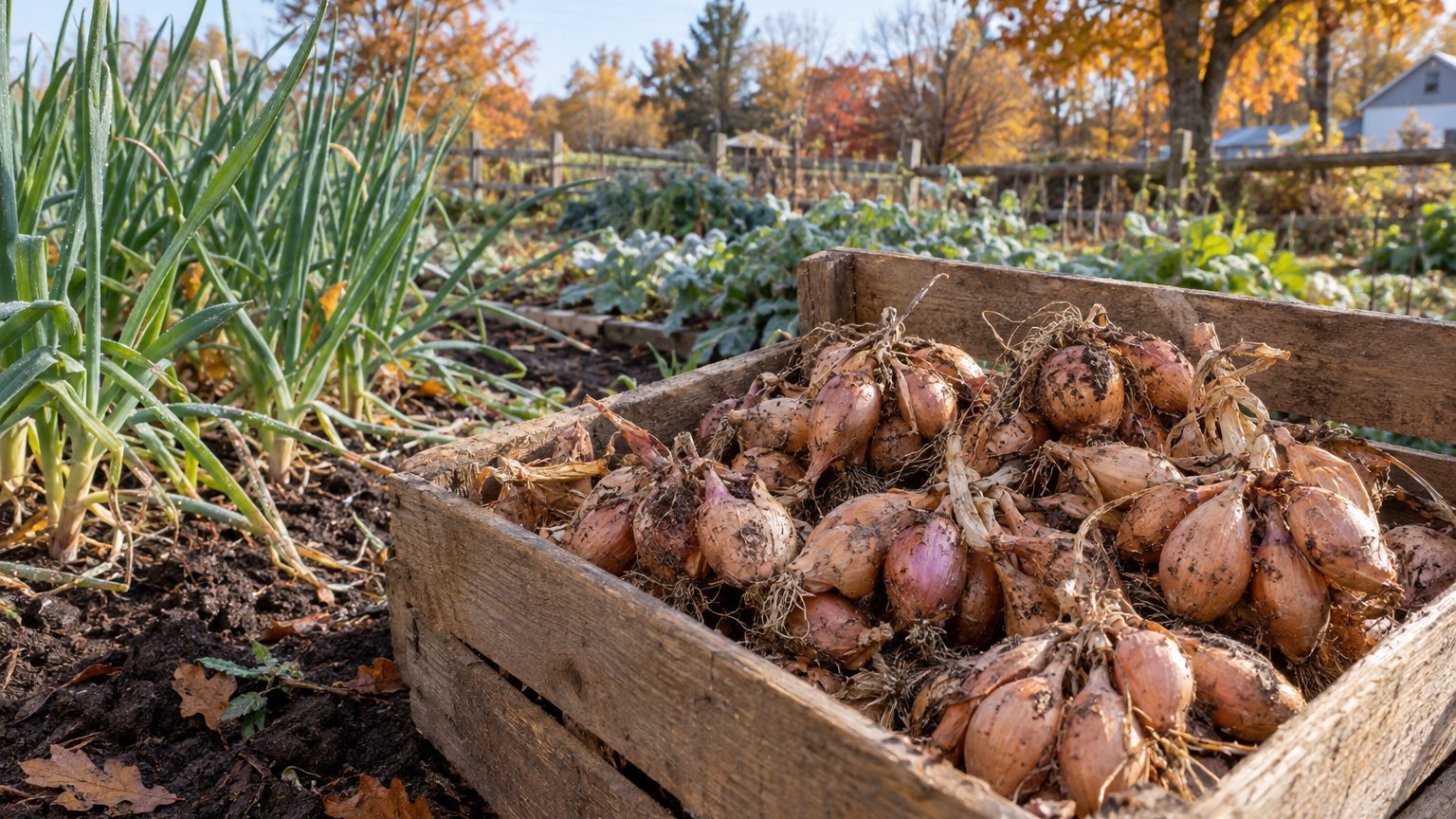

For Kentucky, the best shallots are multiplying, bulb-grown types planted in fall, with seed-grown shallots as the spring fallback. The winters are cold but not brutal, and the frost-free stretch is long. That combination rewards getting roots down in autumn. This page has no county trial data for named varieties, so it decides by type. The Growing Shallots in Kentucky guide covers the full crop.
The short answer for Kentucky
Start with the numbers for the Louisville reference station. In the NOAA 1991-2020 Climate Normals, the last spring frost falls between March 24 and April 4, and the first fall frost between November 2 and November 12. Those dates come from the 30-70% band of 32°F freeze probabilities. They are not a calendar guarantee. On a date inside that band, the odds of another freeze are somewhere between three in ten and seven in ten. A garden can still get a hard freeze after the early end of the window.
Winter is the second number. The mean daily minimum of the coldest month at Louisville is 27.8°F. That is below freezing on a typical night, so the ground does get cold, but it is not the deep, locked-up cold of a northern winter. Bulb shallots handle that fine. A clove set into the ground in fall grows roots, idles through winter, and starts leafing out as soon as the soil allows. The crop is then well along when the heat arrives.
That is why fall planting leads the decision. Here is how the three realistic types compare.
| Type | When it goes in | Fit for Kentucky | Main risk |
|---|---|---|---|
| Bulb shallots (multiplying), fall-planted | Fall, ahead of hard freezes | Best fit | Soggy or heaving winter beds |
| Bulb shallots, spring-planted | Early spring, once soil is workable | Works, with less margin | Squeezed between cold ground and early summer heat |
| Seed-grown shallots | Started indoors in late winter, set out in spring | Good backup, cheaper to start | More weeks of tending before bulbs form |
Within the bulb group, color and flavor are your call. Red, gray and yellow shallots all follow the same timing logic. If you want long storage, ask the seed company or your extension office which of its varieties keeps best, because this page cannot rank named varieties without trial results. For exact dates inside the fall window, see When to Plant Shallots in Kentucky.
What will not work here
A short season is not Kentucky’s problem. Between the spring and fall frost windows above, there are roughly seven months without a typical freeze. The real squeeze is at the front and back of that stretch. Shallots planted late, in May, say, have little time to size up before summer heat pushes them to finish. They tend to turn out small. A calendar written for the Upper Midwest or New England, where people plant once the ground thaws, fits Kentucky badly. It wastes the best months.
Watering habits fail next. This page carries no summer rainfall or humidity figures, so this part is reasoning from the general character of Kentucky summers, not a measured number. Humid Ohio Valley weather keeps foliage wet for long stretches. A weekly overhead soak on top of that invites fungal disease, especially in crowded beds. Tight spacing that works in a dry western garden holds moisture around the necks of the bulbs here. Give each plant room for air to move, water at the soil line, and stop watering as the tops start to yellow.
Winter has its own trap. With a coldest-month minimum of 27.8°F, nights dip below freezing but days often climb back above it. That freeze-thaw cycle can push shallow sets up out of heavy, wet soil. Kentucky has plenty of clay, and clay that stays wet over winter rots sets before it can root. Raised rows or beds, and a layer of straw mulch, solve both problems better than anything you can do after the fact.
Then there is a trap hiding in the data itself. NWS Louisville warns that this urban station runs later in spring and earlier in fall than the surrounding rural parts of Jefferson County. Rural gardens should expect a tighter window than the dates above suggest. If you garden outside a city core, shave your confidence in the early end of the spring window, and do not treat November 2 as a comfortable deadline for anything.
Finally, do not use the first fall frost as a harvest cue. Shallots are ready when the tops fall over and dry down, which comes long before November. Bulbs left in wet ground into autumn sprout and rot.
What changes across Kentucky
Under the USDA Plant Hardiness Zone Map 2023, which uses 1991-2020 normals, Kentucky runs from zone 6a to 7a. That system rests on one variable, the average annual extreme minimum temperature. So there is no single answer for the state. The spread covers more than a full zone, and every figure on this page comes from the Louisville reference station. Other parts of the state differ, sometimes by a lot.
If you garden in the north, near the Ohio River upstream of Louisville, or at altitude in the eastern ridges and hollows, expect colder winters than the 27.8°F reference. Your shifts are simple. Plant on the early side of the fall window so roots establish before the ground cools. Mulch more heavily, a few inches of straw instead of a light scatter. And push your spring tasks later, since frost can linger past the end of the window quoted for Louisville.
If you garden toward the warmer end of the range, the shifts reverse. Fall planting can stretch later and spring growth will start sooner. The trade-off is that the hot, humid stretch also arrives sooner, so your harvest may come earlier and your tolerance for crowding and late watering gets smaller.
Low ground matters too, even within one county. Cold air pools in valleys and at the bottom of slopes, so a garden there can frost later in spring and earlier in fall than one a hundred feet higher. Check the USDA hardiness map for your own location rather than guessing which zone you fall in. The map lets you search by ZIP code.
Where to check this for your own county
The best next stop is University of Kentucky Cooperative Extension, the land-grant extension service for the state. Every county has an office, staffed by agents who know local soil, local disease pressure, and local frost patterns. Find yours through the extension site and look for two things in particular.
First, a local planting calendar for onions and their relatives. If your county office publishes one, it will name dates for fall and spring planting that reflect actual conditions near you, not a statewide midpoint. Second, any variety trials run in or near your county. A trial that grew several shallot types side by side in Kentucky soil tells you more than any catalog description. If no shallot trial exists, ask which onion-family varieties have done well locally, and whether the office has seen problems with storage or disease.
A county recommendation beats a state one. This page is the state one: it relies on a single reference station, a USDA zone range that spans more than one band, and no local trial data. Think of it as a sound starting frame, not a verdict for your yard. When the county office and this page disagree, go with the county office.
Checking this against your own garden
Your own observations outrank every date above. Three are worth watching, and none need equipment.
- Soil warmth by feel. Grab a handful from a few inches down in early spring. If it crumbles and does not stick in a cold, wet clump, the bed is ready. A bed that stays soggy long after neighboring ones have dried tells you it drains poorly. Plant shallots there on a raised row, or skip the spot.
- The first green shoots. In a fall planting, note the week the first leaves poke through in late winter. If that comes earlier in one corner of your yard, that corner is your warm microclimate. Use it for the earliest planting next year.
- First frost on the grass. Walk the yard on the first frosty morning and see where the white shows up first. The spots that frost first are your cold pockets. Mulch those beds heaviest.
Write the dates down for a season or two. A scrap of paper in the shed is enough. After that, you will have a calendar that fits your yard better than any normal calculated for a station miles away.
Common questions
Should I plant shallots in fall or spring in Kentucky?
Fall suits most gardens. Roots form before winter, and the crop finishes before peak summer heat. Spring planting works, but it leaves less margin if warm weather arrives early. See the planting calendar page for dates.
Are seed-grown shallots worth trying here?
They are a reasonable fallback, and seed is usually cheaper than bulbs. You start them indoors in late winter and set them out in spring. Expect more weeks of tending than with bulbs, and a tighter run before summer heat.
Which zone is Kentucky in for shallots?
Kentucky spans USDA zones 6a to 7a, so there is no single answer. The figures here come from Louisville, where the coldest month averages a daily minimum of 27.8°F. Look up your own spot on the USDA map and compare it with your county extension office.
Can I trust the frost dates on this page for a rural garden?
Treat them as a loose guide. NWS Louisville notes that its urban station runs later in spring and earlier in fall than surrounding rural Jefferson County, so rural gardens should expect a tighter window. Your own first frost, noted in a notebook, will be the better number.