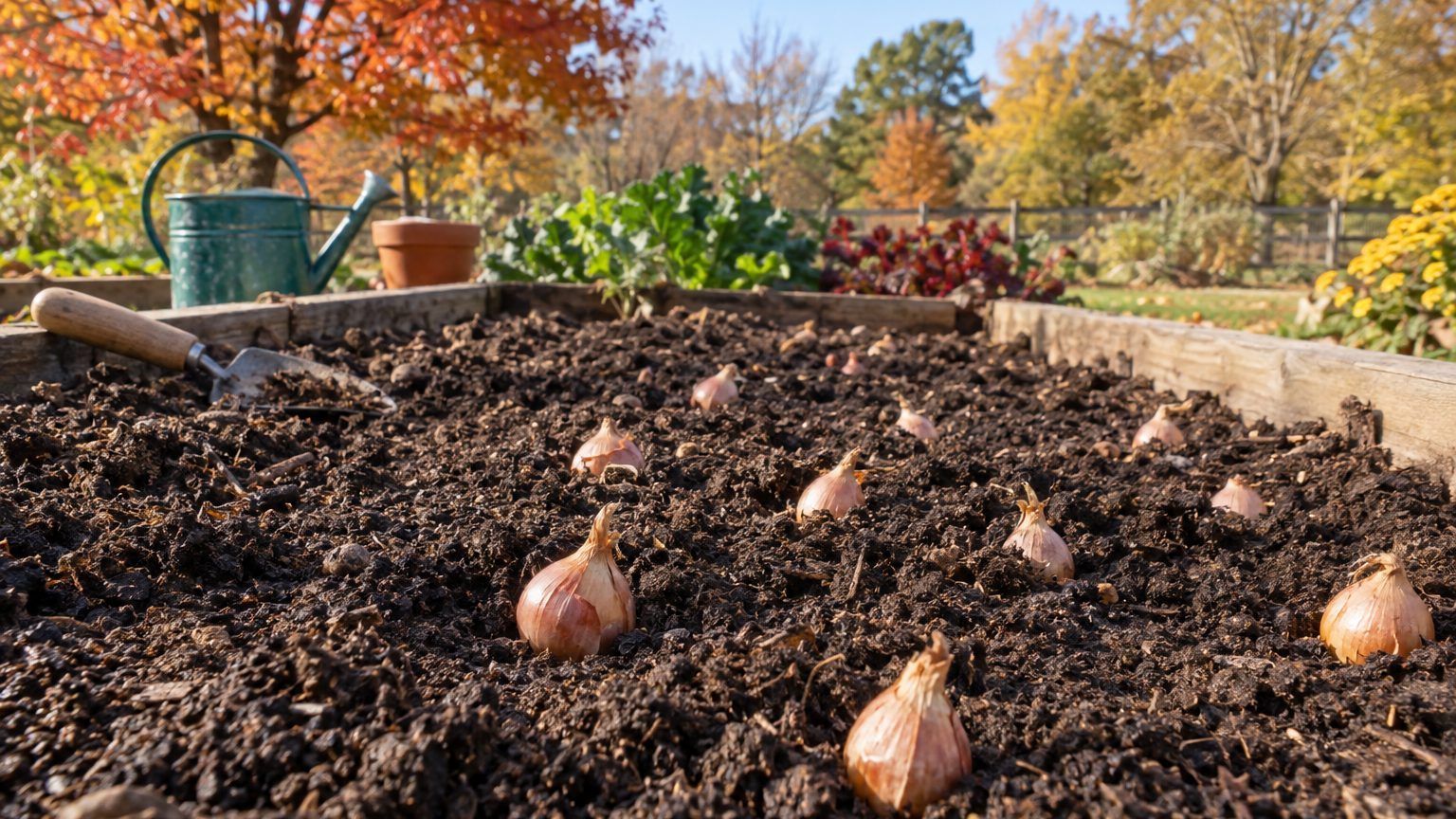

Plant shallots in Louisiana in the fall, so the bulbs root and leaf out through the cool months and finish before summer heat arrives. Frost is a poor guide here. At the New Orleans reference station, the 30 to 70 percent band for a 32°F freeze runs from December 17 to January 8 in fall and from January 18 to February 8 in spring. Heat, not cold, sets your deadline.
The short answer for Louisiana
Get shallots in the ground during the fall, ahead of the first-freeze window that opens on December 17. Late planting is the bigger risk in this state. A bulb set out after the spring window of January 18 to February 8 has little cool weather left to grow in, and Louisiana’s warm months do not wait.
What the frost dates are a probability of
Both date ranges come from the NOAA NCEI 1991-2020 Climate Normals for the New Orleans reference station. They are not the dates of a typical freeze. They mark the band where the chance of a 32°F freeze sits between 30 and 70 percent. Before the fall window, a freeze is less likely than not. After the spring window, it is unlikely again. Inside the window, it is roughly a coin flip.
| Marker | Window | What it measures |
|---|---|---|
| First fall freeze | December 17 to January 8 | 30-70% chance of a 32°F freeze |
| Last spring freeze | January 18 to February 8 | 30-70% chance of a 32°F freeze |
Why this is not a normal planting calendar
Look at the two windows together. The fall window straddles New Year’s Day, and the spring one begins only about ten days after the fall one closes. Freezing weather here is a short, unreliable visitor, not a season. A 32°F freeze occurs in only 86.8 percent of years at this station, so roughly one year in seven has no freeze at all. The mean daily minimum of the coldest month is 46.1°F.
That is why the usual advice to count backward from the first frost does not carry over. Shallots do their growing in the cool months, and the countdown that matters runs forward from planting to the first stretch of serious heat. This page does not have a dated heat threshold for the state, so it cannot hand you an exact last-planting day. What it can say is that the frost dates mark the middle of the growing window, not its edges. If you want the broader picture of how the crop behaves here, Growing Shallots in Louisiana covers the full season.
What will not work here
Waiting for a frost to tell you when to plant will not work. With one winter in seven passing without a 32°F freeze at the New Orleans station, a gardener who watches for the first killing frost may be watching for nothing. And when it does arrive, the fall window lands around the holidays, which is far too late to be starting bulbs.
Spring planting and slow varieties
A late-winter or spring planting is the next casualty. Once the spring window of January 18 to February 8 has passed, the soil warms quickly, and a bulb set out then has a short runway before leaf growth collides with heat. The shallots that fail first are the slowest ones, the types that need a long, cool stretch to size up. The Best Shallots to Grow in Louisiana sorts types by how they handle this compressed season.
Wet soil, tight spacing, and hurricane-season rain
Humidity defeats close spacing. Shallots clump, and a crowded bed holds moisture around the necks of the bulbs, which invites rot and fungal disease in a climate that stays damp for much of the year. Give each set room for air to move through the foliage, and use raised beds if your yard is heavy clay that stays soggy.
Fall planting also overlaps the tail end of hurricane season, which officially runs through November 30. A tropical system dropping several inches of rain on freshly set bulbs in a flat, poorly drained bed is a recipe for rot. If the forecast shows a storm approaching, hold off a few days. A week’s delay costs very little in October. A drowned planting costs the whole season.
What changes across Louisiana
Louisiana is not one garden. The USDA Plant Hardiness Zone Map (2023 edition, built on 1991-2020 normals) places the state across zones 8a to 10a. That spans three full zones, and there is no single answer for the whole state. The zone system rests on one variable only, the average annual extreme minimum temperature. It says nothing about how hot your summer gets or how wet your fall runs, which are the two things that matter most for shallots.
The dates on this page belong to the New Orleans reference station, in the warm south of the state. Other parts of Louisiana differ, and the north differs most. North Louisiana freezes far more reliably than the coast does, so a reader up there should expect the first fall freeze to arrive earlier than December 17 and the last spring freeze to linger later than February 8. This page does not carry station data for the north, so it will not guess at replacement dates.
To find your own zone, use the USDA Plant Hardiness Zone Map and enter your ZIP code. Do not guess from the state average. Two neighbors a few miles apart, one near water and one inland, can land in different zones. Even then, treat the zone as a rough guide to winter cold only. For shallots, your last-planting date in the spring is set by when heat arrives, and the zone map does not measure that.
Where to check this for your own county
A parish recommendation beats a state one, and this page is the state one. Louisiana organizes its counties as parishes, and the state’s land-grant extension system, the LSU AgCenter, runs offices across them. That is the place to settle your own dates.
When you reach the AgCenter, look for two things. The first is the local planting calendar for onions and shallots in your parish, or the closest region it publishes for. A calendar built for southeast Louisiana will differ from one for the northern parishes, and the difference can amount to weeks. The second is the list of varieties that have been trialled near you. A variety that thrives in a research plot in your part of the state has already survived your soil, your rain and your disease pressure, which is more than any national seed catalog can promise.
Call your parish extension office if the website leaves gaps. Agents there know the local quirks: which neighborhoods flood, which soils stay wet, which fall was unusually warm.
Use this page as the frame, and your parish office as the fine print. For a full look at varieties once you have your local window, The Best Shallots to Grow in Louisiana is the next step.
Checking this against your own garden
Your own observations outrank every date on this page. Three things are worth watching, and none needs a gadget.
Soil warmth, by feel. Push your hand a few inches into the bed in the morning. If the soil feels distinctly cool, the fall planting window is open. If it still feels like bathwater, wait. A bed against a south-facing brick wall will stay warm longer than one in open shade, and the difference tells you which corner of your yard to plant first and which to hold for later.
The first green shoots. After planting, note how many days pass before the first true leaves break the surface. Quick emergence says the soil is warm and the bed drains well. A slow, patchy showing says the spot is cold and wet, and might be a candidate for a raised bed next year. Write the date down. Next season it becomes your own local calendar.
The first flower stalks and yellowing tops in spring. When shallots in your bed, or other alliums in neighboring gardens, start sending up flower stalks, the plants are reacting to warming weather. The same goes for leaf tips turning yellow ahead of schedule. Spot these early in a sunny, sheltered spot and you know that corner runs hot. It is a signal to plant there sooner in the fall, or to put your most heat-tolerant types in that bed.
Over two or three seasons, those notes will tell you more than the 30 to 70 percent bands ever could.
Common questions
Can I plant shallots in Louisiana in spring?
It is a poor bet. By the time the spring freeze window of January 18 to February 8 has passed, warm weather arrives quickly, and bulbs set out then have little cool time left. Fall planting gives them the cool months to establish.
Do I need to wait for the first frost before planting?
No. In south Louisiana, a 32°F freeze occurs in only 86.8 percent of years at the New Orleans station, so about one year in seven has none. The fall freeze window of December 17 to January 8 comes well after planting time anyway.
Which dates should I use if I garden in north Louisiana?
The dates here are for the New Orleans reference station, and the north freezes more reliably, so expect the fall freeze earlier and the spring freeze later. This page has no northern station data. Check with your parish office at the LSU AgCenter for dates that fit your area.
Does my hardiness zone tell me when to plant?
Not by itself. The USDA zone, 8a to 10a across Louisiana, reflects only the average annual extreme minimum temperature. It tells you about winter cold, not summer heat or fall rain, which are the limits for shallots in this state.