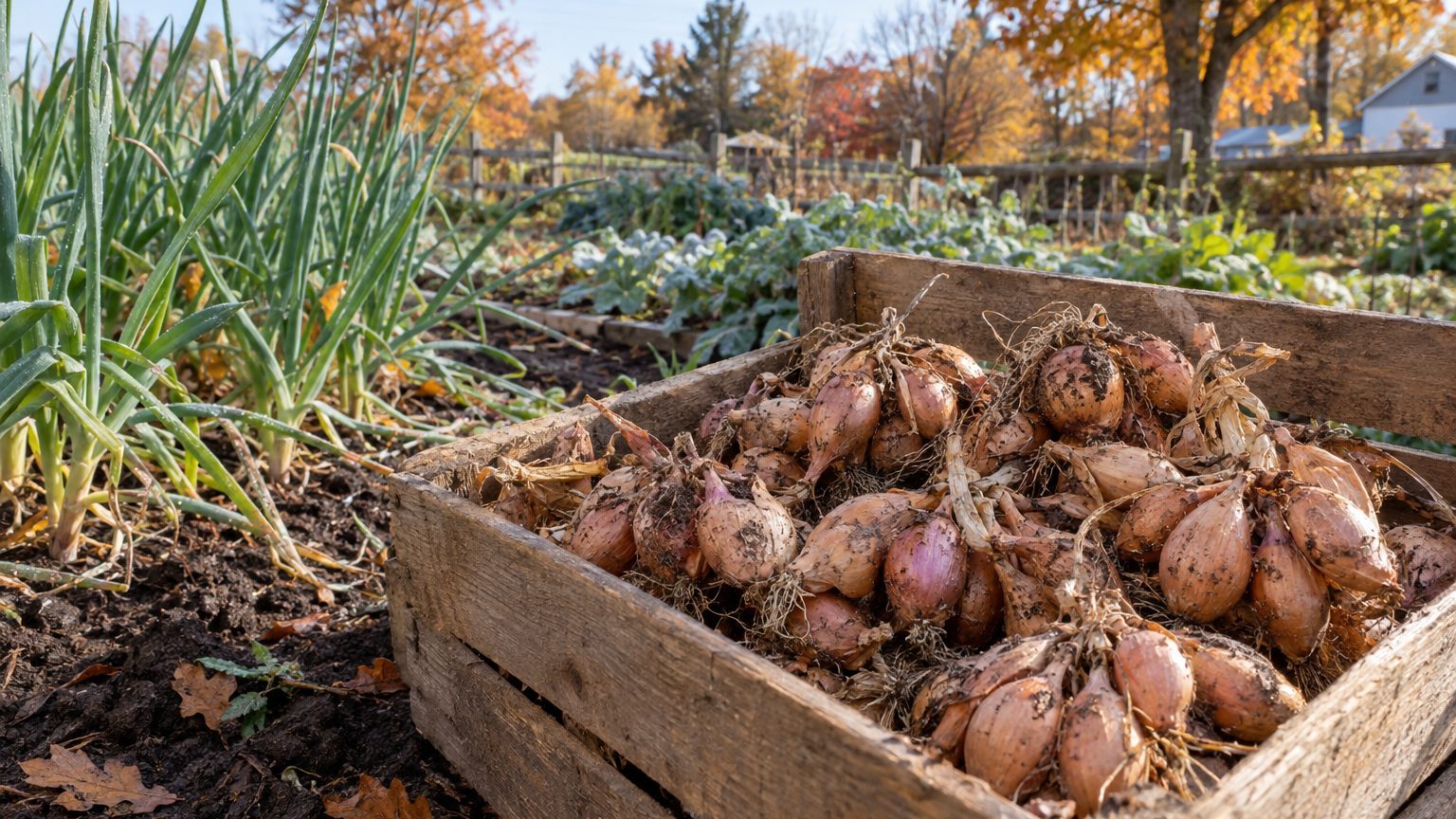

For most Nebraska gardens, the best shallots are multiplier types grown from sets or bulbs and planted as early in spring as the soil can be worked. Seed-grown types started indoors are the second choice, and slow, late-planted shallots are the poor one. This page sorts by type rather than by cultivar name, because it has no verified county trial results to rank named varieties.
The short answer for Nebraska
Choose sets or bulbs of a multiplier type first, and a seed-grown type second if you want to start from seed. Multipliers get a head start because the bulb already holds stored energy, so the plant puts up leaves within days of going into cool soil. A shallot sizes up its bulb on a clock set by lengthening days and rising heat. The goal is to grow as much leaf as possible before that clock runs out, and a set planted in early spring has the most time.
The frost dates explain why. At the Omaha airport reference station, the last spring frost falls between April 12 and April 23. Those dates are a probability, not a calendar. They mark the stretch when the odds of a 32°F freeze sit between 30 and 70 percent (NOAA NCEI U.S. Climate Normals 1991-2020). The first fall frost falls between October 15 and October 26, on the same 30-70 percent basis. These are reference-city figures, not a state-wide guarantee. Suburban and rural gardens typically see the last spring frost later and the first fall frost earlier, often by one to two weeks, and more at elevation. You can read the station data yourself.
Shallots shrug off light frost, so the April window is not a barrier. It is a reference point you plant around. The finer timing is covered in When to Plant Shallots in Nebraska, and the full growing routine is in Growing Shallots in Nebraska.
The decision by type
| Type | How it starts | Fit for Nebraska |
|---|---|---|
| Multiplier shallots | Sets or bulbs, planted early spring | Best all-around choice; fastest to a usable crop |
| Seed-grown shallots | Seed started indoors, transplanted | Good if started early; needs a seedling-to-bulb run before summer heat |
| Fall-planted multipliers | Bulbs planted in autumn, mulched | Workable in the milder parts; riskier in the colder ones |
One gap to state plainly: this page does not have Nebraska-specific trial data for individual cultivars. It can tell you which type suits the climate. It cannot tell you which named variety won a trial in your county.
What will not work here
The frost dates are not the problem. From mid-April to mid-October the reference city has about six months between freezes, which is plenty for a shallot. What fails is a late start, because the heat arrives before the bulb is ready. A seed-grown shallot sown outdoors in late spring, or started indoors too late, will still be small when summer heat tells the plant to wrap up. The result is a crop of undersized bulbs. The slowest types lose first, and they lose by weeks, not days.
Weekly watering is the second failure. Shallots have shallow roots, and a hot Nebraska July can dry the top few inches of soil between those weekly soakings. Bulbs that swell, stall, and swell again tend to split or turn out uneven. The state also dries out from east to west, so a routine that holds up near the Missouri River may fall short farther out. A thick mulch layer and lighter, more frequent watering during bulb sizing do more than one long drink.
Fall planting without mulch is the third. The coldest month at the Omaha reference station has a mean daily minimum of 15.2°F. That is an average night low, not the extreme, and the hardiness zones (built on average annual extreme minimums) run colder than that average suggests. Bulbs set out in fall and left bare can heave out of the ground in repeated freeze and thaw cycles, or lose their tops to a cold snap. Fall planting works best with a layer of straw or shredded leaves, and it is a gamble where winters bite harder.
Last, avoid the idea that a northern calendar will do the job for you. Many shallot guides are written for milder winters or for cooler, wetter summers. Copying a planting date from one of those into a state with hard winters and hot summers puts the bulbing window in the wrong place. Plant by this state’s thaw, not by another state’s schedule.
What changes across Nebraska
Nebraska is not one garden. The USDA Plant Hardiness Zone Map (2023, based on 1991-2020 normals) places the state across zones 4a to 5b. That spread covers several steps of winter cold, so there is no single answer for the whole state. The zone is built on one variable only, the average annual extreme minimum temperature, which says how cold the worst nights get and nothing about summer heat or rainfall.
A gardener in the colder, northern or higher-elevation parts should shift three things. Plant later in spring, because the soil thaws later and the Omaha dates run early for you. Lean on spring-planted multipliers instead of fall planting, since an autumn planting has more winter to survive. And if you do plant in fall, mulch more deeply than you think is needed. The same goes for anyone on exposed, windy ground, where soil freezes harder and thaws slower.
A gardener in the milder southeast has more room to experiment. Fall planting with mulch is a fair option, and spring plantings can go in earlier. Even there, treat the airport dates as a starting estimate. Low spots hold cold air, and sheltered south-facing beds warm days ahead of the open lawn.
Please do not guess your own zone from this page. Look up your address on the USDA Plant Hardiness Zone Map, then compare it with the spread above. That one lookup tells you whether to lean toward the cautious or the adventurous end of the advice.
Where to check this for your own county
The best next stop is University of Nebraska–Lincoln Extension, the state’s land-grant extension service. Its county offices answer local gardening questions, and its published material reflects what actually grows in Nebraska soil and weather.
Look for two things there. First, a local planting calendar for onions and their relatives, which will give you spring dates tuned to your county rather than to an airport in Omaha. Second, any varieties trialled in your county. Trial results tell you which named shallots, or closely related alliums, handled your soils and summers, which is exactly what this page cannot do.
A county recommendation beats a state one. This page is the state one: it sets the type of shallot and the logic of the season, and it relies on a single reference station. A county office knows your local frost pockets, your typical soil, and the dry spells your area really gets. If the two disagree, go with the county.
If you cannot find a shallot-specific page, an onion or garlic planting guide from your county office is a sound proxy for timing. This page does not have a Nebraska extension shallot calendar to cite, so it does not invent one.
Checking this against your own garden
Your own observations outrank every date above. Three are worth watching.
- Soil by feel. Pick up a handful. If it crumbles and does not smear or clump into a wet ball, it is workable. Soil that stays cold and sticky says your spot thaws late, so shift your planting later.
- First true leaves. For seedlings, true leaves are the ones after the first thin, grass-like pair. If they show up well before your target transplant date, your indoor setup is running ahead and the seedlings can go out sooner. For fall-planted sets, the first green shoots in spring tell you how mild your bed is.
- Flower stalks. A stalk rising from the center of a shallot means the plant is bolting, often after a cold snap or a stressful stretch. Bolted bulbs store poorly, so note when it happens and plant earlier or more evenly the next year.
Keep a simple notebook with the date soil became workable, the date shoots appeared, and the date tops fell over. After two seasons, those dates will beat any state-wide calendar for your own bed.
Common questions
Should I grow shallots from seed or from sets in Nebraska?
Sets or bulbs are the safer choice, since they start with stored energy and have the best chance of finishing before summer heat. Seed works if you start early indoors and transplant on time. Late-started seed is where undersized bulbs come from.
Can I plant shallots in fall in Nebraska?
It can work, especially in the milder zones of the state, but mulch is non-negotiable. In the colder zones, 4a and nearby, spring planting is the lower-risk option.
Do the April 12 to April 23 frost dates mean I should plant then?
No. They are the Omaha reference-station window when the odds of a 32°F freeze sit between 30 and 70 percent. Shallots tolerate light frost, so you can plant as soon as the soil is workable. Gardens outside the city often frost later by one to two weeks, so check your county.
Which named variety is best in Nebraska?
This page does not have verified Nebraska trial results for named varieties, so it does not pick one. Ask your county extension office which shallots or related alliums have been trialled locally. Where no trial exists, a multiplier type from sets is the reliable starting point.