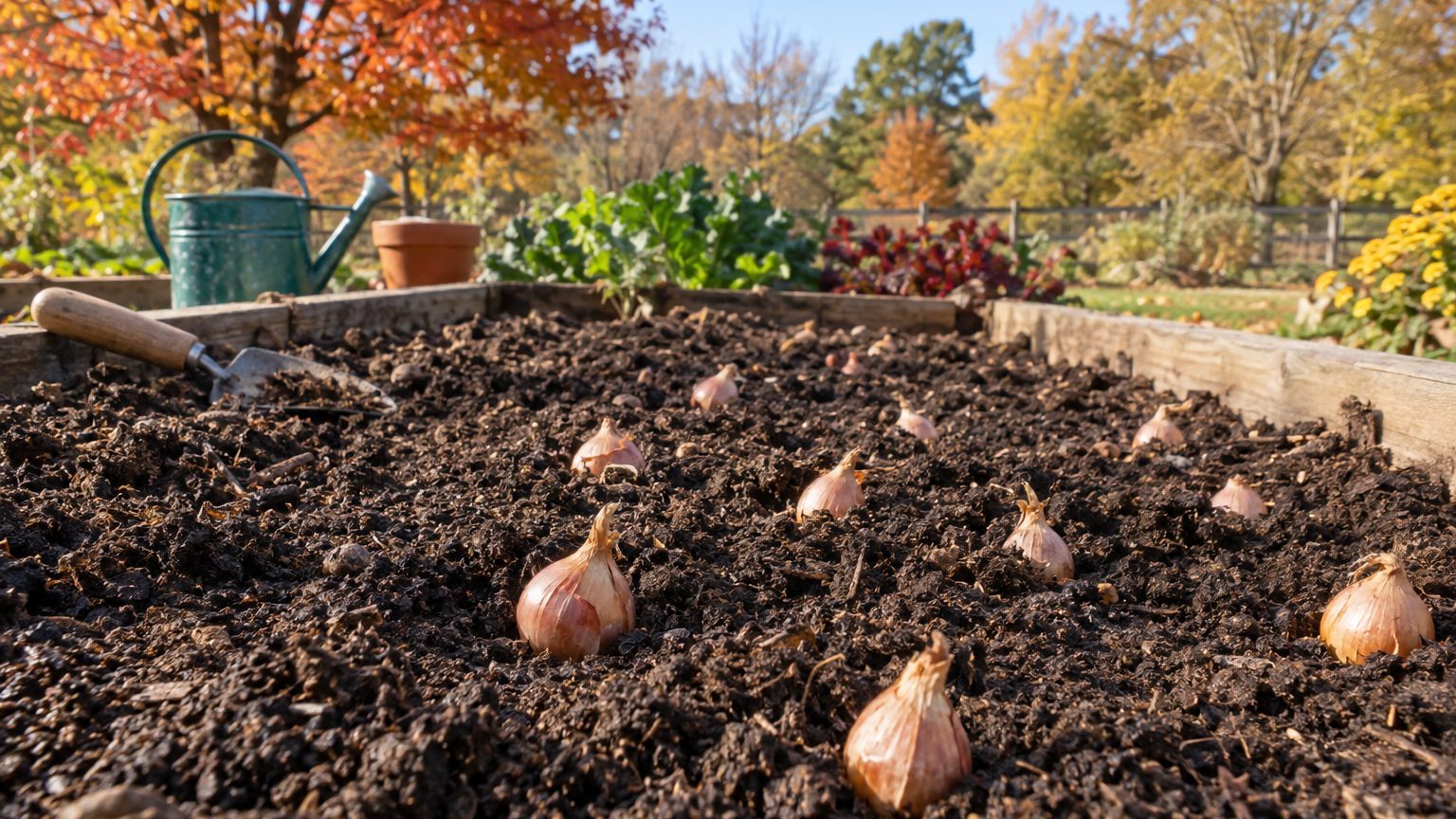

Fall is the better bet in Maine. Plant shallots in October, a few weeks before the ground locks up, and mulch them. Spring planting works too, as soon as the soil can be worked, though the bulbs get a shorter season to size up. The dates below come from Portland, the mild coastal end of the state. Inland and northern gardeners need to shift them.
The short answer for Maine
At the Portland reference station, the last spring freeze falls between April 22 and May 1, and the first fall freeze between October 9 and October 21. Spring shallots go in on or before the April dates, since shallots shrug off frost. Fall shallots go in as the October band arrives and shortly after, once the soil has cooled.
Those dates are a probability, not a calendar. They come from NOAA’s 1991-2020 Climate Normals and mark a band in which the chance of a 32°F freeze sits between 30 and 70 percent. A freeze on May 8 is not a freak event, and a mild October can push the first one later. Treat the band as the center of the odds.
Why fall wins
A shallot planted in fall spends the cooling weeks growing roots, then sits dormant through winter. At Portland the mean daily minimum of the coldest month is 15.6°F, which a mulched bulb handles fine. Come spring, it wakes with roots already in place and puts its energy into leaves and bulb. A spring planting has to build roots and leaves at the same time, and the clock runs out sooner.
| Planting time | Anchor at Portland | Practical trigger |
|---|---|---|
| Fall (preferred) | Around and just after October 9 to October 21 | Soil has cooled, but you can still push a bulb in by hand |
| Spring | On or before April 22 to May 1 | Soil is no longer frozen or soggy and crumbles in your fist |
Fall planting still wants a thick layer of straw or similar mulch over the bed. It keeps the soil temperature steadier and holds bulbs down through freeze and thaw cycles.
This page uses the Portland station for its dated advice. It does not have county-level frost dates for the rest of Maine, so the numbers above are a starting point, not a promise for your yard.
What will not work here
Waiting for May 1 the way you would for tomatoes. That date is the end of the Portland band, not a safe-planting signal for a frost-tolerant crop. Shallots started in April, once the ground is workable, get weeks of cool growing that a mid-May planting never sees.
Planting in fall too early backfires as well. If bulbs go in during a warm September and send up tall green leaves, a hard freeze can burn them back and waste the energy they spent. The October band exists for a reason: you want roots, not a lot of top growth, going into winter.
Planting too late is the opposite failure. Once the ground freezes solid, you cannot push bulbs in at all, and ones that go in just before the freeze may not root enough to resist heaving. Maine’s freeze-thaw swings are rough on shallow bulbs. Bare soil with no mulch invites heaving, and a bulb pushed out of the ground in March is a bulb that dries out or rots.
The season itself limits your choices. Between the spring and fall bands at Portland you get roughly five to six months, and inland the stretch is shorter. That squeezes slow-maturing shallots, particularly those planted in spring. A bulb that needs a long season to size up can finish small or late, and late harvests in a wet stretch are harder to cure. If you plant in spring, lean toward quicker varieties, and see The Best Shallots to Grow in Maine for how types differ.
Borrowing a Portland date for a farm in the northern part of the state also fails. The coastal station is the mild end of Maine, and the source flags that inland and northern Maine run substantially later in spring and earlier in fall. A northern gardener who waits for October 9 to October 21 may find the ground nearly frozen, or find that fall growth never had time to root.
Finally, soggy beds defeat shallots in any season. A spring that stays wet after the thaw leaves shallow roots sitting in cold water. If your bed holds standing puddles in April, planting there is a gamble. Raised rows or a better-drained corner often matter more than the exact day.
What changes across Maine
Maine does not have one garden. The USDA Plant Hardiness Zone Map (2023 edition, built on 1991-2020 normals) puts the state anywhere from zone 3b to 6a. That is six half-zone steps, so there is no single answer, only a spread from the far north and high ground to the sheltered coast.
The zone system rests on one variable, the average annual extreme minimum temperature. It tells you about winter survival, not how long your growing season runs, so use it as a rough guide rather than a planting date. Portland, at the mild end, has that 15.6°F mean minimum in its coldest month. A colder zone means harder, longer winters and thicker snow cover or more frost depth to plan for.
What should a reader in the north or at altitude shift? Fall planting earlier, because the freeze reaches you before the October band at Portland. Spring planting later, because the soil thaws later. Mulch more generously, and favor hardy, quicker-maturing types. Gardeners on the coast can plan closer to the Portland dates, though coastal pockets and river valleys still differ from one another.
Your own zone is on the USDA map, and it is worth looking up rather than guessing from a neighbor’s advice. Enter your ZIP code at the official USDA Plant Hardiness Zone Map and read the result for your location. For the broader picture of the crop, Growing Shallots in Maine covers the rest.
Where to check this for your own county
Start with University of Maine Cooperative Extension. It is Maine’s land-grant extension service, and it has local offices that know the state’s microclimates far better than any single page can.
Look for three things there. First, a local planting calendar for your county, ideally one listing garlic or shallots (the two are handled similarly) with fall and spring windows. Second, any varieties trialled in your county, since a bulb that does well in the south can struggle in the north. Third, local frost-date guidance, which refines the Portland band for your own area.
This page does not cite a Maine extension shallot calendar, so it cannot tell you what that office recommends. Check the site directly for current guidance.
A county recommendation beats a state one. This page is the state one: it gives you a framework built on a coastal reference station, and a county office gives you dates built on local trial results and local weather records. If the two disagree, go with the county.
Checking this against your own garden
Your own observation outranks every date above. Three things are worth watching, and none needs equipment.
- Soil by feel. In spring, grab a handful. If it is cold, sticky and clumps into a wet ball, wait. If it crumbles, it is ready. In fall, soil that feels cool rather than warm tells you roots will still grow but top growth will stay in check. A bed that crumbles early is a warm pocket, probably south-facing or well drained.
- First frost on your lawn. Note the morning you first see frost on the grass and compare it to the October 9 to October 21 band. If yours comes earlier, your site runs colder than Portland, and your fall planting should move earlier too.
- First true leaves. Watch when green shoots appear on spring-planted or overwintered bulbs. Early emergence marks a sheltered spot. Late emergence marks a cold, slow one, and it tells you how far to shift next year’s dates.
Write the dates down for a season or two. Your own notes will soon be a better calendar than any average.
Common questions
Can I plant shallots in spring in Maine?
Yes. Plant as soon as the soil can be worked, on or before the April 22 to May 1 band at Portland. Later than that, bulbs have less time to size up.
Is Maine too cold for fall-planted shallots?
Not at Portland, where the coldest month averages a 15.6°F minimum, as long as you mulch. In colder zones, plant earlier and mulch more heavily.
What if I miss the October window?
You can still plant if the ground is workable, ideally with heavy mulch. If it has frozen solid, wait for spring.
Do I need to wait until the last frost?
No. Shallots tolerate frost, and the last-frost band is not a signal to wait. The ground being workable matters more.