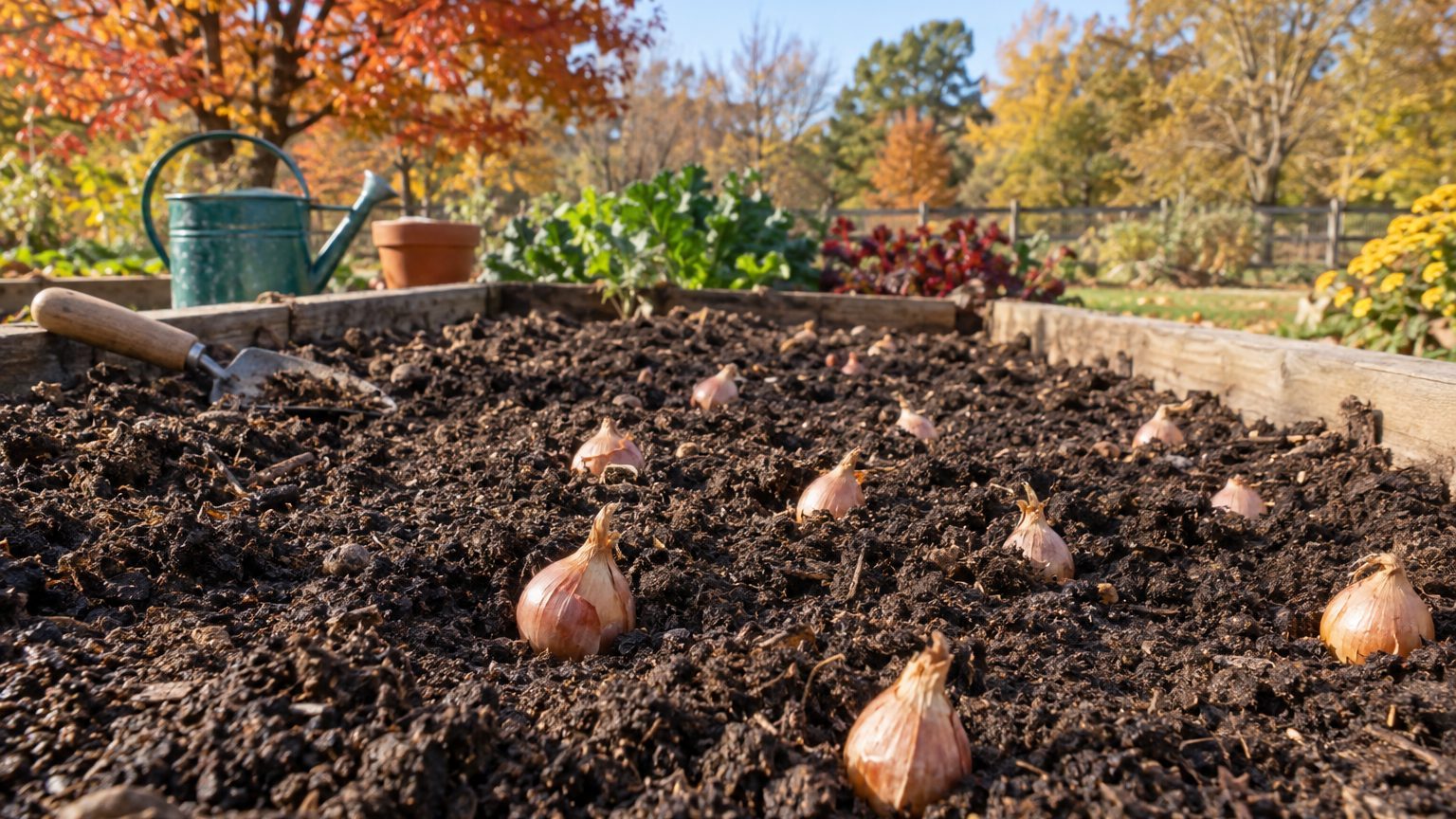

Plant shallots in Maryland in fall, a few weeks before the ground freezes, or in early spring as soon as the soil can be worked. Fall is the stronger bet, because roots get established before winter and the bulbs size up ahead of summer heat. Spring works too, with less margin for error. The exact dates shift across the state, and this page shows how to pin them down. For the full picture, start with Growing Shallots in Maryland.
The short answer for Maryland
The calendar hangs on two dated bands: the last spring frost falls between April 3 and April 16, and the first fall frost between October 26 and November 5. Both come from the NOAA NCEI 1991-2020 Climate Normals, and both are probabilities, not deadlines. Each is the 30-70% band of 32°F freeze probabilities. In spring, that is the stretch when a freeze goes from likely to unlikely. In fall, it is the stretch when the first freeze becomes more likely than not. A freeze can still arrive outside either band.
- Last spring frost: April 3 to April 16
- First fall frost: October 26 to November 5
- Mean daily minimum of the coldest month: 25.4°F (Baltimore reference station)
Fall planting
Aim to get sets in the ground in the weeks around the fall band, early enough that roots can grow while the soil is still workable and late enough that the tops stay small. A bulb below ground shrugs off a freeze. Green growth is what suffers. At Baltimore, the average night in the coldest month bottoms out at 25.4°F, so plenty of nights run colder than that. Shallots planted at the right moment root in autumn, sit quiet through winter, and push growth when the ground warms.
Spring planting
Spring planting follows the other band. Shallots tolerate frost, so there is no need to wait for April 3 to April 16 to pass. The practical trigger is soil that crumbles in your hand instead of smearing, which in a normal year arrives near that band and earlier in mild Eastern Shore springs. Every week of delay after that shortens the cool stretch the plants need to build leaves before bulbs begin to swell. The sources for this page give frost bands, not a Maryland shallot-specific sowing table, so the windows above are built from those frost dates and general shallot habits.
What will not work here
Planting too early in fall is the most common Maryland mistake. With the first fall frost not due until October 26 to November 5, September and early October stay warm enough to push sets into leaf. Tall green tops going into a winter whose average coldest-month night is 25.4°F get burned back, and the plant spends reserves it needed for the bulb. Early planting feels responsible, but the calendar rewards patience.
Late spring planting fails for the opposite reason. Once the spring band has passed, Maryland warms quickly, and shallots planted in May get a short, rushed growing window. They tend to produce small bulbs because the plant is racing heat instead of building foliage in cool weather. The state offers roughly six to seven months between the spring and fall frost bands, which sounds generous, but shallots want most of their growing in the cool shoulders, not the heat in between.
Close spacing is the quieter failure. Maryland summers are humid, and a crowded bed holds moisture around stems and necks right when bulbs should be maturing and drying down. Crowded foliage stays damp longer after rain, which invites fungal trouble and bulbs that cure poorly. Give each plant room for air to move, even if it means planting fewer.
Wet winter soil is the fourth culprit. A bed that stays soggy through winter can rot sets, and repeated freezing and thawing can push shallow bulbs up toward the surface. Raised beds, loosened soil, and a layer of mulch after the ground cools handle both problems.
The final failure is treating one date as gospel across the whole state. The frost bands describe a Baltimore reference station. Garrett and Allegany counties in Western Maryland are mountainous and run weeks later in spring, and the Eastern Shore runs milder. A calendar that says “plant on October 28” fits none of them exactly.
What changes across Maryland
Maryland spans USDA hardiness zones 5b to 8a, per the USDA Plant Hardiness Zone Map 2023, which uses 1991-2020 normals and rests on one variable: the average annual extreme minimum temperature. That is five half-zone steps from the cold western mountains to the mild coast, so there is no single zone for the state and no single planting date. The dates on this page belong to the Baltimore reference station. Every other location differs, and the USDA map, searchable by ZIP code, will tell you where your own garden falls.
| Area | What the data says | What to shift |
|---|---|---|
| Baltimore reference | Spring band April 3 to April 16; fall band October 26 to November 5; coldest-month minimum 25.4°F | Use the dates as written |
| Eastern Shore | Runs milder than the reference | Spring start can come earlier, and the fall window can stay open longer |
| Western Maryland (Garrett, Allegany) | Mountainous, runs weeks later in spring | Delay spring planting by weeks, mulch fall plantings more heavily |
A reader in the north or at altitude should lean toward the early end of the fall window, so roots have time to anchor before hard cold, and plan on later spring work. Variety choice also matters more where winters bite, and The Best Shallots to Grow in Maryland covers which types suit which conditions.
Where to check this for your own county
Start with University of Maryland Extension, the state’s land-grant extension service. Its county offices know local soils, frost pockets, and what has actually performed in nearby gardens, and no state-level page can match that.
Look for two things in particular. The first is a local planting calendar, ideally one that names shallots or the closely related garlic and onion family and gives dates for your county, not the state. The second is a list of varieties trialled in your county, because a type that thrives on the Eastern Shore may sulk in the mountains. If the extension office can also tell you your average frost dates, write them next to the bands on this page and use the local ones.
A county recommendation beats a state one, and this page is the state one. It is built from NOAA’s 1991-2020 normals for a Baltimore reference station, which is a solid anchor but not a substitute for someone who has watched shallots grow in your county. Where extension advice and this page disagree, trust the extension.
Checking this against your own garden
Your garden’s own behavior outranks every date above. Three observations are worth making, and none needs equipment.
Soil by feel. Grab a handful from the bed. In fall, it should feel cool, not warm, and crumble when squeezed instead of forming a slick ball. Warm soil in late October means you are earlier than the calendar thinks, and soil that stays soggy points to a drainage problem. A bed against a south-facing wall will feel warmer than one in an open yard, and that difference is your microclimate.
The first green tips. Watch fall plantings for shoots. A few small tips before winter are fine. Tall growth means you planted too early for your spot. In spring, the first leaves emerging tell you when your soil actually woke up, which may differ from the band by a week or two.
The first frost on your grass. Note the morning you first see white on the lawn and compare it to the October 26 to November 5 band. A low corner of the yard that frosts early is a frost pocket, and a bed near the house that stays clear is a warm one.
Jot the dates in a notebook. After two seasons, you will have a calendar more accurate than any state page.
Common questions
Can I plant shallots in Maryland in spring instead of fall?
Yes. Spring planting works as soon as the soil is workable, around the April 3 to April 16 band. Expect smaller bulbs on average than fall plantings, because the plants have less cool weather to build leaves before summer heat triggers bulbing.
Is it too late to plant shallots in November?
Not if the ground is still workable. The first fall frost band is October 26 to November 5, and shallots are cold-tolerant. A November planting gets less root growth, so a layer of mulch helps protect it.
Will a Maryland winter kill fall-planted shallots?
Rarely. The mean daily minimum of the coldest month at Baltimore is 25.4°F, which bulbs underground handle well. Tops may burn back on the coldest nights, but the plant regrows in spring.
Do these dates apply in Western Maryland?
Not directly. Garrett and Allegany counties are mountainous and run weeks later in spring than the Baltimore reference dates. The state spans hardiness zones 5b to 8a, so in the west, your county extension office is a better guide than this page.